
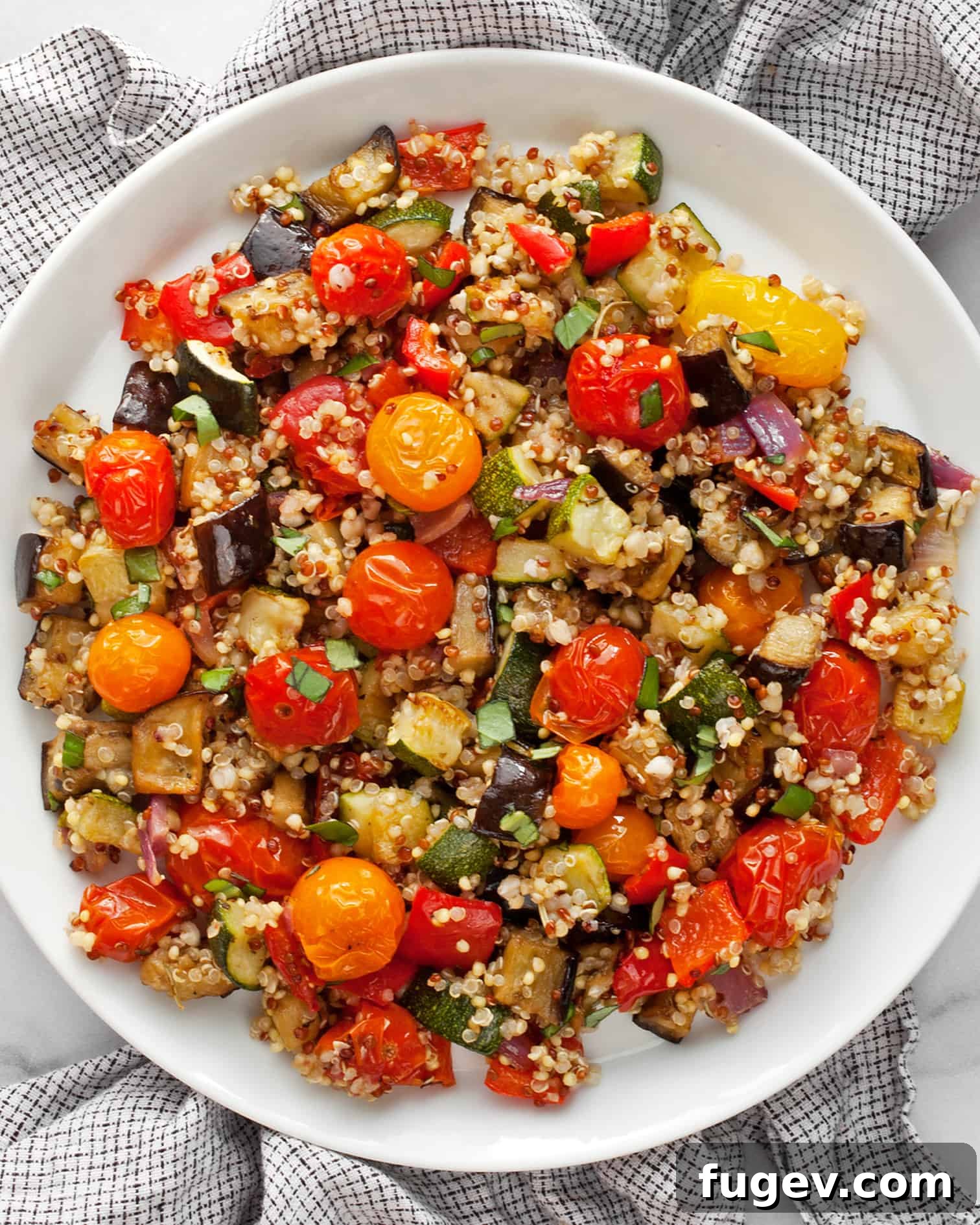
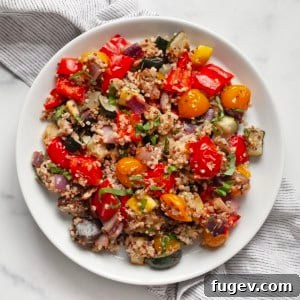
If you’re searching for an effortlessly delicious vegan meal brimming with the bounty of summer, this roasted ratatouille quinoa recipe is your perfect match. Imagine succulent zucchini, tender squash, vibrant bell peppers, juicy tomatoes, rich eggplant, and sweet onions, all roasted to caramelized perfection across two convenient sheet pans. While these glorious vegetables transform in the oven, fluffy quinoa simmers gently on your stovetop. The grand finale involves stirring everything together with fragrant fresh basil, creating a harmonious medley of flavors and textures. Whether served as a satisfying main course or a delightful side dish, this recipe promises ease, nutrition, and an explosion of seasonal taste.
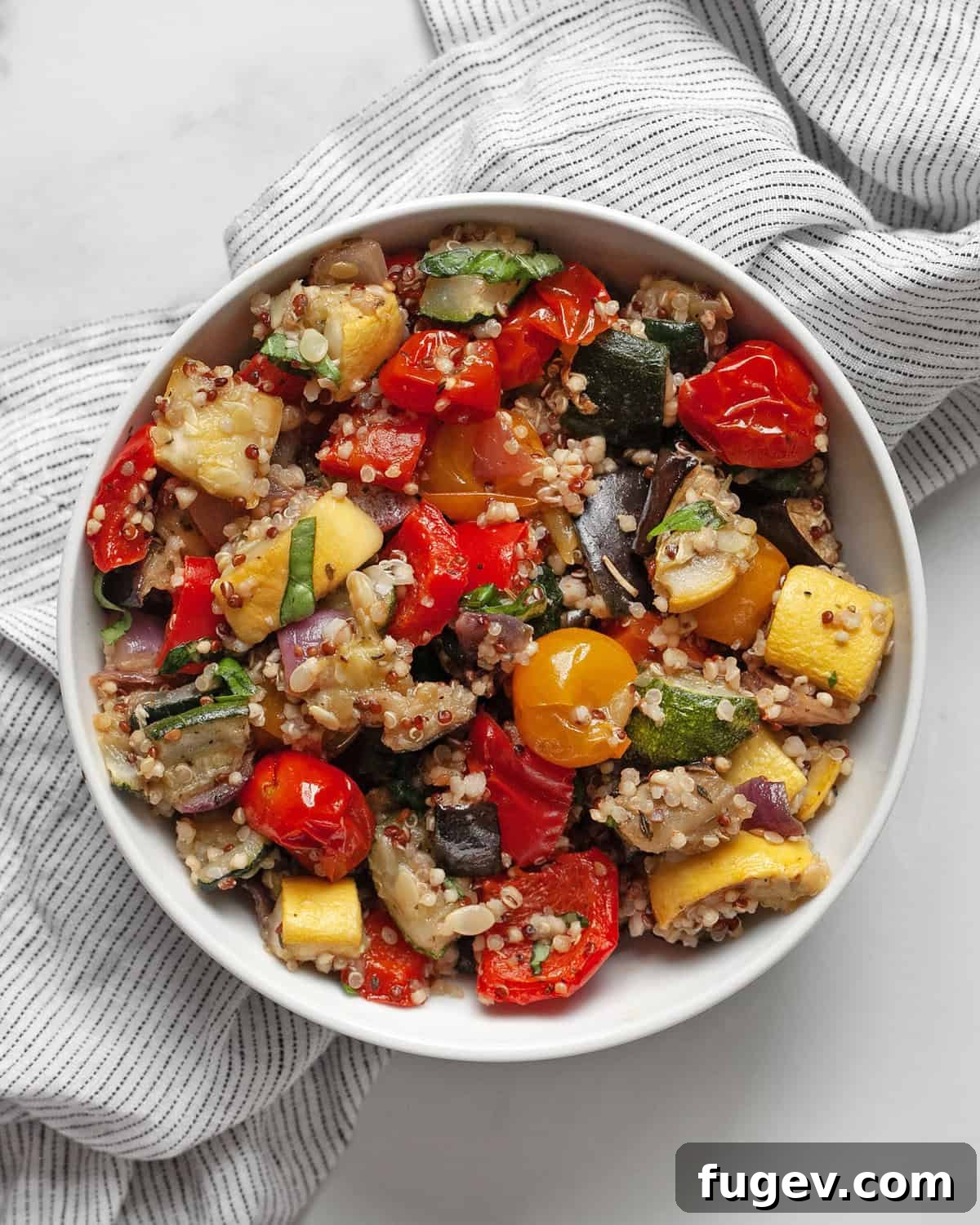
Table of Contents
- Why This Roasted Ratatouille Quinoa is a Must-Try
- What is Ratatouille? A Culinary Journey
- The Vibrant Ingredients for Perfect Ratatouille Quinoa
- Step-by-Step: How to Make Roasted Ratatouille Quinoa
- Serving Suggestions for Your Versatile Dish
- Leftovers and Storage: Maximize Freshness
- Expert Tips for a Flawless Roasted Ratatouille
- Health Benefits of This Plant-Powered Meal
- Customize Your Ratatouille: Endless Variations
- Frequently Asked Questions
- More Delicious Quinoa Recipes
- More Tempting Roasted Vegetable Recipes
- Roasted Ratatouille Quinoa Recipe Card
Why This Roasted Ratatouille Quinoa is a Must-Try
This delightful dish isn’t just another recipe; it’s a testament to simple, flavorful, and healthy eating. Here’s why you’ll absolutely fall in love with our roasted ratatouille quinoa:
Effortless Sheet Pan Perfection: While traditional ratatouille, lovingly stewed in a pot, holds a special place in culinary history, our sheet pan method offers unparalleled convenience without compromising on flavor. Roasting vegetables brings out their natural sweetness, creating beautifully browned and caramelized edges that deepen their taste profile. This hands-off approach allows the oven to do most of the work, freeing you up to focus on other tasks or simply relax.
Seamless Simultaneous Cooking: One of the brilliant aspects of this recipe is its efficiency. As your colorful array of summer vegetables are roasting to tender perfection in the oven, you can simultaneously prepare the quinoa on the stovetop. Quinoa is a rapid-cooking grain, meaning it will be ready in mere minutes, perfectly timing with your roasted veggies. This streamlined process makes it an ideal choice for busy weeknights or when you want a wholesome meal without spending hours in the kitchen.
Hearty, Wholesome, and Incredibly Filling: Despite being entirely vegan, this dish is surprisingly robust and satisfying, making it an excellent main course or a substantial side. The combination of nutrient-dense roasted vegetables and protein-rich quinoa creates a fulfilling meal that will keep you energized and satisfied. As the vegetables soften and caramelize, some naturally break down, creating a rich, flavorful sauce that subtly coats and enriches the quinoa, turning each bite into a delightful experience.
Packed with Seasonal Goodness: This recipe truly shines in the summer months when zucchini, bell peppers, tomatoes, and eggplant are at their peak. Using fresh, in-season produce ensures maximum flavor and nutritional value, making every forkful taste like sunshine.
Versatile and Customizable: Whether you’re adhering to a specific diet or simply enjoy experimenting with flavors, this dish offers incredible flexibility. Adjust the spice blend, swap out vegetables, or add your favorite plant-based proteins to make it uniquely yours.
What is Ratatouille? A Culinary Journey
Ratatouille, a vibrant and iconic vegetable stew, hails from Provence, a picturesque region in southeastern France renowned for its sun-drenched landscapes and rich culinary traditions. The cuisine of Provence is deeply influenced by the Mediterranean, characterized by its generous use of olives, fragrant olive oil, fresh fish, and an abundance of seasonal vegetables.
Traditionally, ratatouille is prepared by stewing the vegetables separately or sequentially in a pot on the stovetop. This method allows each vegetable to retain its distinct flavor and texture before being gently combined into a harmonious blend. The classic array of vegetables typically includes:
- Zucchini: Providing a tender texture and subtle flavor.
- Tomatoes: Offering sweetness, acidity, and a rich base.
- Bell Peppers: Contributing vibrant color and a sweet, slightly peppery note.
- Eggplant: Adding a meaty texture and absorbing the flavors beautifully.
- Onions: Forming the aromatic foundation of the dish, sweetening as they cook.
- Garlic and Herbs: Essential for infusing the stew with its characteristic Mediterranean aroma.
While the traditional stovetop method yields a wonderfully comforting stew, our roasted approach offers a different, yet equally delightful, experience. Roasting intensifies the vegetables’ flavors, imparting a smoky depth and caramelized edges that are truly irresistible. It’s a modern twist on a classic, perfect for those who appreciate both tradition and efficiency in the kitchen.
The Vibrant Ingredients for Perfect Ratatouille Quinoa
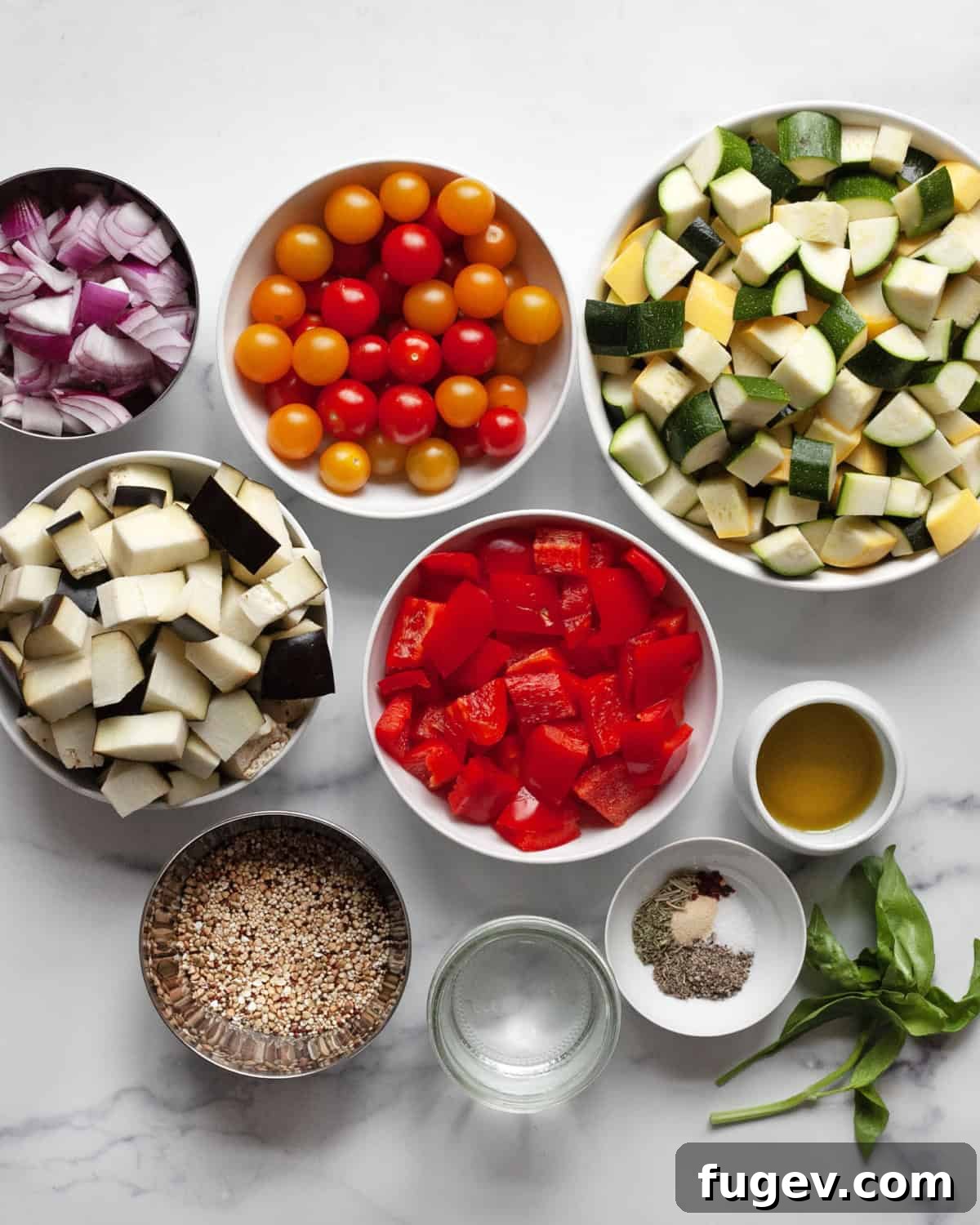
Crafting the perfect roasted ratatouille quinoa starts with selecting the finest ingredients. Here’s a detailed look at what you’ll need and how to choose them for optimal flavor and texture:
- Zucchini and/or Yellow Squash: These mild, versatile summer gourds are the stars of the dish. Feel free to use either zucchini, yellow squash, or a combination of both. Their interchangeability makes this dish highly adaptable to what’s available or what colors you prefer in your final mix. Look for firm, unblemished squash that feels heavy for its size. They provide a tender bite and absorb the delicious roasted flavors.
- Eggplant: A cornerstone of traditional ratatouille, eggplant adds a wonderfully creamy and “meaty” texture when roasted. When choosing eggplant, seek out varieties with smooth, taut, and shiny skin. It should feel substantial and heavy, indicating good moisture content. Smaller eggplants tend to have fewer seeds and a milder flavor.
- Bell Peppers: Red bell peppers are my go-to for their sweetness and vibrant color, which beautifully complements the other vegetables. However, feel free to use yellow or orange peppers for a different hue and slightly varying sweetness. Green bell peppers, while usable, have a more bitter, less sweet flavor profile that might alter the overall taste.
- Onions: A fundamental aromatic, onions caramelize beautifully when roasted, adding a deep, sweet foundation to the dish. Red, white, or yellow onions will all work splendidly. Red onions offer a slightly sharper initial taste but sweeten considerably when cooked, contributing a lovely color.
- Tomatoes: Small varieties like cherry tomatoes or grape tomatoes are ideal for this roasted recipe. Their small size means you don’t need to slice them, and as they roast, they soften, wrinkle, and some will naturally burst, releasing their sweet, acidic juices directly into the dish, creating a natural sauce. Opt for firm, brightly colored tomatoes.
- Dried Spices: Our carefully curated blend elevates the Mediterranean essence of ratatouille. You’ll need:
- Rosemary: Adds a piney, slightly peppery note.
- Thyme: Offers a delicate, earthy, and savory aroma.
- Oregano: Provides classic Mediterranean warmth and a pungent, slightly bitter flavor.
- Garlic Powder: For an underlying savory depth that permeates evenly.
- Red Pepper Flakes: A pinch for a subtle warmth and gentle heat, adjustable to your preference.
- Kosher Salt and Black Pepper: Essential for seasoning and enhancing all the natural flavors.
This blend is designed to complement the vegetables without overpowering them.
- Quinoa: This ancient grain forms the hearty base of our dish. Any color of quinoa—white, red, black, or tricolored—will work wonderfully. Remember to rinse quinoa thoroughly before cooking to remove saponins, which can impart a bitter taste. Quinoa is prized for its high protein content and gluten-free nature, making it a perfect healthy addition.
- Fresh Basil: A finishing touch of fresh herbs is crucial. Chopped fresh basil stirred in at the end brightens the entire dish with its sweet, aromatic, and slightly peppery notes. It’s best added after cooking to preserve its delicate flavor and vibrant color.
- Olive Oil: Extra virgin olive oil is highly recommended for its robust flavor and health benefits. It’s essential for coating the vegetables, allowing them to roast evenly and develop those desirable caramelized edges. A good quality olive oil truly makes a difference in the final taste.
Step-by-Step: How To Make Roasted Ratatouille Quinoa
Preparing this wholesome roasted ratatouille quinoa is simpler than you might think. Follow these clear steps to achieve a dish bursting with flavor and vibrant colors.
Step 1: Prepare Your Oven and Seasoning Blend
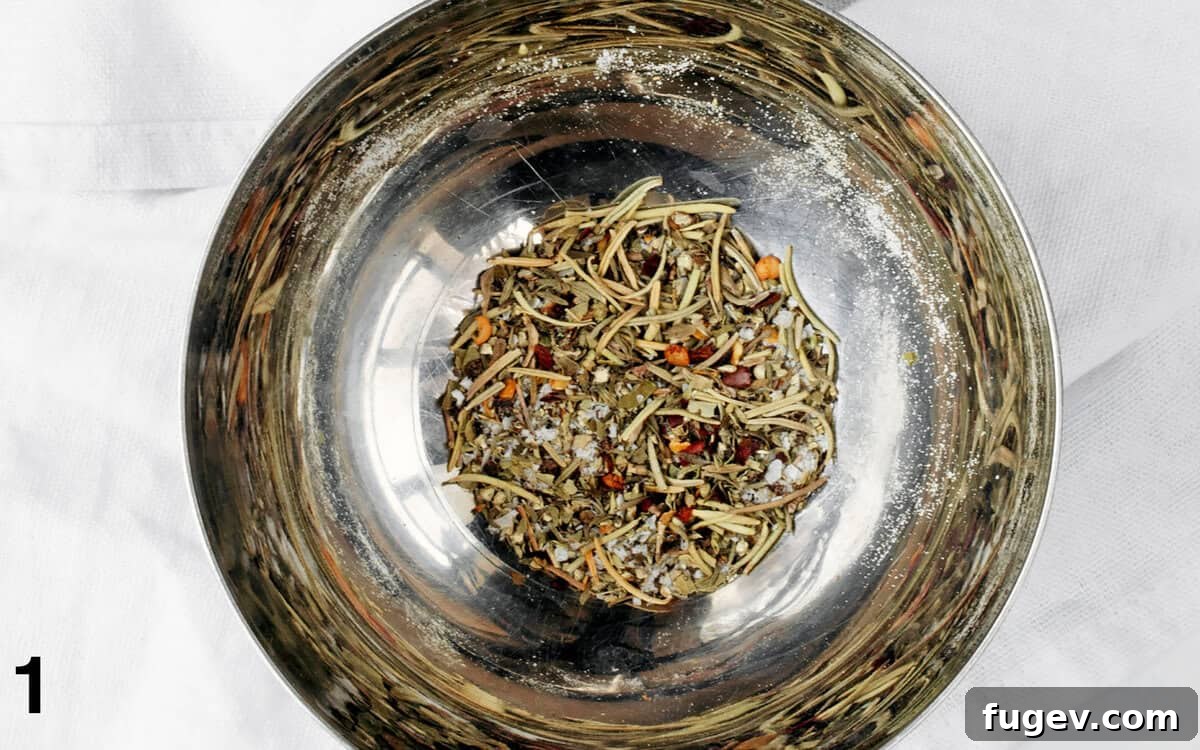
Begin by preheating your oven to 400 degrees F (200 degrees C). This ensures the oven is at the optimal temperature for even roasting once your vegetables are ready. While the oven heats, combine all your dried spices – rosemary, thyme, oregano, garlic powder, red pepper flakes, kosher salt, and black pepper – in a small bowl. Give them a good stir to create a uniform seasoning mix. This blend will infuse your vegetables with rich, Mediterranean flavors.
Step 2: Season and Spread the First Batch of Vegetables
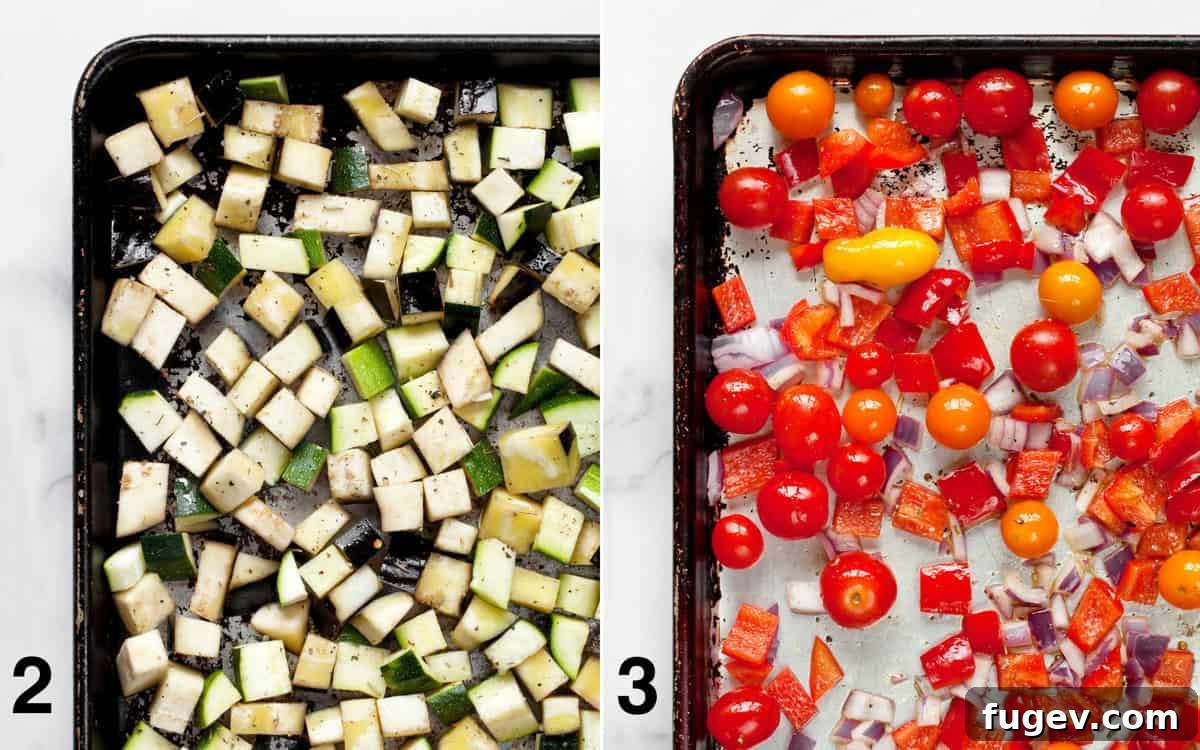
On your first large baking sheet (ideally lined with parchment paper for easy cleanup), combine the diced zucchini, yellow squash, and eggplant. Drizzle them with half of the extra virgin olive oil and sprinkle generously with half of your prepared dried seasoning mix. Toss everything together thoroughly with your hands or tongs until all the vegetables are evenly coated. Arrange them in a single layer across the baking sheet, ensuring they are not overcrowded. This is crucial for roasting rather than steaming, leading to beautifully caramelized edges.
Step 3: Season and Spread the Second Batch of Vegetables
Repeat the process for the second baking sheet. Here, you’ll toss the cherry/grape tomatoes, diced bell peppers, and diced onions with the remaining olive oil and the rest of the dried seasoning mix. Again, ensure all vegetables are well-coated and spread them out in a single layer on the pan. Using two sheet pans prevents overcrowding and allows all the vegetables to roast perfectly.
Step 4: Roast the Vegetables to Perfection
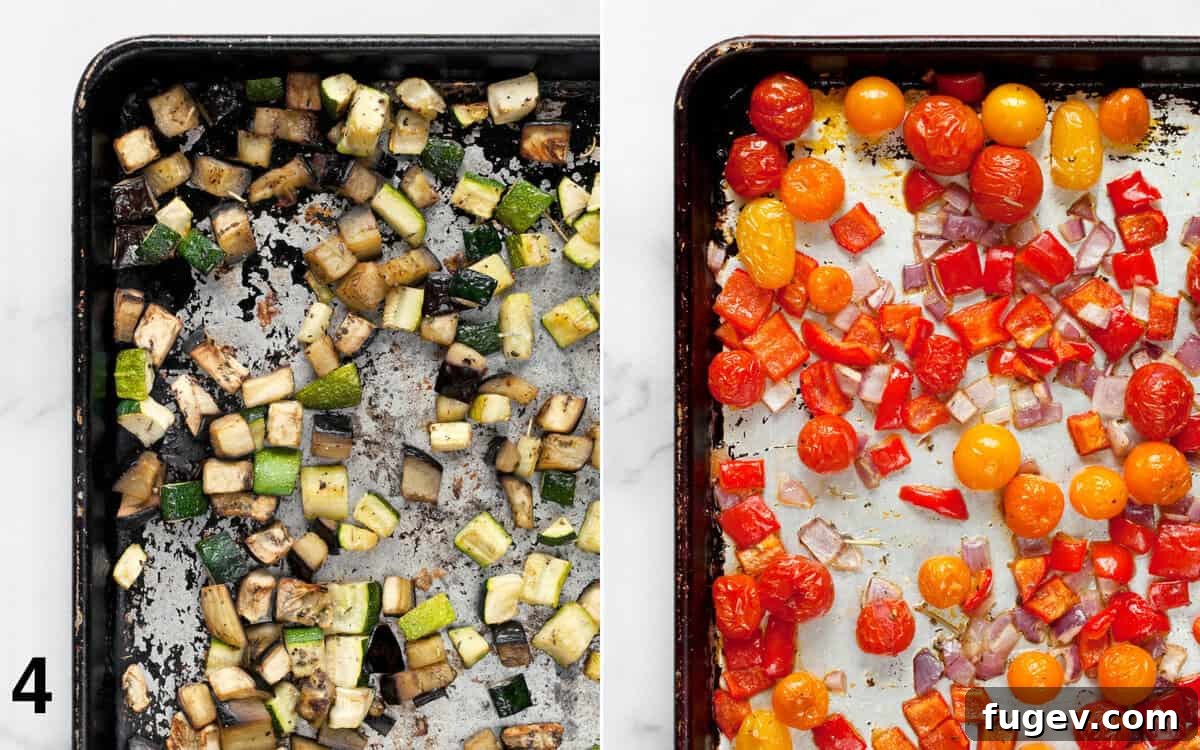
Place both baking sheets into your preheated oven. Roast for approximately 30-35 minutes. Keep an eye on them, especially halfway through roasting, and rotate the pans for even cooking. The vegetables are done when the zucchini, squash, and eggplant are tender and slightly browned, the tomatoes have softened and are a bit wrinkled (some may burst, releasing their juices), and the onions have turned translucent and sweet. The goal is a delightful mix of tender and caramelized textures.
Step 5: Cook the Quinoa Simultaneously
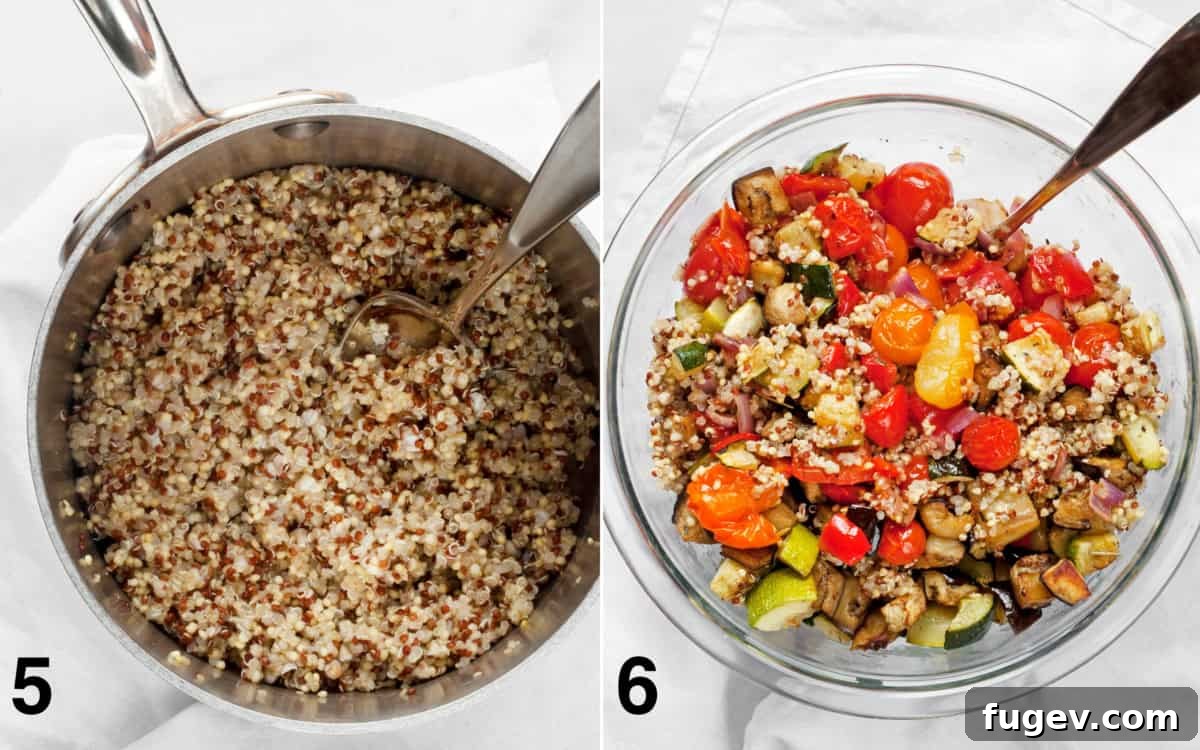
While the vegetables are roasting, turn your attention to the quinoa. In a small pot, combine the rinsed quinoa and water. Bring the mixture to a boil over high heat, then immediately reduce the heat to low, cover the pot, and simmer for 10-12 minutes. The quinoa is cooked when all the water has been absorbed and the grains are tender, with tiny spirals (the germ) visible around each grain. Remove from heat and let it stand, covered, for 5 minutes. This steaming period allows the grains to fluff up perfectly. Finally, fluff the quinoa gently with a fork.
Step 6: Combine and Serve
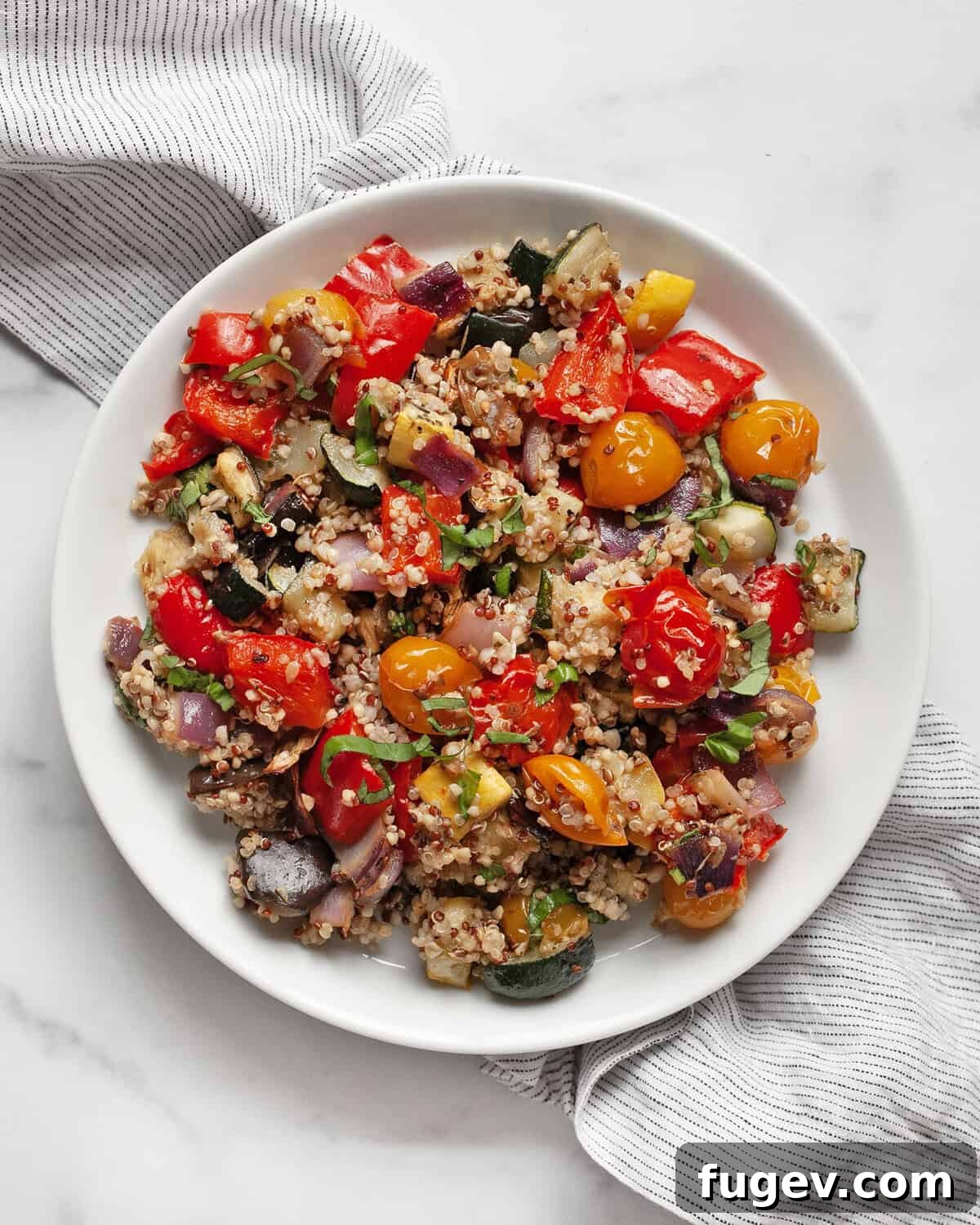
Once both the roasted vegetables and cooked quinoa are ready, transfer them to a large mixing bowl. Add the freshly chopped basil. Gently stir everything together until well combined, allowing the flavors to meld beautifully. The soft, savory vegetables and fragrant basil will beautifully complement the fluffy quinoa.
Serving Suggestions for Your Versatile Dish
One of the many charms of this roasted ratatouille quinoa is its incredible versatility. It can effortlessly transition from a hearty main course to a delightful accompaniment, suiting various meal preferences and occasions.
As a Vegan Main Course:
This recipe shines as a satisfying plant-based entrée. Its rich blend of vegetables and protein-packed quinoa makes it a complete meal on its own. For an even more wholesome experience, consider pairing it with a fresh, vibrant salad. Options include:
- An arugula salad with lemon vinaigrette for a peppery, bright contrast.
- A simple classic house salad with crisp greens and a light dressing.
- A flavorful Italian chopped salad, ensuring you omit any cheese or meat to keep the meal plant-based.
For an extra touch, garnish your ratatouille quinoa with a sprinkle of toasted pine nuts, a drizzle of high-quality balsamic glaze, or a handful of fresh parsley or mint for added freshness and texture.
As a Hearty Side Dish:
This roasted ratatouille quinoa also makes an exceptional side dish, complementing a wide array of proteins. Its robust flavors and satisfying texture pair beautifully with both simple and elaborate main courses:
- Grilled or Pan-Seared Chicken: The smoky notes of the roasted vegetables perfectly enhance chicken.
- Steak: A flavorful counterpoint to a juicy cut of steak.
- Shrimp or Scallops: The lightness of seafood harmonizes wonderfully with the earthiness of the vegetables.
- Baked or Grilled Salmon: A healthy and flavorful pairing that creates a well-rounded meal.
- Legumes or Tofu: For another plant-based protein boost, serve alongside lentils, chickpeas, or grilled tofu.
The beauty of this dish lies in its adaptability, allowing you to incorporate it into almost any meal plan.
Leftovers and Storage: Maximize Freshness
This roasted ratatouille quinoa is just as delicious, if not more so, the next day, making it an excellent candidate for meal prepping. Proper storage ensures you can enjoy its vibrant flavors for days to come.
Refrigeration: Allow any leftovers to cool completely to room temperature before transferring them to an airtight container. Stored properly in the refrigerator, the roasted ratatouille quinoa will remain fresh and flavorful for up to 3 days. When you’re ready to enjoy it again, reheating in the microwave is the quickest and easiest method. A quick stir will redistribute the flavors and warmth.
Enjoying Cold: Don’t limit yourself to just reheating! This dish transforms beautifully into a vibrant quinoa salad when served cold. The flavors deepen overnight, making it a refreshing option for lunch or a light dinner. For an enhanced cold dish, consider stirring in a handful of fresh baby arugula or spinach just before serving. A splash of your favorite balsamic vinaigrette or red wine vinaigrette can also elevate the flavors, adding a zesty brightness.
Freezing Advice: Due to the quinoa, which can become mushy or alter in texture upon thawing and reheating when mixed with vegetables, we generally do not recommend freezing the combined ratatouille quinoa dish.
However, if you wish to prepare ahead and freeze components, you can absolutely freeze just the roasted vegetables. After roasting, let them cool completely, then transfer them to an airtight, freezer-safe container or a heavy-duty freezer bag. The roasted vegetables alone can be frozen for up to 1 month. To use, thaw them overnight in the refrigerator or at room temperature for a few hours before gently reheating. You can then prepare fresh quinoa and combine for a quick meal.
Expert Tips for a Flawless Roasted Ratatouille
Achieving a perfect roasted ratatouille quinoa is simple with a few smart tips. These insights will help you maximize flavor, optimize texture, and make the cooking process even smoother:
- Monitor Your Vegetables Closely: Oven temperatures can vary, especially when you have two sheet pans inside. It’s important to keep a watchful eye on your vegetables as they roast. Rotate the pans halfway through to ensure even cooking and browning. If one batch of vegetables (e.g., those with higher water content like zucchini) finishes before the other, don’t hesitate to remove that pan from the oven early to prevent overcooking.
- Avoid Overcrowding the Pans: This is perhaps the most crucial tip for perfectly roasted vegetables. If you pile too many vegetables onto a single pan, they will steam rather than roast, resulting in soggy, rather than caramelized, textures. Spreading them in a single, even layer allows for proper air circulation and direct contact with the hot pan, promoting browning and flavor development. If necessary, use a third sheet pan.
- Consistent Vegetable Cuts: Aim for uniformly sized pieces for all your vegetables (approximately 1/2-inch dice). This ensures that they cook evenly at the same rate. Inconsistent cuts can lead to some vegetables being undercooked while others are burnt.
- Adjusting Quinoa to Vegetable Ratio: This recipe offers flexibility. If you prefer a heartier, more grain-focused dish, feel free to increase the amount of cooked quinoa. This not only allows you to tailor the recipe to your preference but also helps stretch the meal, creating more servings without needing additional vegetables.
- Grain Substitutions for Dietary Needs: While quinoa makes this recipe naturally gluten-free and adds a wonderful texture, you can easily substitute other grains. Barley or farro can be excellent choices if you’re looking for a chewier texture (note these contain gluten). For other gluten-free alternatives, consider brown rice or even millet. Adjust cooking times according to the grain you choose.
- Customize Vegetable Proportions: Don’t feel bound by the exact quantities of each vegetable. If you’re a big fan of bell peppers, increase their amount! Less keen on eggplant? Reduce it. The key is to maintain roughly the same total volume of vegetables to ensure they fit comfortably on your two sheet pans for optimal roasting. This flexibility allows you to highlight your favorite flavors and use what you have on hand.
- Fresh Herbs are Key: While the dried spices provide a wonderful foundation, the fresh basil added at the end truly elevates the dish. Don’t skip it! If basil isn’t available, fresh parsley or oregano can offer a lovely, albeit different, fresh finish.
Health Benefits of This Plant-Powered Meal
This Roasted Ratatouille Quinoa isn’t just a treat for your taste buds; it’s a powerhouse of nutrition, offering numerous health benefits thanks to its wholesome ingredients:
- Rich in Vitamins and Minerals: The diverse array of vegetables—zucchini, squash, bell peppers, tomatoes, eggplant, and onions—provides a wide spectrum of essential vitamins (like Vitamin A, C, and K) and minerals (such as potassium and magnesium).
- High in Fiber: Both the vegetables and quinoa are excellent sources of dietary fiber, which is crucial for digestive health, helps regulate blood sugar levels, and contributes to a feeling of fullness, aiding in weight management.
- Complete Protein from Quinoa: Quinoa is one of the few plant-based foods considered a complete protein, meaning it contains all nine essential amino acids. This makes it an ideal protein source for vegans and vegetarians.
- Antioxidant Boost: The vibrant colors of the vegetables are a tell-tale sign of their high antioxidant content. These compounds help protect your cells from damage caused by free radicals, supporting overall health and reducing the risk of chronic diseases.
- Heart-Healthy Fats: The use of extra virgin olive oil contributes monounsaturated fats, which are known for their heart-protective benefits, helping to lower bad cholesterol levels and support cardiovascular health.
- Naturally Gluten-Free: For individuals with gluten sensitivities or celiac disease, this dish is a safe and delicious option, utilizing quinoa as its grain base.
- Supports Gut Health: The combination of fiber and diverse plant compounds in this meal promotes a healthy gut microbiome, which is increasingly recognized as central to overall well-being.
Enjoying this dish means nourishing your body with delicious, health-promoting ingredients.
Customize Your Ratatouille: Endless Variations
The beauty of roasted ratatouille quinoa lies in its adaptability. Don’t hesitate to put your own spin on this classic by experimenting with different additions and flavor profiles:
- Add More Protein: For an even more substantial meal, consider adding cooked chickpeas, cannellini beans, or even crumbled firm tofu or tempeh directly to the roasted vegetable and quinoa mix.
- Cheese, Please! (Optional): If you’re not strictly vegan, a sprinkle of crumbled feta, goat cheese, or shaved Parmesan over the warm dish can add a delightful salty and tangy kick. For a vegan cheesy flavor, nutritional yeast can be stirred in.
- Spice It Up: Love heat? Increase the red pepper flakes or add a pinch of cayenne pepper to the spice mix. A dash of smoked paprika can also add a wonderful depth of flavor.
- Herb Alternatives: While basil is traditional, fresh oregano, marjoram, or even a sprinkle of chopped fresh dill can offer unique flavor twists.
- Different Vegetables: Feel free to incorporate other quick-roasting vegetables like cherry tomatoes on the vine, asparagus, mushrooms, or even sweet potatoes (cut smaller to ensure even cooking). Just be mindful of cooking times.
- Citrus Brightness: A squeeze of fresh lemon juice over the finished dish can really make the flavors pop, adding a lovely bright acidity.
- Nutty Crunch: Toasted pine nuts, chopped walnuts, or slivered almonds can add a pleasant textural contrast and a boost of healthy fats.
- Mediterranean Flair: Stir in some Kalamata olives or capers at the end for an extra briny, savory kick.
Let your creativity guide you and make this roasted ratatouille quinoa truly your own!
Frequently Asked Questions
Here are some common questions about making and enjoying this roasted ratatouille quinoa:
- Can I prepare the vegetables ahead of time? Yes, you can chop all the vegetables a day in advance and store them in separate airtight containers in the refrigerator. Wait to toss them with olive oil and spices until just before roasting to prevent them from becoming soggy.
- Do I have to rinse quinoa? It’s highly recommended to rinse quinoa thoroughly under cold running water before cooking. This removes saponins, a natural coating that can give quinoa a bitter, soapy taste.
- What if I don’t have two sheet pans? If you only have one large sheet pan, you can roast the vegetables in batches. However, this will increase your overall cooking time. Ensure you don’t overcrowd the pan for best results.
- Can I use frozen vegetables? While fresh, seasonal vegetables are best for flavor and texture, you can use certain frozen vegetables like bell peppers or green beans if fresh isn’t available. Thaw them slightly and pat them dry before roasting to minimize excess moisture.
- Is this recipe spicy? The pinch of red pepper flakes adds a very subtle warmth. If you prefer no heat, omit them. If you like more spice, feel free to add more!
- Can I make this oil-free? You can try to roast the vegetables without oil by using a non-stick baking mat or parchment paper, and possibly a splash of vegetable broth to help coat the spices. However, olive oil significantly contributes to the browning and flavor of the roasted vegetables.
More Delicious Quinoa Recipes
If you’ve enjoyed the wholesome goodness of quinoa in this dish, explore these other fantastic quinoa-based recipes:
- Kale Quinoa Salad
- Quinoa Chickpea Salad with Roasted Tomatoes
- Quinoa Blueberry Corn Salad
- Herby Lemon Quinoa
More Tempting Roasted Vegetable Recipes
Love the simplicity and rich flavors of roasted vegetables? Here are more recipes that celebrate the magic of oven-roasted goodness:
- Roasted Vegetable Lemon Tahini Couscous
- Sheet Pan Baked Feta with Vegetables
- Roasted Mediterranean Vegetables and Halloumi
- Roasted Vegetable Chickpea Pasta Salad
- Egg White Frittata with Roasted Vegetables
- Roasted Vegetable Salad
- Roasted Eggplant Casserole
- Eggplant, Zucchini and Tomato Orzo
Discover even more easy roasted vegetable ideas in my comprehensive seasonal roundup, featuring everything from hearty vegetarian mains to quick side dishes and invaluable meal prep tips.
Roasted Ratatouille Quinoa
Ingredients
- 1/4 teaspoon dried rosemary
- 1/4 teaspoon dried thyme
- 1/2 teaspoon dried oregano
- 1/4 teaspoon garlic powder
- Pinch of red pepper flakes
- 1 teaspoon kosher salt
- 1/2 teaspoon black pepper
- 2 tablespoons olive oil
- 4 medium zucchini or yellow squash, cut into 1/2-inch dice
- 1 medium eggplant, cut into 1/2-inch dice
- 1 pint cherry tomatoes or grape tomatoes
- 2 red bell peppers, cut into 1/2-inch dice
- 1/2 onion, cut into 1/2-inch dice
- 1/2 cup quinoa, rinsed
- 1 cup water
- 2 tablespoons chopped basil
Instructions
-
Preheat the oven to 400 degrees F (200 degrees C).
-
In a small bowl, combine the dried rosemary, thyme, oregano, garlic powder, red pepper flakes, salt, and black pepper. Stir well to mix the spices evenly.
-
On one large sheet pan, toss the diced zucchini, yellow squash, and eggplant with 1 tablespoon of olive oil and half of the dried seasoning mix. Spread the vegetables into a single, even layer to ensure proper roasting.
-
On a second large sheet pan, toss the cherry/grape tomatoes, diced bell peppers, and diced onions with the remaining 1 tablespoon of olive oil and the rest of the dried seasoning mix. Spread these vegetables into a single, even layer as well.
-
Roast the prepared vegetables in the preheated oven for 30-35 minutes. Halfway through the roasting time, rotate the pans for even cooking. The vegetables are ready when the zucchini, squash, and eggplant are lightly browned and tender, the tomatoes and peppers are slightly wrinkled, and the onions have become translucent and sweet. If one pan finishes cooking before the other, remove it to prevent overcooking.
-
While the vegetables are roasting, prepare the quinoa. In a small saucepan, combine the rinsed quinoa and water. Bring the mixture to a boil over high heat, then reduce the heat to low, cover, and simmer for 10-12 minutes, or until all the water has been absorbed and the grains are tender. Let the quinoa stand, covered, for 5 minutes off the heat, then fluff gently with a fork.
-
In a large mixing bowl, combine the freshly roasted vegetables, the fluffy cooked quinoa, and the chopped fresh basil. Gently stir everything together until all ingredients are well distributed and the flavors are harmonized. Serve warm and enjoy!
Notes
Allow any leftovers to cool completely to room temperature before storing them in an airtight container in the refrigerator for up to 3 days. Reheat gently in the microwave or enjoy cold.
For a refreshing cold meal, enjoy leftovers as a quinoa salad! Stir in some fresh baby arugula or spinach and a splash of your favorite vinaigrette, such as balsamic or red wine vinaigrette.
If you wish to freeze components of this meal, it’s best to freeze only the roasted vegetables before combining them with quinoa. Store the cooled roasted vegetables in an airtight, freezer-safe container for up to 1 month. Thaw them in the refrigerator or at room temperature before reheating and then combine with freshly cooked quinoa.
Nutrition
Carbohydrates: 37g |
Protein: 8g |
Fat: 9g |
Saturated Fat: 1g |
Polyunsaturated Fat: 2g |
Monounsaturated Fat: 6g |
Sodium: 620mg |
Potassium: 1307mg |
Fiber: 9g |
Sugar: 15g |
Vitamin A: 2924IU |
Vitamin C: 142mg |
Calcium: 82mg |
Iron: 3mg
Nutrition information is automatically calculated, so should only be used as an approximation.
Additional Info