
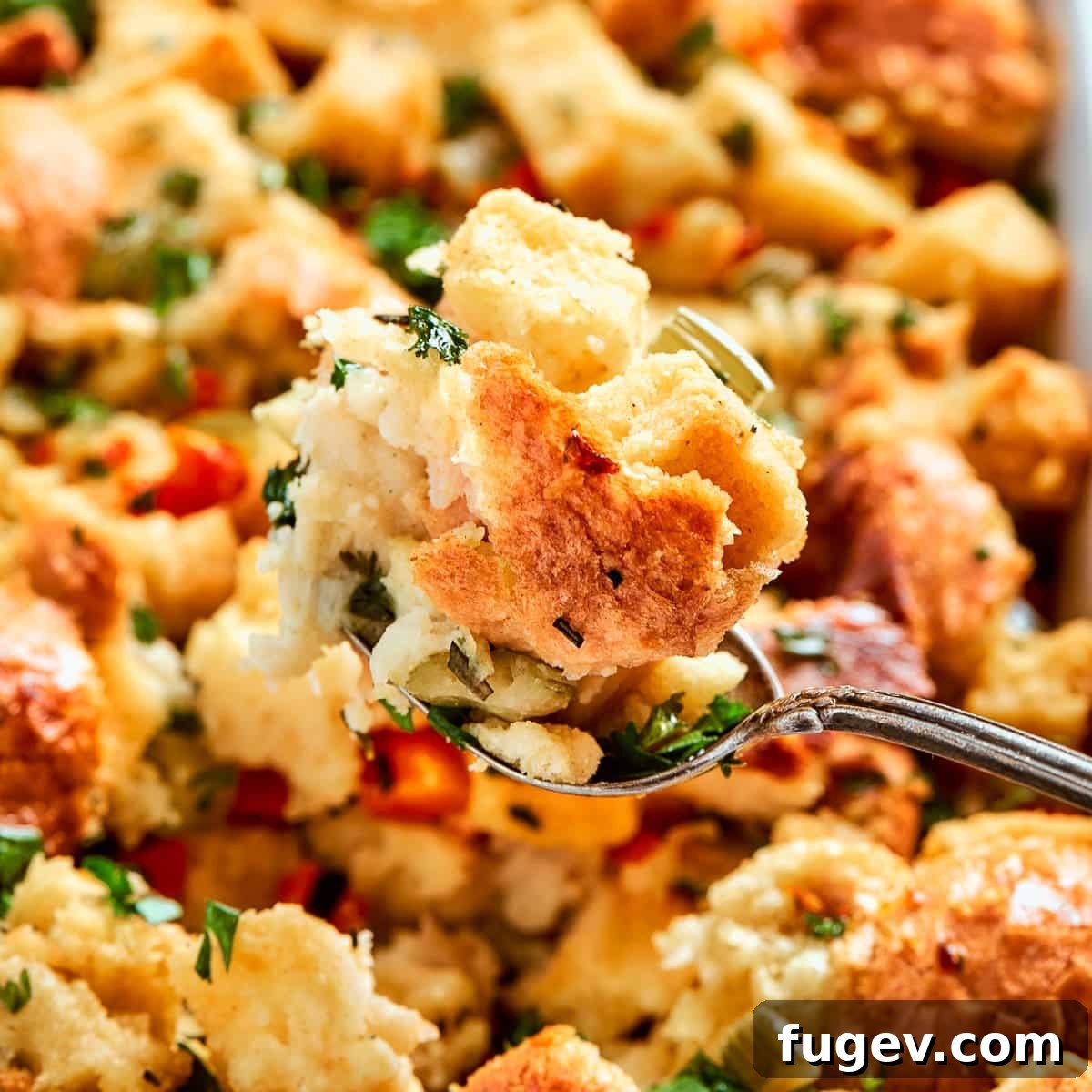
Southern Cornbread Dressing is more than just a side dish; it’s a golden, aromatic centerpiece of any holiday table, brimming with buttery, homemade cornbread and a symphony of fresh herbs. This classic Southern comfort food promises a moist, savory experience with delightful crisp edges in every single bite. Perfectly suited for making ahead, it’s the quintessential addition to your Thanksgiving or Christmas feast, guaranteeing smiles and satisfaction around the table.
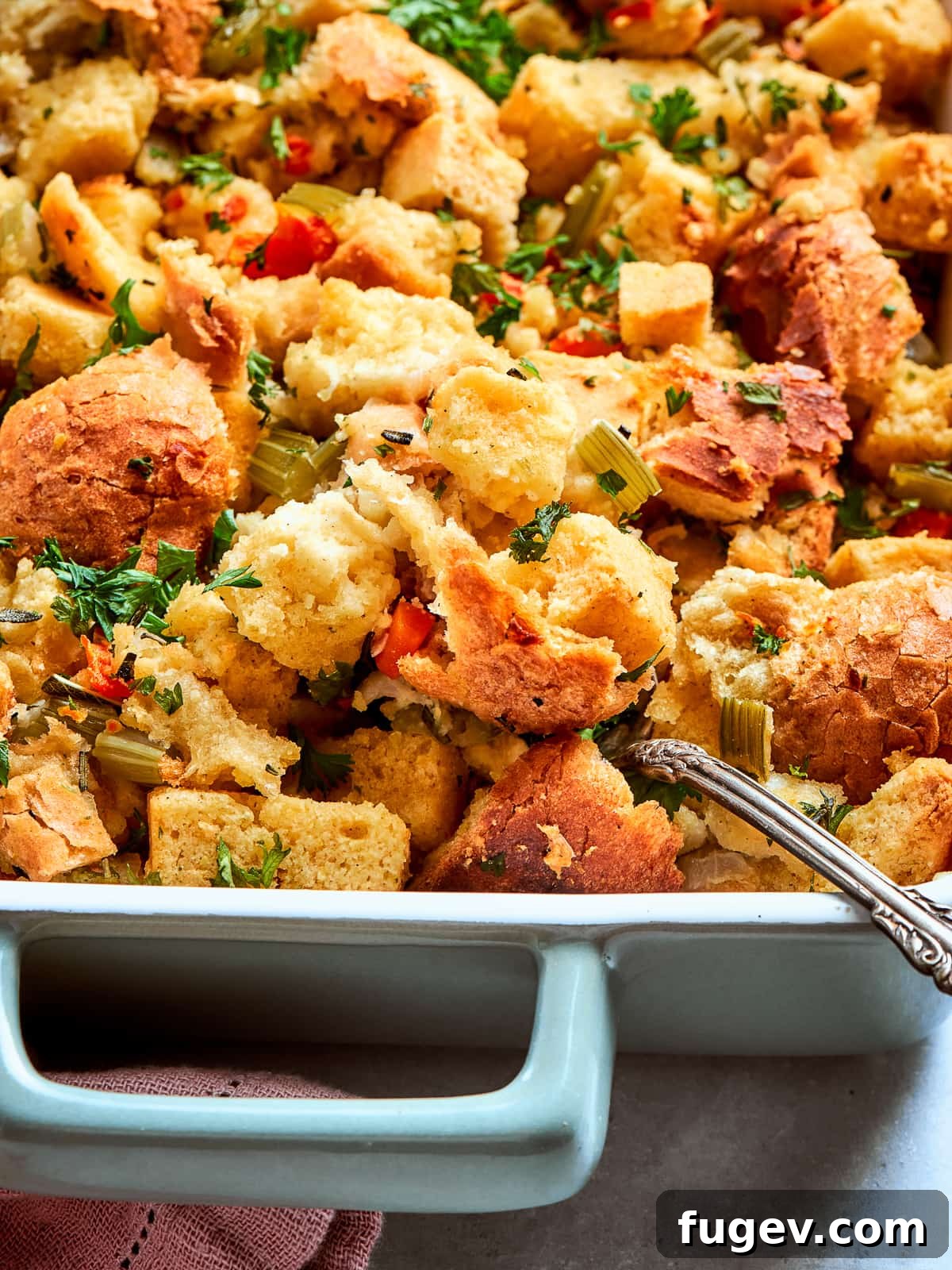
A Quick Look at The Recipe
- Difficulty: Easy, suitable for home cooks of all experience levels.
- Prep Time: 20 minutes (plus overnight resting for optimal texture)
- Cook Time: 40 minutes
- Total Time: Approximately 1 hour (active time)
- Servings: 10 to 12 generous portions
- Calories: Approximately 441 kcal per serving (based on nutritional analysis)
- Technique: Begin with freshly baked cornbread, dry the cubes thoroughly, then combine with perfectly sautéed vegetables and savory broth for a final bake that results in perfection.
- Flavor Profile: Richly buttery and profoundly savory, featuring wonderfully crisp edges and a luxuriously soft, custardy interior.
Why This is the Best Southern Cornbread Dressing
There are countless recipes for cornbread dressing, but this particular recipe stands out for several compelling reasons. It’s designed to deliver an unmatched depth of flavor and an ideal texture that will impress everyone at your table.
- Authentic Cornbread Foundation: This recipe insists on building your dressing from scratch with real, homemade cornbread, steering clear of pre-made mixes. Not all cornbread is created equal for dressing; ours is specifically formulated to hold its shape beautifully, absorbing liquids without turning mushy. It provides a robust, flavorful base that is essential for the best dressing.
- Flavorful Aromatic Infusion: The secret to truly impactful flavor lies in how the aromatics are prepared. Woody herbs like rosemary and sage, along with finely diced celery and onions, reach their full flavor potential when gently sautéed in butter. This initial cooking step draws out their essential oils and deepens their savory notes, infusing the entire dressing with a rich, complex taste.
- Perfectly Balanced Texture: Bid farewell to dry, crumbly stuffing. This recipe achieves a moist, custardy interior with irresistibly crisp edges. The combination of homemade cornbread, robust chicken stock, and optionally, cubed rustic bread ensures that every bite is tender and flavorful, preventing any dryness often associated with lesser dressings. The proper drying of the bread cubes is paramount for this sublime texture, allowing them to soak up all the delicious broth without becoming soggy.
Table of Contents
- A Quick Look at The Recipe
- Why This is the Best Southern Cornbread Dressing
- The Heart of Southern Tradition
- Ingredients & Substitutions
- Variations on this Cornbread Dressing Recipe
- Professional Tips for Perfect Dressing
- How to Make Southern Cornbread Dressing
- Chef Lindsey’s Recipe Tip
- Stuffing vs. Dressing: What’s the Difference?
- Recipe FAQs
- Recommended Thanksgiving Sides Recipes
- Southern Cornbread Dressing Full Recipe
- Before You Go
The Heart of Southern Tradition: Cornbread Dressing
This recipe is the culmination of years spent meticulously poring over cooking magazines and cookbooks, driven by a personal quest to unearth the quintessential stuffing recipe. Each iteration was tested, tweaked, and retested until absolute perfection was achieved. What you’re about to create is a moist, richly buttery, and deeply herby Southern cornbread dressing that truly sings with flavor.
The undisputed secret to its extraordinary quality lies in using genuine, scratch-baked Southern cornbread. It’s perfectly seasoned, strikes the ideal balance between a crisp, golden top, and a tender, moist center. This homemade base is what truly elevates the dressing from merely good to absolutely unforgettable. It’s the kind of dish that evokes warmth, family gatherings, and timeless culinary traditions.
Imagine serving this incredible dressing alongside a beautifully roasted herb turkey, bright and tangy cranberry chutney, and a decadent sweet potato casserole with pecans – a classic Thanksgiving feast that will be talked about for years to come. For those seeking even more cozy holiday companions, consider pairing it with my fluffy rosemary sourdough rolls, a sweet contrast with sweet cornbread, or the creamy indulgence of maple mashed sweet potatoes!
Key Ingredients & Smart Substitutions
Crafting the perfect Southern Cornbread Dressing begins with understanding the role of each ingredient. Here’s a detailed look at what you’ll need and how to make thoughtful substitutions:
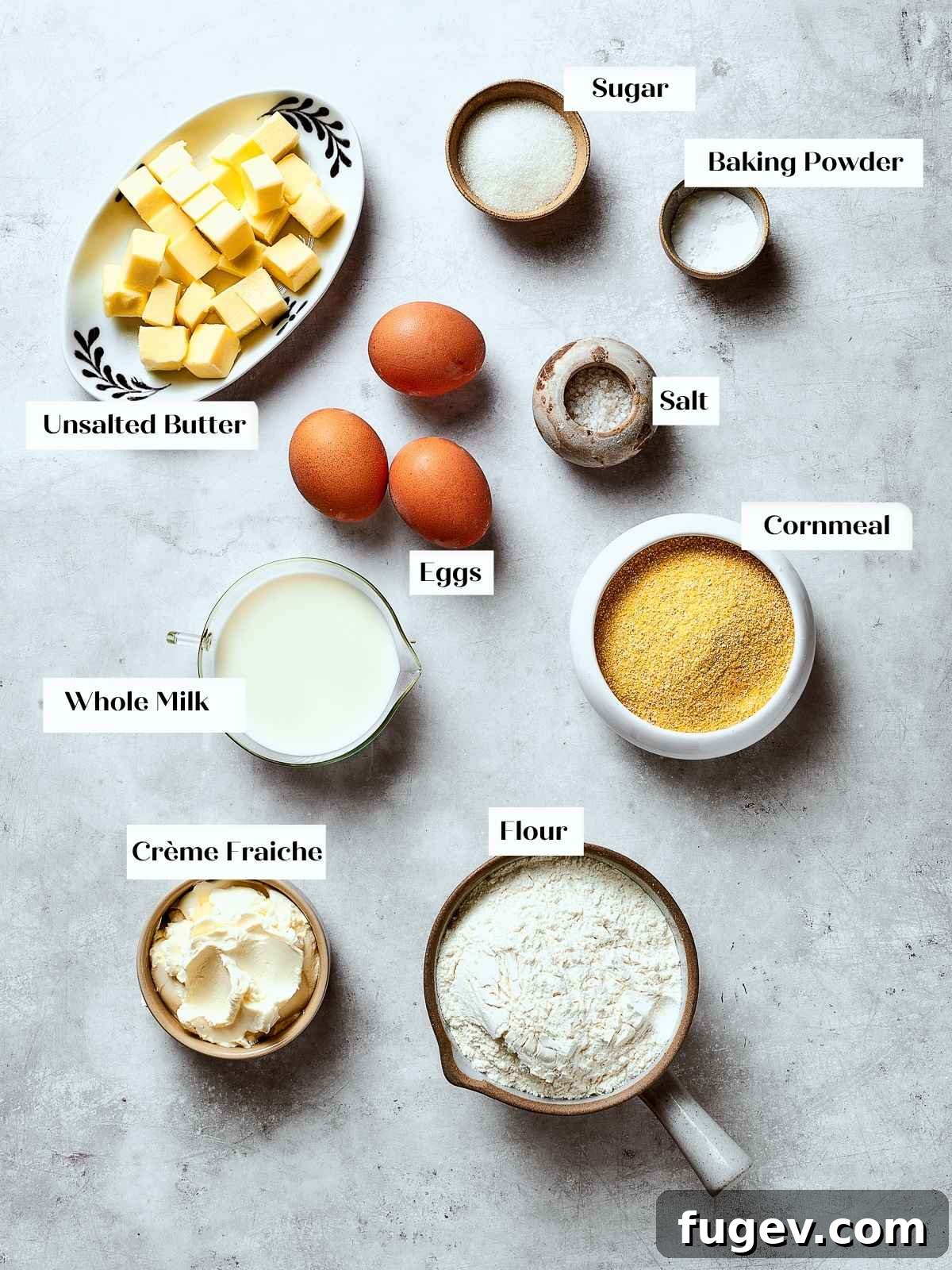
- Cornmeal: For the most authentic Southern flavor and texture, we recommend using finely ground, mass-produced yellow cornmeal, not a self-rising mix. This is typically what is most widely available and economical. However, if you prefer, artisanal stone-ground cornmeal (such as Bob’s Red Mill) offers a richer, more complex flavor; if using this, you may omit the granulated sugar as stone-ground varieties often have a natural sweetness. Both medium and finely ground cornmeal will yield excellent results. White cornmeal can also be used for a slightly different, lighter aesthetic.
- Granulated Sugar: A small amount of sugar in the cornbread helps to balance the flavors and achieve a beautiful golden crust. However, if you prefer a less sweet, more savory cornbread, or are using a naturally sweeter stone-ground cornmeal, you can certainly omit the sugar entirely.
- Crème Fraîche or Sour Cream: Crème fraîche is our top choice for cornbread due to its higher fat content and lower moisture compared to sour cream, resulting in a richer, tender crumb and less tanginess. If crème fraîche is unavailable, full-fat sour cream or even full-fat plain Greek yogurt are excellent and reliable substitutes that will still contribute to a wonderfully moist cornbread.
- Milk: Whole milk is recommended for its richness, contributing to a truly moist and tender cornbread. However, any cow’s milk (skim, 2%) or even unsweetened almond milk can be used as alternatives. Be aware that using lower-fat milk options may result in a slightly less moist cornbread.
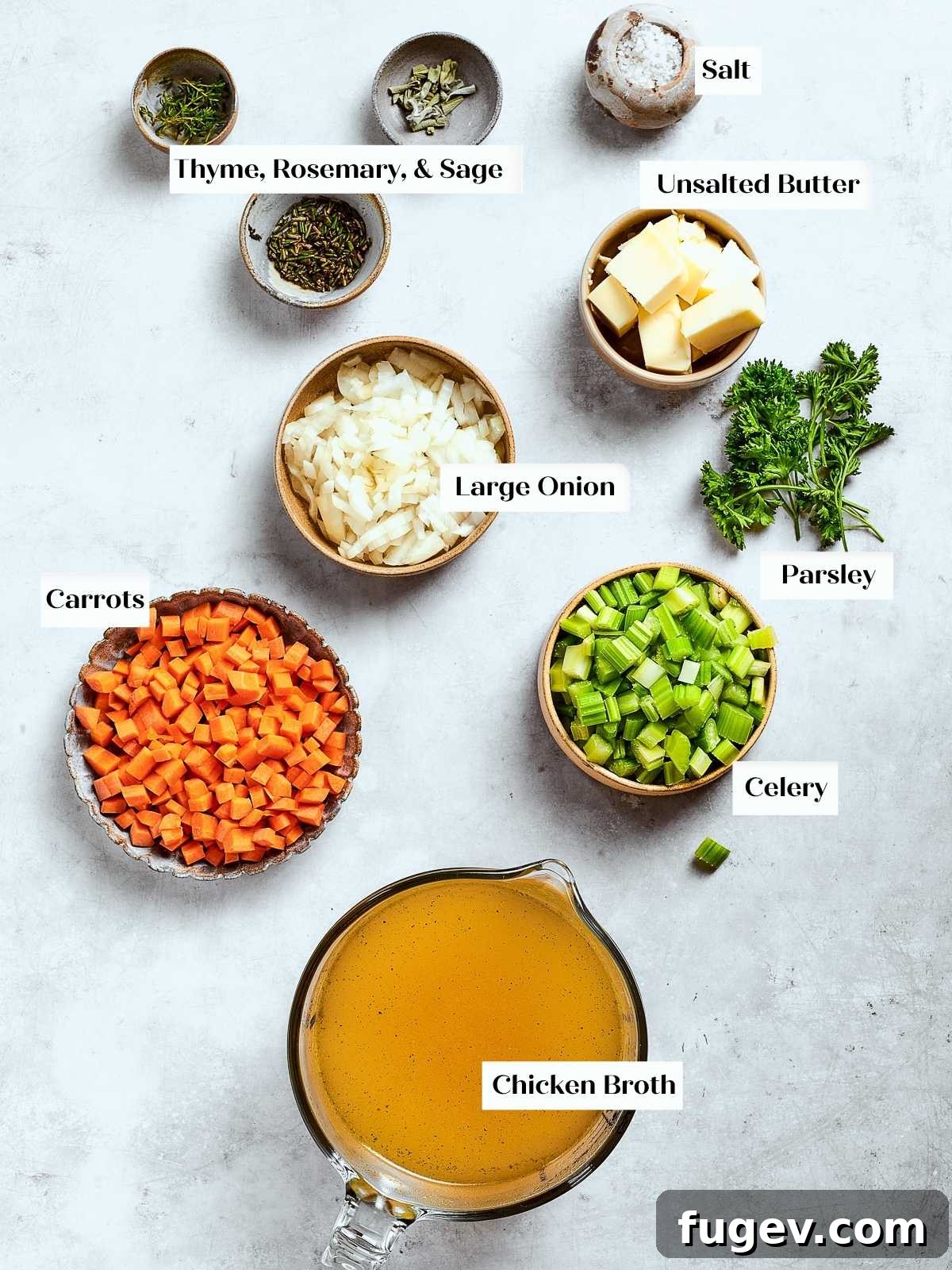
- Bread (for Stuffing): The quality of your bread is crucial for the dressing’s final texture. Day-old or stale bread is highly recommended as its drier nature allows it to absorb more of the flavorful liquid, resulting in a superior, custard-like texture. This is a fantastic opportunity to use leftover sourdough bread, French bread, or other rustic loaves. If you only have fresh bread, you can easily dry the cubes out in a 300°F (150°C) oven for 10-15 minutes until lightly toasted.
- Chicken Stock: This is the backbone of your dressing’s savory liquid. You can use chicken stock, chicken broth, or even turkey stock. For the absolute best flavor, consider using homemade chicken stock. When purchasing from the grocery store, always opt for a low-sodium variety to better control the overall seasoning of your dish.
- Herbs and Aromatics: Fresh herbs like rosemary, sage, and thyme are pivotal for the quintessential holiday flavor. While fresh is always preferred, high-quality dried herbs can be used in a pinch; remember that dried herbs are more potent, so use about half the amount of fresh. Celery, carrots, and onions are classic aromatics that build the savory foundation.
For a comprehensive list of ingredients and precise quantities, please refer to the detailed recipe card below.
Delicious Variations for Your Cornbread Dressing
While this recipe delivers a classic, perfect Southern Cornbread Dressing, there are many ways to customize it to your liking or to utilize ingredients you have on hand. Don’t be afraid to get creative!
- Crispy Skillet Cornbread: For an extra layer of flavor and a gloriously crispy crust on your cornbread base, preheat a cast-iron skillet with a tablespoon (or even two!) of butter or bacon grease before adding the batter. This technique will not only enhance the rise but also create those coveted buttery, crispy edges that add incredible texture to your dressing.
- Choosing Your Cornbread Base: While homemade cornbread is highly recommended for its superior flavor and texture, you can use store-bought cornbread to save prep time. The key is to select a variety that isn’t overly sweet, as it can throw off the savory balance of the dressing. Our Southern cornbread recipe is ideal for all stuffing applications, including this and our flavorful mushroom cornbread stuffing. Remember, allowing your crumbled cornbread to dry out completely before baking is crucial; stale cornbread acts like a sponge, soaking up the broth perfectly without dissolving.
- Experiment with Cornmeal Grind: If you enjoy a more rustic texture, feel free to use coarse cornmeal. When substituting coarse for fine, you might need to add about 2 tablespoons of extra cornmeal to achieve the right consistency, which should be similar to a thick pancake batter. Keep in mind that cornmeal brands vary, so don’t stress over exact measurements and adjust as needed.
- Additions for Extra Flavor:
- Sausage: Brown 1 pound of breakfast sausage or Italian sausage (mild or hot) with your aromatics for a heartier dressing.
- Mushrooms: Sauté sliced mushrooms (cremini or shiitake work well) with the vegetables for an earthy depth.
- Oysters: For a traditional coastal Southern touch, gently fold in a cup of chopped cooked oysters (and some of their liquor) with the broth.
- Nuts: Toasted pecans or walnuts can add a delightful crunch and nutty flavor.
- Dried Fruits: For a touch of sweetness and chewiness, consider adding dried cranberries or apricots.
- Different Herbs: Feel free to adjust the herb profile based on your preference. Marjoram or fresh thyme can complement sage and rosemary beautifully.
- Make it Vegetarian: Easily swap chicken broth for vegetable broth to make this a delicious vegetarian side dish.
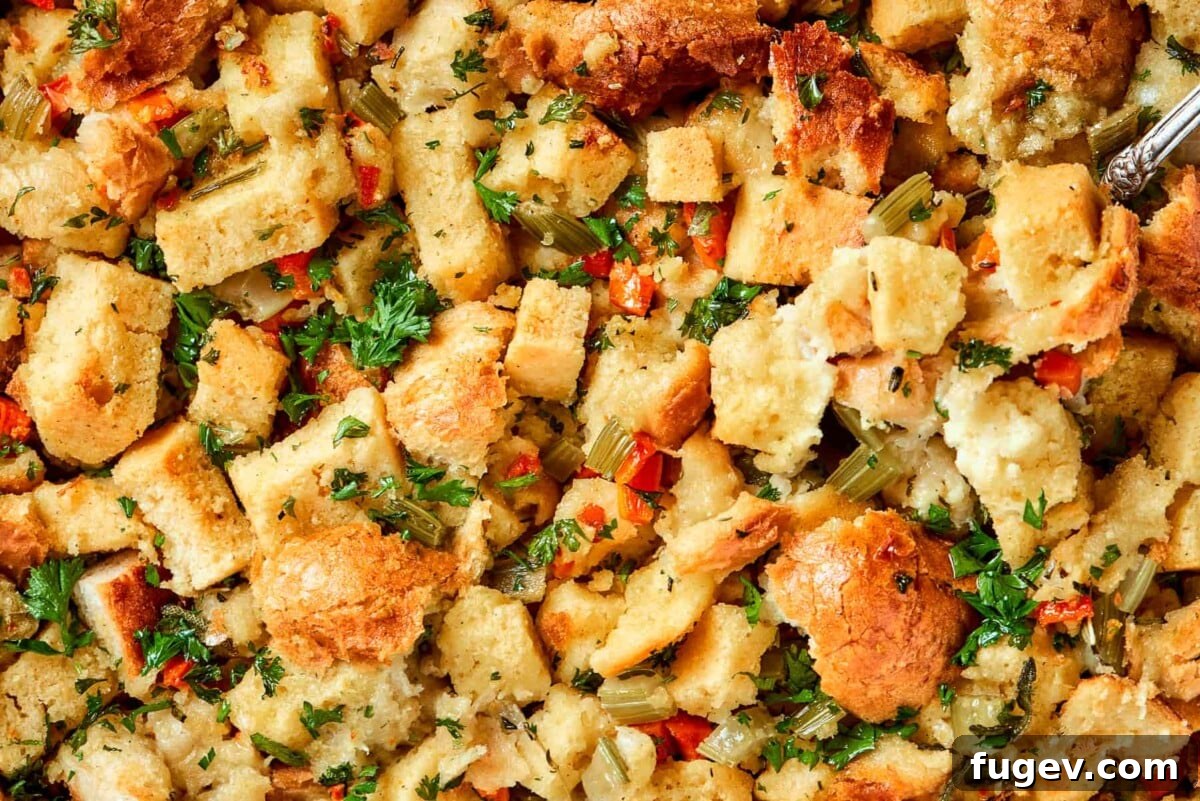
Professional Tips for Perfect Dressing Every Time
Achieving a truly outstanding Southern Cornbread Dressing involves a few key techniques that can elevate your dish from good to unforgettable. These professional insights will help you master the process:
- Gradual Broth Layering: Resist the urge to pour all the broth in at once. Instead, ladle it in gradually, tossing the bread mixture gently between each addition. This meticulous approach ensures that every piece of bread is evenly moistened, preventing unintentionally soggy patches and guaranteeing a consistent, delightful texture throughout the dressing. It also allows you to control the moisture level more precisely, adapting to the absorbency of your specific bread.
- The Magic of Stale Bread: The importance of using stale or day-old bread cannot be overstated. Drier bread acts like a superior sponge, eagerly absorbing the flavorful egg and broth mixture. This absorption is key to achieving that wonderfully moist, custard-like texture that defines a great dressing. If you find yourself with only fresh bread, don’t fret! Simply cut it into cubes and spread them on a baking sheet, then bake in a 300-350°F (150-175°C) oven for 10-15 minutes, or until lightly golden and dry to the touch. This quick-drying method mimics the effect of day-old bread.
- Vigilant Baking to Avoid Overdrying: The baking time for your cornbread, and subsequently for the dressing, can vary significantly based on the type and size of the baking dish you choose. A metal sheet pan or a cast-iron skillet will conduct heat more efficiently and bake faster than a ceramic or glass dish. Even though we are preparing a “dressing” (which is essentially baked outside the bird), you still want to avoid overbaking. Overbaking will lead to a dry, crumbly texture. Keep a close eye on your dressing; it should be golden brown and set but still yield slightly when pressed in the center. A light golden top with just a few moist crumbs attached to a cake tester is ideal, rather than a completely dry crumb.
- Don’t Overmix the Cornbread: When combining your wet and dry ingredients for the cornbread, mix just until combined. Overmixing develops the gluten in the flour, leading to a tough cornbread, which is undesirable for a tender dressing.
- Preheating is Your Friend: Always preheat your oven and, if making crispy cornbread, preheat your cast iron skillet. A hot environment ensures an immediate rise and a beautiful crust.
- Taste as You Go: This is perhaps the most crucial professional tip! Constantly taste your broth mixture and even a small sample of the mixed dressing before the final bake. Adjust seasoning (salt, pepper, herbs) as needed. Bread and broths vary wildly in sodium content, so tasting is the only way to ensure perfect seasoning.
How to Make The Ultimate Southern Cornbread Dressing
Creating this flavorful dressing is a two-part process, ensuring both the cornbread base and the dressing itself are perfect. Detailed measurements and specific instructions can be found in the recipe card below.
Part 1: Prepare the Homemade Cornbread (Ideally the Day Before)
Preparing the cornbread a day in advance allows it to dry out naturally, which is crucial for the ideal dressing texture. This step also allows you to tackle part of the recipe ahead of time, reducing holiday stress.
Step 1: Preheat and Prep the Skillet. The day before you plan to make the dressing, begin by baking your cornbread. Melt 2 tablespoons of unsalted butter in an 8-inch cast iron skillet over medium heat, or simply butter an 8-inch baking dish. Preheat your oven to 350°F (175°C). If you are aiming for a crispy bottom crust on your cornbread, place the buttered cast iron pan into the preheating oven to get it piping hot.
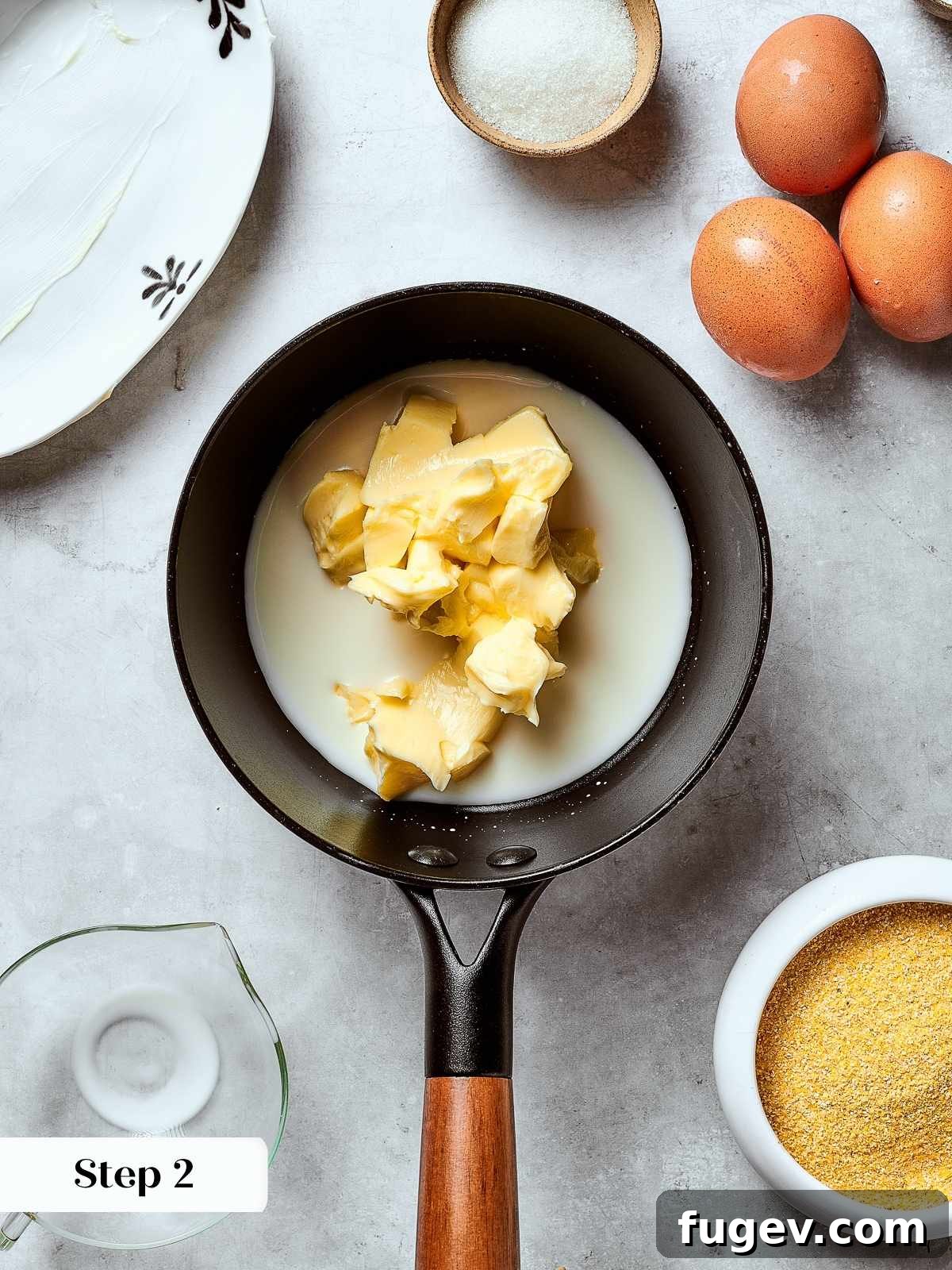
Step 2: Melt and Mix the Batter Base. In a small saucepan, gently melt the milk with the cubed butter over low to medium heat, or you can do this in the microwave. It’s easiest to control the temperature on the stovetop. Ensure the mixture is just melted and warm, but not hot. It is crucial to let it cool to warm to the touch before combining with the eggs; if the milk mixture is too hot, it can scramble the eggs upon contact.
Chef’s Note: Let it cool until just warm to the touch; if the mixture is too hot, it can scramble the eggs when combined.
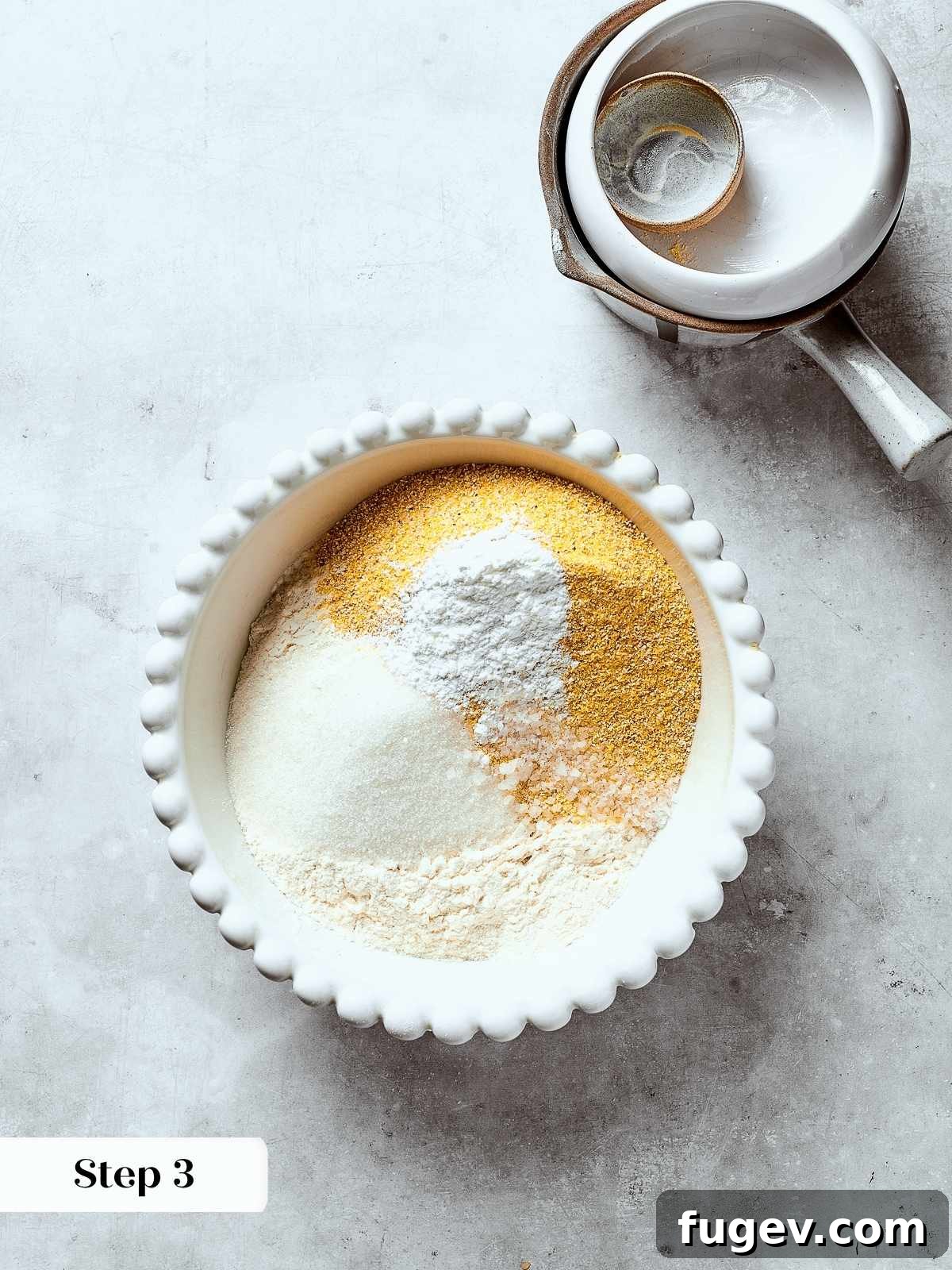
Step 3: Combine Dry Ingredients. In a medium-sized bowl, thoroughly whisk together all the dry ingredients: all-purpose flour, granulated sugar (if using), cornmeal, baking powder, and kosher salt. Set this bowl aside for later use.
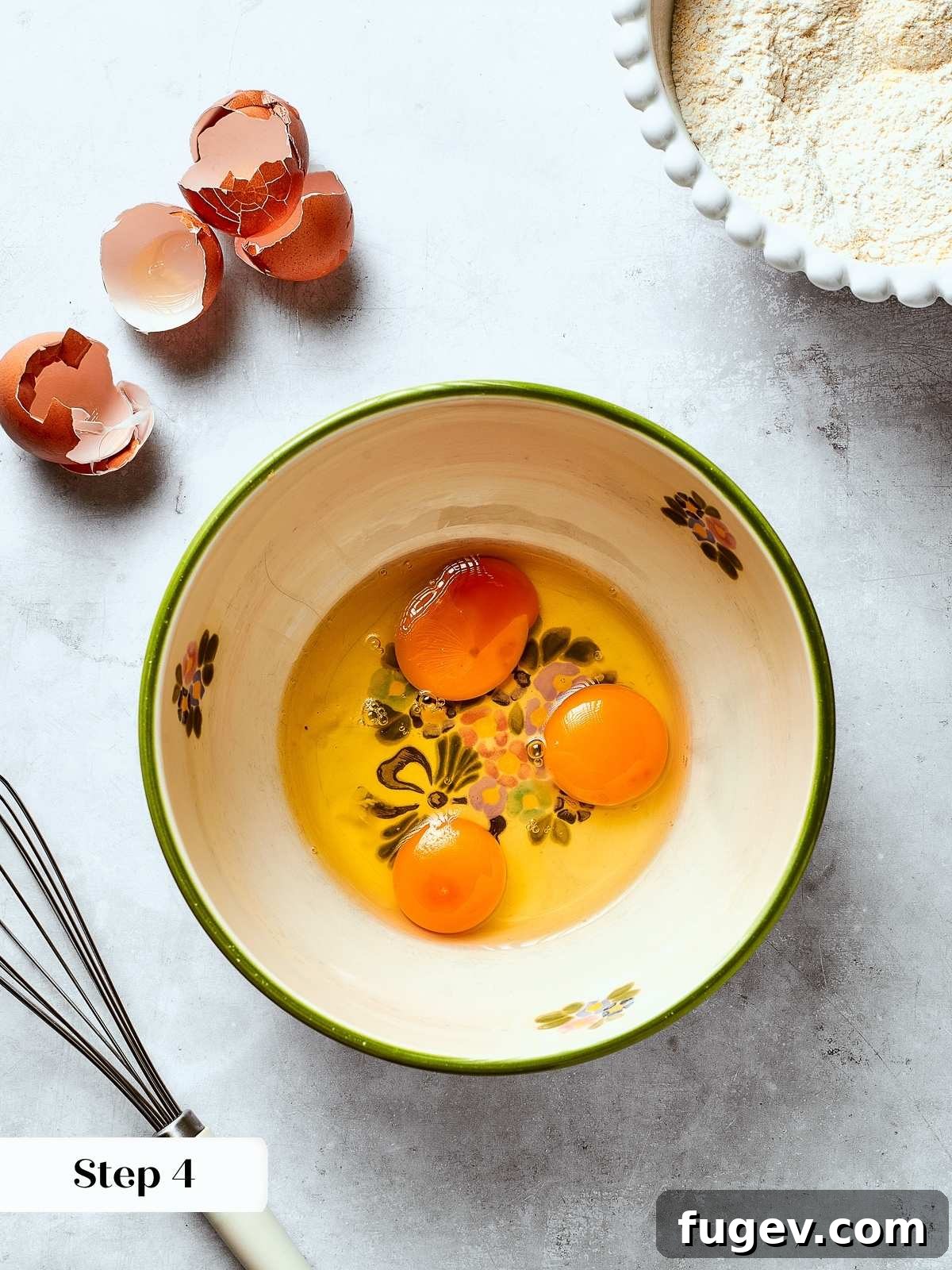
Step 4: Prepare Wet Ingredients. In a separate large bowl, whisk the large eggs until they are uniform in color and no streaks of egg white remain. Then, whisk in the crème fraîche or sour cream until fully incorporated and smooth.
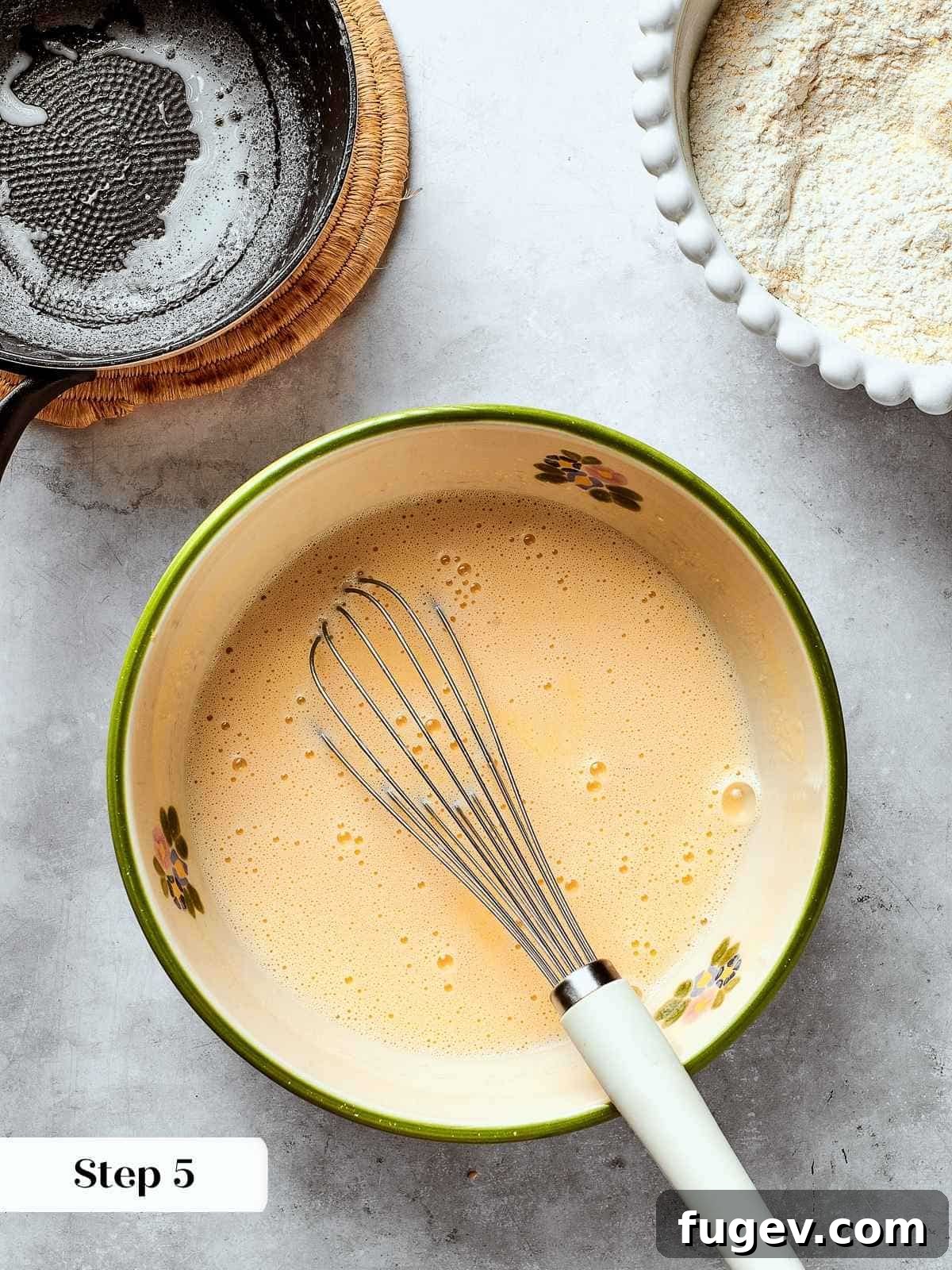
Step 5: Slowly Incorporate Milk Mixture. Gradually pour the warm milk and butter mixture into the egg mixture. Do this very slowly and continuously whisk the egg mixture as you pour. This tempering process is important because the milk is warm, and you want to prevent cooking the eggs prematurely, ensuring a smooth batter.
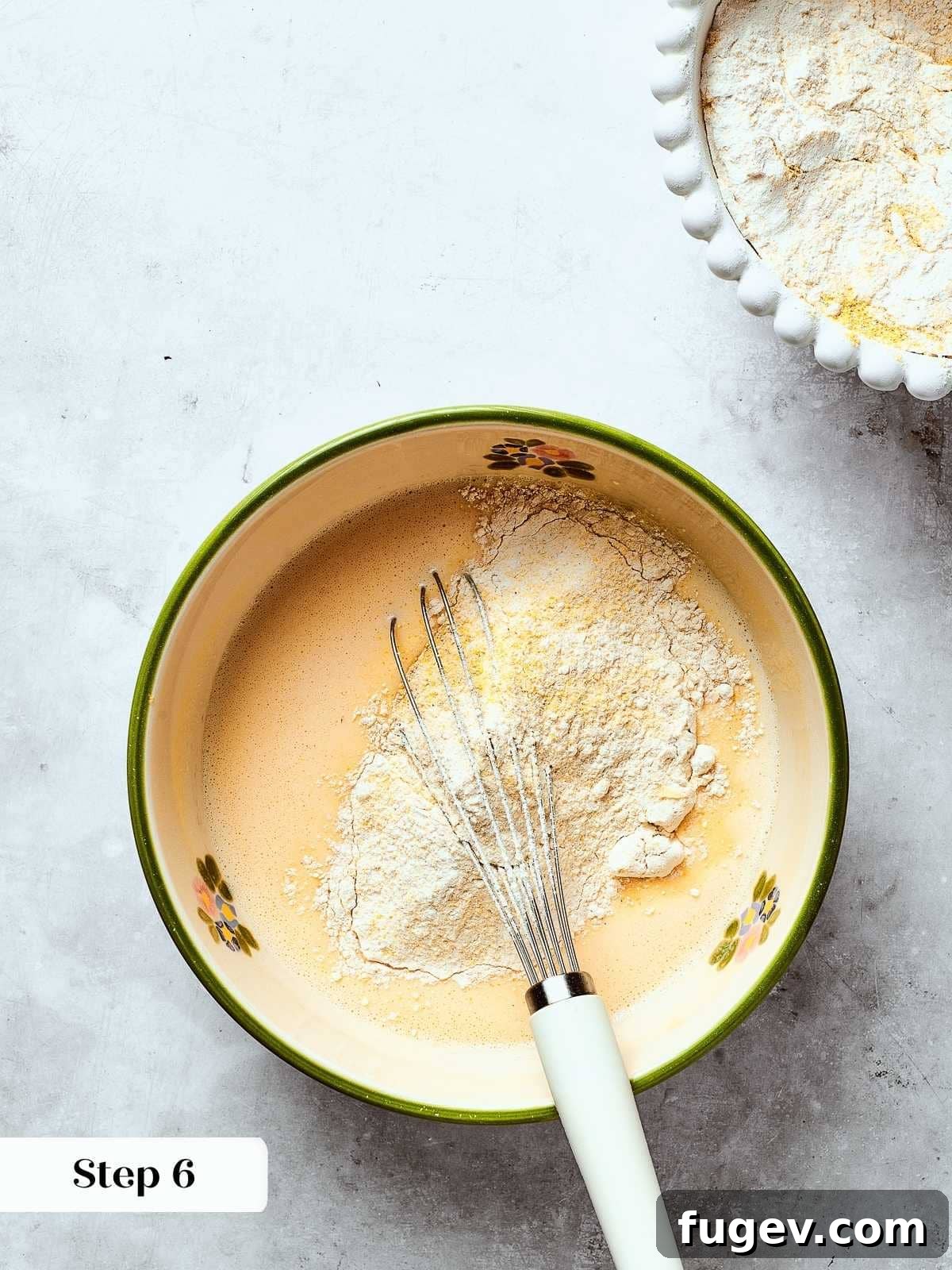
Step 6: Gradually Add Dry to Wet. Slowly and gradually whisk the dry ingredients into the wet mixture. Adding them incrementally helps prevent lumps and ensures a smooth, uniform batter. Continue mixing just until the last addition is almost incorporated; avoid overmixing to keep the cornbread tender.
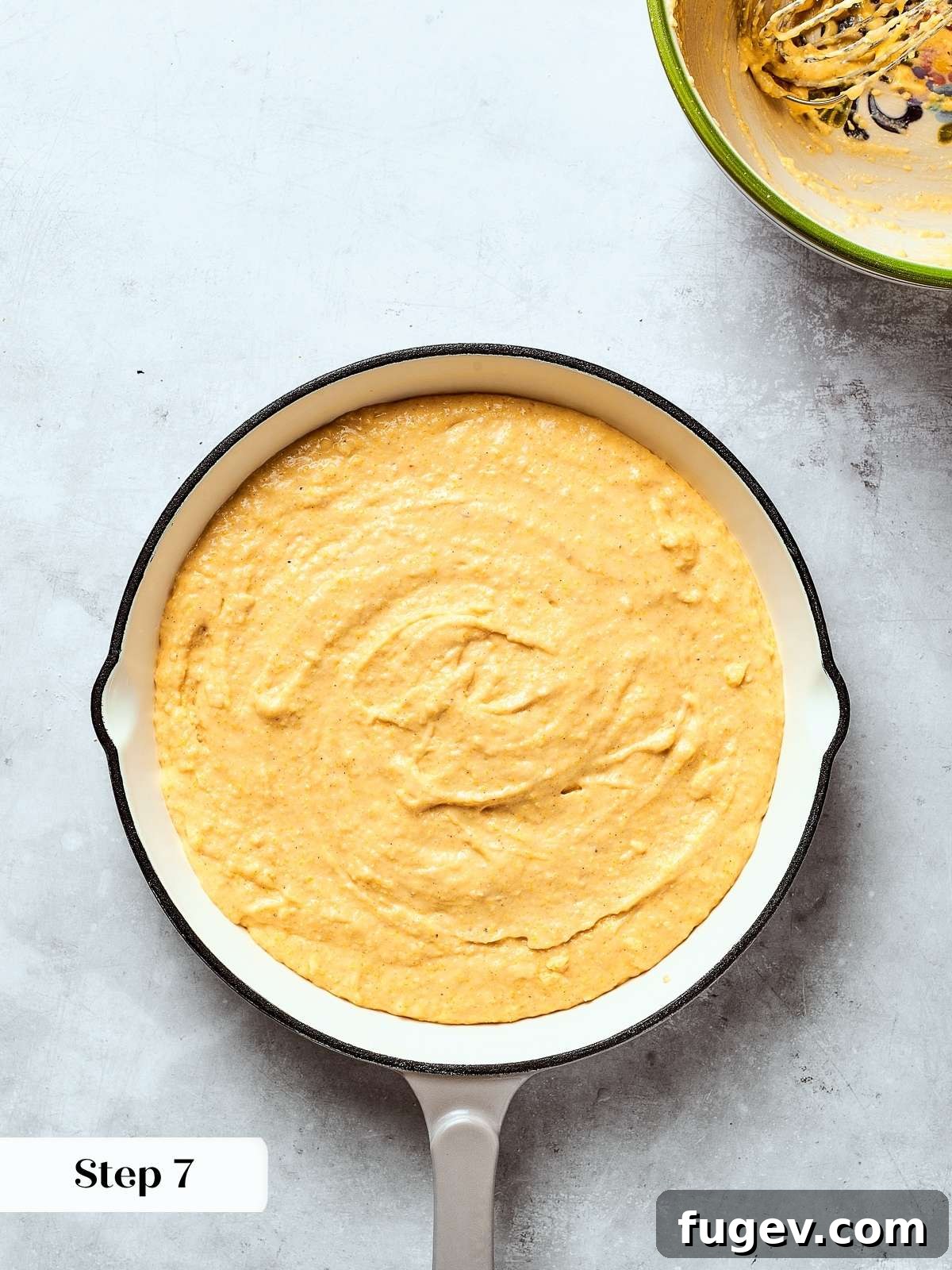
Step 7: Pour and Spread Batter. Pour the prepared cornbread batter into your buttered baking pan or hot cast-iron skillet. Use a spatula to spread the batter evenly across the bottom of the pan, which will ensure uniform baking and a consistent texture.
Step 8: Bake the Cornbread. Bake the cornbread in the preheated oven at 350°F (175°C) for 15-20 minutes. The cornbread is done when the top offers a slight resistance when gently pressed, or when a wooden skewer or cake tester inserted into the center comes out clean with just a few moist crumbs attached. If baking in a preheated cast-iron skillet, the bake time will likely be shorter, so start checking around the 10-minute mark. Remember, even though it’s for dressing, you want a moist cornbread, so do not overbake!
Expert Tip: The top should be a light golden brown with a few moist crumbs attached to a tester, indicating it’s cooked through but still tender, not completely dry.
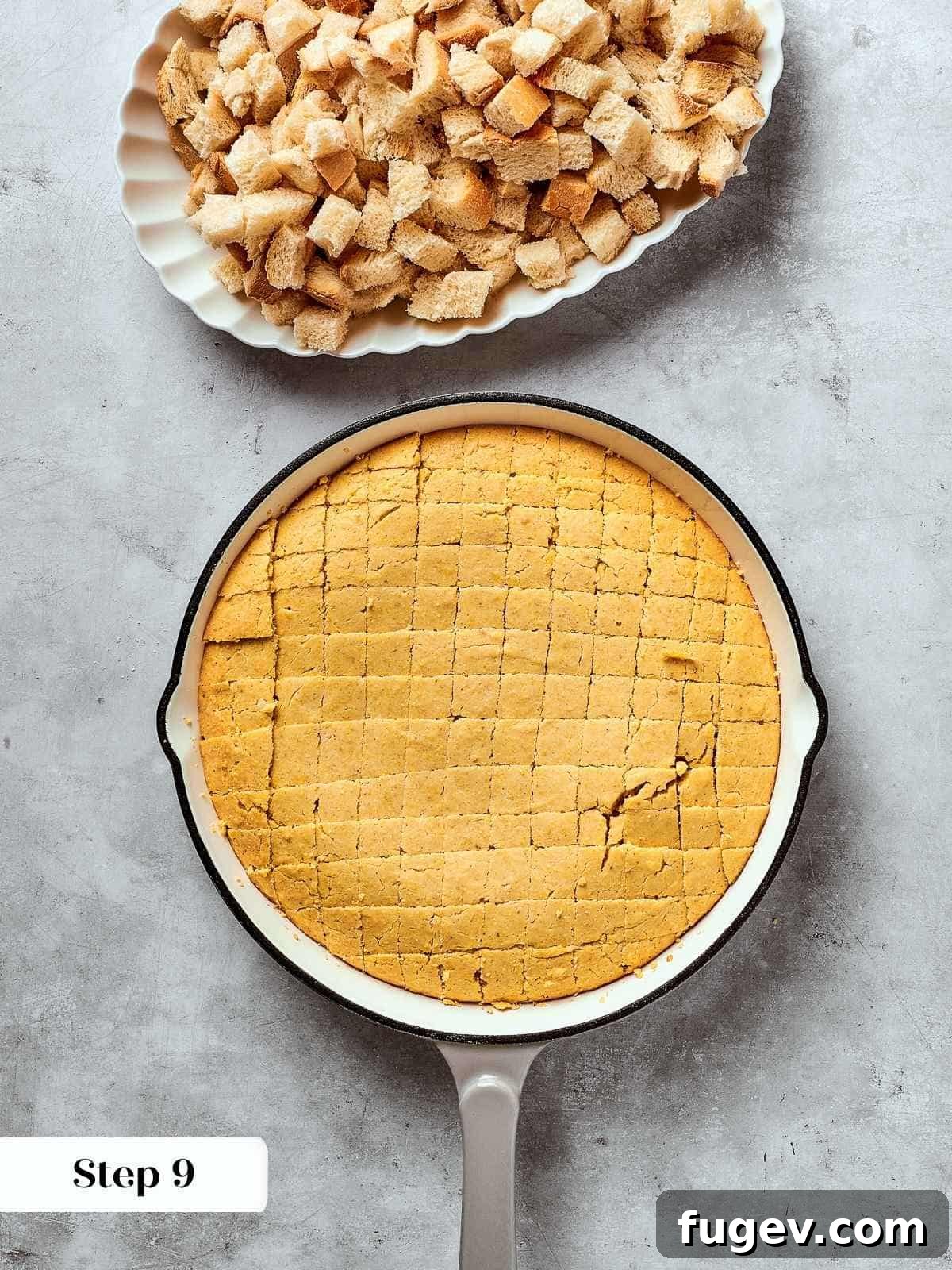
Step 9: Cool and Cube. Once baked, remove the cornbread from the oven and allow it to cool completely in the skillet or baking dish. This cooling period is important for the cornbread to set properly. Once cool, carefully cut the cornbread into 1-inch cubes (or smaller, depending on your preferred dressing texture).
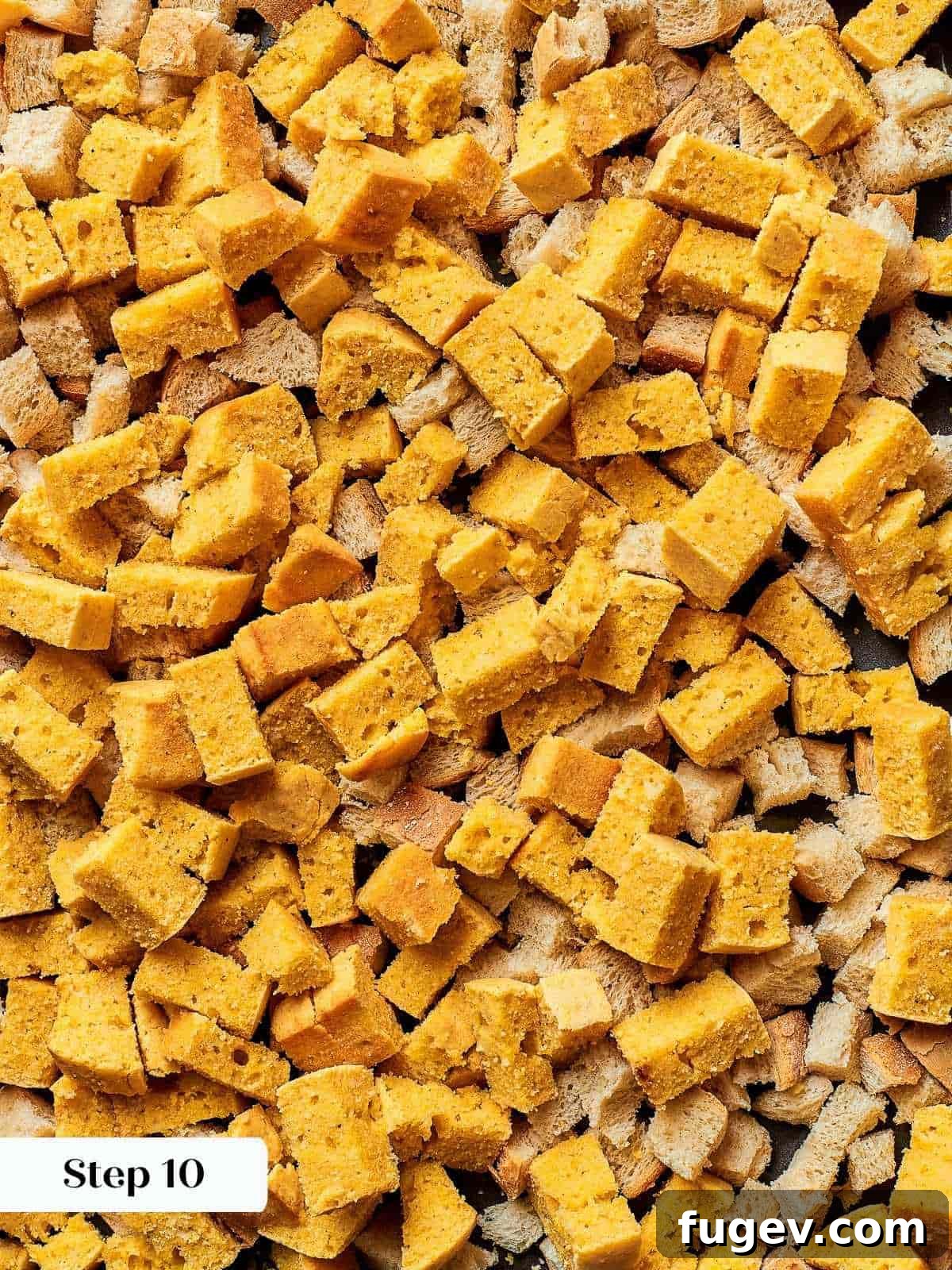
Step 10: Dry the Bread Cubes. This is a crucial step for the perfect dressing texture. Spread the cornbread cubes (and any additional crusty bread cubes, like French or sourdough bread, if using) onto two large baking sheets. Allow them to air dry uncovered overnight, ideally for about 24 hours, at room temperature until they become quite crisp. This drying process allows the bread to absorb the liquid without becoming soggy later.
Step 11: Combine Dried Breads. Once fully dried, transfer all the cornbread and rustic bread cubes into a very large mixing bowl. Toss them gently to ensure an even mix.
Part 2: Prepare and Bake the Southern Cornbread Dressing
With your cornbread ready, the assembly of the dressing comes together quickly.
Step 12: Prepare Oven and Skillet. Preheat your oven to 350°F (175°C). In a large, heavy-bottomed skillet or a Dutch oven, melt 1 stick of unsalted butter over medium heat. This butter will be the base for sautéing your aromatics.
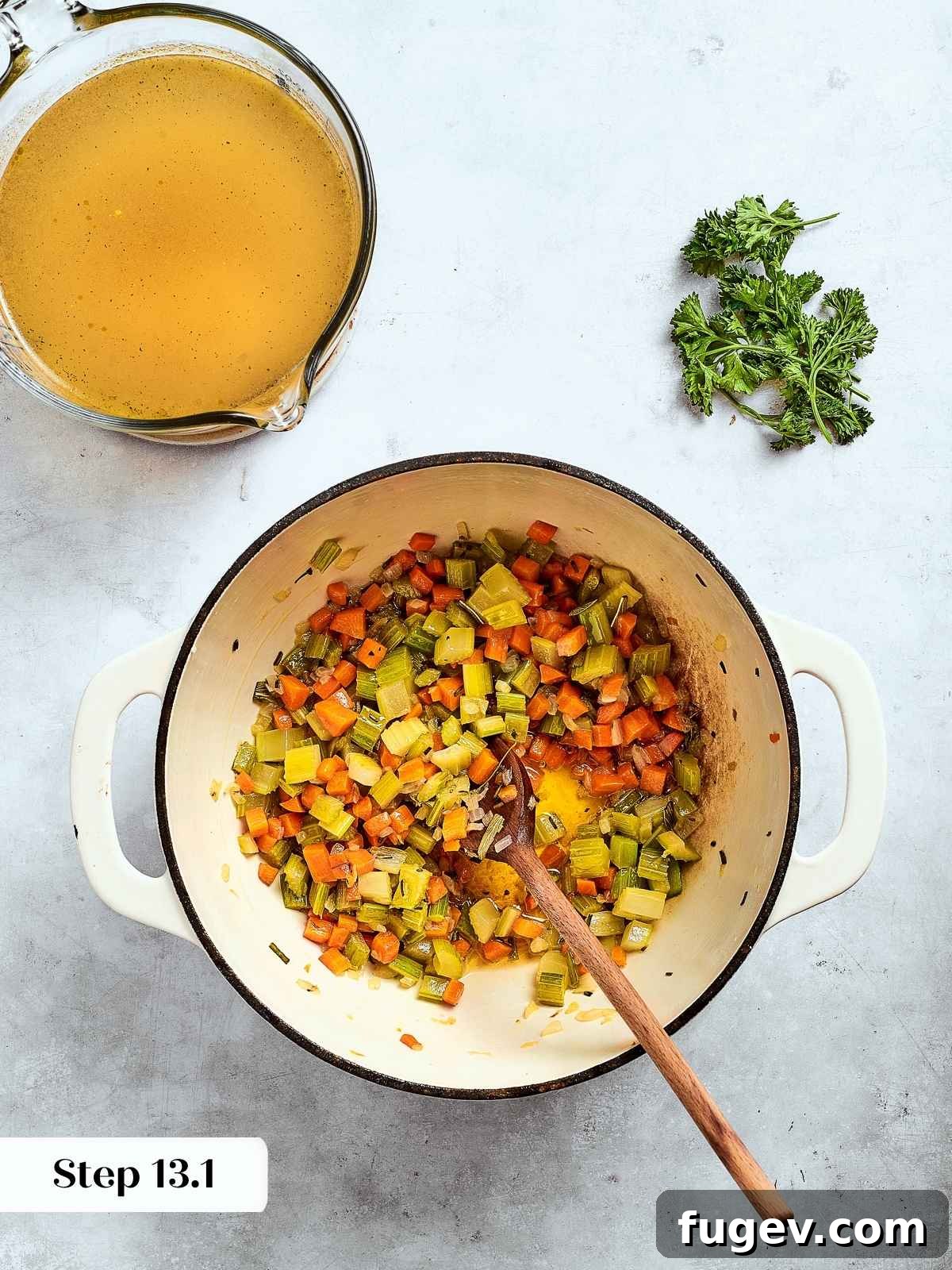
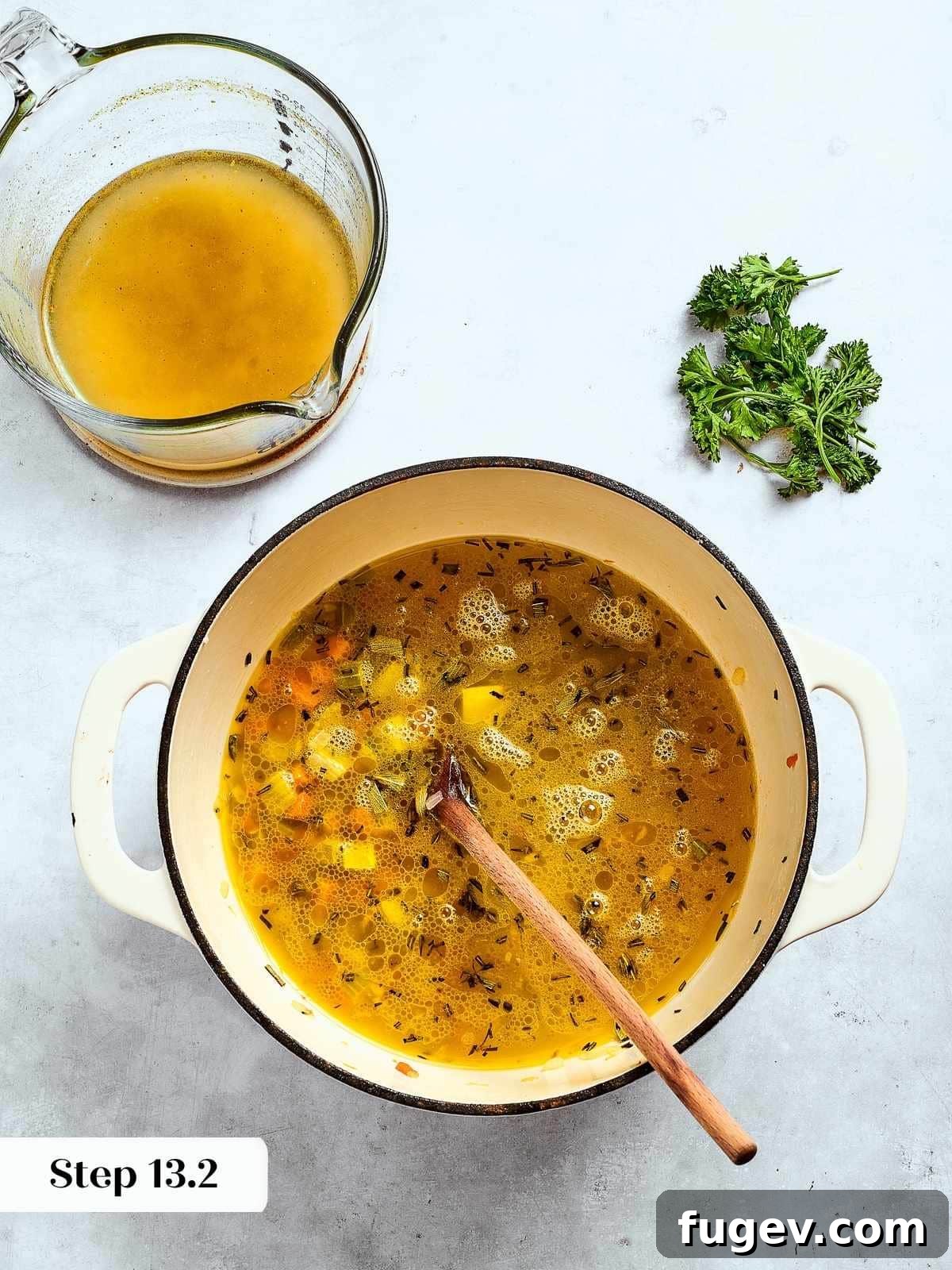
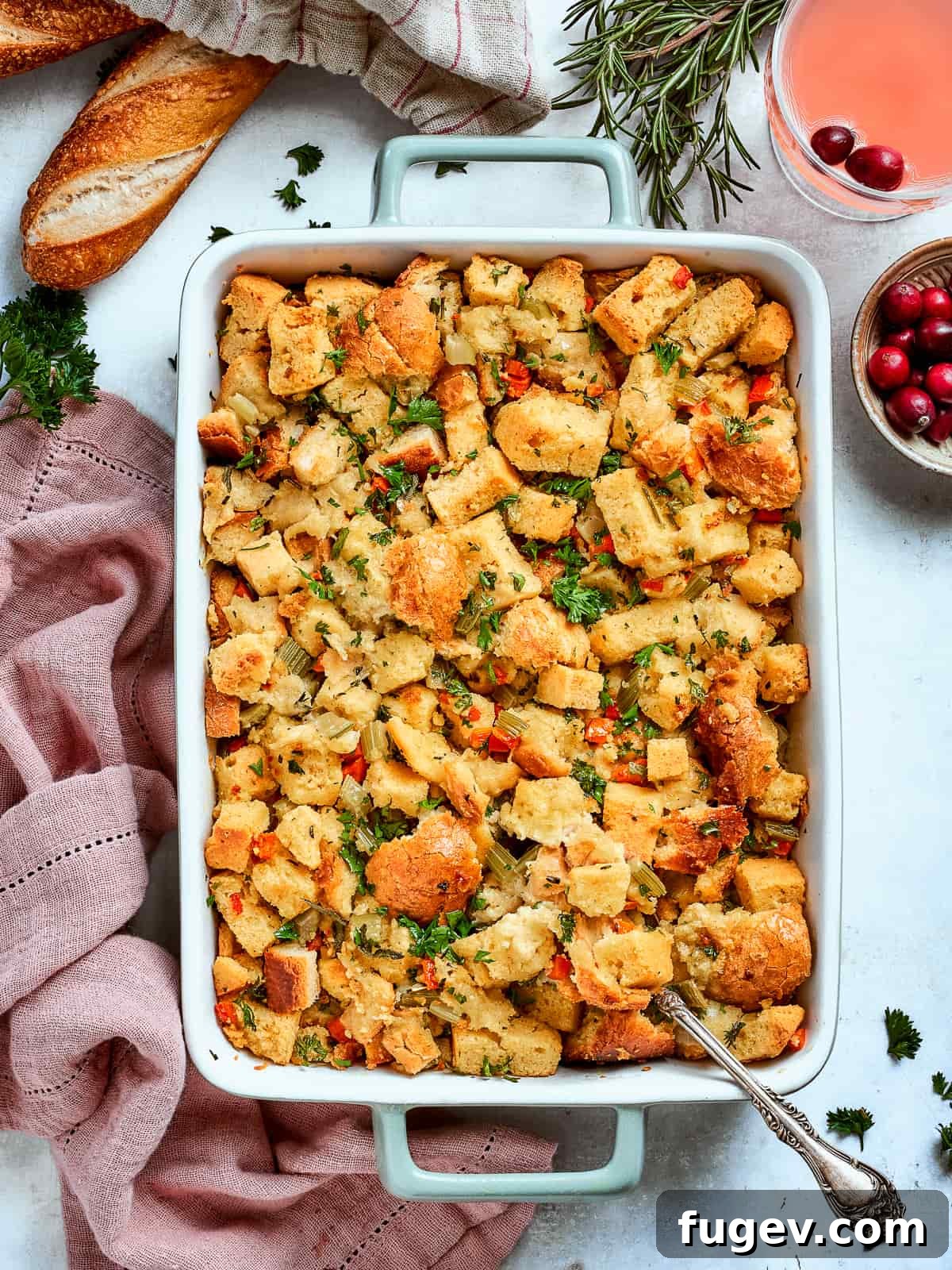
Step 13: Sauté Aromatics and Build Flavor. Add the finely diced celery, carrots, and onion to the melted butter in the skillet. Cook these vegetables over medium heat, stirring occasionally, until the onion becomes nearly translucent and the vegetables have softened, about 8-10 minutes. Stir in the dried thyme, chopped fresh rosemary, and dried sage, cooking for another minute until fragrant. Pour in the chicken broth and bring the mixture to a boil. Reduce the heat to low and let it simmer for 2 minutes to allow all the wonderful flavors to meld beautifully. Taste the broth and add a little kosher salt as desired, remembering that you can always add more later.
Pro Tip: Reduce heat to low and simmer for 2 minutes to let the flavors deeply meld, creating a rich base for your dressing.
Step 14: Moisten the Bread Cubes. Carefully ladle the hot broth and vegetable mixture into the large bowl containing the dried bread cubes. Add the liquid gradually, tossing the bread gently with a large spoon or your hands to ensure even distribution. Continue adding broth until the mixture is moist but not swimming in liquid; the bread should be thoroughly moistened but still hold its shape. Stir in the fresh chopped parsley. The exact amount of broth needed may vary depending on how dry your bread is.
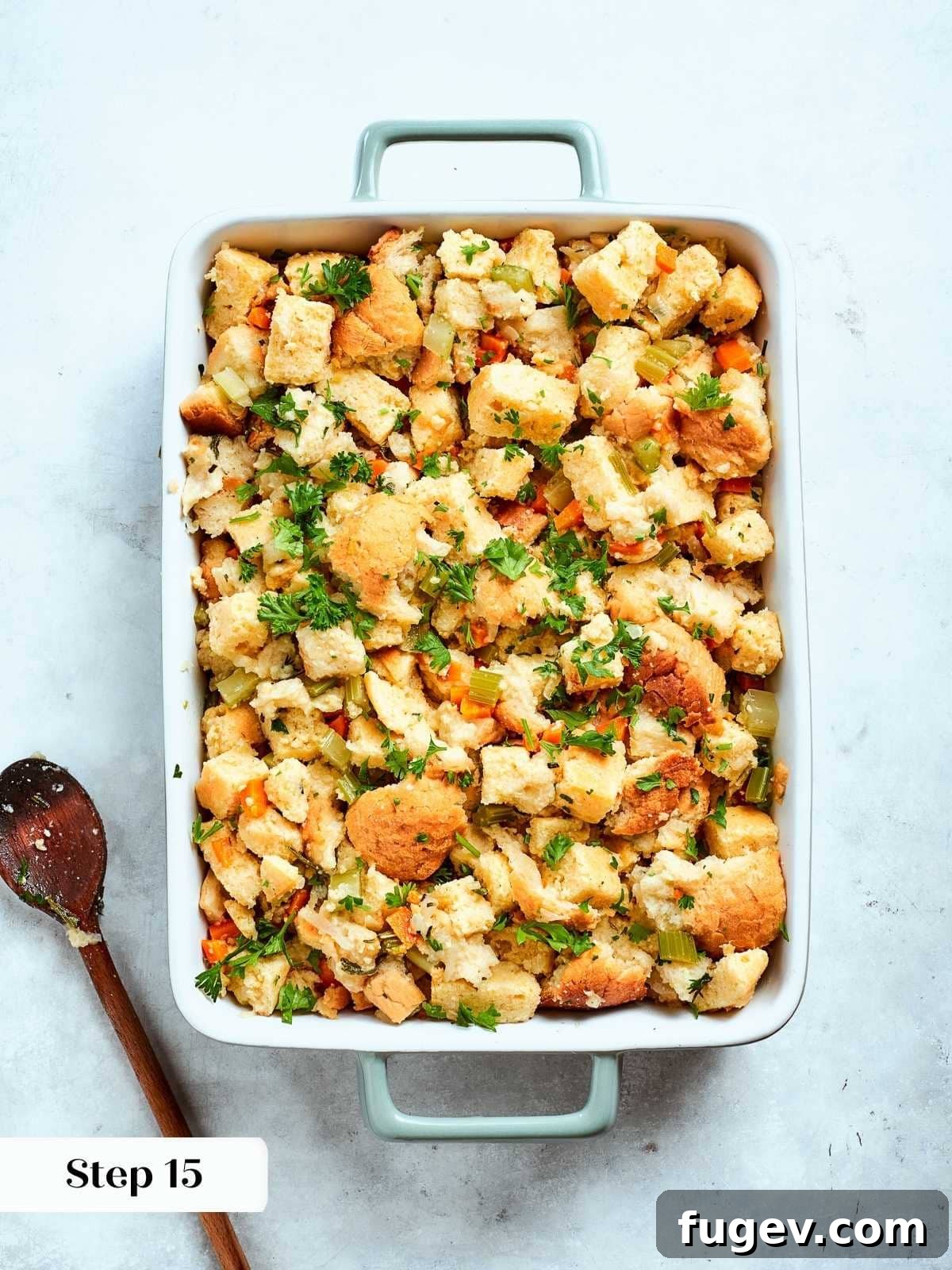
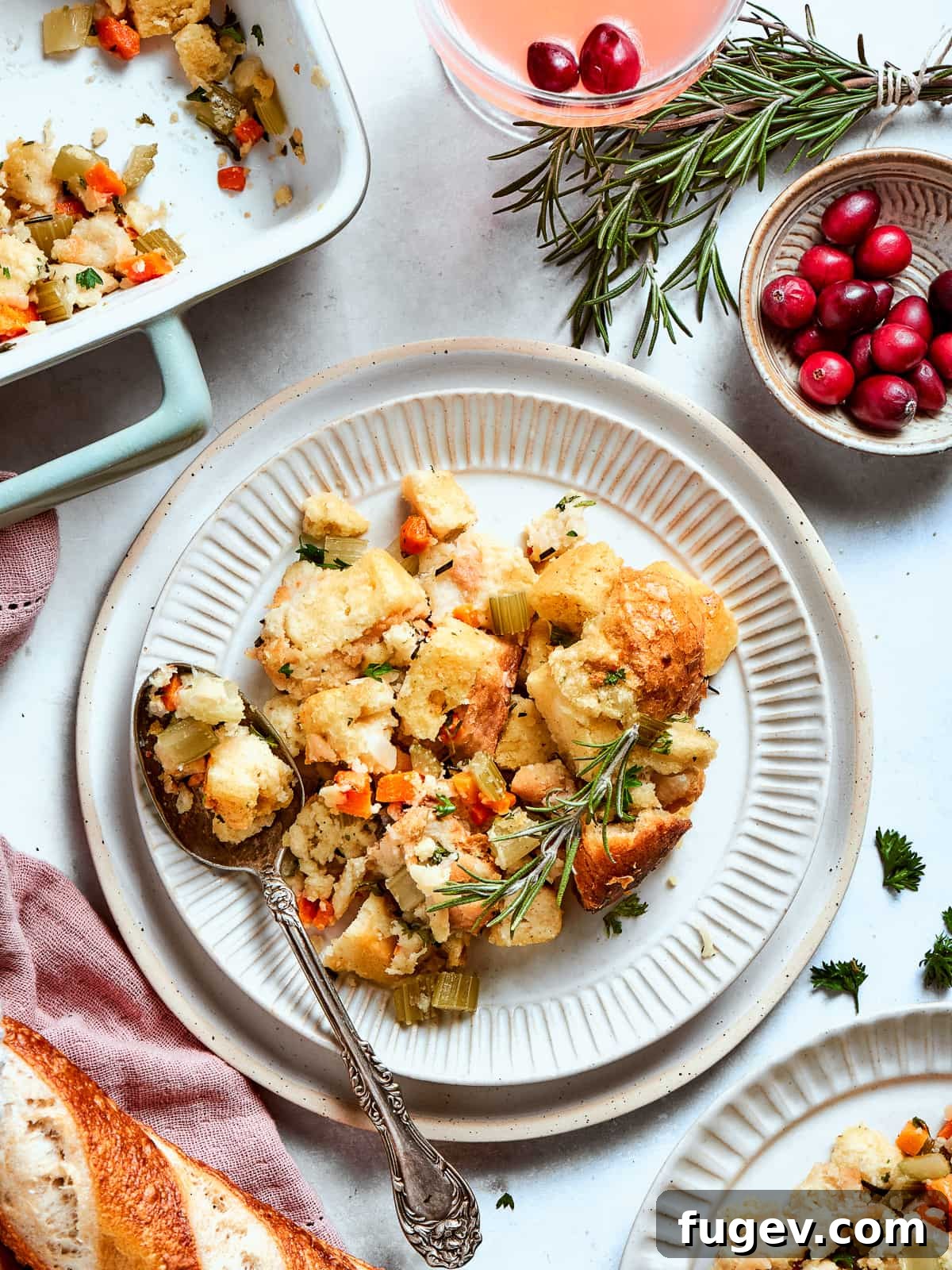
Step 15: Bake to Golden Perfection. Transfer the moistened bread mixture into a 9×13 inch baking dish or a large cast-iron skillet, spreading it out evenly. Bake in the preheated oven for 20 to 25 minutes, or until the top is beautifully golden brown and the dressing is heated through and set. For an extra crispy top, remove any foil (if you’ve covered it) during the last 5 minutes of baking. Let the dressing rest for 10 minutes prior to serving; this allows the flavors to settle and makes for easier serving.
Finishing Touch: For an irresistibly crisper top, uncover the baking dish during the final 5 minutes of baking.
Chef Lindsey’s Recipe Tip: The Importance of Tasting
One of the most fundamental lessons I learned in a professional kitchen is the absolute necessity of tasting as you go! This principle applies perfectly to your Southern Cornbread Dressing. Taste the broth mixture before you combine it with the bread. Is it seasoned enough? Does it need a pinch more salt, a grind of black pepper, or perhaps a little extra herb? Then, after you’ve mixed the bread and broth but before baking, taste a small amount of the dressing mixture. This allows you to make any final adjustments to the seasoning or moisture level. Depending on the variety and age of your bread, you might find that you need to add a little more stock or broth to achieve the perfect consistency. Don’t be shy; your taste buds are your best guide to a truly memorable dish!
Stuffing vs. Dressing: What’s the Difference?
While often used interchangeably, especially in modern culinary contexts, the terms “stuffing” and “dressing” traditionally refer to how the dish is prepared and cooked. The primary distinction is simple:
- Stuffing: This term is historically used when the bread-based mixture is literally “stuffed” inside the cavity of a turkey or other poultry and cooked along with the bird. Cooking inside the bird infuses the stuffing with rich juices, resulting in a very moist and flavorful dish. However, cooking stuffing inside a bird can sometimes pose food safety challenges if not properly heated to a safe internal temperature throughout.
- Dressing: This term is typically used when the mixture is baked in a separate casserole dish, outside of the bird. “Dressing” is particularly common in the Southern United States, where it’s often made with cornbread. Since it’s baked separately, it’s easier to achieve consistent cooking and desired textures (like those crisp edges!) without worrying about internal bird temperatures. Our Southern Cornbread Dressing falls firmly into this category.
Ultimately, whether you call it stuffing or dressing, the goal is the same: a delicious, savory, bread-based side dish that complements your holiday roast perfectly.
Recipe FAQs
Absolutely! Southern cornbread dressing is an excellent make-ahead dish, perfect for reducing stress during busy holiday preparations. You can bake the cornbread and cube the bread one or two days in advance. In fact, allowing the cornbread cubes to dry out overnight significantly improves the texture of the final dressing. For ultimate convenience, you can mix the entire dressing up to a whole day in advance, cover it tightly with plastic wrap or foil, and refrigerate it. When you’re ready to serve, simply transfer it to the oven and bake as directed. This allows the flavors to meld even further, often leading to an even more delicious result!
Yes, you can freeze Southern cornbread dressing to enjoy later. To do so, allow the baked dressing to cool completely after cooking. Once cooled, transfer it to a freezer-safe zip-top plastic bag or an airtight container, ensuring as much air is removed as possible to prevent freezer burn. It can be frozen for up to 1 month. When you’re ready to serve, thaw the frozen dressing in the refrigerator overnight. Reheat leftovers in the microwave for individual portions, or transfer to a casserole dish, cover with foil, and reheat in a preheated oven (around 325°F/160°C) until thoroughly heated through.
Proper storage ensures your delicious leftovers stay fresh. Once the Southern cornbread dressing has cooled completely to room temperature, cover the baking dish tightly with aluminum foil or plastic wrap. You can then refrigerate it for up to 3-4 days. If you find the dressing to be a bit dry after reheating, you can easily revive it by stirring in a small amount of extra chicken broth or stock before warming.
Yes, you can adapt this recipe to be gluten-free. You would need to use a gluten-free all-purpose flour blend in your cornbread recipe and ensure that your chosen cornbread and rustic bread are certified gluten-free. All other ingredients are typically naturally gluten-free, but always check labels for hidden gluten, especially in chicken broth.
Recommended Thanksgiving Sides Recipes
Easy Side Dish Recipes
Cornbread Stuffing Recipe
Easy Side Dish Recipes
Southern Cornbread Recipe
Recipe Roundups
35 Best Thanksgiving Side Dishes
Recipe Roundups
Traditional Thanksgiving Dinner Menu with Recipes
If you tried this recipe and loved it, please leave a 🌟 star rating and let me know how it goes in the comments below. I love hearing from you; your comments make my day!
Rating: 4.75 out of 5 stars (based on 4 ratings)
Southern Cornbread Dressing
Chef Lindsey
20 mins
40 mins
8 hrs
1 hr
12 servings
Print Recipe
Ingredients
For the Cornbread:
- 10 tablespoons unsalted butter, cubed
- 2 cups all-purpose flour
- 1 tablespoon granulated sugar
- ¾ cup cornmeal
- 2 teaspoons baking powder
- 2 teaspoons kosher salt
- 3 large eggs
- ⅔ cup crème fraîche or sour cream
- ⅔ cup whole milk
- 2 tablespoons unsalted butter for the pan
For the Stuffing:
- 1 loaf crusty bread (such as French bread or sourdough bread), cut into 1-inch cubes
- 1 stick unsalted butter
- 4 stalks celery, finely diced, leaves included
- 2 carrots, finely diced
- 1 large onion, finely diced
- 4 cups chicken broth (or more as needed, homemade preferred!)
- 2 teaspoons thyme
- 1 tablespoon fresh rosemary, chopped (or dried)
- 2 teaspoons dried sage
- kosher salt for seasoning
- ¼ cup fresh parsley, chopped
9 x 13 inch rectangle
Instructions
Prepare the Cornbread:
- The day before making the stuffing, bake the cornbread: Melt 2 tablespoons butter in a cast iron skillet over medium heat. Preheat the oven to 350°F (175°C) and butter an 8-inch baking dish or cast iron skillet. If you are making crispy cornbread, pop that pan in the oven to preheat.
- In a small saucepan or in the microwave, melt the milk with cubed butter. I find this easiest to do on the stovetop. Be sure it is just melted and not too hot, or you’ll need to let it cool before combining with the eggs.
- In a medium bowl, whisk together the dry ingredients (all-purpose flour, sugar, cornmeal, baking powder and salt). Set aside.
- In a large bowl, whisk the eggs until no streaks remain, then whisk in the crème fraîche or sour cream.
- Slowly pour the milk mixture into the egg mixture. Do this slowly while whisking constantly, because it’s a little warm and you don’t want to cook your eggs.
- Gradually whisk the dry ingredients into the wet ingredients. Adding it slowly in the beginning will keep the dry ingredients from clumping. Try not to over mix by adding the next addition when the last one is almost incorporated.
- Pour the batter into the buttered pan and spread it out so it bakes evenly.
- Bake at 350°F (175°C) for 15-20 minutes until the top provides a little resistance when pressed lightly or until a cake tester comes out clean. Baking in a preheated skillet will decrease the bake time, so check it after 10 minutes just to see where it is and how long you think it has left. Even though we are making stuffing, that is no excuse to overbake!
- Let cool completely in the skillet and then cut into 1 inch cubes or smaller to taste.
- Spread cornbread and French bread cubes onto two baking sheets and dry overnight (~24 hours) at room temperature until they are crisp.
- Dump into a large bowl and toss to mix.
Prepare the Stuffing:
- Preheat the oven to 350°F (175°C). Melt 1 stick of butter in a large skillet or Dutch oven over medium heat.
- Add celery, carrots, onion, and spices (thyme, rosemary, sage). Cook until the onion is almost translucent and vegetables are softened. Add chicken broth and bring to a boil. Taste and add a little salt as desired, then reduce heat to low and simmer for 2 minutes.
- Gradually ladle the hot broth mixture into the bowl with the bread, tossing gently. If the mixture is not moist enough, add more broth as needed. Stir in fresh parsley.
- Transfer mixture to a 9×13 inch baking dish or a cast iron skillet. Bake until golden brown, 20 to 25 minutes. For a crisper top, uncover during the last 5 minutes of baking. Let rest 10 minutes prior to serving.
Notes
Variations – Store-bought cornbread can be used to save time, but ensure it is not too sweet. Consider adding sausage, mushrooms, or other herbs for variety.
Storage – Store leftover dressing in an airtight container in the refrigerator for 3-4 days. Freeze for up to 1 month.
Nutrition
Carbohydrates: 46g |
Protein: 10g |
Fat: 25g |
Saturated Fat: 14g |
Polyunsaturated Fat: 2g |
Monounsaturated Fat: 6g |
Trans Fat: 1g |
Cholesterol: 102mg |
Sodium: 996mg |
Potassium: 256mg |
Fiber: 3g |
Sugar: 5g |
Vitamin A: 2633IU |
Vitamin C: 4mg |
Calcium: 120mg |
Iron: 3mg
Side Dish
American
441
Before You Go
We truly hope you enjoyed this professional chef-tested recipe for Southern Cornbread Dressing. It’s a labor of love designed to bring authentic Southern comfort to your holiday table. Don’t stop here! Explore our other delicious, chef-developed Thanksgiving recipes, including our hearty apple sausage stuffing, for a complete and memorable feast. Happy cooking and happy holidays!