
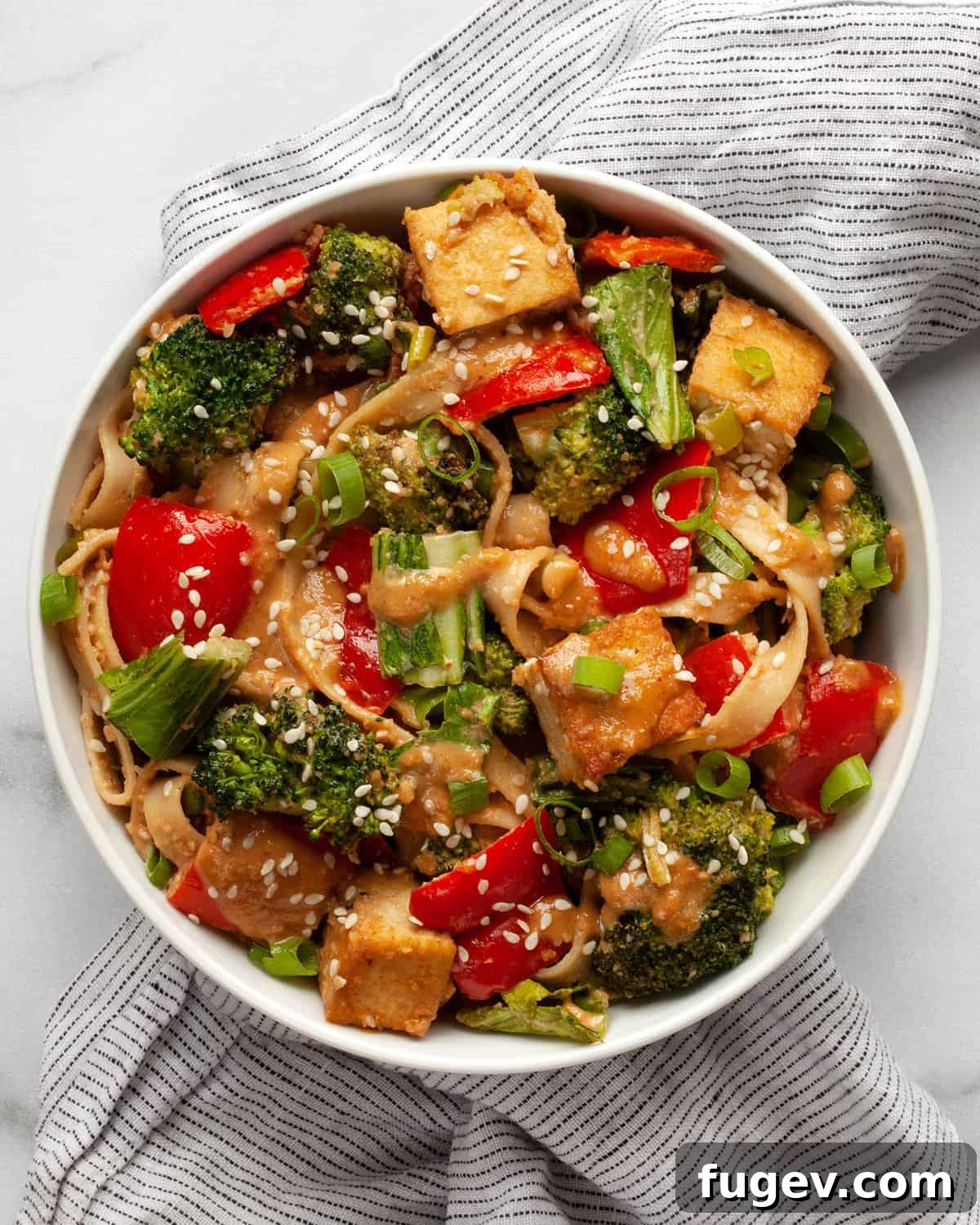
Easy & Delicious Tofu Vegetable Stir-Fry with Creamy Peanut Sauce
Embark on a culinary journey to craft the perfect peanut stir-fry sauce – a creamy, nutty, and utterly delicious vegan condiment that transforms ordinary vegetables and noodles into an extraordinary meal. Made effortlessly in minutes using a food processor or blender, this sauce combines the vibrant flavors of garlic, fresh ginger, rich peanut butter, roasted peanuts, savory soy sauce, and a hint of sriracha. It’s not just a sauce; it’s the heart of a sensational vegetable stir-fry, making healthy eating both simple and incredibly satisfying.
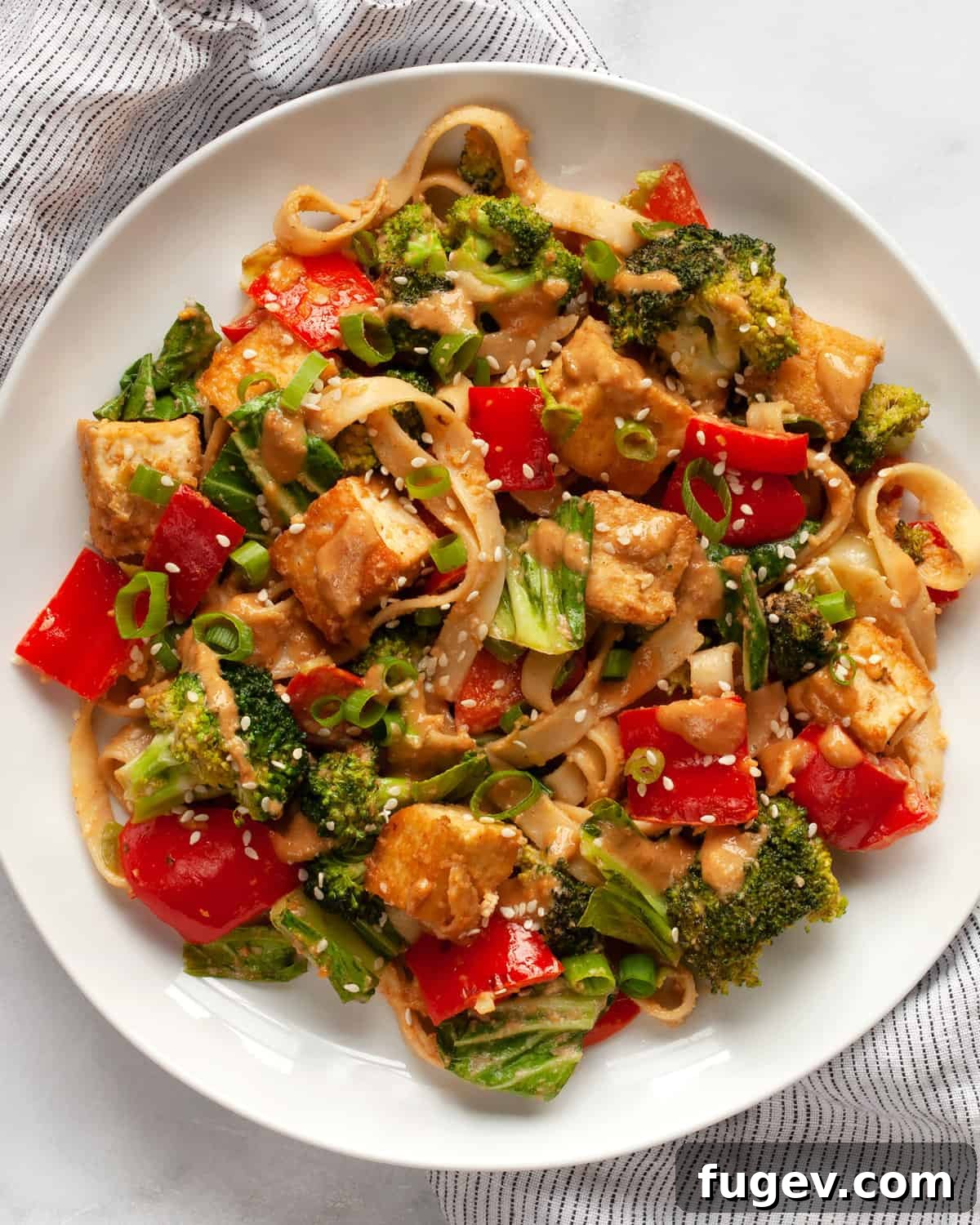
Table of Contents
- The Essence of a Perfect Stir-Fry
- Why This Recipe Will Become a Staple
- Essential Ingredients for Your Stir-Fry
- Crafting Your Tofu Vegetable Stir-Fry with Peanut Sauce
- Serving Suggestions
- Leftover Love: Storage and Reheating
- More Delightful Stir-Fry Ideas
- Tofu Vegetable Stir-Fry with Peanut Sauce Recipe
The beauty of a stir-fry lies in its speed and simplicity. It’s designed to be a quick meal, a delicious solution for busy weeknights. This means that every component you add, beyond the core vegetables, noodles or rice, and protein (which, while delicious, is technically optional for a veggie-focused dish), must contribute to this ease without compromising on flavor. Our peanut sauce fits this philosophy perfectly – it’s a breeze to prepare, yet incredibly flavorful, nutty, and transforms your entire dish into a memorable dining experience. Forget complex cooking; embrace the simplicity and rich taste of this homemade stir-fry.
The Essence of a Perfect Stir-Fry
Stir-frying is more than just a cooking method; it’s an art of quick preparation, vibrant flavors, and dynamic textures. The secret to a truly great stir-fry lies in high heat, fresh ingredients, and a spectacular sauce that binds everything together. This recipe delivers on all fronts, offering a harmonious blend of crisp-tender vegetables, hearty tofu, and slurpable noodles, all brought to life by our signature peanut sauce. It’s a complete, satisfying meal that caters to both your taste buds and your busy schedule.
Why This Recipe Will Become a Staple
Unleash the Versatility of Peanut Sauce
Our creamy peanut sauce is far more than just a stir-fry accompaniment. While it shines brilliantly mixed into noodles and vegetables, its intense flavor profile also makes it an excellent dipping sauce for fresh spring rolls, grilled skewers, or roasted vegetables. Drizzle it over chicken, shrimp, or even a simple green salad for an instant flavor boost. You might find its standalone taste a bit strong, but that’s by design – it’s crafted to perfectly meld with and elevate your entire meal.
Effortless Meal Prep with Make-Ahead Options
streamline your cooking process. Although whipping up this sauce takes mere minutes, you can easily prepare it up to two days in advance. Store it in an airtight container in the refrigerator, and it will be ready to go when you are, making weeknight dinners even more convenient. This foresight allows you to focus solely on the quick stir-frying of your protein and vegetables when mealtime arrives.
Adaptability: Your Kitchen, Your Rules
This recipe is incredibly flexible, designed to fit your preferences and what you have on hand. Feel free to customize it! Craving a lighter meal? Skip the tofu and noodles and create an all-vegetable stir-fry. Prefer a hearty noodle dish? Omit the tofu and let the noodles and veggies take center stage. The key is to embrace a good mix of fresh vegetables to ensure a diverse array of textures and nutrients. This recipe is your canvas; feel free to paint with your favorite ingredients.
Essential Ingredients for Your Stir-Fry
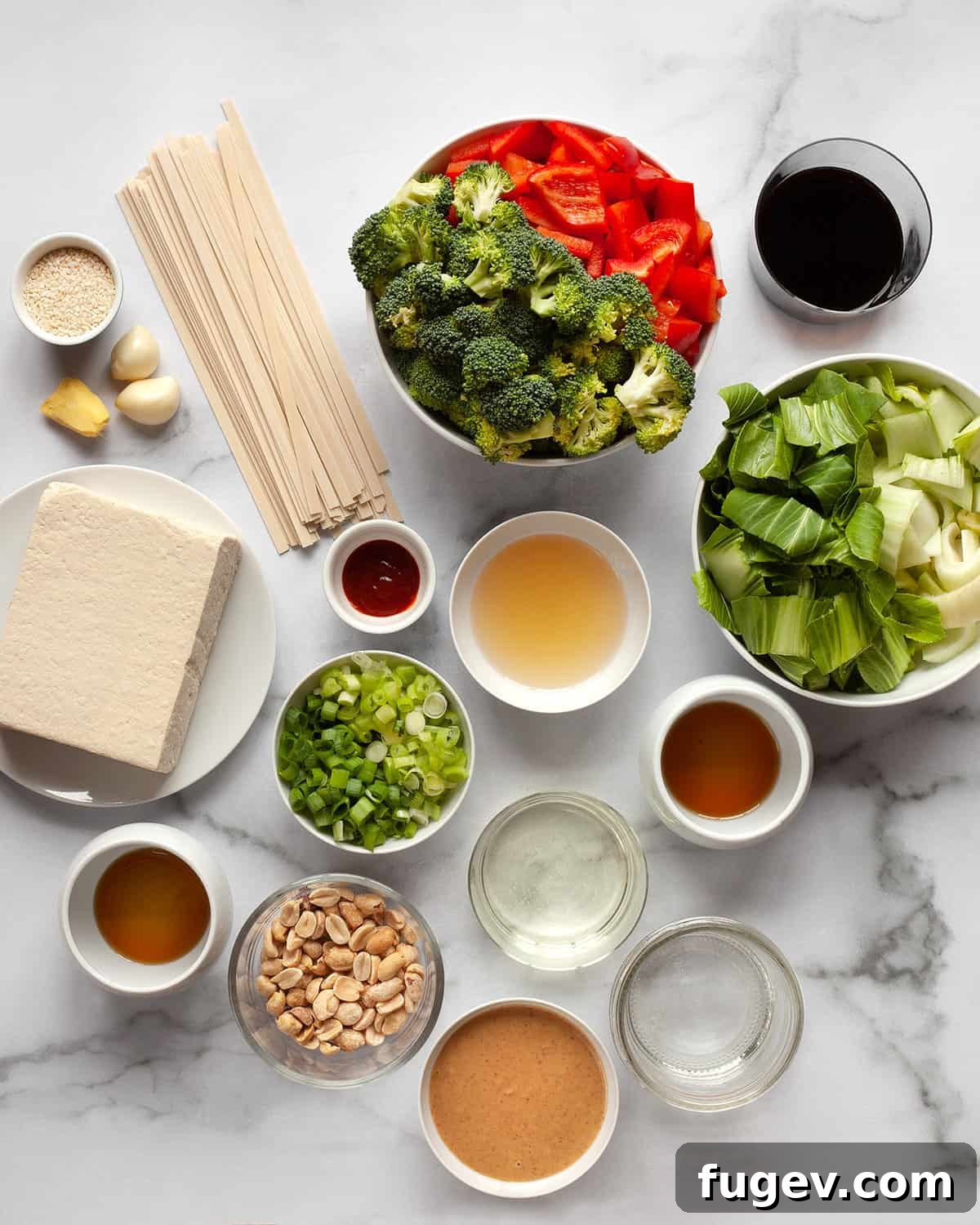
For the Irresistible Peanut Sauce:
- Creamy Peanut Butter and Roasted Salted Peanuts: The combination of both creamy peanut butter and whole roasted peanuts adds a remarkable depth and complexity to the sauce. While everything is pureed, the peanuts contribute to a richer, more authentic texture and intensified nutty flavor that smooth peanut butter alone cannot achieve.
- Garlic and Fresh Ginger: These aromatic powerhouses are non-negotiable for an authentic Asian-inspired sauce. Freshly minced garlic and grated ginger infuse the sauce with a warm, pungent, and slightly spicy kick that brightens every spoonful.
- Low Sodium Soy Sauce: Opting for low-sodium soy sauce allows you to control the saltiness of your dish more effectively. For a gluten-free alternative, Tamari is an excellent substitute, offering a similar umami depth without the wheat.
- Sesame Oil: A drizzle of toasted sesame oil is essential for its distinctive nutty aroma and flavor, which beautifully complements the peanuts and enhances the overall “Asian” profile of the sauce.
- Maple Syrup: A touch of natural sweetness from maple syrup is crucial for balancing the savory and tangy elements of the sauce. It rounds out the flavors without making the sauce overly sweet, creating a harmonious blend.
- Sriracha: Don’t be afraid of the sriracha! A small amount goes a long way, providing a subtle warmth and a gentle “kick” rather than overpowering spice. Adjust to your preference for heat.
- Rice Vinegar: Made from fermented rice, this mild vinegar introduces a lovely acidity to the sauce, cutting through the richness of the peanut butter and brightening all the other flavors.
For the Dynamic Stir-Fry:
- Tofu: For stir-fries, always choose extra-firm or super-firm tofu. Its dense texture holds up well to high heat and absorbs flavors beautifully without crumbling. Pressing the tofu thoroughly before cooking is key to achieving a crispy exterior.
- Red Bell Peppers, Broccoli & Bok Choy: This trio is a fantastic starting point for a colorful and nutritious stir-fry. Red bell peppers offer sweetness, broccoli provides a satisfying crunch, and bok choy adds a delicate, slightly bitter note. Feel free to experiment with other vegetables like cauliflower, mushrooms, other colors of bell peppers, snow peas, snap peas, carrots, or even thinly sliced cabbage.
- Udon Noodles: These thick, chewy Japanese wheat noodles are ideal for stir-fries because their robust texture stands up well to the hearty vegetables and the rich, creamy sauce, preventing them from becoming mushy. Other wider noodles like lo mein or even rice noodles can also work.
- Scallions: Also known as green onions, scallions provide a mild, fresh oniony flavor and a touch of vibrant green. They act almost like fresh herbs, adding a crisp finish.
- Sesame Seeds: A sprinkle of toasted sesame seeds before serving adds a lovely visual appeal and a delicate nutty crunch, enhancing the overall texture and presentation of your stir-fry.
- Vegetable Oil: When stir-frying, you’re cooking at high heat, so it’s important to use an oil with a high smoke point. Non-GMO canola oil is a good choice, as are peanut oil or grapeseed oil.
Crafting Your Tofu Vegetable Stir-Fry with Peanut Sauce
Creating this flavorful tofu vegetable stir-fry is a straightforward process, broken down into easy-to-follow steps. Precision in preparation and attention to heat are key to achieving that perfect balance of textures and flavors.
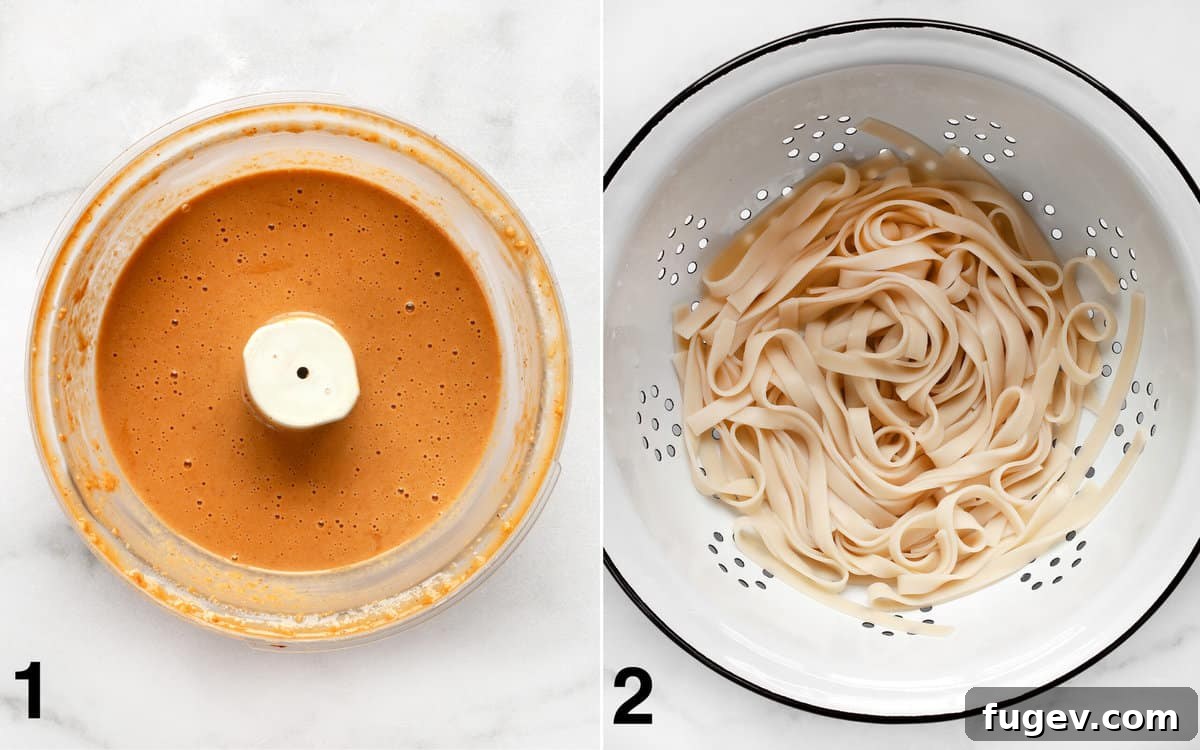
1. Prepare the Peanut Sauce: The magic begins with the sauce. In a food processor or a high-speed blender, combine the peeled garlic cloves, a piece of fresh ginger, creamy peanut butter, low sodium soy sauce, aromatic sesame oil, sweet maple syrup, a kick of sriracha, tangy rice vinegar, roasted salted peanuts, and water. Blend until the mixture is completely smooth and creamy, scraping down the sides as needed to ensure all ingredients are well incorporated. The consistency should be pourable but not watery. This sauce can be prepared ahead of time and stored in the refrigerator.
2. Cook the Udon Noodles: Bring a pot of salted water to a rolling boil. Add the udon noodles and cook according to the package instructions until they are al dente. Overcooked noodles can become mushy in a stir-fry, so keep a close eye on them. Once cooked, drain the noodles thoroughly in a colander and rinse them immediately with cold water. This stops the cooking process and prevents them from sticking together.
3. Press and Cube the Tofu: To achieve crispy tofu, proper pressing is crucial. Begin by patting the extra-firm tofu block dry with paper towels. Then, wrap it in a fresh, dry paper towel and place it on a plate or cutting board. Position a heavy object, such as a cast-iron skillet or a stack of books, on top of the tofu. Let it press for at least 15 minutes (or up to 30 minutes for even firmer tofu) to remove excess liquid. This step significantly improves the tofu’s texture and its ability to absorb flavor. Once pressed, cut the tofu into uniform 1/2-inch cubes.
4. Cook the Tofu to Golden Perfection: Heat the vegetable oil in a large nonstick skillet or wok over high heat. High heat is essential for achieving a good sear. Once the oil is shimmering, carefully add the cubed tofu in a single layer, ensuring not to overcrowd the pan. Cook the tofu, turning occasionally, until it is lightly browned and crispy on all sides, typically about 1-2 minutes per side. Remove the cooked tofu from the skillet and set it aside on a plate; it will be added back into the stir-fry later.
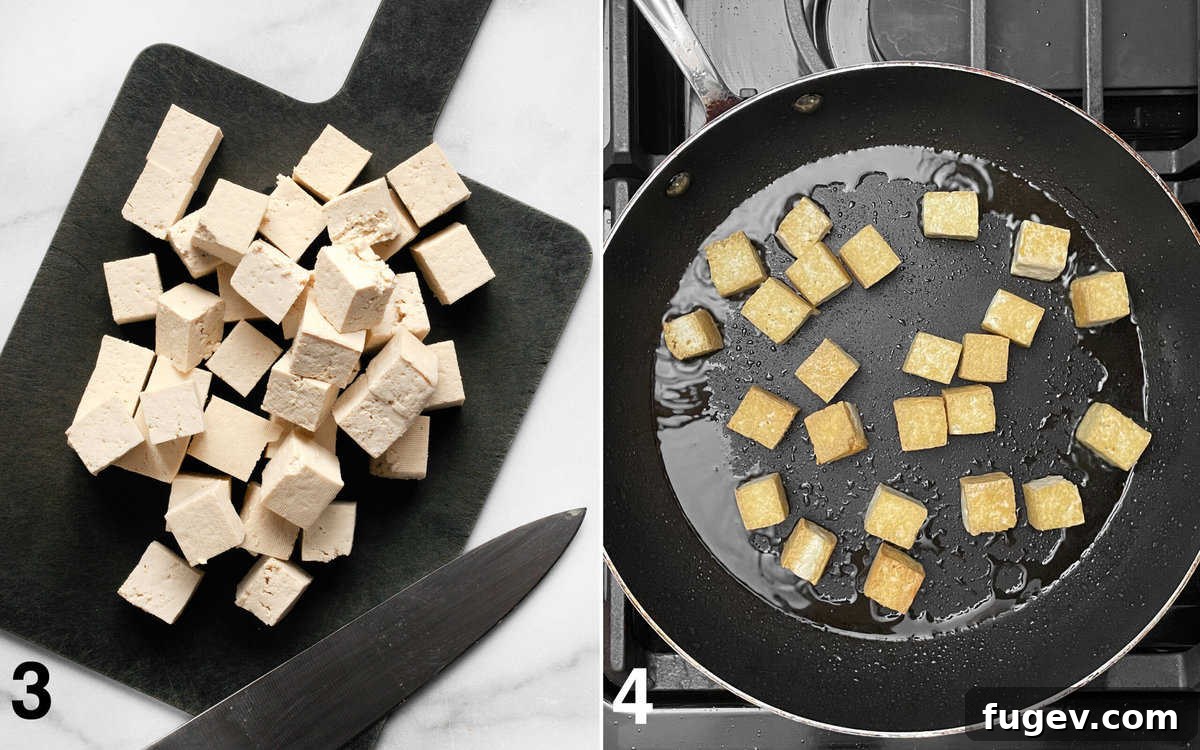
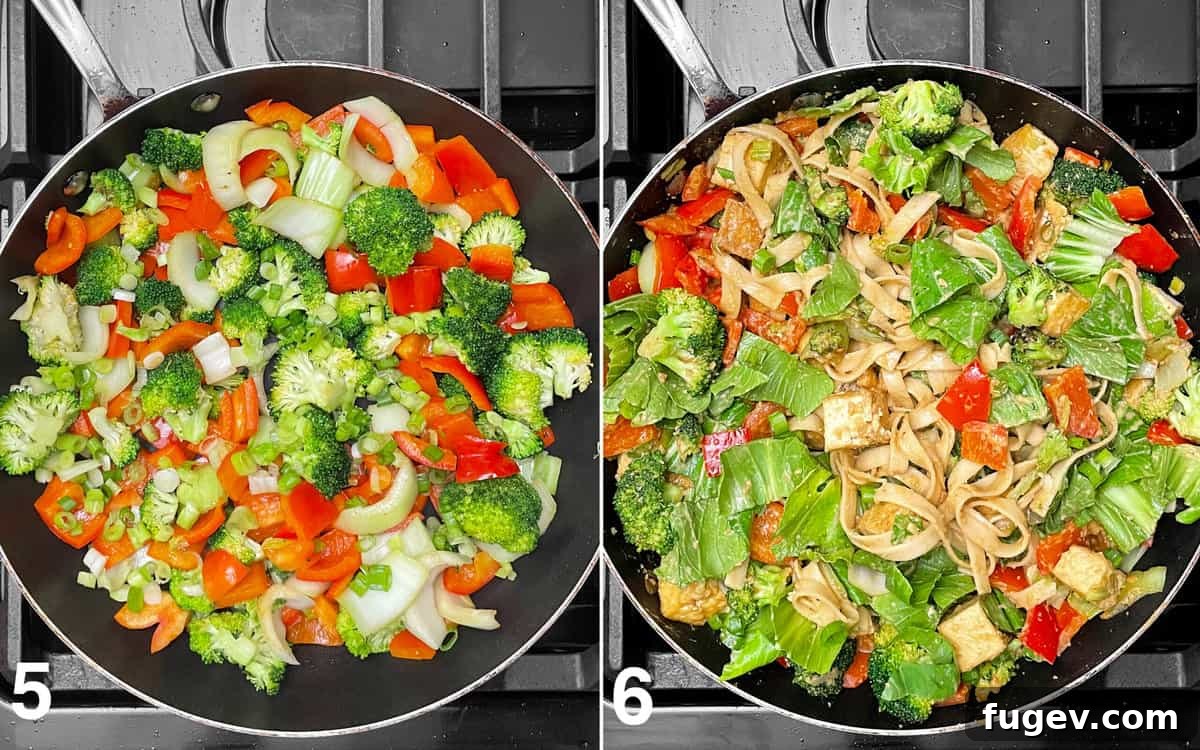
5. Stir-Fry the Vegetables: Using the same skillet (add a little more oil if needed), add the diced red bell peppers, small broccoli florets, and the white parts of the bok choy. Stir-fry these harder vegetables for 3-4 minutes over high heat. The goal is for them to be cooked through but still retain a slight crispness and vibrant color. This technique ensures that your vegetables are tender-crisp, not soggy. Next, add the white parts of the thinly sliced scallions to the skillet and cook for another minute, until they become fragrant.
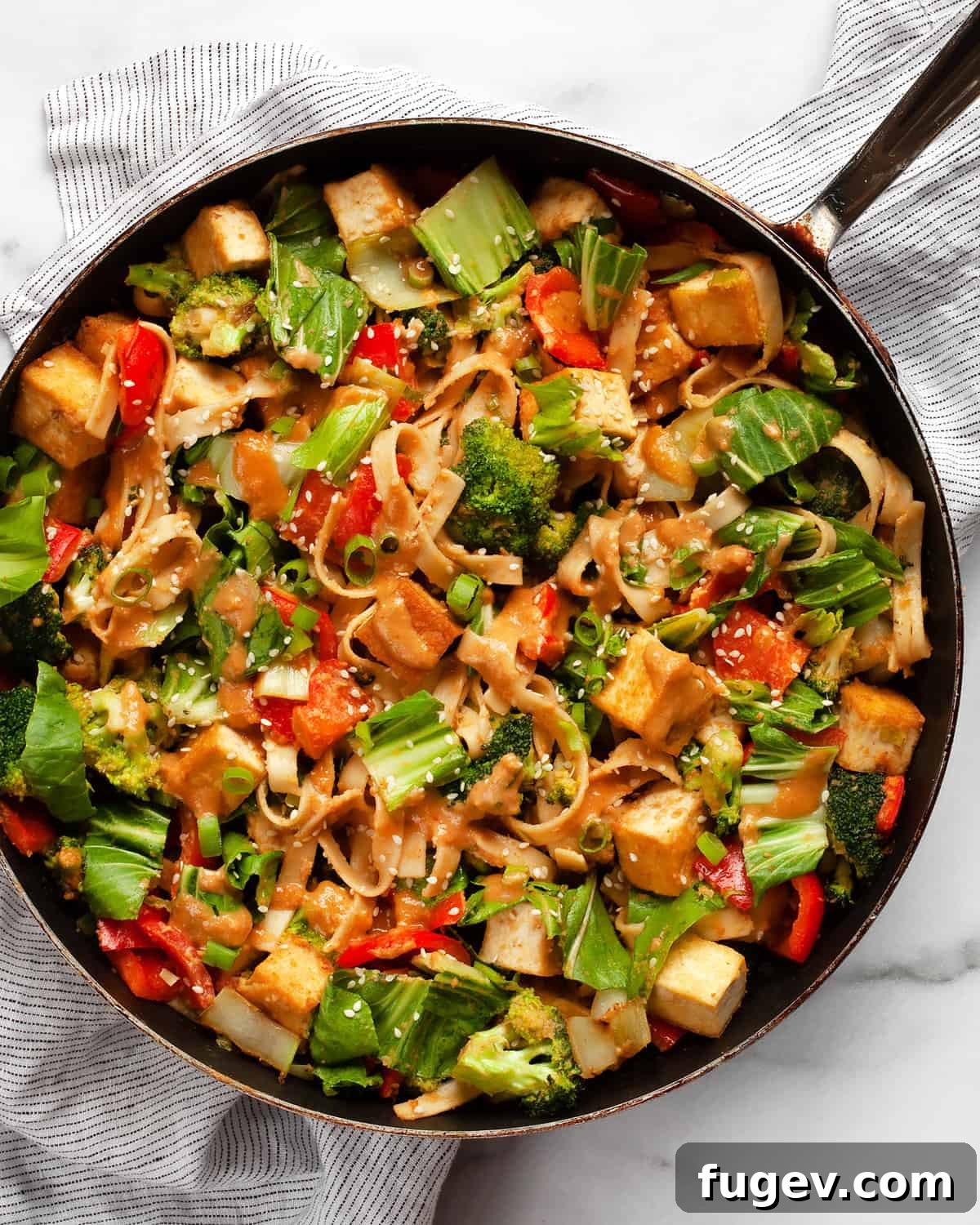
6. Combine and Finish: Return the cooked tofu to the skillet with the vegetables. Add the drained udon noodles and 1/2 cup of your prepared peanut sauce. Toss everything gently to ensure the noodles and vegetables are thoroughly coated in the rich sauce. Finally, stir in the green parts of the bok choy and the green parts of the scallions. Cook for just another minute or two, allowing the greens to wilt slightly but still maintain their fresh vibrancy. Sprinkle with sesame seeds for added texture and visual appeal. Divide the stir-fry into serving dishes and, for an extra burst of flavor, drizzle with additional peanut sauce if desired.
Serving Suggestions
This tofu vegetable stir-fry is at its best when served warm, straight from the skillet into bowls or onto plates. The heat brings out the full aroma and flavor of the peanut sauce, perfectly coating every strand of noodle and every tender-crisp vegetable. For those looking to complement their meal, consider pairing it with a refreshing side. A light and tangy Asian cucumber salad with crunchy carrots offers a cool contrast, or try a vibrant Asian cabbage salad for added texture. An edamame salad with a zesty tahini-ginger dressing would also make an excellent, protein-rich accompaniment. Don’t forget an extra drizzle of peanut sauce for those who crave more richness!
Leftover Love: Storage and Reheating
One of the many benefits of this stir-fry is how well it holds up as leftovers. Store any remaining portions in an airtight container in the refrigerator for up to three days. The flavors often deepen overnight, making for an even more enjoyable meal the next day. You can savor your leftovers in a couple of delightful ways: enjoy them cold, straight from the fridge, as a refreshing noodle salad, perfect for a quick lunch; or gently warm them in the microwave until heated through. Be careful not to overheat, as this can make the vegetables soggy. A dash of fresh lime juice or a sprinkle of chopped cilantro can re-invigorate the flavors when reheating.
More Delightful Stir-Fry Ideas
If you’ve enjoyed the simplicity and flavor of this tofu vegetable stir-fry, we encourage you to explore other quick and easy stir-fry recipes to add to your repertoire. These dishes are perfect for busy weeknights and offer endless possibilities for customization:
- Frozen Vegetable Stir-Fry: A super-fast option when fresh vegetables are not readily available.
- Garlic Ginger Veggie Tofu Stir Fry: A classic combination of aromatics and plant-based protein.
- Broccoli Edamame Pea Fried Rice: A hearty and flavorful twist on traditional fried rice.
- Cashew Veggie Stir-Fry: For those who love the added crunch and buttery taste of cashews.
We’d love to hear from you! If you tried this delicious tofu vegetable stir-fry with peanut sauce, please share your thoughts and leave a comment and rating below. Your feedback helps us and other home cooks. Thanks for cooking with us!
Tofu Vegetable Stir-Fry with Peanut Sauce
Paige Adams
20 minutes
15 minutes
35 minutes
4
Ingredients
For Peanut Sauce
- 2 garlic cloves
- 1- inch piece fresh ginger, peeled
- 1/4 cup creamy peanut butter
- 3 tablespoons low sodium soy sauce (or tamari for gluten-free)
- 2 teaspoons sesame oil
- 1 tablespoon maple syrup
- 1 teaspoon sriracha (adjust to taste)
- 1 tablespoon rice vinegar
- 1/4 cup roasted salted peanuts
- 1/4 cup water
For Stir-Fry
- 1-14 ounce block extra firm tofu, pressed and cubed
- 3 ounces udon noodles
- 1 tablespoon vegetable oil (e.g., canola, peanut, or grapeseed)
- 2 red bell peppers, diced
- 2 cups small to medium broccoli florets
- 2 heads baby bok choy, cut into 1/4-inch wide pieces, white and green parts separated
- 3 scallions, thinly sliced, white and green parts separated
- 1 tablespoon sesame seeds, for garnish
Instructions
-
Make the Peanut Sauce: In a food processor or blender, combine the garlic cloves, ginger, peanut butter, soy sauce, sesame oil, maple syrup, sriracha, rice vinegar, roasted salted peanuts, and water. Process until completely smooth and creamy. Set aside.
-
Prepare Tofu: Pat the extra-firm tofu with a paper towel. Wrap with a fresh dry paper towel and place a heavy pan or cutting board on top to press out excess liquid. Let stand for 15-20 minutes. Once pressed, cut the tofu into 1/2-inch cubes.
-
Cook Noodles: Cook the udon noodles according to package instructions in boiling salted water until al dente. Drain thoroughly and rinse with cold water in a colander to prevent sticking.
-
Cook Tofu: Heat 1 tablespoon of vegetable oil in a large nonstick skillet or wok over high heat. Add the cubed tofu and cook, turning occasionally, until lightly browned and crispy on all sides (about 1-2 minutes per side). Remove the tofu from the skillet and set aside on a plate.
-
Stir-Fry Vegetables: Add the diced red bell peppers, broccoli florets, and the white parts of the bok choy to the same skillet (add a touch more oil if needed). Sauté for 3-4 minutes over high heat until the vegetables are cooked but still bright and crisp-tender.
-
Add Aromatics: Stir in the white parts of the thinly sliced scallions and continue cooking for 1 minute until fragrant.
-
Combine Ingredients: Return the cooked tofu to the skillet. Add the drained udon noodles and 1/2 cup of the prepared peanut sauce to the vegetables and tofu. Toss well to combine and coat everything evenly.
-
Finish and Garnish: Fold in the green parts of the bok choy and the green parts of the scallions. Cook for another 1-2 minutes until the greens are slightly wilted. Sprinkle with sesame seeds.
-
Serve: Divide the stir-fry into serving bowls or plates. Drizzle with additional peanut sauce as desired for extra flavor. Serve immediately and enjoy!
Notes
Leftovers: Stir-fry leftovers can be stored in an airtight container in the refrigerator for up to 3 days. They are delicious eaten cold as a refreshing noodle salad or can be gently warmed in the microwave.
Nutrition
Carbohydrates: 50g
Protein: 30g
Fat: 23g
Saturated Fat: 4g
Polyunsaturated Fat: 9g
Monounsaturated Fat: 9g
Trans Fat: 0.02g
Sodium: 1214mg
Potassium: 2081mg
Fiber: 13g
Sugar: 18g
Vitamin A: 21667IU
Vitamin C: 404mg
Calcium: 603mg
Iron: 7mg
Nutrition information is automatically calculated and should only be used as an approximation.
Additional Info
Main Dishes
Asian
Did you make this recipe?
Mention @lastingredient on Instagram and tag it #lastingredient!