

Welcome to your new favorite breakfast or brunch indulgence: these incredible Lemon Blueberry Scones! Bursting with the vibrant flavors of fresh lemon zest and sweet, juicy blueberries, these scones are a delightful treat that tastes like sunshine in every bite. What makes this recipe truly special is its simplicity: it’s a foolproof drop scone method, meaning no complicated shaping or cutting is required. Just scoop and bake for beautifully rustic, perfectly crumbly scones every time. The exterior bakes to a lovely golden crisp, while the interior remains wonderfully soft and tender, studded generously with berries.
If you’re a fan of citrusy pastries but prefer to omit the fruit, you can easily adapt this recipe to create classic Lemon Scones instead.
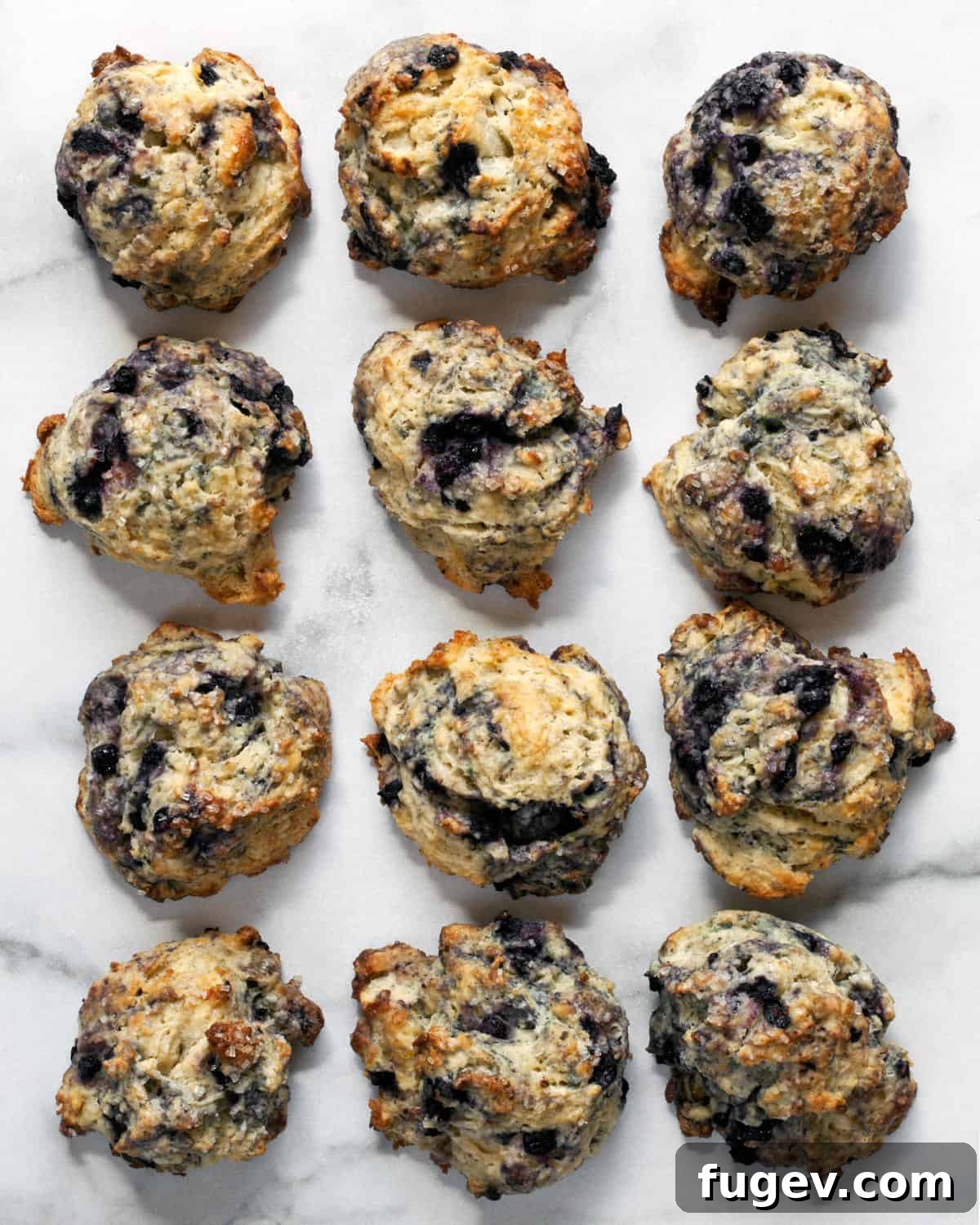
Table of Contents
- Why You’ll Adore These Lemon Blueberry Scones
- Understanding the Scone: More Than Just a Pastry
- Choosing the Perfect Blueberries for Your Scones
- The Essential Ingredients for Perfect Scones
- Optional Zesty Lemon Glaze
- Step-by-Step Guide: How To Make Lemon Blueberry Scones
- Serving Suggestions
- Storage & Freezing Tips for Freshness
- Expert Tips for Baking the Best Scones
- Frequently Asked Questions About Scones
- Explore More Scone Recipes
- Delicious Blueberry Recipes to Try Next
- Printable Lemon Blueberry Scones Recipe
Why You’ll Adore These Lemon Blueberry Scones
These lemon blueberry scones aren’t just delicious; they’re incredibly convenient and versatile, making them a fantastic addition to any baker’s repertoire. Here’s why this recipe will quickly become a favorite:
- Flexible Berry Options: Fresh or Frozen Berries Work Beautifully. Whether it’s the peak of berry season or the dead of winter, you can enjoy these scones year-round. While fresh blueberries offer a lovely burst of flavor, frozen berries are often my preference. They are firmer, which makes them easier to incorporate into the dough without crushing or “bleeding” their color too much, ensuring a beautiful appearance and consistent distribution throughout your scones.
- Effortless Preparation: No Fancy Shaping Required. Say goodbye to the stress of perfectly cut wedges or rounds! This is a classic drop scone recipe, celebrating rustic charm. Simply scoop mounds of dough onto your baking sheet. The natural bumps, cracks, and imperfect edges are exactly what give drop scones their unique, appealing character. This method significantly cuts down on prep time and makes baking accessible for even novice bakers.
- Bake Ahead & Freeze for Convenience. Life gets busy, but that shouldn’t stop you from enjoying fresh-baked goodness. This recipe offers incredible flexibility for meal prepping. You can prepare the dough in advance and refrigerate it for a few days before baking, or freeze either the unbaked dough portions or fully baked scones for a grab-and-go treat whenever a craving strikes. This makes having warm, homemade scones a reality even on the busiest mornings.
Understanding the Scone: More Than Just a Pastry
Originating in Scotland, scones hold a cherished place in British culinary traditions, most famously served as a quintessential component of afternoon tea. Structurally and in terms of preparation, scones share many similarities with American biscuits, both relying on cold butter cut into flour to create tender, flaky layers. However, there are distinct differences in their character and common usage.
Traditionally, a well-made scone boasts a desirable combination of textures: a lightly crisp, golden-brown crust on the outside, and a wonderfully soft, fluffy, and tender interior. When split in half, the perfect scone should exhibit a beautiful crumbly texture, indicative of its rich, buttery layers. While not overtly sweet like a dessert pastry, scones typically contain a touch more sugar than their savory American biscuit counterparts, making them ideal for breakfast, a delightful afternoon snack, or paired with a hot cup of coffee or, of course, a traditional pot of tea.
They are often enjoyed simply with butter, or more elaborately with clotted cream and jam, showcasing their versatility. Our lemon blueberry version adds a refreshing fruitiness and zesty brightness that elevates this classic pastry to new heights.
Choosing the Perfect Blueberries for Your Scones
The success of these scones heavily relies on the quality and distribution of the blueberries. As previously mentioned, you have the option to use either fresh or frozen berries, both yielding delicious results. My personal recommendation leans towards using frozen blueberries. Their firmer texture makes them significantly easier to fold into the dough without bursting, which prevents the dough from becoming overly stained and maintains the distinct bursts of blue throughout the scone.
If you can find them, wild blueberries are an excellent choice. They are typically smaller than standard cultivated blueberries, meaning more berries can be evenly distributed throughout each scone, ensuring a delightful berry pop in every bite. Regardless of your choice, a quick toss in a tablespoon of flour before adding them to the dough is a clever trick to prevent them from sinking to the bottom and to minimize any potential color bleeding.
The Essential Ingredients for Perfect Scones
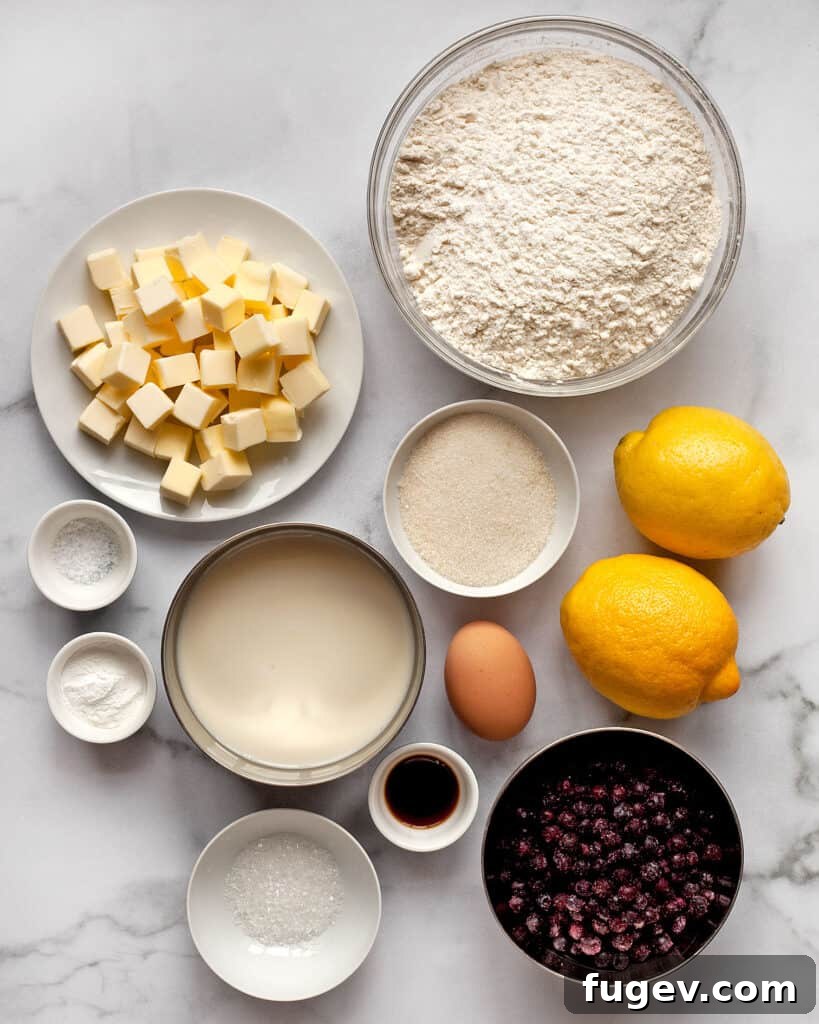
Crafting perfect scones begins with understanding the role each ingredient plays. Here’s what you’ll need to create these irresistible lemon blueberry delights:
- Blueberries: As discussed, either fresh or frozen blueberries will work. For the best distribution and minimal staining, opt for smaller wild blueberries and remember to toss them in a little flour before incorporating into the dough.
- All-Purpose Flour: This forms the foundational structure of your scones. Using standard all-purpose flour provides the ideal balance for a tender, yet satisfyingly structured scone that bakes up beautifully.
- Unsalted Butter (Chilled & Cubed): This is perhaps the most crucial ingredient for achieving that signature crumbly, flaky texture. Unlike cookies where butter is creamed, for scones, cold butter is cut into the flour. As these small pieces of cold butter melt during baking, they release steam, creating pockets of air and those desirable flaky layers. Ensure it’s very cold and firm.
- Lemon Zest: The star of the citrus show! I highly recommend zesting at least two fresh lemons to infuse the dough with a bright, aromatic, and intense lemon flavor that perfectly complements the blueberries. Avoid the white pith, as it can be bitter.
- Granulated Sugar: Providing a subtle sweetness, the sugar in this recipe ensures the scones are sweet enough to be a treat, but not overly sugary, allowing the lemon and blueberry flavors to shine.
- Baking Powder: Our primary leavening agent. Baking powder reacts when wet and with heat, causing the scones to rise beautifully and achieve a light, airy texture with a lovely dome.
- Kosher Salt: A pinch of salt is essential in both sweet and savory baking. It enhances all the other flavors, balancing the sweetness and brightening the lemon and blueberry notes.
- Large Egg: The egg binds the wet ingredients together and adds richness and structure to the dough, contributing to the overall tenderness and stability of the scones.
- Milk: Any type of milk can be used, from skim to whole milk, or even non-dairy alternatives like oat milk. While some recipes call for heavy cream for extra richness, regular milk works wonderfully to hydrate the dough and keep the scones light without being overly dense.
- Vanilla Extract: A teaspoon of vanilla extract adds a subtle warmth and depth, rounding out the complex flavors of lemon and blueberry without overpowering them. It’s a secret weapon for a well-balanced taste.
- Coarse Sugar (for topping): Also known as sanding sugar, this optional but highly recommended topping provides a beautiful sparkle and a delightful textural crunch on the crust of the baked scones.
Optional Zesty Lemon Glaze
While I often prefer these scones simply topped with coarse sugar for a rustic look and subtle crunch, a bright lemon glaze can add an extra layer of sweetness and a vibrant citrus kick. It’s a fantastic option if you love a sweeter, tangier finish.
To prepare the glaze, simply whisk together 1 tablespoon of freshly squeezed lemon juice with 1/2 cup of powdered sugar until smooth. The goal is a pourable, yet slightly thick consistency. Depending on the humidity and exact measurements, you may need to adjust by adding a tiny bit more lemon juice for a thinner glaze or a touch more powdered sugar for a thicker one. Remember, it’s crucial that your scones have cooled completely to room temperature before drizzling with the glaze; otherwise, it will simply melt off.
Step-by-Step Guide: How To Make Lemon Blueberry Scones
Baking these delightful lemon blueberry scones is a straightforward process, especially since it’s a drop scone recipe. Follow these steps for perfect results:
Preparation: Begin by preheating your oven to 400 degrees Fahrenheit (200 degrees Celsius). Line two large baking sheets with parchment paper. This prevents sticking and ensures easy cleanup.
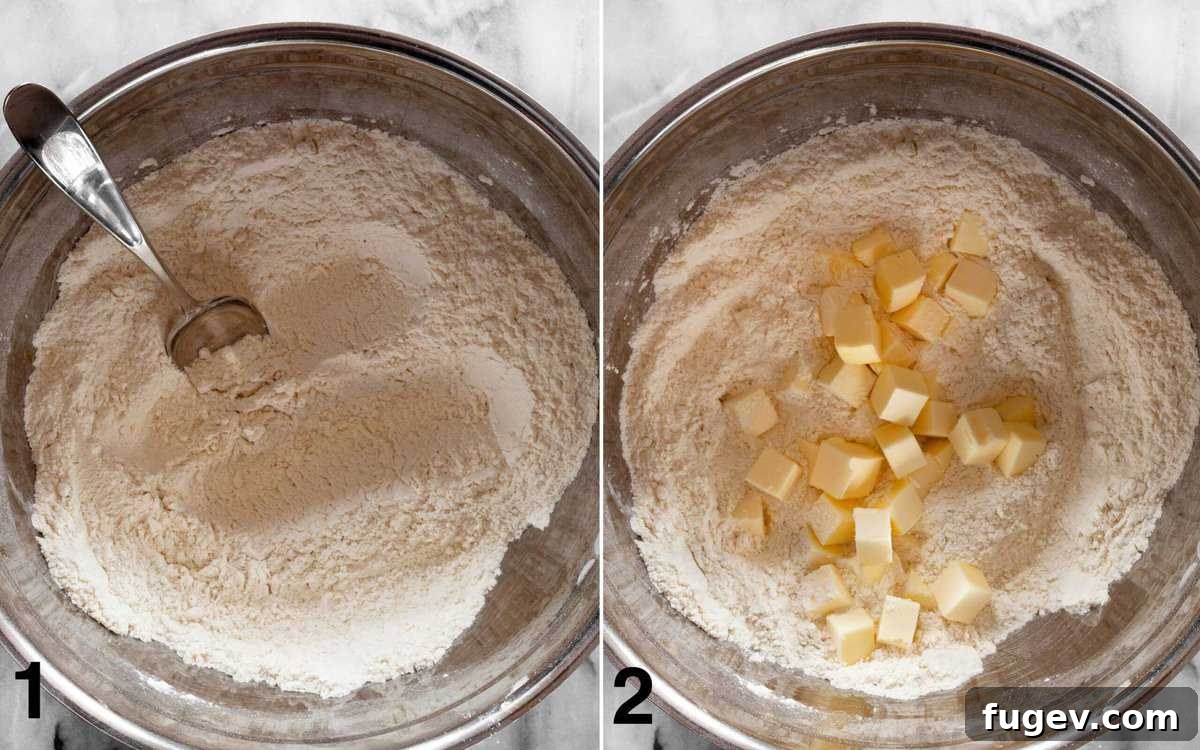
1. Combine the Dry Ingredients: In a large mixing bowl, thoroughly whisk together the all-purpose flour, granulated sugar, baking powder, kosher salt, and the fragrant lemon zest. Ensure these ingredients are well combined so the leavening and flavors are evenly distributed.
2. Cut in the Cold Butter: This is a critical step for tender, flaky scones. Add the cold, cubed unsalted butter to the dry ingredients. Using a pastry blender (also known as a pastry cutter), two forks, or even your fingertips, work the butter into the flour mixture. The goal is to break down the butter into pea-sized clumps, or even slightly larger coarse crumbs, ensuring each piece is coated in flour. These small butter pieces will create steam pockets during baking, resulting in those desired flaky layers.
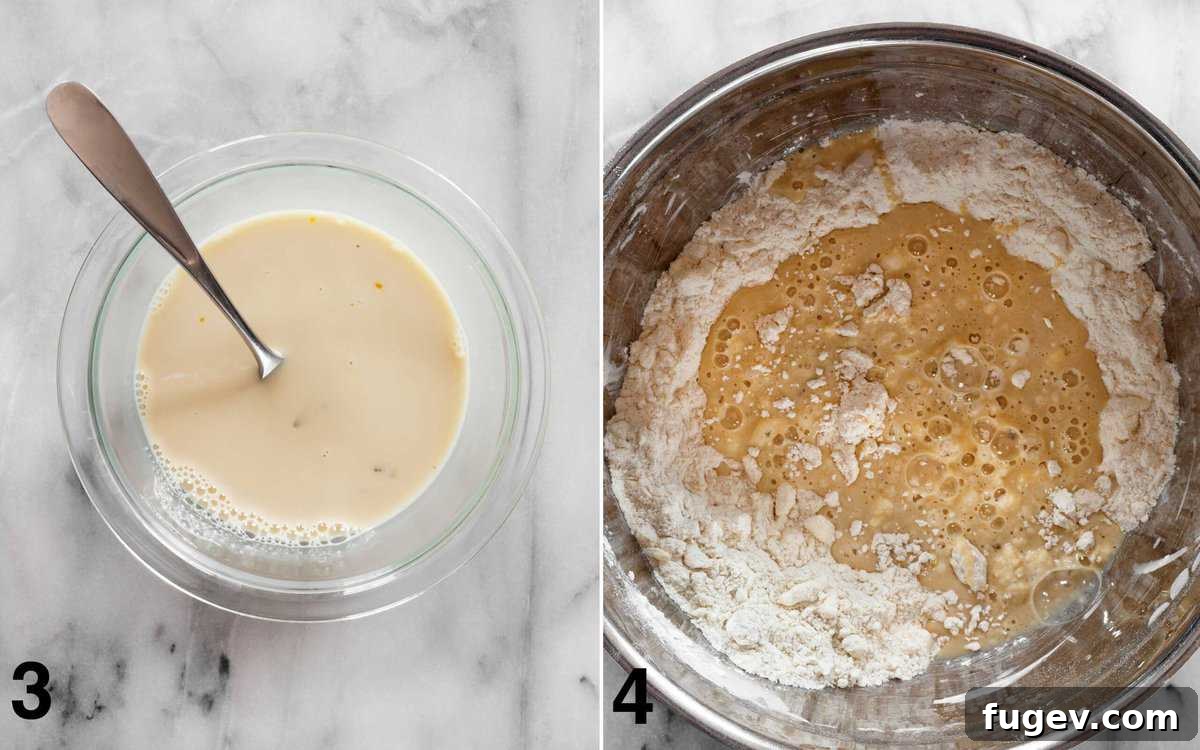
3. Prepare the Wet Ingredients: In a separate, smaller bowl, gently whisk together the large egg, milk, and vanilla extract until they are well combined. This ensures even incorporation into the dry mix.
4. Combine Wet and Dry: Pour the whisked wet ingredients into the large bowl with the flour and butter mixture. Use a wooden spoon or spatula to gently stir until just combined. The dough will look very shaggy and somewhat crumbly – this is perfectly normal and desired. Avoid overmixing at this stage, as it can lead to tough scones. Keeping the dough in the bowl for this step is fine; there’s no need to turn it out onto a floured surface yet.
5. Add the Blueberries: In a small separate bowl, toss your fresh or frozen blueberries with a tablespoon of all-purpose flour. This light coating helps prevent the berries from sinking to the bottom of the scones and minimizes color bleeding into the dough. Gently fold the floured blueberries into the shaggy dough until they are just distributed. Be careful not to overmix.
6. Form the Dough: Lightly flour your hands, then gently press the dough together within the bowl until it forms a cohesive ball. The key here is minimal handling. Overworking the dough develops gluten, which can make your scones tough, and also increases the likelihood of blueberry staining.
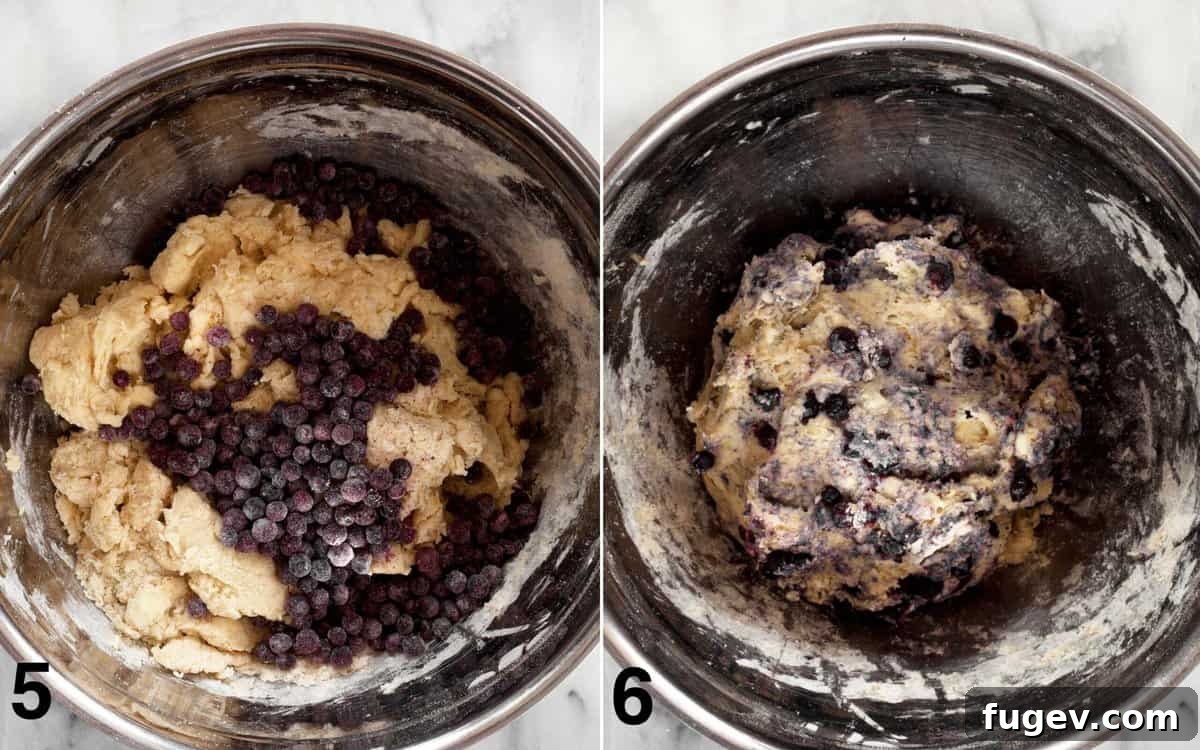
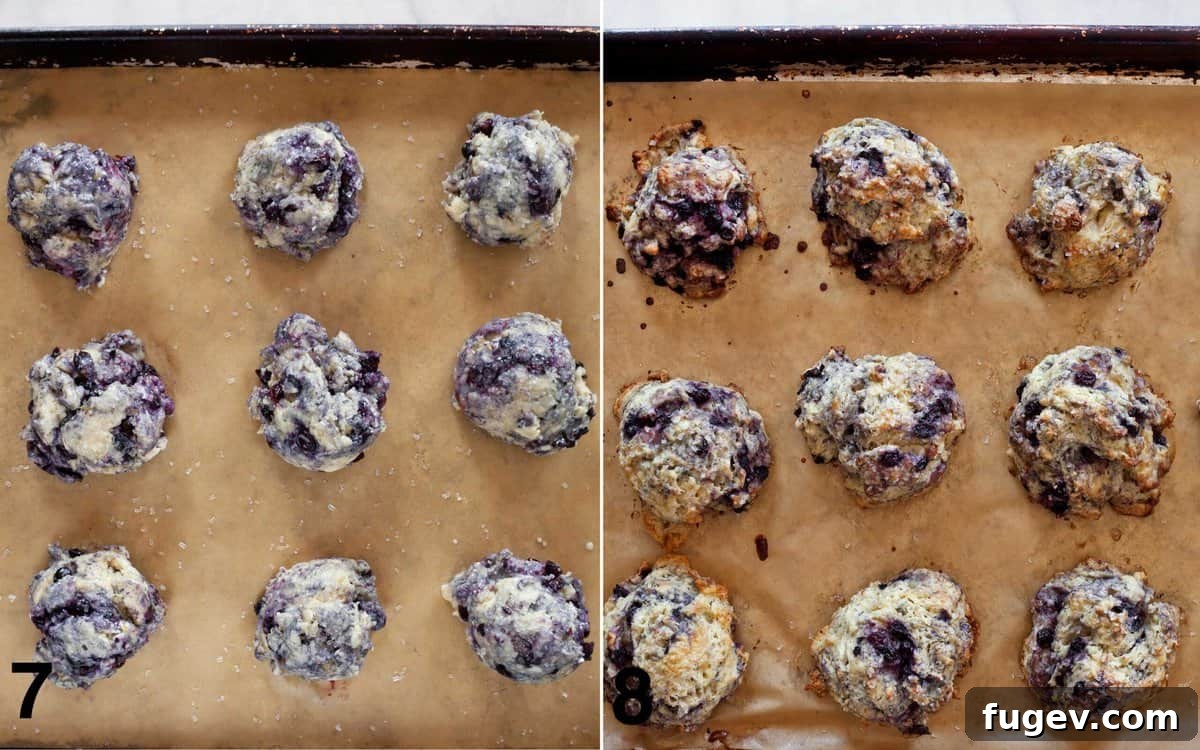
7. Scoop and Prepare for Baking: Using a large cookie scoop (about a heaping 1/4 cup to 1/3 cup of dough per scoop) or your hands, drop mounds of dough onto the prepared baking sheets, leaving about 3 inches between each scone to allow for spreading. Once all scones are on the trays, gently brush the tops of each with a little extra milk. This promotes a beautiful golden-brown crust. Finally, sprinkle generously with coarse sugar for added sparkle and crunch.
8. Bake to Golden Perfection: Transfer the baking sheets to your preheated oven. Bake for approximately 18-20 minutes, or until the scones are gloriously golden brown on top and have developed enticing cracks, indicating a perfect rise. Once baked, remove them from the oven and allow them to cool on a wire rack. Cooling is important for the exterior to crisp up and for the berries to set.
Serving Suggestions
These Lemon Blueberry Scones are utterly delightful whether served warm straight from the oven or at room temperature. If serving warm, do allow them a few minutes to cool down after baking. This not only prevents you from burning your mouth on hot berries but also allows the exterior to develop that lovely, desired crustier texture. They are perfect on their own, but can also be elevated with a dollop of clotted cream, a smear of your favorite jam, or simply a generous pat of softened butter. Pair them with a freshly brewed cup of coffee or a comforting mug of tea for an authentic British experience or a truly special breakfast.
Storage & Freezing Tips for Freshness
Scones are undeniably at their absolute best when enjoyed fresh, ideally on the very day they are baked. The crispy exterior and tender interior are most pronounced shortly after coming out of the oven. However, that doesn’t mean you can’t enjoy homemade scones whenever the craving strikes!
For ultimate convenience and a taste of “fresh-baked” any day, I highly recommend freezing the dough unbaked. Simply portion out your scone dough onto a baking sheet lined with parchment or waxed paper. Freeze them until solid (this usually takes a couple of hours). Once firm, transfer the frozen scone balls to a freezer-safe airtight container or bag. They can be stored for up to 1 month. The beauty of this method is you can bake just one or two scones at a time, straight from the freezer (no thawing needed!), adjusting the baking time slightly to about 20-22 minutes.
If you’ve baked an entire batch and have leftovers, store them in an airtight container at room temperature for up to 2 days. To refresh day-old scones and bring back that wonderful crisp exterior, pop them into a 300-degree Fahrenheit (150 degrees Celsius) oven for about 5-7 minutes.
Should you wish to freeze baked scones, ensure they are completely cooled before placing them in an airtight container or freezer bag. They will keep well for up to 1 month. To reheat, thaw them at room temperature first, then warm them in a 325-degree Fahrenheit (160 degrees Celsius) oven for 12-14 minutes until heated through and lightly crisped.
Expert Tips for Baking the Best Scones
Achieving perfectly tender, flaky scones is simple once you know a few key tricks. Follow these expert tips for consistently delicious results every time:
- Embrace the Cold Butter: This is non-negotiable! Your unsalted butter absolutely needs to be chilled and firm. Cold butter is key to creating pockets of steam during baking, which in turn leads to a light, flaky, and tender crumb. You should be able to see small, distinct clumps of flour-coated butter throughout the mixture before adding any wet ingredients. If your kitchen is warm, you can even chill your flour and mixing bowl before starting.
- Don’t Overwork the Dough: Resist the urge to knead or overmix the scone dough. Overworking develops gluten, resulting in tough, dense scones rather than light, tender ones. After combining the wet and dry ingredients, the dough will look shaggy. Use your hands to gently press it together into a ball, just enough to bring it together without excessive kneading.
- Frozen Blueberries Are Your Friend: While fresh blueberries are wonderful, frozen berries are often easier to work with in scone dough. Their firmness means they’re less likely to burst and stain the dough, keeping your scones beautifully colored. Plus, they stay colder longer, helping to maintain the integrity of the cold butter. You don’t even need to thaw them; just toss them in flour and add them straight from the freezer.
- Make Ahead for Convenience: This scone dough is incredibly forgiving and perfect for prepping in advance. You can prepare the dough up to 3 days beforehand. Simply cover the bowl tightly with plastic wrap and store it in the refrigerator. When you’re ready to bake, scoop and proceed with the recipe as usual.
- Leverage the Freezer for Freshness Anytime: For truly freshly baked scones on demand, take advantage of freezing the dough. Portion out the dough onto a parchment-lined sheet pan and freeze until solid. Once frozen, transfer the individual scone portions to a freezer-safe bag or container. You can then bake them directly from frozen (adding a few extra minutes to the baking time) whenever you desire a warm, homemade treat, even on the busiest of mornings. This method ensures you always have the best flavor and texture.
Frequently Asked Questions About Scones
Good scones should strike a perfect balance: a delightful crunch on the outside that yields to a light, fluffy, and tender interior. They should ideally be crumbly when broken in half, not dry or dense. The moisture comes from the butter and milk, balanced by the flour.
Brushing the tops of scones with a little milk before baking serves a few purposes. It helps them achieve a beautiful, rich golden-brown color during baking and provides a surface for coarse sugar to adhere to, giving them an appealing sparkle and a delicate crunch.
For the most even baking and consistent results, position your baking sheets on a rack in the middle of the oven. This ensures proper heat circulation around the scones, promoting a uniform rise and golden finish.
Absolutely! While lemon and blueberry are a classic combination, this versatile scone base works well with other fruits. Consider swapping blueberries for raspberries, chopped strawberries, or even dried cranberries. Adjust the lemon zest quantity or omit it if your chosen fruit has a strong flavor profile you want to highlight.

Explore More Scone Recipes
If you loved these Lemon Blueberry Scones, be sure to explore our other delightful scone variations:
- Cinnamon Maple Scones
- Strawberry Almond Scones
Delicious Blueberry Recipes to Try Next
Can’t get enough of those wonderful blueberries? Here are more recipes featuring this fantastic fruit:
- Vegan Blueberry Chia Muffins
- Vegan Blueberry Crumble Ice Cream
- Blueberry Lime Pie
Did you bake these amazing Lemon Blueberry Scones? We’d love to hear your thoughts! Please leave a rating and comment below. Thank you for baking with us!
Lemon Blueberry Scones
Paige Adams

20
20
40
16 scones
Ingredients
- 3 cups + 1 tablespoon all-purpose flour
- 3 teaspoons baking powder
- 1/3 cup granulated sugar
- 1/4 teaspoon kosher salt
- Zest of 2 lemons
- 6 ounces (1-1/2 sticks) chilled unsalted butter, cubed
- 1 large egg
- 3/4 cup milk plus more for brushing tops
- 1 teaspoon vanilla extract
- 1 cup fresh or frozen blueberries
- Coarse sugar optional
Instructions
-
Preheat the oven to 400 degrees F (200 C). Line 2 sheet pans with parchment paper.
-
In a large bowl, stir together 3 cups all-purpose flour, baking powder, granulated sugar, salt, and lemon zest.
-
Use a fork or pastry blender to cut the cold, cubed butter into the dry ingredients, until it resembles pea-sized clumps. Alternatively, rub the butter and flour together with your fingertips.
-
In a small bowl, whisk together the egg, milk, and vanilla extract. Stir these wet ingredients into the flour-butter mixture until just combined. The dough will appear shaggy and clumpy.
-
Before the dough is fully combined, toss the blueberries in 1 tablespoon of flour in a small bowl. Then, add them to the dough, gently pressing the dough together to incorporate the berries without overworking.
-
Drop the dough by 1/4 to 1/3-cup-full mounds onto the prepared sheet pans, spreading them about 3 inches apart. A cookie scoop makes this process easy.
-
Brush the tops of the scones with a little milk and sprinkle generously with coarse sugar.
-
Bake for approximately 18-20 minutes, or until the scones are golden brown and cracked on the top.
-
Allow the scones to cool on a wire rack before serving.
Video
Notes
Scones are best enjoyed the day they are baked. You can store leftover baked scones in an airtight container at room temperature for 1-2 days. To refresh them, warm in a 300-degree F (150 C) oven for about 5 minutes.
Scones can be frozen either unbaked or baked. For unbaked scones, scoop the dough onto a lined sheet and freeze until solid. Once frozen, transfer them to an airtight container and freeze for up to 1 month. Do not thaw unbaked scones before baking; bake them straight from frozen at 400 degrees F (200 C) for 18-22 minutes.
Frozen baked scones can be kept in an airtight container for up to 1 month. Thaw them at room temperature, then warm in a 325-degree F (160 C) oven for 12-14 minutes.
Optional Lemon Glaze: Whisk 1 tablespoon fresh lemon juice with 1/2 cup powdered sugar. Adjust consistency with a little more juice or sugar as needed. Wait for the scones to cool completely before icing. For easy cleanup, place scones on a wire rack with a lined sheet pan underneath when drizzling the glaze.
Nutrition
Carbohydrates: 24g |
Protein: 3g |
Fat: 10g |
Saturated Fat: 6g |
Polyunsaturated Fat: 1g |
Monounsaturated Fat: 2g |
Trans Fat: 0.3g |
Cholesterol: 34mg |
Sodium: 126mg |
Potassium: 57mg |
Fiber: 1g |
Sugar: 6g |
Vitamin A: 305IU |
Vitamin C: 1mg |
Calcium: 67mg |
Iron: 1mg
Nutrition information is automatically calculated, so should only be used as an approximation.
Additional Info
Quick Breads & Muffins
British
Did you make this recipe?
Mention @lastingredient on Instagram and tag it #lastingredient!
Recipe originally published July 15, 2021. Updated: April 26, 2023.