
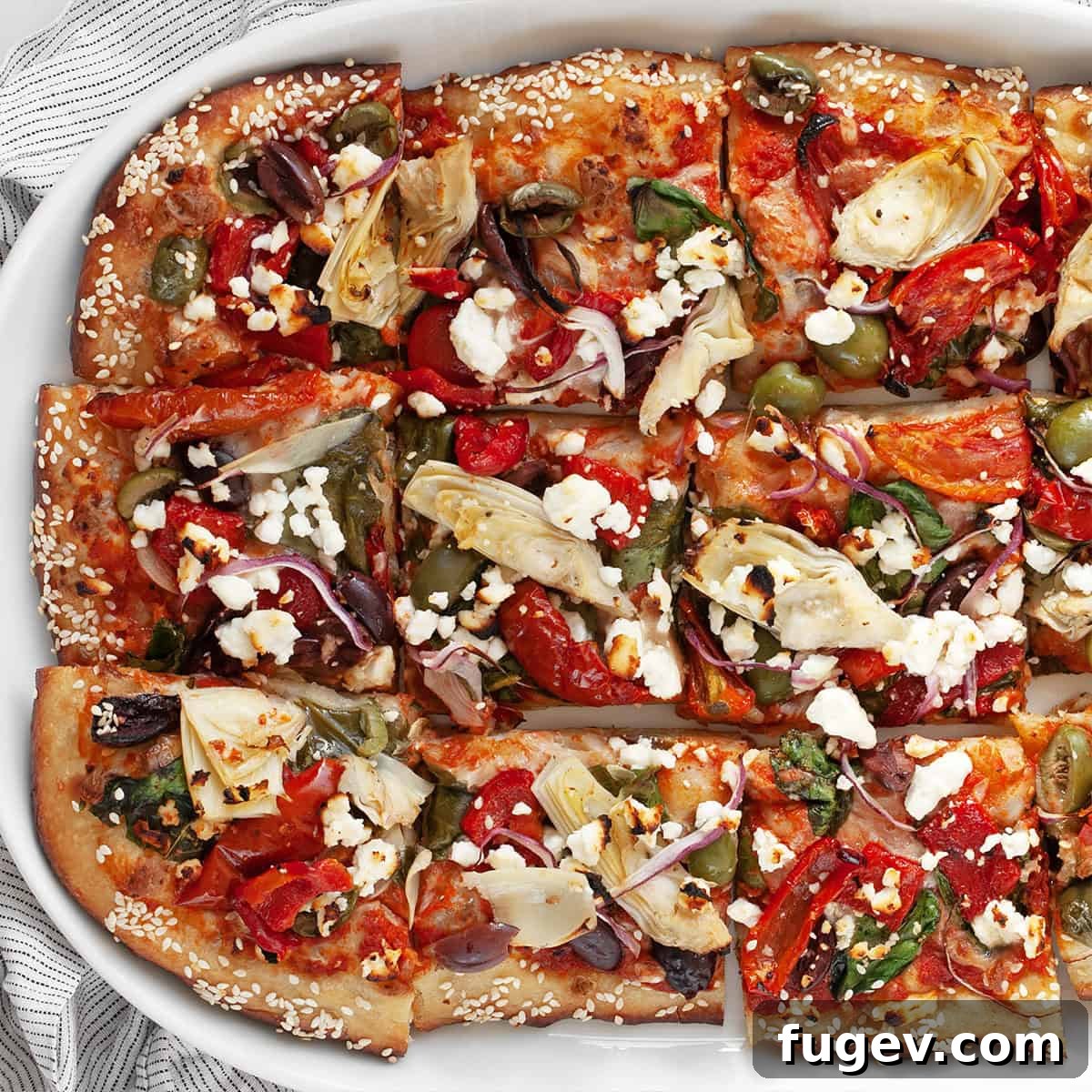
Easy & Vibrant Mediterranean Pizza: Your Go-To Recipe for Flavorful Weeknights
Craving a taste of the Mediterranean without the hassle? This incredibly easy Mediterranean pizza recipe brings vibrant flavors to your table with minimal effort. Using convenient store-bought dough and a medley of readily available ingredients, you can whip up a gourmet-style pizza in no time. Topped generously with savory sun-dried tomatoes, sweet roasted red peppers, briny olives, tender artichoke hearts, and creamy feta, every bite is a celebration of classic Mediterranean tastes. And for an extra layer of nutty flavor and delightful crunch, we’ll sprinkle the edges of the dough with sesame seeds before it bakes. This versatile pizza is perfect for a satisfying vegetarian dinner when paired with a fresh salad, or sliced into squares for a crowd-pleasing game day appetizer.
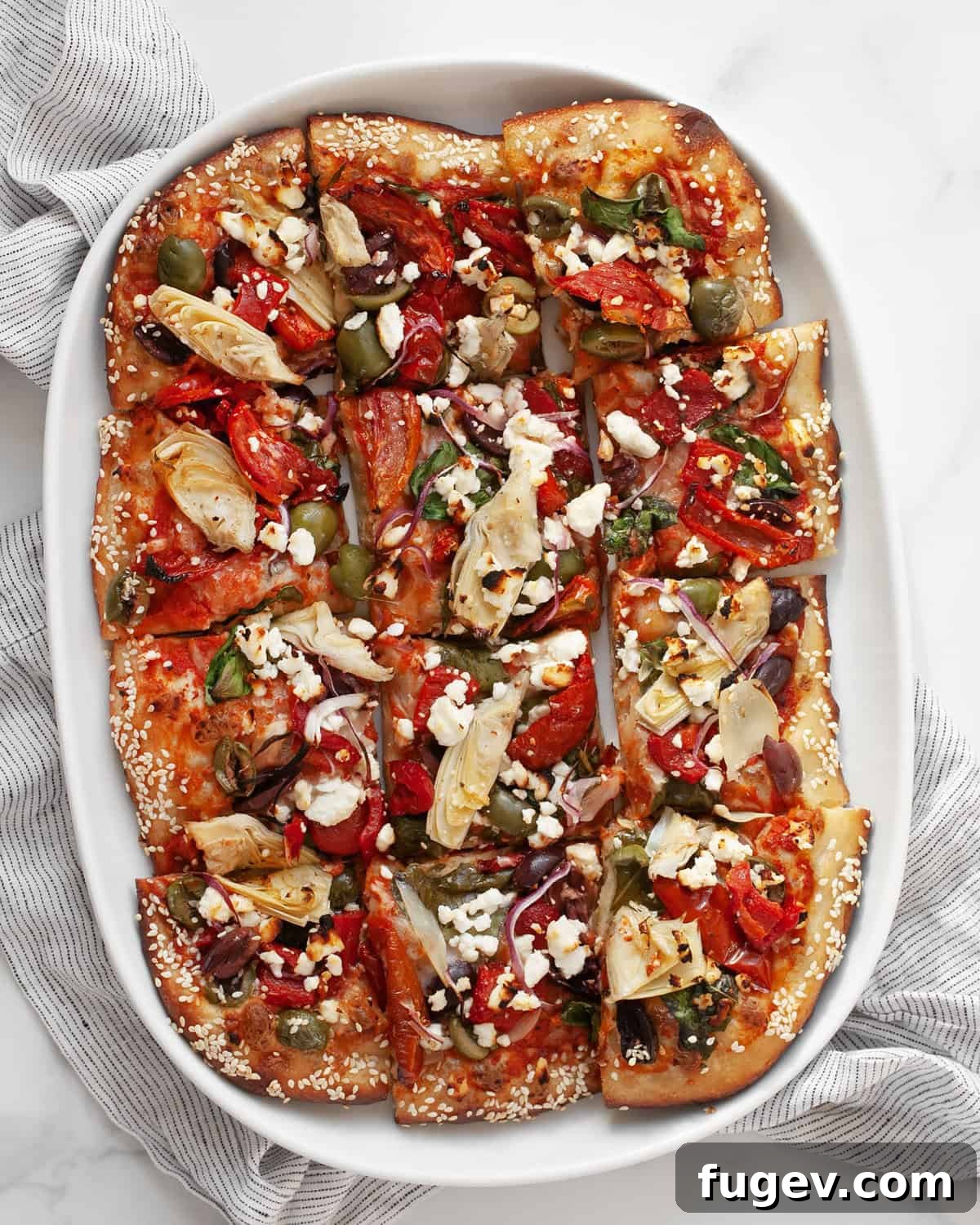
Table of Contents
- Why You’ll Love This Recipe
- The Ingredients Unveiled
- How To Make This Easy Mediterranean Pizza
- Serving Suggestions
- Leftovers, Storage & Reheating
- Expert Recipe Tips for Perfection
- More Pizza Recipes to Explore
- Mediterranean Pizza Recipe Card
Why You’ll Love This Recipe
This Mediterranean pizza isn’t just another meal; it’s an experience built on convenience and incredible flavor. Here’s why it’s destined to become a staple in your kitchen:
1. A Celebration of Toppings Over Cheese: Unlike many traditional pizzas where cheese can overwhelm other flavors, this recipe shines by highlighting its vibrant, fresh vegetable toppings. We advocate for a lighter hand with mozzarella to ensure that the exquisite tastes of sun-dried tomatoes, roasted red peppers, olives, and artichokes are the true stars, not masked by a heavy cheese blanket. The result is a pizza that feels fresh, exciting, and full of character.
2. Effortless Convenience with Store-Bought Dough: While making dough from scratch is rewarding, time isn’t always on our side. This recipe embraces the convenience of refrigerated pizza dough, making homemade pizza achievable on even the busiest weeknights. Brands like Trader Joe’s and Whole Foods offer excellent options, allowing you to bypass the proofing process and get straight to the fun part: assembling your masterpiece. It’s a game-changer for quick, delicious meals.
3. The Irresistible Charm of a Sesame Seed Crust: Prepare to elevate your pizza game with a simple yet transformative addition: sesame seeds on the crust. A quick brush of olive oil followed by a sprinkle of sesame seeds transforms the plain dough into a nutty, slightly crunchy, and incredibly aromatic border. This subtle touch adds an unexpected layer of flavor and texture that will have you incorporating it into every homemade pizza from now on. It’s a small step that yields a huge flavor impact.
4. A Healthier, Brighter Pizza Option: Packed with vegetables and featuring a balanced amount of cheese, this Mediterranean pizza offers a fresher, lighter alternative to heavier pizza varieties. It’s naturally vegetarian and can be easily adapted to be vegan by omitting the cheeses, focusing on the abundance of colorful, nutrient-rich toppings. It’s a guilt-free indulgence that satisfies both your taste buds and your desire for wholesome eating.
5. Perfect for Any Occasion: Whether you’re planning a cozy vegetarian dinner for two, feeding a family, or looking for an impressive yet easy appetizer for a gathering, this pizza fits the bill. Its vibrant appearance and bold flavors make it a showstopper, and its ease of preparation means you can spend more time enjoying your guests and less time in the kitchen.
The Ingredients Unveiled
Creating this Mediterranean masterpiece relies on a thoughtful selection of ingredients. Each component plays a vital role in building the rich, balanced flavor profile that makes this pizza so irresistible. Here’s a closer look at what you’ll need and some tips for choosing the best:
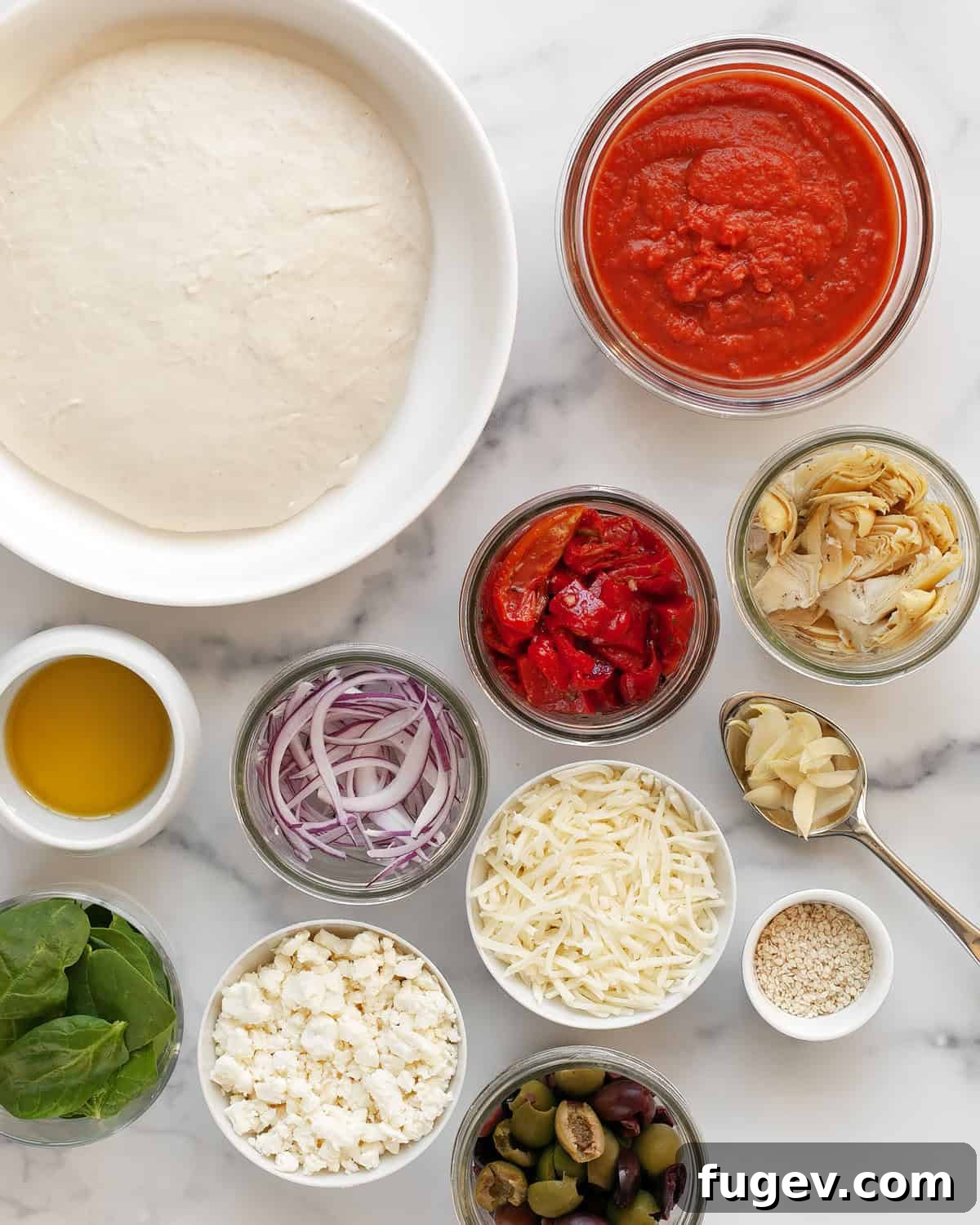
- Store-Bought or Homemade Pizza Dough: The foundation of your pizza! For ultimate convenience, refrigerated store-bought dough from specialty grocers like Trader Joe’s or Whole Foods is highly recommended. You can opt for traditional white flour dough or a whole wheat variety for added fiber. The crucial step is to allow the dough to come to room temperature for at least 2 hours before shaping. This makes it pliable and easy to work with, preventing it from snapping back as you stretch it.
- Pizza Sauce: The choice of sauce significantly impacts the overall flavor. I personally lean towards a smoother, well-seasoned sauce that allows the toppings to shine, rather than a chunky variety that might compete for attention. A simple homemade tomato sauce, pureed after simmering, offers incredible depth. Alternatively, select your favorite high-quality jarred pizza sauce. Ensure it’s not overly sweet or acidic, as this can throw off the balance of the Mediterranean flavors.
- Garlic: Thinly sliced fresh garlic cloves are a simple yet powerful addition. Placed directly onto the sauce before the cheese, they infuse the pizza with a subtle, aromatic pungency that complements every other ingredient without being overpowering. This method distributes the garlic flavor more evenly than minced garlic, which can sometimes burn.
- Olives: Pitted olives are a must for ease of eating and slicing. A mix of briny Kalamata olives and buttery Castelvetrano olives provides a wonderful contrast in flavor and texture. Avoid the low-quality canned black or green olives, as their milder flavor and softer texture won’t stand up to the other bold ingredients. Halving the olives ensures they are bite-sized and spread evenly across the pizza.
- Sun-Dried Tomatoes: These intensely flavored gems bring a concentrated sweetness and umami depth. Look for sun-dried tomatoes packed in oil, typically found in jars in the Italian section of your grocery store or at the olive bar. They are plump and ready to use, unlike the vacuum-packed dry ones that require rehydration. Roughly chop them for even distribution.
- Roasted Red Peppers: Sweet, smoky, and tender, jarred roasted red peppers are a fantastic convenience item. Use a fork to retrieve them from their liquid, then chop them into pieces roughly the same size as your sun-dried tomatoes. You can adjust the ratio of sun-dried tomatoes to roasted red peppers based on your preference; a 1:1 ratio works beautifully.
- Artichoke Hearts: Marinated artichoke hearts, typically found in jars, add a lovely tang and unique texture. Make sure to drain them well and cut them into quarters. Keeping them to a manageable size is key to ensuring the pizza is easy to slice and eat, preventing large, cumbersome bites.
- Spinach: Fresh baby spinach adds a touch of green, a hint of earthy flavor, and a dose of nutrients. The heat of the oven will beautifully wilt the spinach, integrating it seamlessly into the toppings. Baby arugula can be a delightful substitute if you prefer a slightly peppery note.
- Red Onions: Thinly sliced red onions contribute a sharp, fresh bite that mellows pleasantly during baking, offering a subtle sweetness and aromatic depth. Slice them as thinly as possible to ensure they soften nicely and distribute their flavor throughout the pizza without overpowering it.
- Mozzarella: We use shredded mozzarella as a foundational cheese, but with a lighter hand. Its mild, milky flavor provides a perfect backdrop without dominating the vibrant Mediterranean toppings. Layer it directly over the sauce and garlic, creating a gentle bed for the vegetables. A good quality shredded pizza cheese blend can also be used.
- Feta: Crumbled feta cheese is the crowning glory, offering a salty, tangy counterpoint that truly defines the “Mediterranean” aspect of this pizza. Scatter it as the final topping after the vegetables for a burst of flavor in every bite. If feta isn’t your preference, grated Parmesan cheese offers a milder, savory alternative.
- Sesame Seeds: These tiny seeds are crucial for our signature crust. They provide a wonderful nutty flavor and a satisfying crunch that elevates the entire pizza experience. Don’t skip this step – it’s a simple trick with a gourmet result.
- Olive Oil: Essential for greasing your baking sheet, ensuring the dough doesn’t stick, and for brushing the crust before adding the sesame seeds. A good quality extra virgin olive oil enhances the overall Mediterranean essence.
How To Make This Easy Mediterranean Pizza
Creating this flavorful Mediterranean pizza is surprisingly straightforward. Follow these simple steps for a perfect homemade pie:
Preparation: Begin by preheating your oven to 450 degrees F (230 degrees C). Lightly grease a large baking sheet with 1 tablespoon of olive oil. For easier cleanup, you can optionally line the pan with parchment paper.
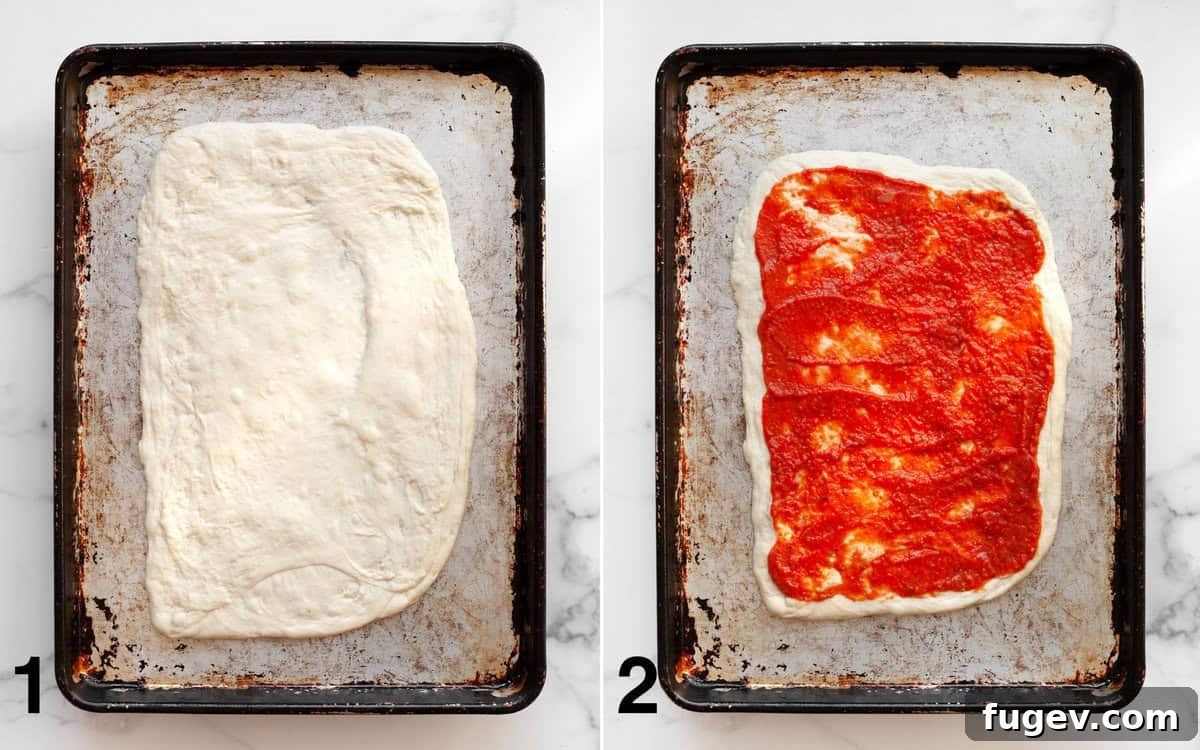
1. Shape the Dough: On your prepared baking sheet or a lightly floured surface (if the dough is sticky), gently stretch and shape the dough with your hands. You don’t necessarily need a rolling pin; your hands are often the best tools for achieving that rustic, authentic pizza crust texture. Aim for a rough rectangle or oval, approximately 9×12 inches. If the dough resists stretching or shrinks back, allow it to rest for another 10-15 minutes at room temperature. This allows the gluten to relax, making it much more pliable. Don’t worry about achieving a perfect shape; a rustic look adds to its charm.
2. Spread the Sauce: Once the dough is shaped, evenly spread your chosen pizza sauce across the surface. Be sure to leave a 1/2-inch border around the edges of the dough; this will become your crust and prevent the toppings from spilling over.
3. Add Initial Toppings: Sprinkle the shredded mozzarella cheese evenly over the sauce. The cheese acts as a light adhesive for the subsequent toppings. Then, scatter the thinly sliced garlic directly onto the mozzarella. This ensures the garlic infuses its flavor throughout the pizza as it bakes.
4. Layer on the Vegetables: Now it’s time for the star Mediterranean ingredients! Generously scatter the baby spinach, halved olives, quartered sun-dried tomatoes, roughly chopped roasted red peppers, quartered artichoke hearts, and thinly sliced red onion over the pizza. Try to distribute them as evenly as possible to ensure every slice gets a taste of everything.
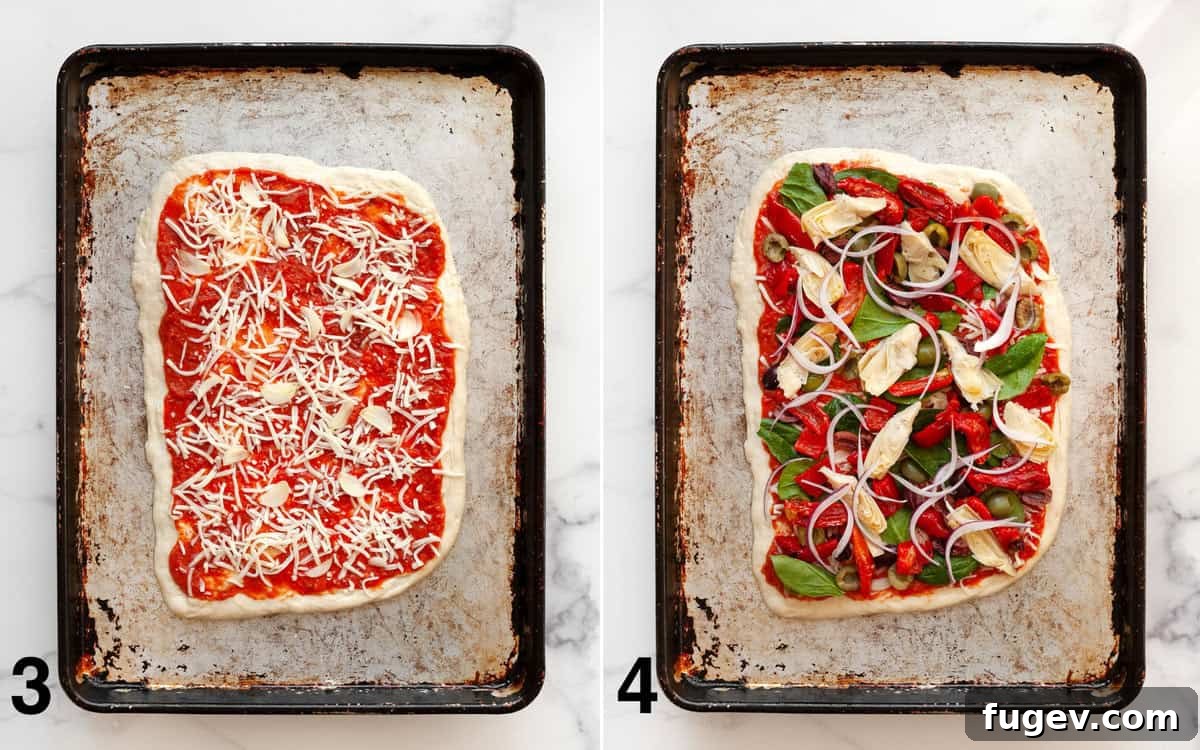
5. Final Touches: Sprinkle the crumbled feta cheese over all the vegetable toppings. This will melt slightly and add its distinct salty tang. Finally, brush the exposed crust border with a little extra olive oil, then generously sprinkle it with sesame seeds. This step creates our signature crunchy, nutty crust.
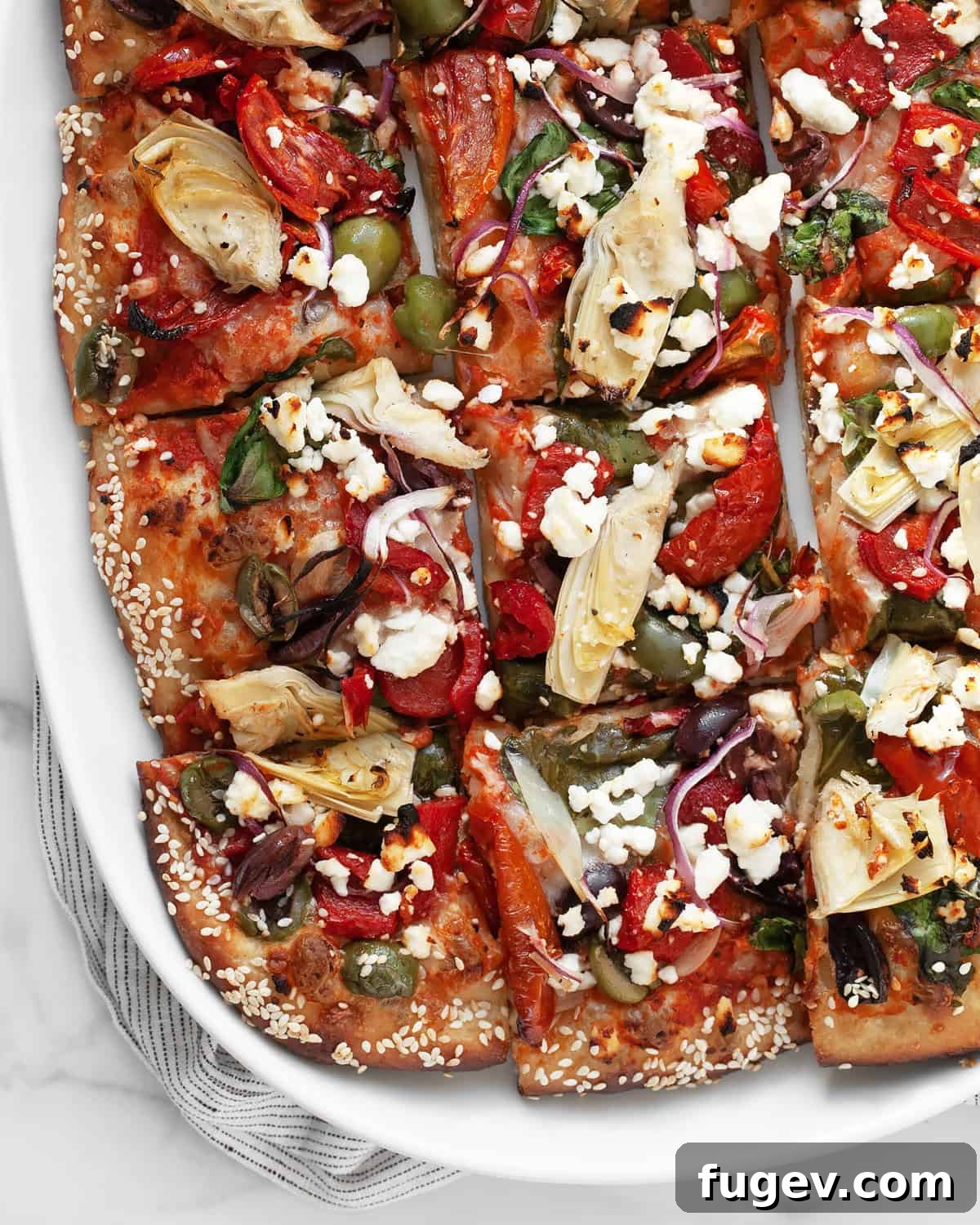
6. Bake to Perfection: Carefully transfer the baking sheet to your preheated oven. Bake for 12-14 minutes, or until the pizza crust is beautifully puffed up, golden brown, and crisp at the edges. The cheese should be melted and lightly bubbly, and the vegetables tender.
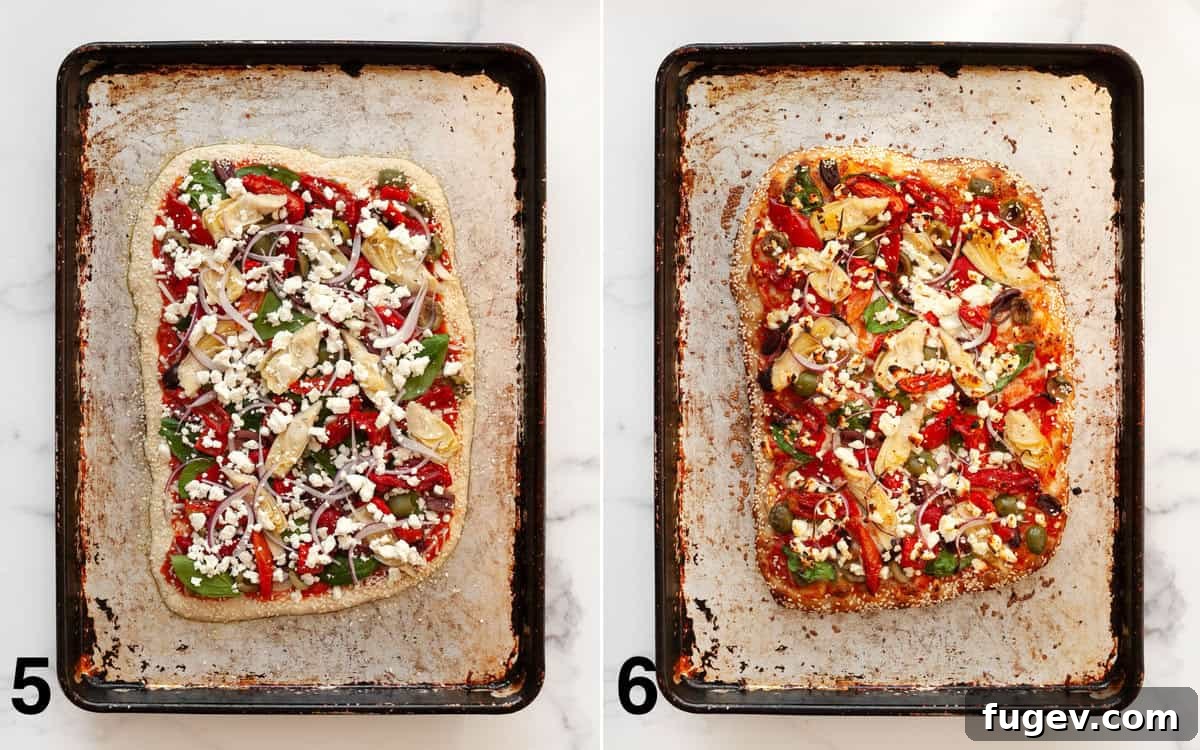
Remove from the oven, let it cool for a minute or two before slicing, and then serve immediately!
Serving Suggestions
This Mediterranean pizza is incredibly versatile and makes a fantastic meal on its own, but it truly shines when paired thoughtfully. Here are some of my favorite ways to serve it:
For a Complete Vegetarian Dinner: My absolute go-to side for pizza night is always a fresh, vibrant salad. The lightness and crispness of greens perfectly complement the rich flavors of the pizza. Consider these excellent pairings:
- Lemon Arugula Salad: The peppery notes of arugula and bright lemon vinaigrette cut through the richness of the pizza beautifully.
- Classic House Salad: A simple mixed greens salad with your favorite dressing (perhaps a balsamic vinaigrette) is always a winner.
- Italian Chopped Salad: For something more substantial, a chopped salad with chickpeas, cucumbers, tomatoes, and a robust Italian dressing adds more texture and protein.
As a Game Day Appetizer: If you’re serving this pizza for a casual gathering or game day, feel free to skip the leafy greens! This pizza is hearty and flavorful enough to stand alone as a fantastic finger food. Slice it into smaller squares for easy grabbing and munching. It’s a guaranteed crowd-pleaser that offers a gourmet twist on traditional game day fare.
Beverage Pairings: A crisp, dry white wine like Sauvignon Blanc or Pinot Grigio pairs wonderfully with the bright, salty flavors of the Mediterranean. For non-alcoholic options, sparkling water with a squeeze of lemon or a light herbal iced tea would be refreshing.
Additions to the Table: A small bowl of extra Kalamata olives, a side of good quality olive oil for drizzling, or a sprinkle of fresh oregano after baking can elevate the experience even further.
Leftovers, Storage & Reheating
One of the best things about pizza is that it often tastes even better the next day! Proper storage and reheating are key to enjoying your Mediterranean pizza long after it’s baked.
Storing Leftovers in the Refrigerator:
Allow any extra slices to cool completely to room temperature before storing. This prevents condensation from making the crust soggy. Once cooled, place the pizza slices in an airtight container or wrap them tightly in aluminum foil. Stored this way, your Mediterranean pizza will stay fresh in the refrigerator for up to 5 days, making it perfect for quick lunches or dinners throughout the week.
Reheating for Optimal Flavor and Texture:
For the best possible leftover pizza experience, always reheat it in the oven – never in the microwave. The microwave tends to make the crust chewy and the toppings rubbery. To reheat in the oven:
- Preheat your oven to 400 degrees F (200 degrees C).
- Place the cold pizza slices directly on a baking sheet.
- Warm the slices for 7-9 minutes, or until the cheese is melted, the toppings are heated through, and the crust is crisp again.
Freezing for Long-Term Storage:
If you have a lot of leftovers or want to meal prep, this pizza freezes beautifully. For best results, slice the pizza into individual portions before freezing. This makes it incredibly convenient to reheat just one or two slices at a time. Wrap each slice tightly in plastic wrap, then again in aluminum foil, or place them in freezer-safe bags. Frozen pizza can be stored for up to 1 month.
Reheating Frozen Pizza:
The good news is you don’t need to thaw frozen pizza before reheating! Simply follow these steps:
- Preheat your oven to 400 degrees F (200 degrees C).
- Place the frozen pizza slices directly on a baking sheet.
- Bake for 13-15 minutes, or until the crust is crisp and the toppings are thoroughly heated and bubbly. You may need a couple of extra minutes if the slices are particularly thick.
Expert Recipe Tips for Perfection
Achieving Mediterranean pizza perfection is easier than you think. Keep these expert tips in mind to ensure a delicious and stress-free cooking experience every time:
- Ensure Dough is at Room Temperature: This is arguably the most critical tip! Cold dough is stiff, inelastic, and notoriously difficult to stretch and shape without tearing or shrinking back. Remove your store-bought refrigerated dough from the fridge at least 2 hours before you plan to make the pizza. For best results, let it sit on your countertop, still in its packaging, to gradually warm up. This makes it pliable and a dream to work with.
- Customize Your Toppings: The beauty of this Mediterranean pizza lies in its adaptability. While the suggested amounts of olives, red peppers, sun-dried tomatoes, and artichokes create a balanced flavor, feel free to adjust them to your personal taste. Love olives? Add a bit more! Prefer fewer artichokes? Scale back. The key is to aim for approximately 1.5 cups of total toppings (excluding cheese and spinach) to avoid overloading the pizza and ensure even baking. You can also add other Mediterranean favorites like capers, thinly sliced zucchini, or even some crumbled cooked lamb or chicken for a non-vegetarian option.
- Don’t Skip the Sesame Crust: Seriously, this is a game-changer! The simple act of brushing the crust with olive oil and sprinkling it with sesame seeds before baking adds an incredible depth of nutty flavor and a delightful crunch. It transforms an ordinary crust into a gourmet element. Once you try it, you’ll wonder how you ever made pizza without it.
- Add a Drizzle of Pesto Post-Baking: If you’re a fan of fresh herbs and garlic, consider a light drizzle of homemade or good quality store-bought pesto after the pizza comes out of the oven. The warmth of the pizza will gently release the pesto’s aromas, adding another layer of vibrant, herbaceous flavor without burning. This works particularly well if you’re using a milder pizza sauce. Learn how to make fresh pesto here.
- Consider a Pizza Stone or Steel: While a baking sheet works perfectly well, a preheated pizza stone or steel can significantly improve your crust. It provides a burst of intense, even heat from below, resulting in an extra-crispy crust and a faster bake time. Ensure your stone or steel is preheated in the oven for at least 30-60 minutes before placing the pizza on it.
- A Quick Broil for Extra Crispness: If you find your toppings aren’t quite as golden or crispy as you’d like, or if you prefer a slightly more charred look on your crust, you can carefully turn on the broiler for the last 1-2 minutes of baking. Watch it very closely, as things can go from perfectly golden to burnt in a matter of seconds!
- Mind the Moisture: Some jarred ingredients, like roasted red peppers and artichoke hearts, come packed in liquid. Ensure you drain them thoroughly and pat them dry if necessary to prevent excess moisture from making your pizza soggy.
More Pizza Recipes to Explore
If you love this Mediterranean pizza, you might enjoy experimenting with these other delicious pizza creations:
- Cauliflower Crust Pizza: A lighter, gluten-friendly option for your favorite toppings.
- Roasted Vegetable Pizza: Featuring a delightful medley of roasted seasonal vegetables.
- Grilled Mushroom Corn Pizza: For a unique smoky flavor profile perfect for summer grilling.
- Sun Dried Tomato Arugula Pizza: A fresh and zesty pizza with peppery greens.
Mediterranean Pizza Recipe
This easy Mediterranean pizza, made with store-bought dough, features a delicious combination of sun-dried tomatoes, roasted red peppers, olives, artichokes, feta, and a unique sesame seed crust. It’s a flavorful and convenient option for any meal.
By: Paige Adams
Prep Time: 15 mins
Cook Time: 14 mins
Total Time: 29 mins
Servings: 4
Ingredients
- 1 tablespoon olive oil, plus more for brushing crust
- 1 pound store-bought refrigerated pizza dough or homemade dough, at room temperature
- 1 cup pizza sauce (smooth is preferred)
- 1/2 cup shredded mozzarella cheese
- 1 garlic clove, thinly sliced
- 1/2 cup baby spinach
- 1/2 cup halved pitted Kalamata and Castelvetrano olives
- 1/2 cup quartered sun-dried tomatoes (oil-packed) and roughly chopped roasted red peppers (jarred)
- 1/2 cup quartered marinated artichoke hearts, well-drained
- 1/4 small red onion, thinly sliced
- 1/2 cup crumbled feta cheese
- 2 tablespoons sesame seeds
Instructions
- Preheat the oven to 450 degrees F (230 degrees C). Grease a large baking sheet with 1 tablespoon of olive oil. Optionally, line the pan with parchment paper.
- Gently stretch and shape the dough into a rough rectangle or oval, approximately 9×12 inches. If the dough is sticky, lightly dust it with flour. If it springs back, let it rest for a few minutes to relax.
- Spread the pizza sauce across the dough, leaving a 1/2-inch border at the edges for the crust.
- Sprinkle the shredded mozzarella cheese and then the thinly sliced garlic evenly over the sauce.
- Generously top the pizza with baby spinach, olives, sun-dried tomatoes, roasted red peppers, artichokes, and red onion slices.
- Scatter the crumbled feta cheese evenly over all the vegetables.
- Brush the exposed crust with additional olive oil, then sprinkle generously with sesame seeds.
- Bake for 12-14 minutes, or until the pizza crust puffs up, is golden brown, and crisp at the edges, and the cheese is melted and bubbly.
- Remove from oven, let cool slightly, then slice and serve immediately.
Notes
- If using a store-bought pizza crust instead of dough, follow the cooking instructions provided on the package.
- For an extra crispy crust, you can bake the pizza on a preheated pizza stone or steel instead of a sheet pan.
- Feel free to adjust the quantities of olives, red peppers, tomatoes, and artichokes to suit your preference, aiming for about 1.5 cups total.
- Store leftover pizza in an airtight container or wrapped tightly in foil in the refrigerator for up to 5 days.
- To reheat refrigerated pizza, place slices on a baking sheet in a 400-degree F (200 degrees C) oven for 7-9 minutes.
- You can freeze the pizza, wrapped tightly, for up to 1 month. Slice before freezing for easy reheating of individual portions.
- To reheat frozen pizza, place slices on a baking sheet in a 400-degree F (200 degrees C) oven for 13-15 minutes (no need to thaw).
Nutrition (Approximate)
Calories: 482kcal | Carbohydrates: 62g | Protein: 16g | Fat: 20g | Saturated Fat: 6g | Polyunsaturated Fat: 2g | Monounsaturated Fat: 6g | Cholesterol: 28mg | Sodium: 2013mg | Potassium: 276mg | Fiber: 4g | Sugar: 10g | Vitamin A: 1198IU | Vitamin C: 19mg | Calcium: 209mg | Iron: 5mg
Nutrition information is automatically calculated and should only be used as an approximation.
Additional Info
Course: Pizza
Cuisine: Italian (with Mediterranean influences)
Did you make this recipe?
We’d love to see your creations! Mention @lastingredient on Instagram and tag it #lastingredient!