
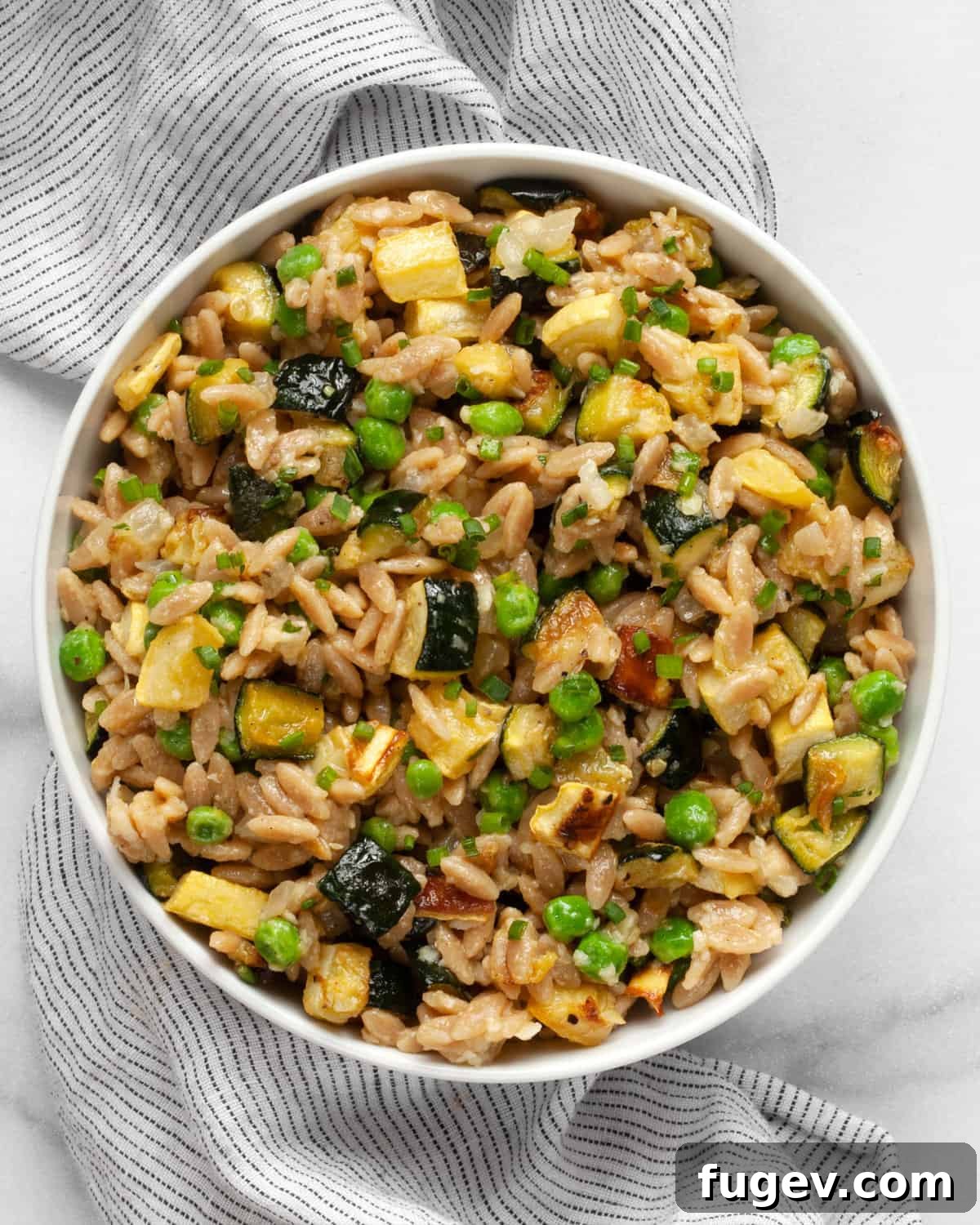
Creamy Parmesan Orzo with Roasted Zucchini and Squash
Indulge in this incredibly flavorful and satisfying Parmesan Orzo dish, where tiny pasta pearls are simmered to perfection in a savory vegetable broth, creating an irresistibly creamy texture. This recipe elevates a simple side into a wholesome meal by incorporating a vibrant mix of roasted yellow squash, zucchini, and sweet peas, making it an ideal easy vegetarian orzo recipe. Whether you’re looking for a hearty lunch, a light dinner, or an impressive side dish, this pasta will surely become a household favorite.
Looking for more orzo inspiration? You might also enjoy our Lemon Kale Orzo for another refreshing twist.
Why You’ll Absolutely Love This Creamy Orzo Recipe
This Roasted Zucchini Squash Parmesan Orzo isn’t just another pasta dish; it’s a culinary experience designed for both ease and enjoyment. Here’s why it deserves a spot in your weekly meal rotation:
- The Best of Both Worlds: Pasta and Rice in One. Orzo pasta, with its unique rice-like shape, brings a delightful chewiness reminiscent of both pasta and risotto. When simmered in broth, it absorbs all the rich flavors, yielding an incredibly creamy consistency without the need for heavy cream or a separate sauce. This makes it a lighter yet equally comforting alternative to traditional cream-based pasta dishes.
- A Celebration of Fresh Vegetables. This recipe is a fantastic way to pack plenty of nutrients into your meal. Sweet peas, tender diced zucchini, and yellow squash are perfectly sized to complement the orzo, ensuring that every forkful is bursting with vibrant flavors and healthy goodness. The roasting process caramelizes the squash and zucchini, enhancing their natural sweetness and adding depth to the dish.
- Incredibly Versatile and Adaptable. While this recipe is a standout as is, its adaptability is truly remarkable. Feel free to swap out the roasted squash and zucchini for other seasonal vegetables. Imagine using juicy roasted cherry tomatoes in the summer for a burst of acidity, or earthy sautéed mushrooms for a richer, umami flavor. As the seasons change, consider roasted butternut squash for a cozy fall rendition. And no matter the time of year, you can always stir in a handful of fresh baby spinach at the end for an extra boost of greens.
- Quick and Easy to Prepare. With a prep time of just 5 minutes and a total cooking time of around 35 minutes, this recipe is perfect for busy weeknights. The simultaneous roasting of vegetables and simmering of orzo streamlines the process, making it surprisingly fast for such a flavorful dish.
- A Wholesome Vegetarian Main or Side. This Parmesan orzo is hearty enough to stand alone as a fulfilling vegetarian main course, offering a balanced combination of carbohydrates, protein from the Parmesan, and a generous serving of vegetables. It also makes an excellent side dish to complement a variety of proteins, from grilled chicken to baked fish.
What Exactly is Orzo?
Often mistaken for rice due to its distinctive shape, orzo is actually a small, oval-shaped pasta belonging to the Italian family of pastina, which literally translates to “little pasta.” Despite its appearance, it behaves much like other pasta varieties but offers a unique texture and versatility in cooking.
Traditionally, orzo can be prepared in a few different ways: it can be boiled in salted water like any conventional pasta, or it can be simmered in broth, much like risotto. The latter method, which we employ in this recipe, allows the orzo to slowly absorb the liquid and release its starches, resulting in an exceptionally creamy and flavorful consistency without the addition of any heavy cream. This “risotto-style” cooking is perfect when you want a warm, comforting dish.
Alternatively, when preparing orzo for cold pasta salads, cooking it in boiling water yields distinct, separate grains that are ideal for tossing with other ingredients. Orzo is also a fantastic addition to soups, where it adds substance and a pleasant chewiness, making the broth even more hearty and satisfying.
You’ll find various types of orzo available in most supermarkets. While conventional white flour orzo is common, I particularly enjoy using whole-wheat orzo for this recipe. It introduces a subtle nutty flavor and a bit more bite, along with increased fiber content, adding another layer of nutritional value to the dish. Some brands also offer tri-color orzo, which can add a fun visual element to your meal.
The Essential Ingredients for This Orzo Masterpiece
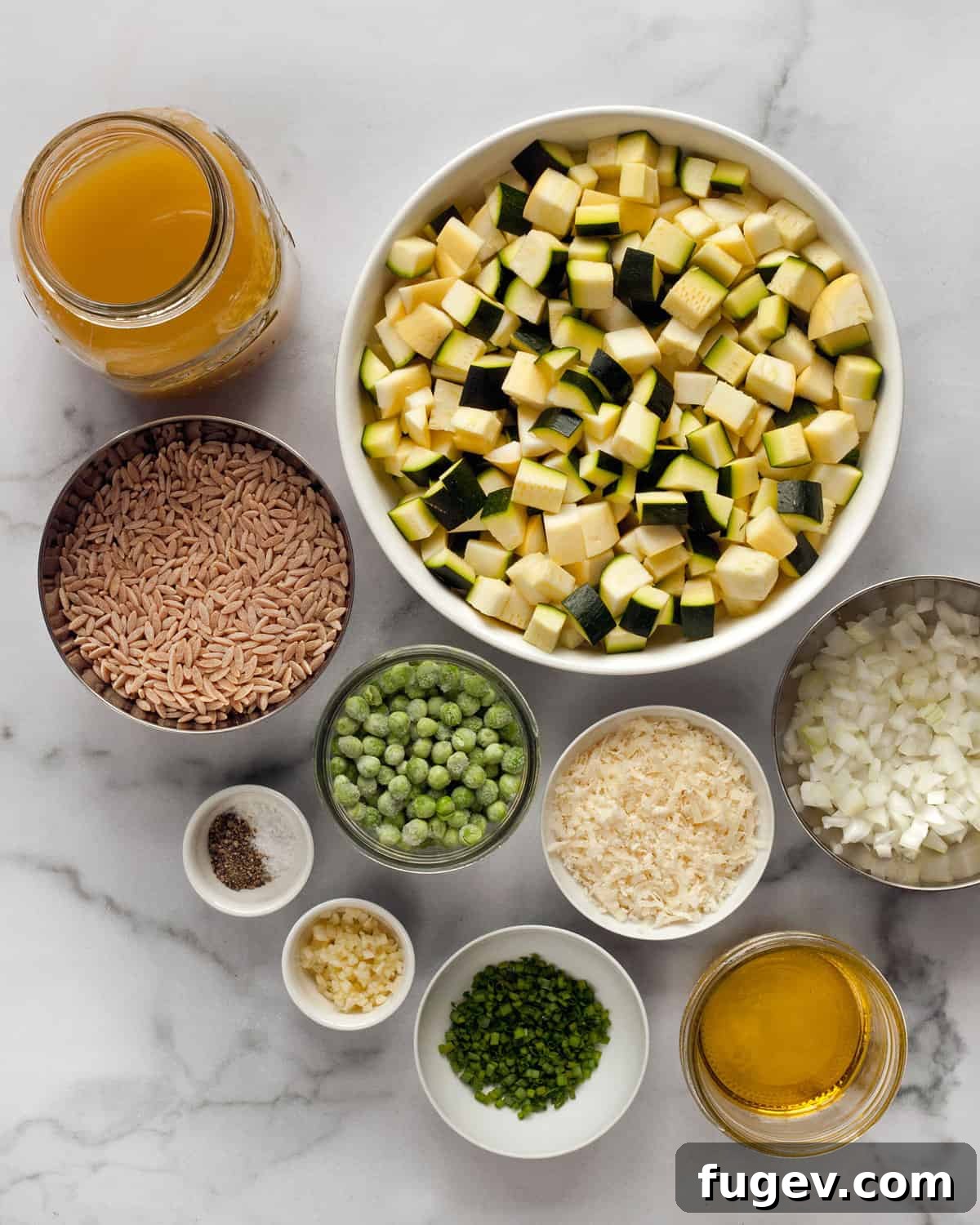
Creating this delicious Squash Zucchini Parmesan Orzo requires a selection of fresh and pantry staples that come together harmoniously:
- Orzo: The star of our dish! Choose between classic plain orzo for a neutral base, whole-wheat orzo for added texture and nutrients, or even tri-color orzo to make the dish visually pop. Any variety will yield a delicious result when cooked “risotto-style” in broth.
- Yellow Squash & Zucchini: These summer favorites are transformed through roasting. When tossed with olive oil, salt, and pepper and baked at 400°F (200°C), they develop a tender interior and slightly caramelized edges, enhancing their natural sweetness. Look for firm, blemish-free squash and zucchini.
- Peas: A quick and easy addition! Both fresh or frozen peas work wonderfully here. Frozen peas are especially convenient as they thaw and warm instantly from the residual heat of the cooked orzo, adding a burst of sweet flavor and vibrant color.
- Parmesan Cheese: Essential for that signature creamy texture and tangy, salty depth. This Italian hard cow’s milk cheese not only contributes to the rich creaminess when melted into the broth-cooked orzo but also imparts a delightful umami flavor. For the best taste, grate fresh Parmesan rather than using pre-shredded varieties.
- Onions: Sautéing finely chopped onions forms the aromatic foundation of our orzo. As they soften and sweeten, they release complex flavors that infuse the entire dish, creating a warm and inviting base. White or yellow onions are both suitable.
- Garlic: A crucial flavor enhancer! Two minced garlic cloves are added to the sautéed onions, releasing their pungent, aromatic oils and complementing the sweetness of the onions. Always mince fresh garlic for the most intense flavor.
- Vegetable Broth: The liquid base for cooking the orzo. Using low-sodium vegetable broth is key, as it allows you to control the overall seasoning of the dish. If you don’t require the recipe to be vegetarian, chicken broth can be a suitable alternative, offering a slightly different flavor profile.
- Fresh Chives: A bright and delicate garnish. Minced chives provide a subtle, fresh oniony flavor without being overpowering. They add a touch of elegance and lightness to the rich orzo. You can also use parsley or dill if chives are unavailable.
- Olive Oil: Used for roasting the vegetables and sautéing the aromatics. Extra-virgin olive oil is recommended for its superior flavor and quality, adding a fruity and peppery note.
- Salt & Pepper: Fundamental seasonings that bring out the best in all the ingredients. Kosher salt and freshly ground black pepper are used to season both the roasted vegetables and the orzo, ensuring a well-balanced flavor throughout the dish.
How To Make Creamy Squash Zucchini Parmesan Orzo
This recipe involves two simple main components: roasting the vegetables and cooking the orzo. Both are straightforward and come together beautifully for a cohesive, flavorful meal.
Part 1: Roasting the Zucchini and Squash
Preheat your oven to 400°F (200°C). This ensures your vegetables roast evenly and quickly, achieving that desirable golden-brown finish.
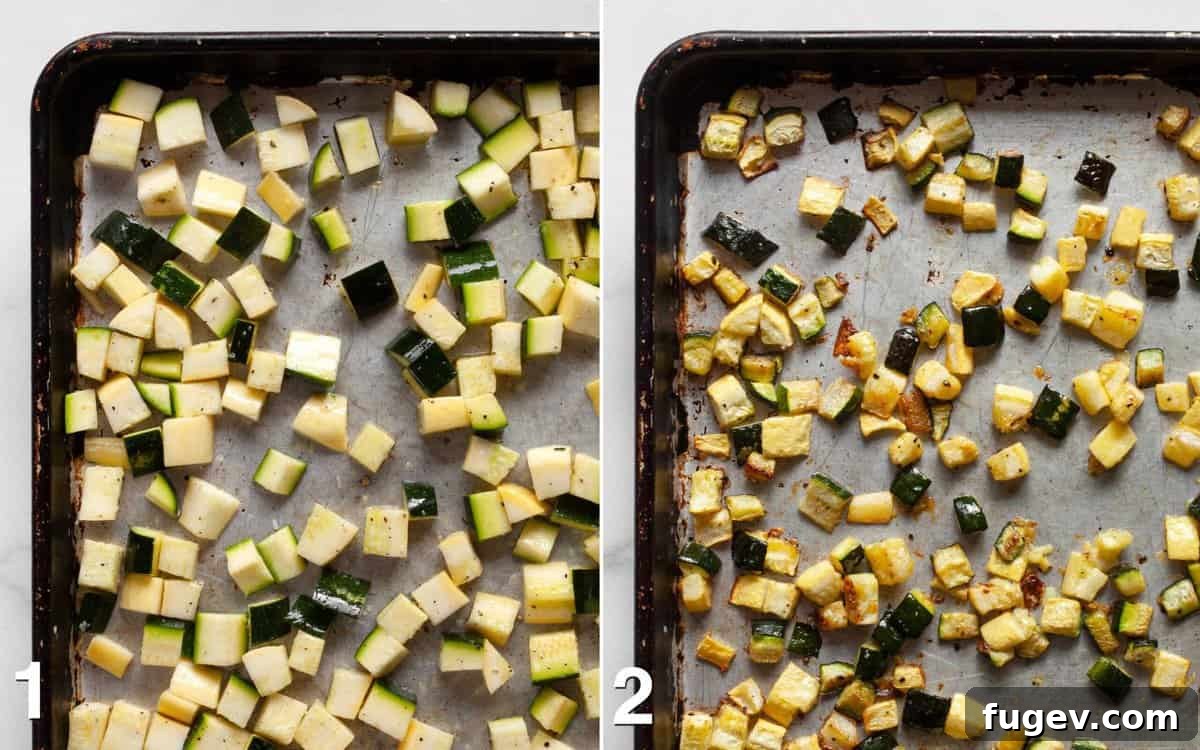
- Prepare and Toss the Vegetables: On a large baking sheet, combine the diced zucchini and yellow squash. Drizzle with 1 tablespoon of olive oil, then season generously with 1 teaspoon of kosher salt and 1/2 teaspoon of black pepper. Use your hands to toss everything together directly on the sheet pan, ensuring the vegetables are well-coated.
- Arrange and Roast: Spread the seasoned squash and zucchini into a single, even layer on the baking sheet. Avoid overcrowding the pan, as this can steam the vegetables instead of roasting them, preventing them from browning properly.
- Bake to Perfection: Transfer the sheet pan to the preheated oven and roast for approximately 25-30 minutes. The vegetables should become tender and exhibit beautiful lightly browned, slightly caramelized edges, indicating optimal flavor development.
Part 2: Preparing the Creamy Parmesan Orzo
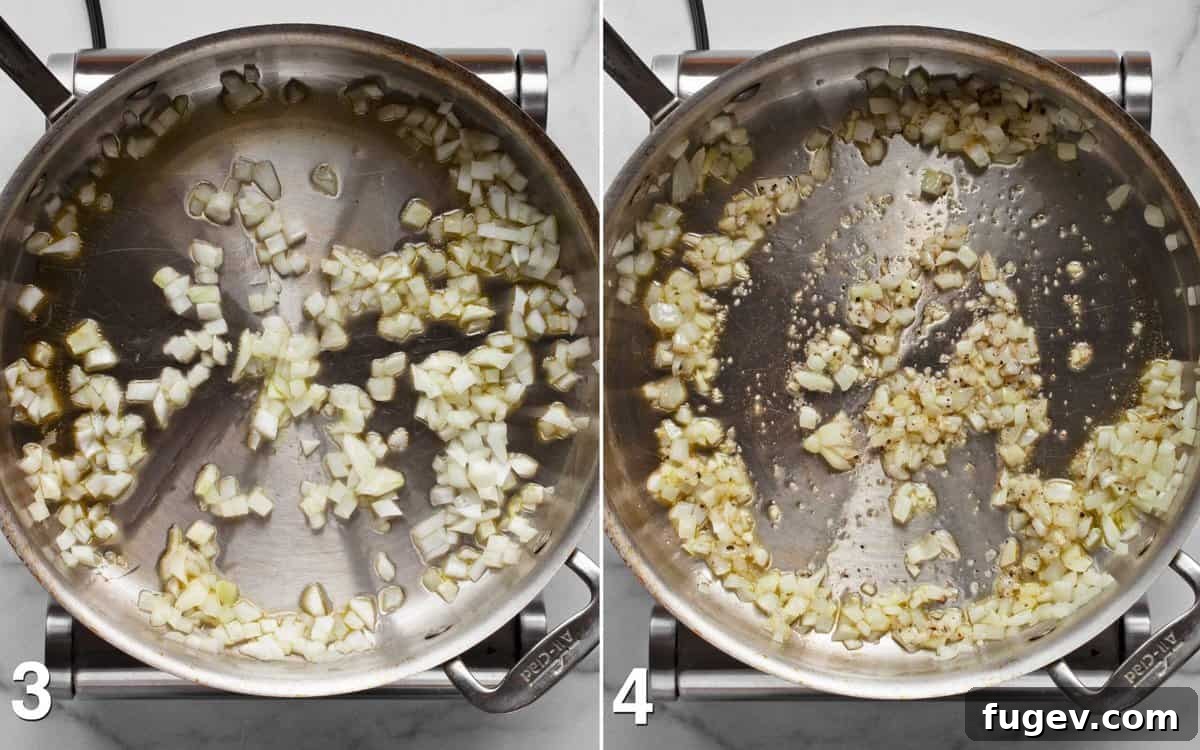
- Sauté the Onions: In a large, deep sauté pan or skillet, warm 1 tablespoon of olive oil over medium-high heat. Add the roughly chopped white onion and sauté for 4-5 minutes, stirring occasionally, until the onions begin to soften and become translucent. This step builds the aromatic base for your orzo.
- Infuse with Garlic and Seasonings: Stir in the minced garlic, along with 1/2 teaspoon of kosher salt and 1/4 teaspoon of black pepper. Continue to cook for about 1 minute, stirring constantly, until the garlic becomes fragrant. Be careful not to burn the garlic, as it can turn bitter.
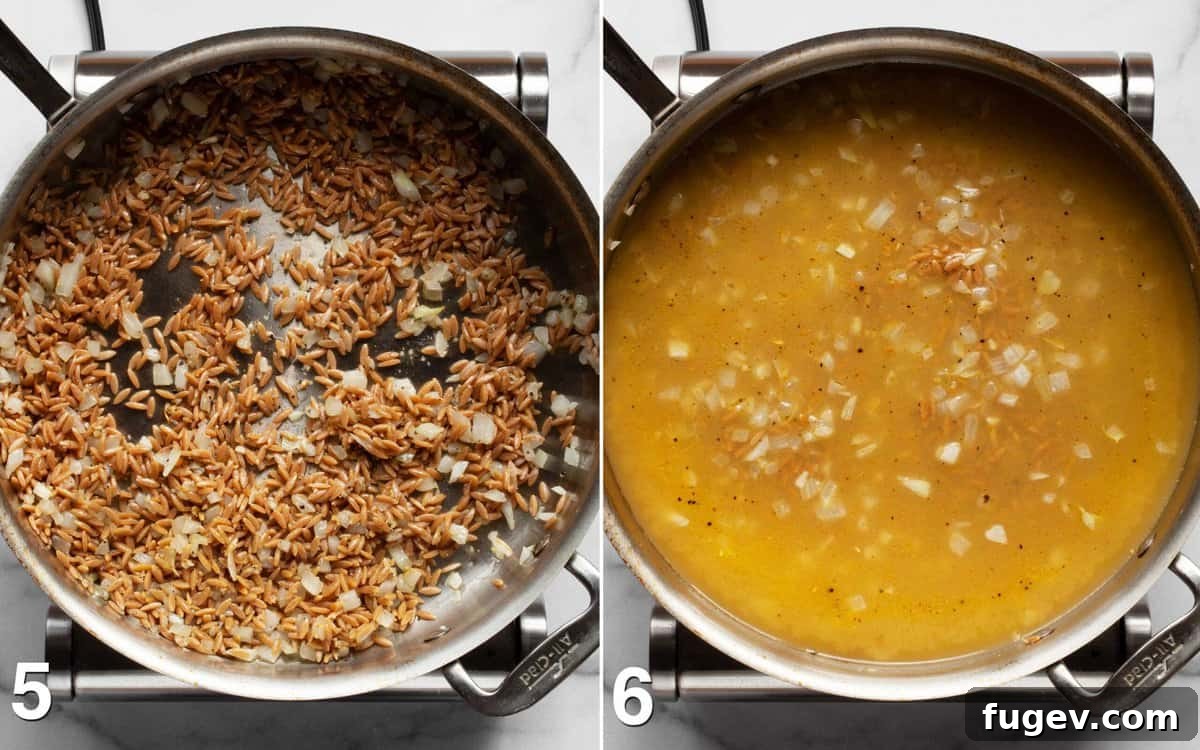
- Toast the Orzo: Add the dry orzo pasta to the pan with the sautéed onions and garlic. Stir well to coat the orzo grains in the olive oil and aromatics. Toast the orzo for about 1 minute, stirring frequently. This light toasting helps to develop a deeper, nutty flavor in the pasta.
- Simmer in Broth: Pour in the 2 cups of low-sodium vegetable broth. Bring the mixture to a boil over medium-high heat. Once boiling, reduce the heat to low, cover the pan, and let it simmer gently for 8-10 minutes. The orzo will gradually absorb most of the liquid and should be perfectly al dente—tender with a slight bite. Remove the pan from the heat once cooked.
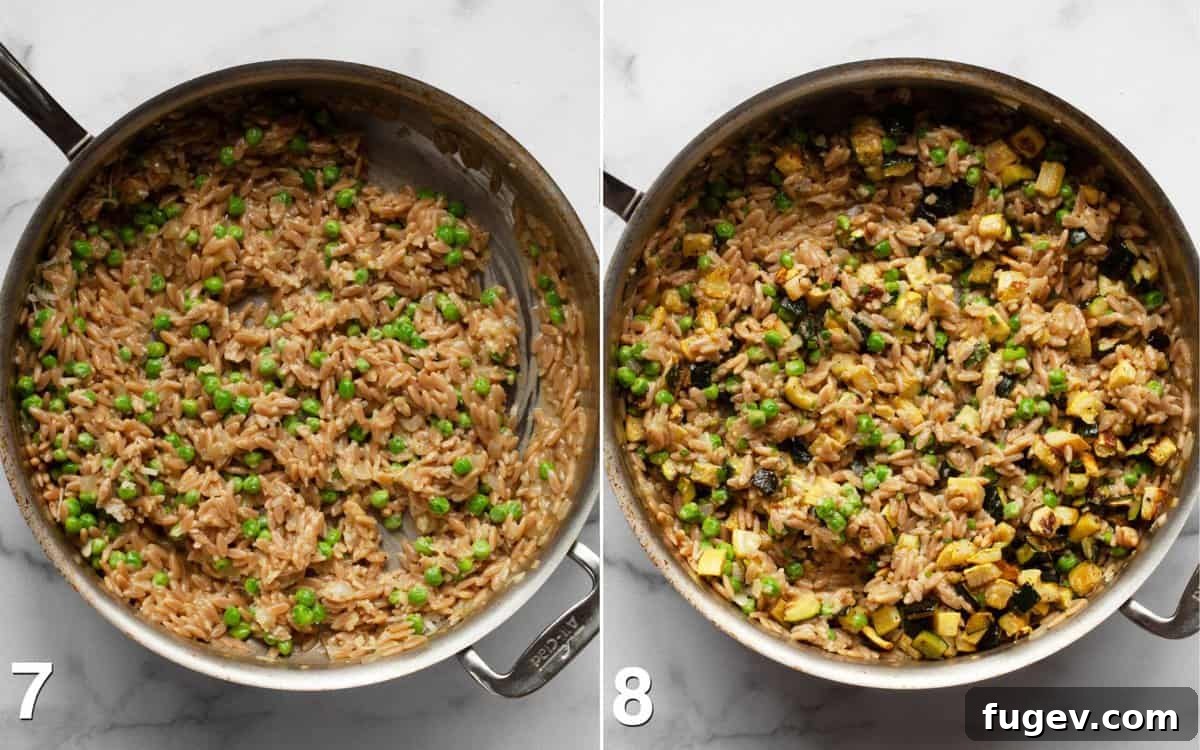
- Stir in Peas and Parmesan: To the hot orzo, add the 3/4 cup of peas (fresh or frozen) and 1/2 cup of grated Parmesan cheese. Stir thoroughly until the Parmesan has melted into the orzo, making it wonderfully creamy, and the peas are warmed through. If using frozen peas, the heat from the orzo will quickly thaw them.
- Fold in Roasted Vegetables and Chives: Gently fold in the roasted squash and zucchini, along with the 2 tablespoons of minced fresh chives. Stir just enough to combine everything without mashing the tender vegetables.
Tips for Perfect Creamy Parmesan Orzo Every Time
- Don’t Overcook the Orzo: Like any pasta, overcooked orzo can become mushy. Keep an eye on it during the simmering process, and remove it from the heat as soon as it reaches al dente. It will continue to absorb a little liquid as it rests.
- Use Low-Sodium Broth: This allows you full control over the saltiness of your dish. You can always add more salt, but you can’t take it away!
- Freshly Grated Parmesan is Best: Pre-shredded cheeses often contain anti-caking agents that can prevent them from melting smoothly. For the creamiest texture and best flavor, grate your Parmesan from a block just before adding it.
- Don’t Crowd the Sheet Pan: When roasting vegetables, ensure they are in a single layer with a little space between them. This promotes browning and caramelization instead of steaming, which would result in soggy vegetables.
- Taste and Adjust: Always taste your orzo before serving and adjust seasonings as needed. A pinch more salt, pepper, or even a squeeze of fresh lemon juice can brighten all the flavors.
Serving This Delicious Parmesan Orzo
This creamy Parmesan orzo pasta is wonderfully versatile and can be enjoyed in various ways. It shines beautifully as a vegetarian main dish, offering a complete and satisfying meal on its own. To round out the meal, consider pairing it with a light and refreshing salad:
- A vibrant arugula salad with lemon vinaigrette adds a peppery bite and bright acidity that complements the richness of the orzo.
- A simple yet elegant classic house salad offers a crisp contrast and a refreshing element.
- For a heartier option, an Italian Chopped Salad provides extra texture and robust flavors, creating a truly satisfying combination.
Beyond salads, you can also serve this orzo as a gourmet side dish alongside grilled chicken, pan-seared fish, or a roasted pork tenderloin. Its creamy texture and rich vegetable flavors make it an excellent accompaniment to a wide range of main proteins.
Leftovers & Storage: Enjoying Your Orzo Later
One of the beauties of this Parmesan orzo recipe is how well it stores, allowing you to enjoy its delicious flavors for days to come.
- Refrigeration: Store any leftover orzo in an airtight container in the refrigerator for up to 3 days. This ensures maximum freshness and prevents spoilage.
- Reheating: To reheat, simply warm portions in the microwave until heated through. You might find the orzo has thickened slightly in the refrigerator; if so, you can add a splash of vegetable broth or water during reheating to restore its creamy consistency.
- Enjoying Cold: For a delightful alternative, leftovers can be enjoyed cold as a savory orzo salad! The flavors meld even further overnight. You can enhance this by stirring in fresh arugula, baby spinach, or other mixed greens just before serving for added crunch and freshness. A drizzle of olive oil or a squeeze of lemon juice can also revitalize the cold dish.
Due to the dairy content (Parmesan cheese), freezing this dish is not recommended as the texture can change upon thawing, potentially becoming grainy or separating.
Creative Variations and Customizations for Your Orzo
The core method of cooking orzo in broth provides a fantastic base for endless culinary creativity. Feel free to experiment with these variations:
- Seasonal Vegetable Swaps: Beyond butternut squash for fall, consider asparagus and sun-dried tomatoes in spring, or bell peppers and corn in late summer.
- Add Greens: For an extra nutritional boost, wilt a handful of fresh baby spinach or kale into the hot orzo along with the Parmesan.
- Herb Power: Experiment with different fresh herbs. Fresh basil, parsley, or thyme would also be lovely additions.
- Spice It Up: A pinch of red pepper flakes added with the garlic can give the dish a subtle kick.
- Protein Boost: While delicious as a vegetarian meal, you can easily add cooked protein like shredded rotisserie chicken, sautéed shrimp, or cannellini beans for a more substantial dish.
- Cheesy Alternatives: Instead of Parmesan, try stirring in a different hard Italian cheese like Pecorino Romano for a sharper flavor, or even a creamy goat cheese for a tangier profile.
- Citrus Brightness: A squeeze of fresh lemon juice at the very end can brighten all the flavors and add a zesty finish.
More Orzo Recipes to Explore and Enjoy
If you’ve fallen in love with the versatility and comforting nature of orzo, you’re in luck! There are so many delightful ways to prepare this tiny pasta. Here are some more fantastic orzo recipes to inspire your next meal:
- Roasted Broccoli Orzo
- Grilled Vegetable Orzo Salad
- Tomato Zucchini Orzo
- Roasted Butternut Squash Orzo
- Lemon Orzo Pasta Salad
- Spinach Pesto Orzo
Be sure to check out our broader collections of simple seasonal pasta recipes and easy roasted veggie recipes for more culinary inspiration, including tips and tricks for making the most of your favorite ingredients.
Did you try this delicious Squash Zucchini Parmesan Orzo recipe? Please leave a rating and comment below to let us know what you thought! Your feedback is greatly appreciated.
Squash Zucchini Parmesan Orzo
By Paige Adams
Cook: 30 mins
Total: 35 mins
Yields: 4 servings
This Parmesan orzo pasta is a simple, yet incredibly flavorful and creamy dish packed with tender roasted squash, zucchini, and sweet peas, making it a perfect vegetarian meal or hearty side.
Ingredients
For the Roasted Squash & Zucchini:
- 2 medium zucchini, diced
- 2 medium yellow squash, diced
- 1 tablespoon olive oil
- 1 teaspoon kosher salt
- 1/2 teaspoon black pepper
For the Creamy Orzo:
- 1 tablespoon olive oil
- 1/2 small white onion, roughly chopped
- 2 garlic cloves, minced
- 1/2 teaspoon kosher salt
- 1/4 teaspoon black pepper
- 1 cup orzo pasta
- 2 cups low-sodium vegetable broth
- 3/4 cup peas (fresh or frozen)
- 1/2 cup grated Parmesan cheese
- 2 tablespoons minced fresh chives
Instructions
- Roast Vegetables: Preheat oven to 400°F (200°C). On a large sheet pan, toss diced zucchini and yellow squash with 1 tablespoon olive oil, 1 teaspoon kosher salt, and 1/2 teaspoon black pepper. Spread into a single layer. Roast for 25-30 minutes, or until lightly golden at the edges and tender.
- Sauté Onions: In a large sauté pan or skillet, warm 1 tablespoon olive oil over medium-high heat. Add the chopped onion and sauté for 4-5 minutes until it begins to soften and become translucent.
- Add Garlic & Seasonings: Stir in the minced garlic, 1/2 teaspoon kosher salt, and 1/4 teaspoon black pepper. Cook for about 1 minute until fragrant, stirring constantly.
- Toast Orzo: Add the orzo pasta to the pan. Stir well to coat the orzo with the onions, garlic, and oil. Toast for 1 minute, stirring continuously.
- Simmer Orzo: Pour in the 2 cups of vegetable broth. Bring to a boil, then reduce heat to low, cover, and simmer for 8-10 minutes, or until the orzo has absorbed most of the broth and is al dente. Remove the pan from the heat.
- Stir in Peas & Parmesan: Stir in the peas and grated Parmesan cheese. Continue stirring until the Parmesan is fully melted and the orzo is creamy. If using frozen peas, they will warm quickly from the heat of the pasta.
- Combine: Gently fold in the roasted squash and zucchini, and the minced chives. Serve immediately.
Video
Notes
Storage: Store any leftovers in an airtight container in the refrigerator for up to 3 days. Reheat gently in the microwave, adding a splash of broth if needed to restore creaminess. This dish is also delicious served cold as an orzo salad; consider adding fresh greens like arugula or spinach before serving.
Customization: The method of cooking orzo in broth is incredibly versatile. Feel free to swap out the roasted vegetables for other options based on what’s in season or what you have on hand. Roasted cherry tomatoes, sautéed mushrooms, or roasted butternut squash are all excellent choices. For an extra boost of greens, simply fold fresh baby spinach into the hot orzo after stirring in the Parmesan cheese.
Nutrition
Calories: 325kcal | Carbohydrates: 43g | Protein: 13g | Fat: 12g | Saturated Fat: 3g | Polyunsaturated Fat: 1g | Monounsaturated Fat: 6g | Cholesterol: 11mg | Sodium: 1105mg | Potassium: 721mg | Fiber: 6g | Sugar: 8g | Vitamin A: 776IU | Vitamin C: 47mg | Calcium: 165mg | Iron: 2mg
Nutrition information is automatically calculated and should only be used as an approximation.
Additional Info
Course: Pasta & Noodles
Cuisine: Italian