
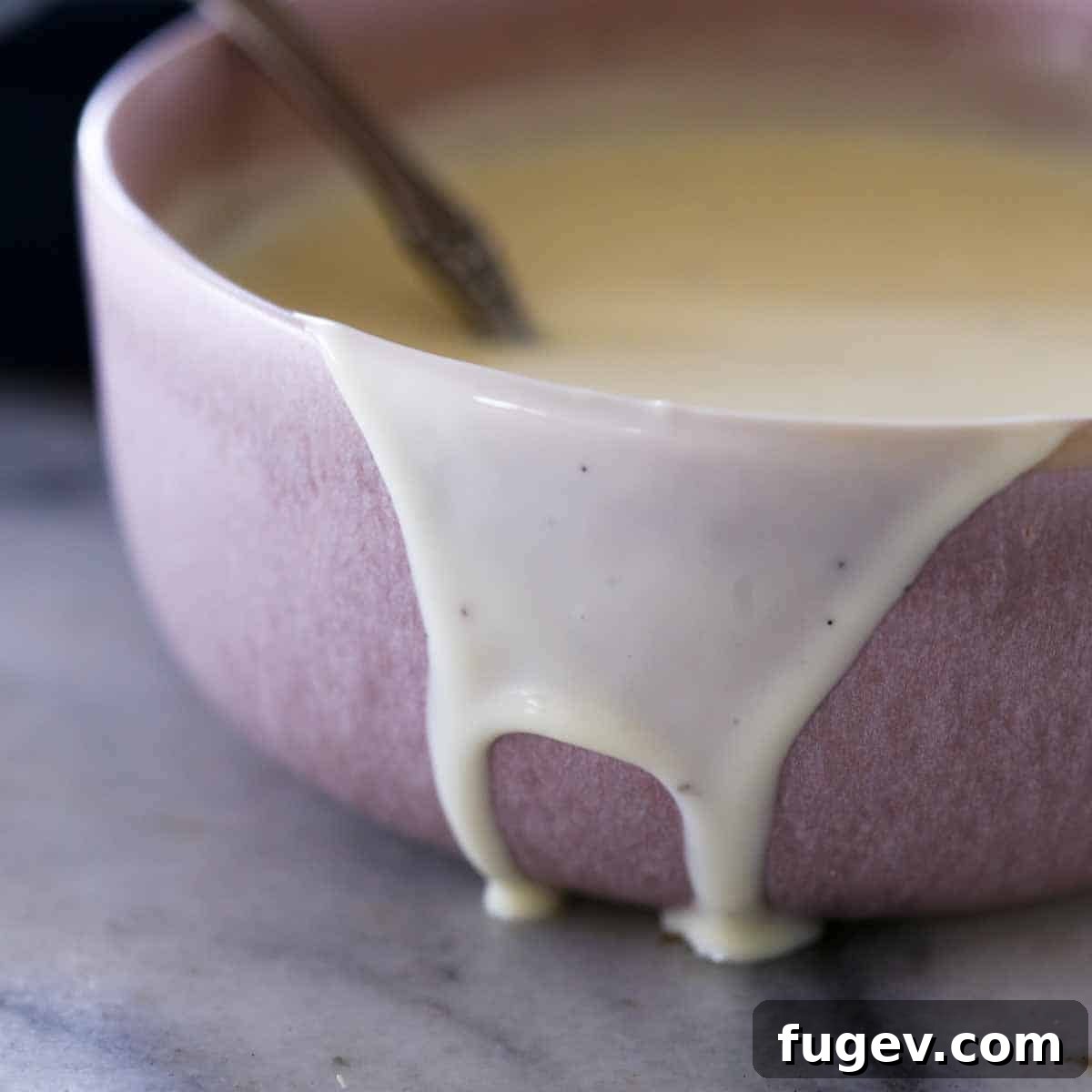
Welcome to the definitive guide for mastering Crème Anglaise, a timeless vanilla custard sauce that embodies elegance and versatility in the world of desserts. This exquisite, silky-smooth sauce is far more than just a simple topping; it’s a fundamental building block in classic French pastry, capable of transforming ordinary desserts into extraordinary culinary experiences. Whether you’re aiming to crown a delicate fruit tart, enrich a slice of moist cake, or create an irresistible dipping sauce for warm chocolate chip cookies or fudgy brownies, this professionally crafted recipe promises a flawless, intensely flavorful anglaise. Consider it your gourmet alternative to ice cream, offering a lighter, yet equally indulgent, creamy counterpoint to almost any sweet treat.
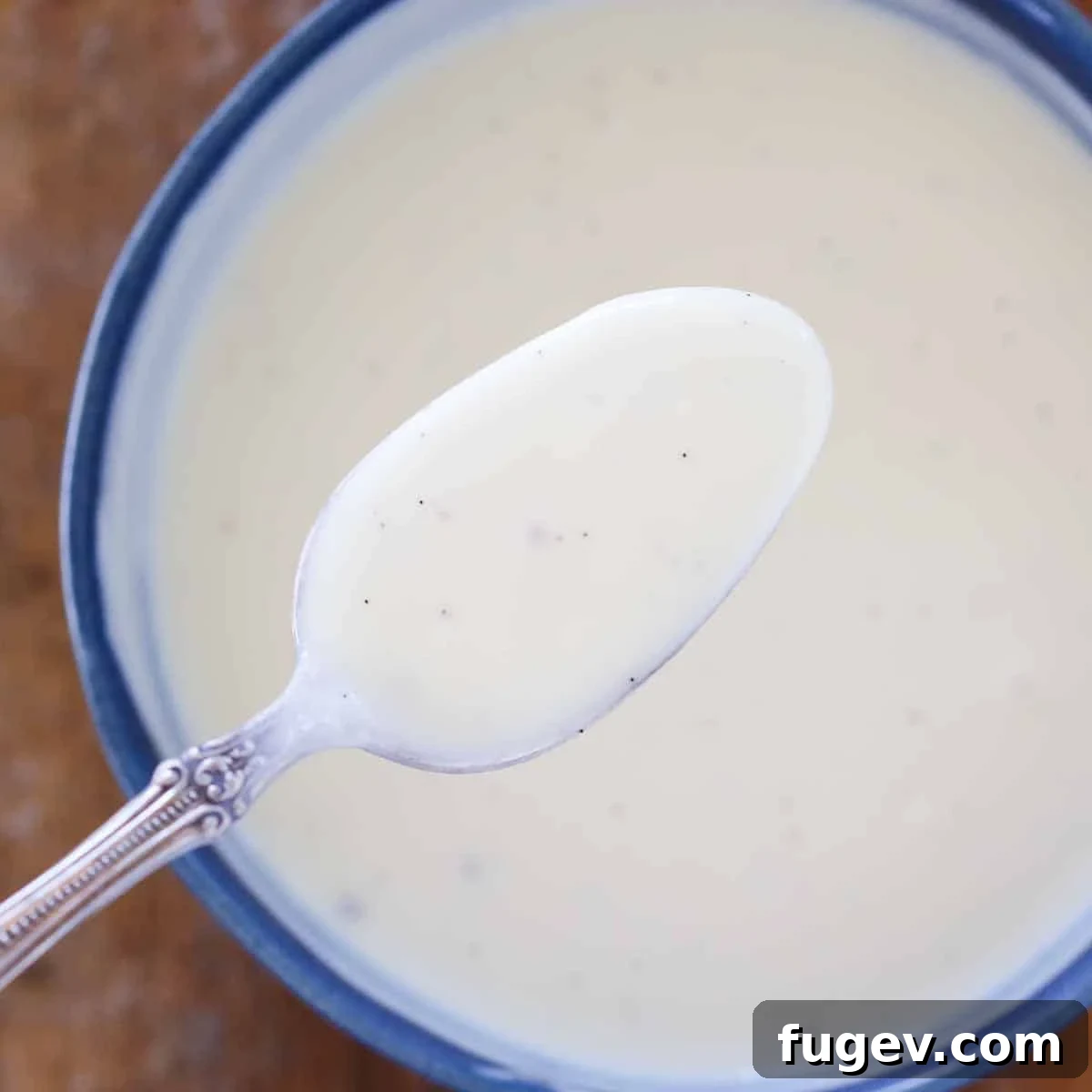
Crème Anglaise, often referred to as English Cream, is a celebrated staple in classic French patisserie for good reason. Much like its thicker cousin, crème patissière, its adaptability knows no bounds. This easy-to-make custard sauce provides a luxurious foundation for a myriad of desserts. Imagine it cascading over slices of cake, accompanying a plate of freshly baked cookies, enhancing the fruitiness of tarts and pies, or as the essential component of iconic French desserts such as the delicate floating island (île flottante). Its allure lies in its perfectly balanced sweetness and its irresistibly smooth, pourable consistency, making it an indispensable secret weapon for any home baker or aspiring pastry chef.
Beyond its classic applications, Crème Anglaise offers endless possibilities for customization. Infuse it with your favorite liqueurs or spirits for a sophisticated dipping sauce that elevates any cookie platter. Its ability to add a refined touch to even the simplest dessert makes it a go-to choice for those looking to impress with minimal effort. This seemingly simple sauce is a testament to the power of high-quality ingredients and precise technique, culminating in a dessert enhancement that is both comforting and exquisitely special.
Table of Contents
- Why This Crème Anglaise Recipe Stands Out
- Professional Tips for Crafting Perfect Crème Anglaise
- Essential Ingredients for Crème Anglaise
- Creative Variations & Smart Substitutions
- Elevating Desserts: What is Crème Anglaise Used For?
- Step-by-Step Guide: How to Make Crème Anglaise
- Troubleshooting: How to Fix a Broken Custard Sauce
- Chef Lindsey’s Expert Recipe Tip
- Frequently Asked Questions About Crème Anglaise
- Crème Anglaise Recipe Card
- Discover More Delicious Recipes
Why This Crème Anglaise Recipe Stands Out
Among countless recipes, this particular Crème Anglaise has been meticulously refined to achieve unparalleled excellence. It’s not just another custard sauce; it’s a recipe that has been tested, perfected, and celebrated in professional pastry kitchens, promising consistent, exceptional results every time you make it. Here’s what makes this recipe truly special:
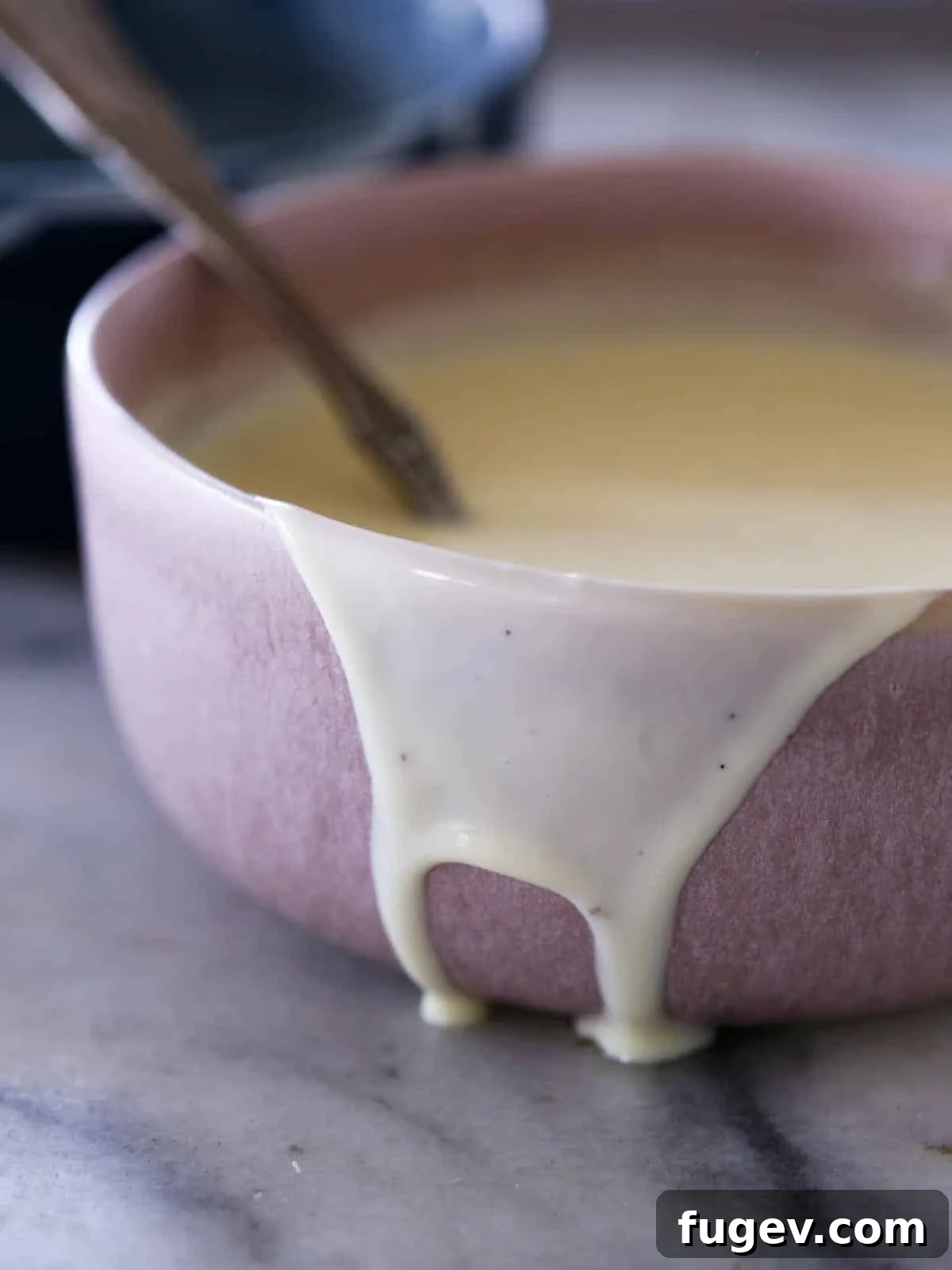
- The Epitome of Perfect Consistency: Achieving the ideal consistency for Crème Anglaise is an art, and this recipe delivers it flawlessly. The precise ratio of heavy cream to whole milk, combined with the strategic use of whole eggs instead of just egg yolks, creates a sauce that is neither too thin nor too thick. It’s light enough to pour gracefully over desserts, yet rich enough to coat the back of a spoon, providing that signature “nappant” texture that every pastry chef strives for. This thoughtful balance ensures a velvety mouthfeel that complements without overpowering.
- Refined and Perfected by a Professional Pastry Chef: This isn’t just a home cook’s recipe; it’s the exact formulation I relied on for countless desserts in high-end Manhattan restaurants. I have personally prepared this Crème Anglaise in batches ranging from a single quart to enormous 16-quart volumes, always with consistently perfect outcomes. Years of professional experience have gone into balancing every element, guaranteeing a recipe that is robust, reliable, and truly restaurant-quality. You’re getting the accumulated wisdom of a professional kitchen in your own home.
- An Unforgettable Vanilla Flavor Profile: The magic of a truly great Crème Anglaise often lies in its vanilla essence. This recipe leverages a synergistic combination of real vanilla beans and premium vanilla extract to create a complex, deeply aromatic vanilla custard. The scraped vanilla bean pods infuse the milk and cream with their earthy, floral notes during the heating process, contributing a depth of flavor that extract alone cannot achieve. The carefully measured amount of granulated sugar plays a crucial role not only in sweetening the sauce but also in protecting the delicate egg and milk proteins from scorching during cooking. This thoughtful approach ensures the vanilla flavor is pronounced, sophisticated, and perfectly balanced by just the right level of sweetness.
Professional Tips for Crafting Perfect Crème Anglaise
Making Crème Anglaise is an exercise in precision and attention to detail. These professional tips, honed through years in bustling pastry kitchens, will help you avoid common pitfalls and achieve a consistently perfect, silky-smooth custard sauce every single time.
- Bring the Milk and Cream to a Full Boil: This crucial first step is often overlooked or rushed. The milk and cream mixture must reach a vigorous, rolling boil before it is gradually incorporated into the eggs. This intense heat is essential for two key reasons: firstly, it helps to dissolve the sugar completely, preventing a grainy texture; and secondly, it activates the thickening proteins in the eggs more effectively during the tempering process, resulting in a richer, more stable emulsion. Don’t worry about scorching; the sugar in the mixture acts as a protective agent, helping to prevent the milk solids from sticking to the bottom of the pan.
- Precisely Heat the Custard After Mixing: Unlike some recipes that stop at tempering, this method emphasizes further controlled heating. After combining the tempered egg mixture with the hot milk, gently cook the custard over low to medium-low heat, stirring continuously, until it reaches precisely 178°F (81°C) on an instant-read thermometer. This specific temperature is critical for both safety and texture. Heating to 178°F ensures the eggs are fully cooked and safe to consume, while simultaneously thickening the sauce to its ideal “nappant” consistency – a perfect balance of pourable and coating. Avoid exceeding this temperature to prevent curdling.
- Cool It Quickly and Efficiently: Once your Crème Anglaise has reached the perfect nappant consistency, rapid cooling is imperative to halt the cooking process. This phenomenon, known as “carry-over cooking,” means that even off the heat, residual warmth can continue to cook and potentially overthicken or curdle your delicate custard. To prevent this, immediately strain the hot sauce into a clean bowl set over a larger bowl filled with ice water (an “ice bath”). Stir the custard gently but consistently while it cools in the ice bath. This rapid cooling technique not only stops carry-over cooking but also ensures a velvety, smooth texture by preventing the formation of a skin on the surface and discouraging any last-minute curdling.
Essential Ingredients for Crème Anglaise
The beauty of Crème Anglaise lies in its simplicity, relying on a few high-quality ingredients to create a magnificent sauce. Each component plays a vital role in achieving the perfect flavor and texture:
- Heavy Cream: This is the cornerstone of a rich and luxurious custard. Heavy cream, with its high fat content (typically 36% or more), contributes significantly to the creamy mouthfeel and decadent flavor of the anglaise. It provides body and ensures a smooth, luscious texture that coats the palate beautifully.
- Whole Milk: While heavy cream brings richness, whole milk (around 3.5% fat) provides the necessary liquid balance and contributes to the overall volume without making the sauce overly heavy. I always opt for whole milk for custards as its higher fat content compared to skim or low-fat milk makes it more stable under heat and yields a richer, more satisfying taste.
- Granulated Sugar: Beyond merely adding sweetness, granulated sugar serves several critical functions in Crème Anglaise. It plays a role in tempering the eggs by increasing their volume and protecting them from scrambling when the hot milk mixture is added. Additionally, sugar helps prevent the milk from scorching during the initial heating phase, ensuring a clean flavor.
- Kosher Salt: A pinch of kosher salt is a non-negotiable ingredient. It doesn’t make the sauce salty but acts as a flavor enhancer, much like in baking. It subtly brightens and rounds out the sweet and creamy notes, preventing the sauce from tasting flat and allowing the vanilla to truly shine without needing excessive amounts of sugar.
- Vanilla Bean: For the most authentic and profound vanilla flavor, a whole vanilla bean is indispensable. Splitting and scraping the seeds into the cream and milk allows for a deep infusion during heating. Even spent vanilla bean pods from other recipes (like homemade marshmallows that only use the seeds) can be reused here to impart a wonderfully complex aroma. The visual flecks of vanilla bean also add to the gourmet appeal.
- Vanilla Extract: To bolster and intensify the vanilla notes, a touch of pure vanilla extract is added towards the end. While vanilla beans provide depth, the extract offers an immediate, bright burst of vanilla aroma, creating a multi-layered flavor experience that is truly exquisite. Ensure you use high-quality pure vanilla extract for the best results.
- Whole Eggs: This recipe deliberately uses whole large eggs for the custard sauce. Many classic Crème Anglaise recipes call exclusively for egg yolks, but I’ve found that using whole eggs simplifies the process significantly without compromising consistency or richness. The whites in whole eggs contribute additional protein, which helps to create a stable emulsion and provides a perfect, slightly lighter body to the sauce, making it less heavy than an all-yolk custard while still achieving that ideal nappant texture.
Refer to the detailed recipe card below for precise measurements and quantities for each ingredient.
Creative Variations & Smart Substitutions for Crème Anglaise
While the classic vanilla Crème Anglaise is perfect on its own, its neutral base makes it an ideal canvas for a variety of flavors. Don’t hesitate to experiment and make this versatile sauce your own! Here are some fantastic ways to customize your anglaise:
- Half and Half for Convenience: If you’re looking to simplify your shopping list, this recipe uses an equal proportion of heavy cream to whole milk. This means you can easily substitute the total volume (4 cups) with half and half. While the fat content might be slightly different, it will still yield a wonderfully creamy and delicious custard.
- Infuse with Fruit Flavors: Transforming your vanilla anglaise into a vibrant fruit-flavored sauce is surprisingly easy. Once your Crème Anglaise is fully cooked and thoroughly chilled, gradually whisk in your favorite fruit puree. The key is to add the puree slowly, a little at a time, tasting as you go to achieve the desired intensity and sweetness. Adding puree to hot or warm custard can cause it to break, so ensure it’s cold. Be cautious with very acidic purees like passionfruit, as they can sometimes curdle the dairy; always add them in small increments. For an even simpler approach, swirl in a spoonful of quick strawberry jam or a high-quality fruit preserve for instant flavor.
- Indulge in Chocolate Crème Anglaise: For chocolate lovers, this variation is a must-try. Immediately after cooking and straining your hot Crème Anglaise, pour it directly over finely chopped chocolate (dark, milk, or white, depending on your preference). Let it sit for a few minutes to allow the residual heat to melt the chocolate, then whisk vigorously until completely smooth and emulsified, much like making a ganache. The result is a rich, luscious chocolate custard sauce. Alternatively, for a quicker chocolate fix, you can simply stir in some homemade hot fudge sauce into either warm or cooled anglaise.
- Explore Infinite Flavor Options: The possibilities for flavoring Crème Anglaise are truly endless. Get creative with your infusions and additions:
- Alcoholic Boost: Stir in a splash of your favorite liqueur or spirit once the sauce has cooled slightly. Grand Marnier, Kahlua, rum, bourbon, or even a fruit brandy can add a delightful depth of flavor.
- Caramel Swirl: For a decadent twist, swirl in a generous amount of homemade salted caramel sauce into the cooled anglaise. The sweet and salty notes of caramel perfectly complement the vanilla.
- Spice Infusion: Before heating the milk and cream mixture, infuse it with whole spices like cinnamon sticks, star anise, cardamom pods, or a few strips of orange zest. Allow the spices to simmer gently, then let them steep off the heat for 10-15 minutes before straining them out and proceeding with the recipe. This creates a beautifully aromatic and warm-spiced anglaise, perfect for fall and winter desserts.
- Coffee or Tea Infusion: For a coffee-flavored anglaise, dissolve a tablespoon of instant espresso powder in the hot milk mixture. For tea, steep a few tea bags (like Earl Grey or chai) in the hot milk for 5-10 minutes before removing.
No matter which variation you choose, remember to adjust sweetness as needed and always taste as you go to ensure the flavors are perfectly balanced for your palate.
Elevating Desserts: What is Crème Anglaise Used For?
Crème Anglaise stands out as one of the most versatile and beloved dessert sauces in the culinary repertoire. Its creamy texture and delicate vanilla flavor provide an exquisite contrast to a wide array of desserts, elevating them from simple treats to sophisticated creations. The cool, smooth richness of vanilla and cream beautifully enhances flavors like dark chocolate, ripe peaches, warm spices, and tangy fruits. Here are some of its primary and most delightful applications:
- The Ultimate Plating Sauce: Crème Anglaise is a pastry chef’s secret weapon for plating elegant desserts. Its pourable consistency allows for beautiful presentations, creating a luscious pool on which to serve your creations. It’s the perfect accompaniment to:
- Rich Chocolate Desserts: The coolness and creaminess of anglaise cuts through the intensity of dense chocolate cakes, creating a harmonious balance. Pair it with a flourless chocolate cake, an easy chocolate pie, or a slice of chocolate pound cake for a truly decadent experience.
- Warm Spice Cakes and Fruit Tarts: Crème Anglaise adds a luxurious, cooling element to warm, spiced desserts. Drizzle it over a comforting pumpkin cake, a classic gingerbread cake, or this autumnal pear upside down cake. Its creamy texture also perfectly complements the fruitiness of tarts and cobblers.
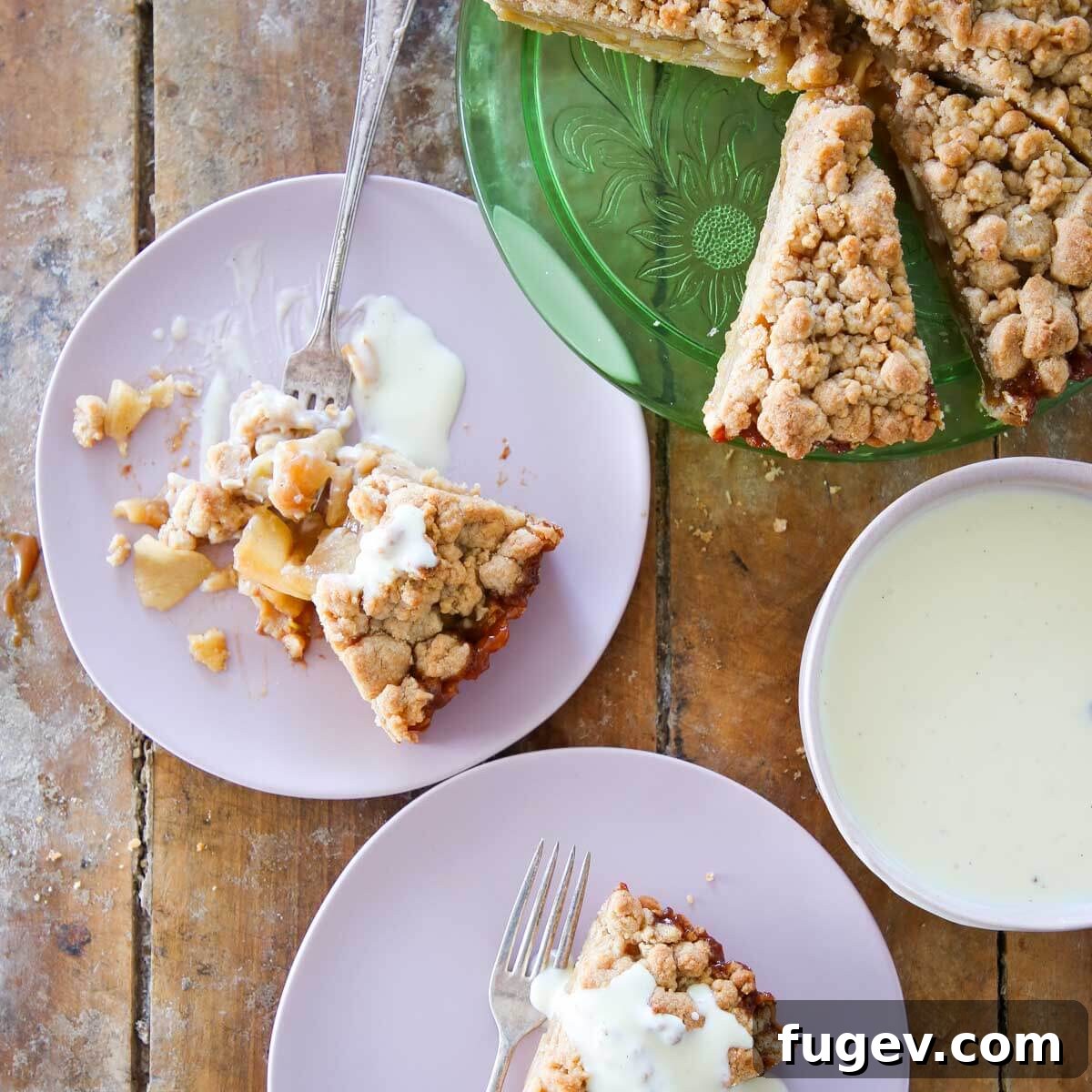
- Anywhere You’d Serve Ice Cream: Think of Crème Anglaise as a more refined, less icy alternative to ice cream. Serve it with apple crisp, bread pudding, fruit compotes, or simply any dessert that traditionally calls for a scoop of vanilla bean ice cream for a sophisticated twist.
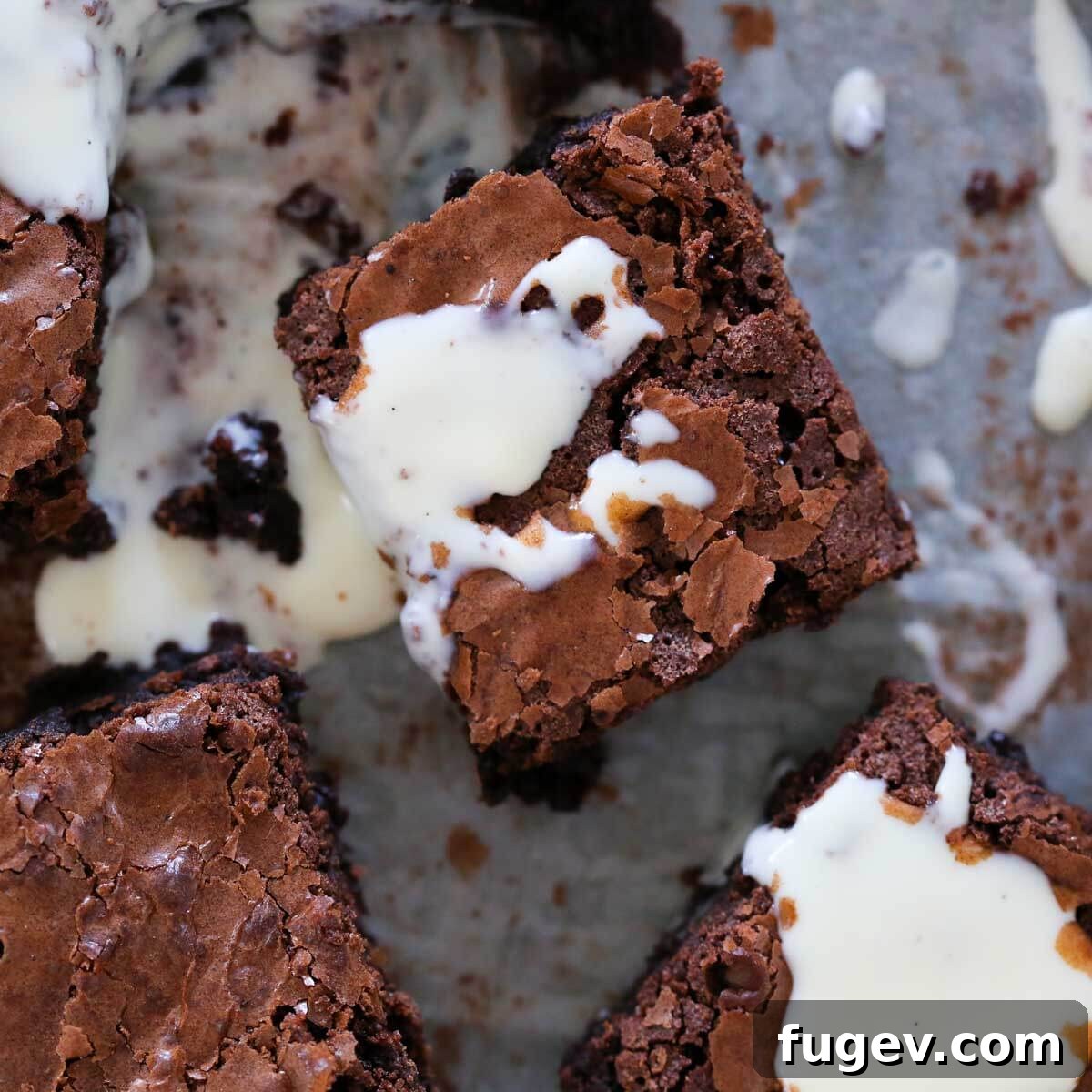
- An Irresistible Dipping Sauce: For a more interactive and delightful dessert experience, Crème Anglaise excels as a dipping sauce. Imagine the sheer satisfaction of plunging a warm, gooey chocolate chip cookie or a rich, fudgy brownie into a cool pool of vanilla custard. For an adult-friendly treat, consider adding a discreet splash of whiskey or rum to your anglaise for a boozy, comforting dipping experience.
- A Cornerstone in Traditional French Desserts: Crème Anglaise is not merely an accompaniment but a star ingredient in several traditional French desserts. The most famous example is îles flottantes (floating islands), where delicate poached meringues drift on a sea of Crème Anglaise. In professional settings, I’ve also enjoyed serving creative twists, such as a crisp pavlova filled with fresh fruit, elegantly nestled on a generous bed of this silky custard sauce, showcasing its versatility beyond classic preparations.
How to Make Crème Anglaise: A Step-by-Step Guide
Creating the perfect classic English custard doesn’t have to be intimidating. By following these precise instructions, you’ll achieve a flawless, silky Crème Anglaise every single time. Detailed measurements and ingredient quantities can be found in the recipe card below.
Step 1: Infuse and Heat the Dairy Mixture
Begin by combining the heavy cream, whole milk, half of the granulated sugar (approximately ½ cup), kosher salt, and the scraped vanilla bean pods (along with the seeds) in a heavy-bottomed saucepot. A heavy-bottomed pot is crucial as it distributes heat more evenly, minimizing the risk of scorching. Place the pot over medium-high heat and bring the mixture to a vigorous, rolling boil. This ensures the sugar is fully dissolved and the vanilla flavor is deeply infused into the dairy. Once it reaches a boil, immediately remove the pot from the heat.
Step 2: Prepare the Egg and Sugar Mixture
While your milk mixture is heating and just before it reaches a boil, prepare your eggs. In a large, heat-proof bowl, combine the whole eggs with the remaining half of the granulated sugar (the other ½ cup). Whisk these together vigorously and continuously until the mixture becomes noticeably lighter in color, turning a pale yellow, and achieves a slightly frothy, ribbons-like consistency. This process incorporates air and helps to protect the eggs from scrambling during the tempering step.
Chef’s Note on Sugar Division: Don’t obsess over dividing the sugar into perfectly equal halves; an approximate eyeball division is perfectly fine. The sugar added to the milk mixture helps prevent scorching, while the sugar whisked with the eggs provides a protective buffer, making them less prone to cooking instantly when the hot dairy is added. This dual-purpose use of sugar is a key element of the tempering process.
Step 3: The Art of Tempering
Tempering is the critical step where you gradually introduce the hot dairy mixture to the eggs, slowly raising their temperature to prevent them from scrambling. To do this, slowly whisk a quarter (approximately 1 cup) of the hot milk mixture into the prepared egg and sugar mixture. Whisk continuously and thoroughly to fully incorporate the hot liquid without cooking the eggs. Repeat this process with another quarter (another 1 cup) of the hot milk mixture, whisking constantly. Once the eggs are sufficiently warmed, carefully pour the entire tempered egg mixture back into the saucepot containing the remaining hot milk mixture. This gradual incorporation prevents thermal shock and ensures a smooth, lump-free custard.
Step 4: Cooking to Nappant Consistency
Return the saucepot to medium-low heat. Cook the custard, stirring constantly with a wooden spoon or silicone spatula, ensuring you scrape the bottom and sides of the pot to prevent sticking and localized overheating. Continue cooking until the custard visibly thickens to a “nappant” consistency, or when it reaches precisely 178°F (81°C) on an instant-read thermometer. Nappant means the sauce is thick enough to coat the back of a spoon.
The Nappant Test: To confirm your sauce has reached the perfect “nappant” stage, dip a clean wooden spoon or silicone spatula into the custard. Lift it out, and then run your finger through the thin layer of custard on the back of the spoon. If the line you draw holds cleanly and the custard doesn’t immediately run back to fill the gap, your Crème Anglaise has achieved the ideal consistency!
Step 5: Rapid Cooling and Storage
Once the custard reaches the nappant stage, immediately remove it from the heat. Strain the entire mixture through a fine-mesh sieve into a clean bowl. Straining removes any potential cooked egg bits or vanilla bean pods, ensuring a perfectly smooth texture. To halt carry-over cooking and ensure the silkiest finish, place this bowl into a larger bowl filled with an ice bath (plenty of ice with just enough water for the cubes to move freely). Cover the surface of the Crème Anglaise directly with plastic wrap to prevent a skin from forming. Stir the sauce occasionally in the ice bath to expedite cooling. Allow it to cool completely to room temperature before transferring to an airtight container and refrigerating. Rapid cooling is key to preventing overcooking and maintaining its delicate texture.
Troubleshooting: How to Fix a Broken Custard Sauce
Even seasoned chefs encounter challenges, and Crème Anglaise, though simple, can be temperamental if not handled with care. After training countless individuals to master this recipe, I’ve witnessed almost every possible mishap. Here’s what I’ve learned about troubleshooting and, sometimes, salvaging a less-than-perfect custard:
- When It Looks Curdled While Cooling: If your custard appears perfectly smooth in the pot but then develops a curdled or slightly lumpy texture as it cools, don’t despair immediately. There’s often a chance to save it! Transfer the custard to a blender (a standard blender or an immersion blender works best) and blend it on high speed until it becomes completely smooth again. The shear force of the blending can re-emulsify the sauce and restore its velvety texture. Be careful not to incorporate too much air, which can make it foamy.
- If It Gets Too Hot During Cooking: If you accidentally let your sauce get a little too warm, perhaps around 180°F (82°C) or slightly higher, immediately remove it from the heat and pour it into a metal bowl set into a generous ice bath. Begin stirring it actively and vigorously. Rapidly cooling it can sometimes prevent further coagulation and salvage the texture. If, after cooling, it still looks slightly broken or grainy, try the immersion blending technique mentioned above.
- The Point of No Return – Overcooked and Scrambled Eggs: Unfortunately, some culinary accidents are irreversible. If your Crème Anglaise develops a distinct, unpleasant eggy smell, it signifies that the eggs have overcooked and essentially scrambled within the sauce. This can happen during the initial tempering if the hot milk was added too quickly without enough whisking, or during the final cooking phase if the heat was too high or stirring wasn’t constant. Once the eggs have coagulated beyond a certain point and that eggy aroma takes over, the sauce is regrettably ruined. At this stage, it’s best to discard it and start fresh, taking extra care with temperature and stirring.
- Yellow and Visibly Curdled Texture: If your custard appears overly yellow and has a distinctly curdled or chunky texture, this is a clear indication that it was cooked over excessively high heat or was not stirred consistently enough. High heat causes the egg proteins to coagulate too rapidly and unevenly, leading to a lumpy texture. Consistent, gentle stirring ensures even heating and a smooth, uniform custard. This type of curdling is harder to completely fix with blending, but it’s always worth a try before giving up!
Patience and gentle heat are your best friends when making Crème Anglaise. With practice, you’ll develop an intuitive feel for its perfect texture.
Chef Lindsey’s Expert Recipe Tip
For a slightly looser, yet perfectly safe Crème Anglaise, you don’t strictly have to continue cooking the sauce to the nappant stage (178°F) after tempering, as long as you ensure the milk mixture comes to a full, rolling boil right before you begin the tempering process into the eggs. The high heat from the boiling milk is sufficient to cook the eggs safely. However, while this method yields a perfectly consumable sauce, be aware that it will result in a noticeably thinner consistency. If you desire that classic, luxurious “nappant” texture that coats the back of a spoon, then gently cooking it to temperature is essential.
Frequently Asked Questions About Crème Anglaise
Once your Crème Anglaise has been rapidly cooled in an ice bath, transfer it to a clean, airtight container. It is crucial to place a piece of plastic wrap directly on the surface of the custard before sealing the container to prevent a “skin” from forming. Store the cooled Crème Anglaise in the refrigerator for up to 10 days. Due to its delicate emulsion and dairy content, I strongly advise against freezing Crème Anglaise, as it tends to separate and lose its smooth texture upon thawing.
Technically, any Crème Anglaise recipe *could* be used as a base for ice cream; however, I do not recommend it for optimal results. The ideal consistency for a pourable custard sauce like Crème Anglaise is deliberately thinner than what is required for a rich, creamy ice cream base. Crème Anglaise typically contains fewer egg yolks (or uses whole eggs) and a higher proportion of milk to heavy cream compared to a traditional French vanilla ice cream base. This composition will likely result in an ice cream that is icy, hard, and lacks the desirable smooth, scoopable texture. For truly exceptional homemade French vanilla ice cream, I highly recommend using a dedicated ice cream recipe that is formulated with the correct fat and egg yolk ratio to prevent ice crystallization, such as this vanilla ice cream recipe.
Vanilla Crème Anglaise is a classic, simple vanilla-flavored custard that is intentionally kept thin and pourable, designed to be used as a sauce rather than a firm dessert. It is prepared by gently heating a mixture of milk, cream, and sugar to a boil, which is then slowly and carefully whisked into a bowl of tempered eggs. The mixture is then returned to the heat and cooked to a specific temperature (around 178°F or 81°C) until it achieves a “nappant” consistency, meaning it coats the back of a spoon. While it must be cooked to a safe temperature (at least 160°F or 71°C) to denature egg proteins, it is typically served chilled or at room temperature. As mentioned, while it’s a custard base, it’s generally not formulated with enough fat or egg yolks to produce a rich, smooth, and scoopable ice cream.
The term “custard” is a broad category encompassing any preparation thickened with eggs. Crème Anglaise is a specific type of custard, classified as a “stirred custard.” This category includes other popular desserts like custard-based ice cream bases and pastry cream (crème patissière), all of which are cooked on the stovetop and continuously stirred until thickened. In contrast, other custards are “baked custards,” such as crème brûlée or flan, where the mixture of cream, sugar, and eggs is baked in an oven until set. While crème brûlée uses a similar process of heating cream and tempering it into eggs, its final preparation involves baking until firm. To delve deeper into the fascinating world of custards and explore their diverse forms and preparations, you can read more on this comprehensive page dedicated to custard recipes.
If you tried this recipe and loved it, please take a moment to leave a 🌟 star rating and share your experience in the comments below. I absolutely cherish hearing from you; your feedback and comments truly brighten my day!
Classic Crème Anglaise (Vanilla Custard Sauce)
Chef Lindsey
20 mins
20 mins
20 servings (approx. 4 cups)
Comment
Print Recipe
Ingredients
- 2 cups heavy cream
- 2 cups whole milk
- 1 cup granulated sugar divided
- ½ teaspoon kosher salt
- 1 vanilla bean split and scraped
- 5 whole eggs large
- 1 teaspoon pure vanilla extract (added at the end, optional)
Instructions
-
In a heavy-bottomed saucepot, combine the heavy cream, whole milk, half of the granulated sugar, kosher salt, and the scraped vanilla bean (seeds and pod). Bring the mixture to a full, rolling boil over medium-high heat. Immediately remove from heat once boiling.
-
While the milk mixture is heating, whisk together the whole eggs and the remaining granulated sugar in a large bowl until the mixture lightens to a pale yellow and is slightly frothy.
-
Gradually whisk ¼ of the hot milk mixture into the egg mixture. Repeat with another ¼ of the milk mixture, whisking constantly to temper the eggs. Then, slowly pour the tempered egg mixture back into the saucepot with the remaining milk mixture, whisking continuously.
-
Return the pot to medium-low heat. Cook, stirring constantly with a wooden spoon or spatula, until the custard thickens to “nappant” consistency, or reaches 178°F (81°C) on an instant-read thermometer. To test “nappant,” run your finger across the back of the coated spoon; the line should hold without the sauce running back together.
-
Immediately strain the finished Crème Anglaise through a fine-mesh sieve into a clean bowl. Place the bowl into an ice bath and cover the surface directly with plastic wrap to prevent a skin from forming. Stir occasionally until completely cooled. Once cool, stir in vanilla extract if using. Store in the refrigerator.
Video
Notes
Variations: Experiment by stirring chopped chocolate into the hot custard, or flavor the cooled sauce with fruit purees, caramel sauce, or a splash of your favorite liqueur.
Storage: Store Crème Anglaise in an airtight container with plastic wrap directly on the surface in the refrigerator for up to 10 days. Freezing is not recommended as it will alter the texture.
This recipe can be easily halved or multiplied to suit your needs.
Nutrition (per serving)
Carbohydrates: 12g |
Protein: 3g |
Fat: 10g |
Saturated Fat: 6g |
Polyunsaturated Fat: 1g |
Monounsaturated Fat: 3g |
Trans Fat: 0.004g |
Cholesterol: 71mg |
Sodium: 90mg |
Potassium: 75mg |
Sugar: 12g |
Vitamin A: 449IU |
Vitamin C: 0.1mg |
Calcium: 52mg |
Iron: 0.2mg
Enjoyed this recipe? Leave a comment below!
Before You Go: Explore More Delicious Recipes
I genuinely hope you enjoyed perfecting this professional chef-tested Crème Anglaise recipe. Mastering this fundamental sauce opens up a world of dessert possibilities, adding a touch of gourmet elegance to your culinary creations. Whether you’re a seasoned baker or just starting, the satisfaction of making your own silky custard is truly rewarding.
Don’t stop here! Be sure to explore our extensive collection of other dessert toppings and sauce recipes to further enhance your sweet treats. Or, if you’ve developed a newfound love for custards, dive into all of our amazing custard recipes, including my comforting easy bread pudding recipe, which pairs beautifully with Crème Anglaise. For something a little different and vegetarian-friendly, why not try a refreshing lemon posset? This delightful dessert thickens solely through the natural curdling properties of heated cream and lemon juice, offering a fascinating contrast to egg-based custards. Happy baking and exploring!