
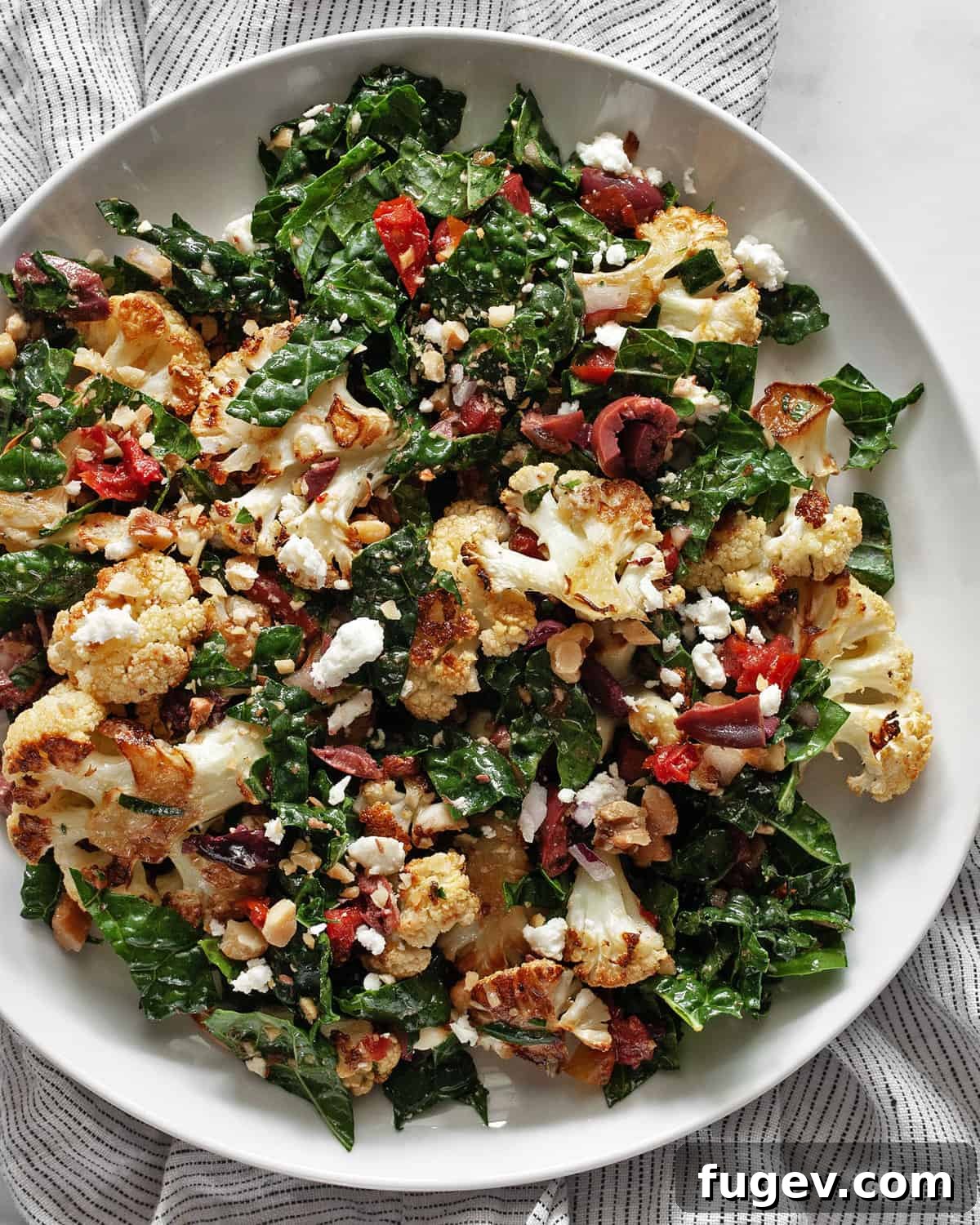
Elevate your salad game with this incredibly flavorful and satisfying Roasted Cauliflower and Kale Salad. More than just a simple side, this vibrant dish boasts a robust base of perfectly roasted cauliflower florets and tender, chopped kale, all generously tossed in a zesty homemade balsamic vinaigrette. What truly makes this salad unforgettable is the harmonious blend of savory, salty, and briny ingredients: rich sun-dried tomatoes, briny Kalamata olives, creamy feta cheese, and crunchy walnuts. It’s a hearty and wholesome creation that can easily stand alone as a fulfilling main course, or it can serve as an impressive and nutritious side dish for any meal. Get ready to transform your perception of healthy eating with every delicious bite!
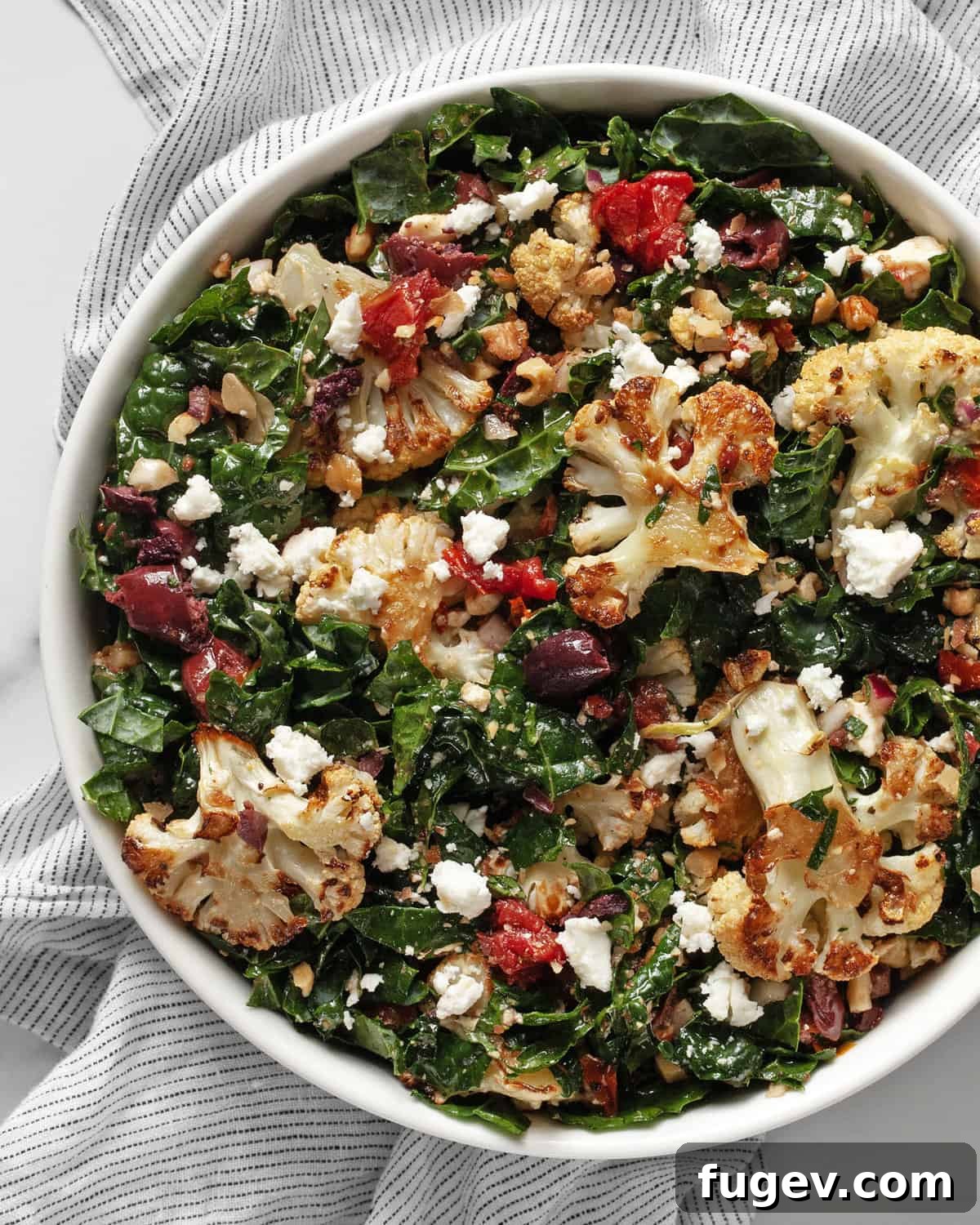
Table of Contents
- Why You’ll Love This Hearty Salad
- Key Ingredients for the Perfect Salad
- Optional Enhancements and Protein Boosters
- Mastering the Art of Roasting Cauliflower
- Step-by-Step Guide: Crafting Your Salad
- Versatile Serving Suggestions
- Tips for Storing Leftovers
- Expert Recipe Tips for Success
- Frequently Asked Questions
- Explore More Delicious Salad Recipes
- Creative Cauliflower Recipe Ideas
- Roasted Cauliflower Salad Recipe
Why You’ll Love This Hearty Roasted Cauliflower and Kale Salad
This isn’t just another everyday kale salad; it’s a culinary experience designed to delight your taste buds and nourish your body. Here’s why this recipe will quickly become a cherished favorite:
Beyond the Usual Kale Salad Experience
I understand that kale can sometimes be polarizing, with its distinct, slightly bitter notes. However, the secret to an truly exceptional kale salad lies in achieving a perfect balance. This recipe masterfully combines the earthy bitterness of kale with a symphony of other flavors and textures: the tender sweetness of roasted vegetables, the salty burst of olives, the sharp crunch of onions, and the creamy tang of feta. The result is a vibrant, multi-layered salad where every forkful offers a delightful blend of savory, sweet, and salty sensations, completely transforming the kale experience into something truly memorable.
The Magic of Roasted Cauliflower
Roasting is, without a doubt, the superior method for cooking this incredibly versatile and nutrient-dense vegetable. While raw cauliflower possesses a mild, almost neutral flavor, the high heat of the oven works wonders. As the florets caramelize, their inherent nuttiness is amplified, and they develop a beautiful golden-brown exterior with a tender, slightly sweet interior. This process not only enhances the flavor profile but also adds a wonderful textural dimension that raw cauliflower simply cannot offer, making it the perfect foundation for our hearty salad.
A Salad for All Seasons (Almost!)
While this salad feels particularly comforting and satisfying during the cooler months of fall and winter, its core ingredients make it remarkably versatile for year-round enjoyment. Fresh kale and cauliflower are readily available, and many of the supporting components, such as jarred Kalamata olives and sun-dried tomatoes, are pantry staples. This means you can whip up this wholesome and flavorful salad whenever the craving strikes, regardless of the season, making it a reliable choice for healthy eating all year long.
Key Ingredients for the Perfect Salad
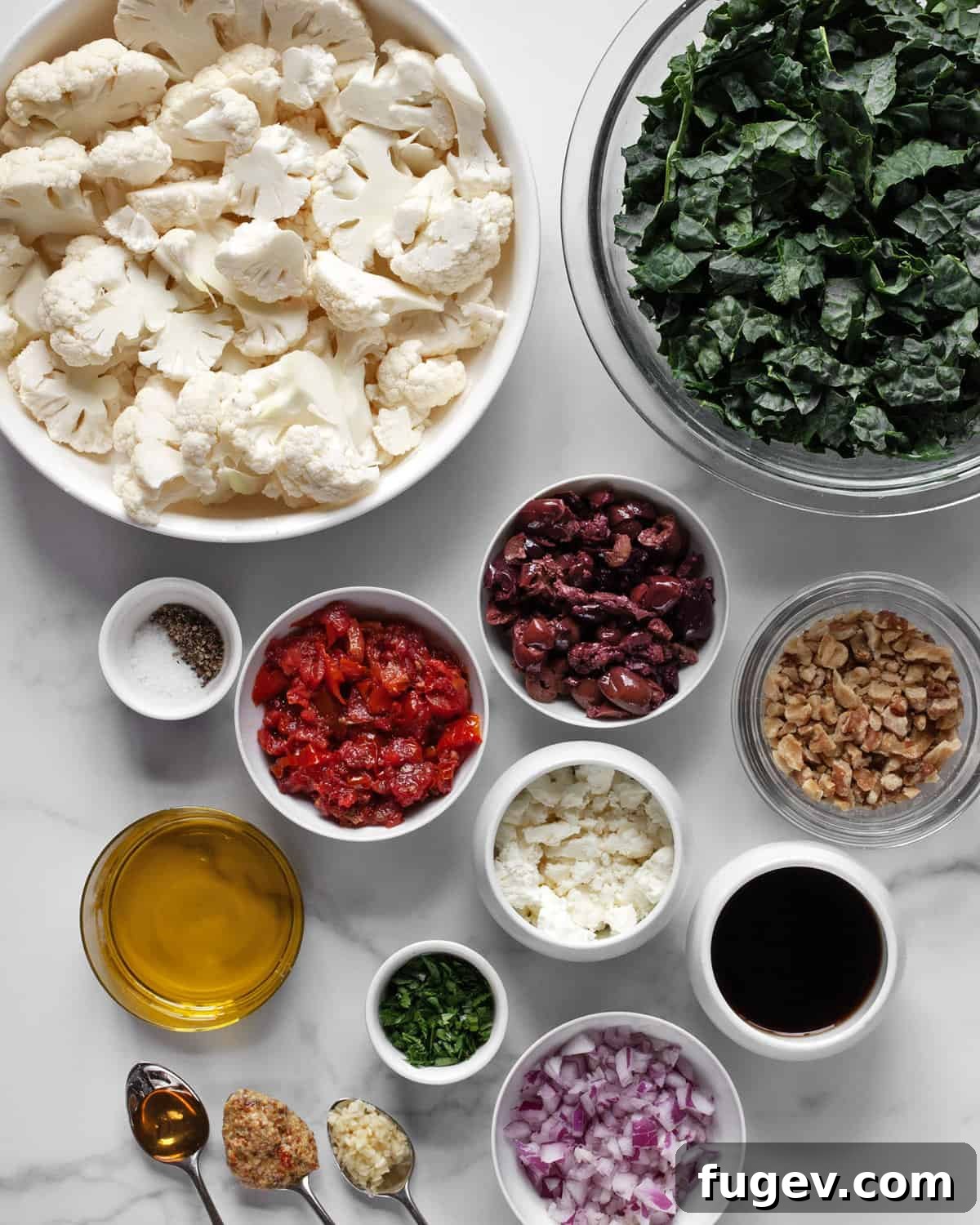
Gathering the right ingredients is the first step to creating this incredible salad. Here’s a closer look at what you’ll need:
- Cauliflower: When selecting your cauliflower, look for a firm, compact head that feels heavy for its size and is free of any dark spots or blemishes. The color of the cauliflower (white, orange, purple, or green) doesn’t impact its flavor or suitability for this recipe, so choose what looks best!
- Kale: Both lacinato kale (also known as Tuscan or dinosaur kale) and curly kale will work beautifully in this salad. Lacinato kale tends to be a bit more tender and less bitter, while curly kale offers a heartier texture. Whichever you choose, ensure it’s fresh and vibrant.
- Sun-Dried Tomatoes: These intensely flavorful gems are a favorite antipasto ingredient, bringing a concentrated sweet and tangy punch to the salad. Opt for sun-dried tomatoes packed in oil, as they are already hydrated and tender. To avoid excess oil, simply use a fork to retrieve them from the jar before chopping. As an alternative, marinated roasted tomatoes or roasted red peppers can also be used for a similar flavor profile.
- Olives: Kalamata olives are my preferred choice for their soft, meaty texture and rich, briny flavor that complements the other ingredients perfectly. Make sure to use pitted olives for convenience and roughly chop them to ensure an even distribution of their delightful flavor throughout the salad.
- Feta Cheese: Crumbled feta cheese introduces a wonderful salty, tangy, and creamy element to the salad, harmonizing beautifully with the olives and tomatoes. Its crumbly texture also adds another dimension to each bite.
- Walnuts: Toasting walnuts before adding them to the salad is a simple but crucial step that significantly enhances their earthy, nutty flavor. If walnuts aren’t your preference, feel free to substitute with other toasted nuts like almonds, pecans, pine nuts, pistachios, or even sunflower seeds for a similar crunch.
- Red Onions: Finely diced red onions are a staple in many of my salads. They provide a crisp texture and a mild, piquant flavor that contributes to the salad’s overall complexity and layered taste profile, ensuring every bite is interesting.
- Fresh Parsley: A generous amount of chopped fresh parsley adds a bright, herbaceous note and a pop of color, lifting the overall freshness of the salad.
- Balsamic Vinaigrette: The homemade dressing is simple yet packed with flavor. It consists of finely minced garlic, tangy whole grain mustard, a touch of honey for sweetness, salt, pepper, rich balsamic vinegar, and high-quality olive oil. This combination creates a perfectly balanced dressing that ties all the robust flavors together.
Optional Enhancements and Protein Boosters
While this salad is incredibly satisfying as is, feel free to customize it with these delightful additions:
- Homemade Croutons: For an extra layer of toasty crunch and texture, consider adding homemade croutons. They are surprisingly easy to make, whether you prefer plain or cornbread croutons. If you need to keep the recipe gluten-free, simply omit them.
- Protein Boost: This salad is substantial enough to be a meal on its own, but if you’re looking to increase its protein content, it pairs wonderfully with roasted chicken, flaky salmon, or marinated baked tofu. These additions transform the salad into an even more complete and nourishing meal.
Mastering the Art of Roasting Cauliflower: The Best Cutting Technique
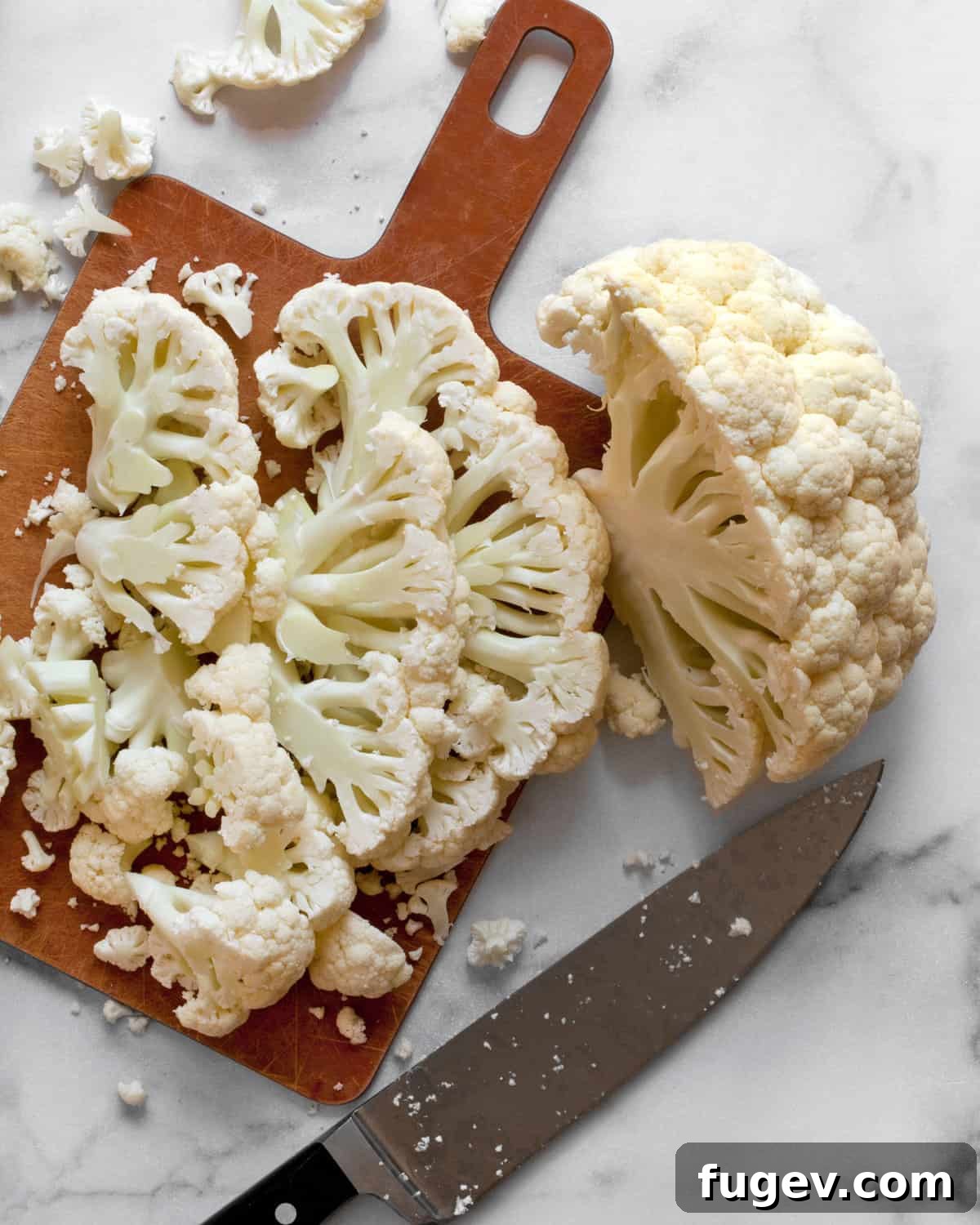
To achieve perfectly browned and caramelized roasted cauliflower, the way you cut it makes all the difference. Instead of simply breaking a head of cauliflower into uneven florets, I recommend a slicing technique that maximizes surface area for optimal caramelization.
Begin by preparing your cauliflower: remove all the outer leaves and trim the bottom stem so that the head has a flat, stable base. This will make slicing much easier and safer. Next, take a sharp chef’s knife and carefully cut the cauliflower into 1/2-inch thick slices. You’ll notice that these slices naturally have more flat edges than irregularly broken florets.
Once sliced, you can then use your hands or your knife to gently break these slices into smaller, bite-sized florets. The key advantage of this method is that more flat surfaces will come into direct contact with the hot metal of the baking sheet. This direct contact is essential for promoting the Maillard reaction, which is responsible for those delicious browned edges and the deep, nutty flavor that makes roasted cauliflower so irresistible. Don’t discard the stem pieces either; they soften and caramelize beautifully during roasting and are perfectly edible and delicious.
Step-by-Step Guide: Crafting Your Roasted Cauliflower Salad
Creating this vibrant salad is straightforward and rewarding. Follow these simple steps for a truly delicious result:
Step 1: Prepare and Roast the Cauliflower
Preheat your oven to a robust 425 degrees F (220 degrees C). This high temperature is crucial for achieving that desirable caramelization. On a large baking sheet, spread your prepared cauliflower florets. Drizzle them generously with 1 tablespoon of olive oil, then season with 1/2 teaspoon of kosher salt and 1/4 teaspoon of black pepper. Toss everything together directly on the sheet pan to ensure each floret is evenly coated. Arrange the cauliflower in a single layer, making sure not to overcrowd the pan. This maximizes contact with the hot surface, which is key for browning. Roast for 20-25 minutes, flipping the florets halfway through the cooking time, until they are tender and beautifully browned at the edges.
Step 2: Whisk Together the Balsamic Vinaigrette
While the cauliflower roasts, prepare your flavorful dressing. In a small bowl, combine the minced garlic, whole grain mustard, honey, 1/2 teaspoon kosher salt, 1/4 teaspoon black pepper, and balsamic vinegar. Whisk these ingredients together until well combined. Gradually drizzle in the 1/4 cup of olive oil while continuously whisking until the dressing is emulsified and smooth. This homemade vinaigrette is the heart of the salad, offering a perfect balance of tang, sweetness, and savory notes.
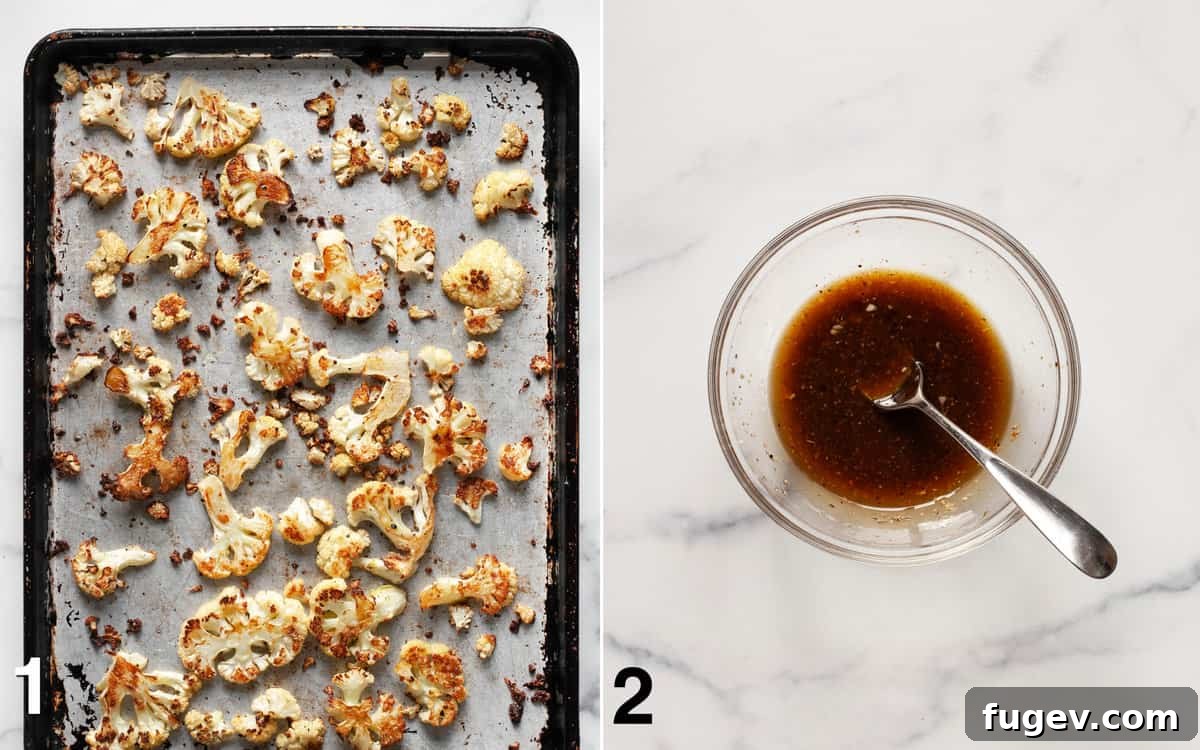
Step 3: Assemble the Salad Base
Once your cauliflower is roasted to perfection, allow it to cool slightly. In a large mixing bowl, combine the chopped kale, the roasted cauliflower, finely diced red onions, chopped sun-dried tomatoes (with excess oil drained), chopped pitted Kalamata olives, crumbled feta cheese, and the toasted walnuts. Ensure all components are ready before the final step to maintain freshness and texture.
Step 4: Dress and Toss the Salad
Finally, it’s time to bring all the flavors together. Pour the freshly prepared balsamic vinaigrette over the salad ingredients in the large bowl. Using tongs or your hands, gently toss everything until all the ingredients are thoroughly coated in the dressing. Serve immediately and enjoy the harmonious blend of textures and flavors!
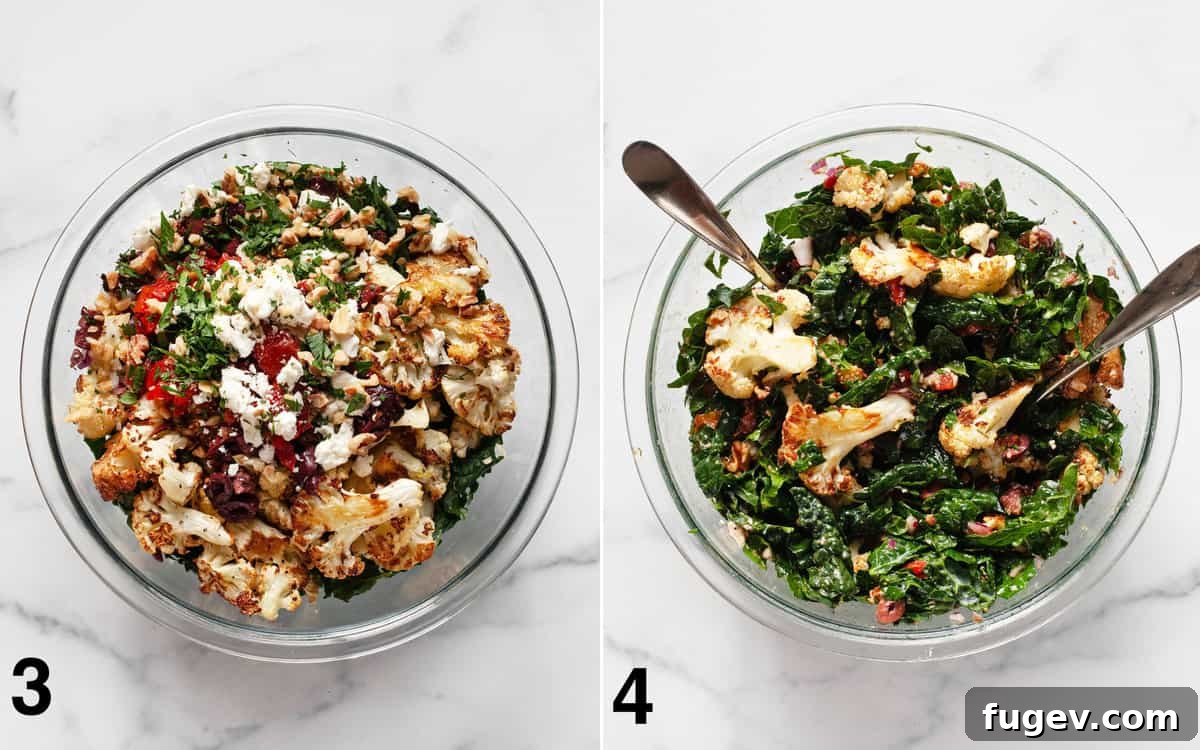
Versatile Serving Suggestions for Your Roasted Cauliflower and Kale Salad
This roasted cauliflower and kale salad is incredibly versatile, making it suitable for almost any occasion and any time of year. Its hearty and sophisticated flavor profile makes it a welcome addition to diverse meals:
Holiday Feasts: Don’t reserve this salad just for everyday meals. Its rich flavors and impressive appearance make it perfectly worthy of a holiday spread, such as Thanksgiving, where it would beautifully complement a succulent roasted turkey or a festive ham. It adds a much-needed fresh and vibrant counterpoint to heavier holiday dishes.
Everyday Dinners: For weeknight meals, you have the flexibility to serve this salad as a substantial side dish that adds a burst of flavor and nutrition, or elevate it to a main course. Its combination of roasted vegetables, healthy fats, and greens ensures it’s satisfying on its own.
Pairing with Pasta: This salad pairs exceptionally well with various pasta dishes, creating a balanced and complete meal. Consider enjoying it alongside a comforting chickpea spinach pasta, a delicate fresh herb pappardelle, or a seasonal pumpkin pasta. The fresh, tangy notes of the salad cut through the richness of pasta, offering a delightful contrast.
Whether you’re planning a celebratory dinner or a simple weeknight meal, this roasted cauliflower and kale salad is a delicious and adaptable choice that caters to both taste and convenience.
Tips for Storing Leftovers and Meal Prep
Proper storage is key to enjoying your salad for days to come. Here are the best practices for handling leftovers and meal prep:
For Maximum Freshness (Meal Prep): If you anticipate having leftovers or are preparing this salad for future meals, it’s highly recommended to store the salad ingredients and the vinaigrette separately. Keep the undressed salad mixture (kale, roasted cauliflower, onions, tomatoes, olives, feta, walnuts, and parsley) in an airtight container in the refrigerator. Store the balsamic vinaigrette in its own separate airtight container. When you’re ready to eat, simply drizzle the desired amount of dressing over a portion of the salad and toss. This method prevents the greens from becoming soggy and helps maintain the crisp texture of all the ingredients, keeping the salad fresh for up to 2-3 days.
Storing Dressed Leftovers: Even if you’ve already tossed the entire salad with dressing, don’t hesitate to save the leftovers. Kale is a much heartier green compared to more delicate lettuces like spinach or romaine. While a dressed kale salad will inevitably lose some of its initial crispness over time, it will still retain its texture and flavor remarkably well. Store any dressed leftover salad in an airtight container in the refrigerator for up to 3 days. It makes for a delicious and convenient meal or snack!
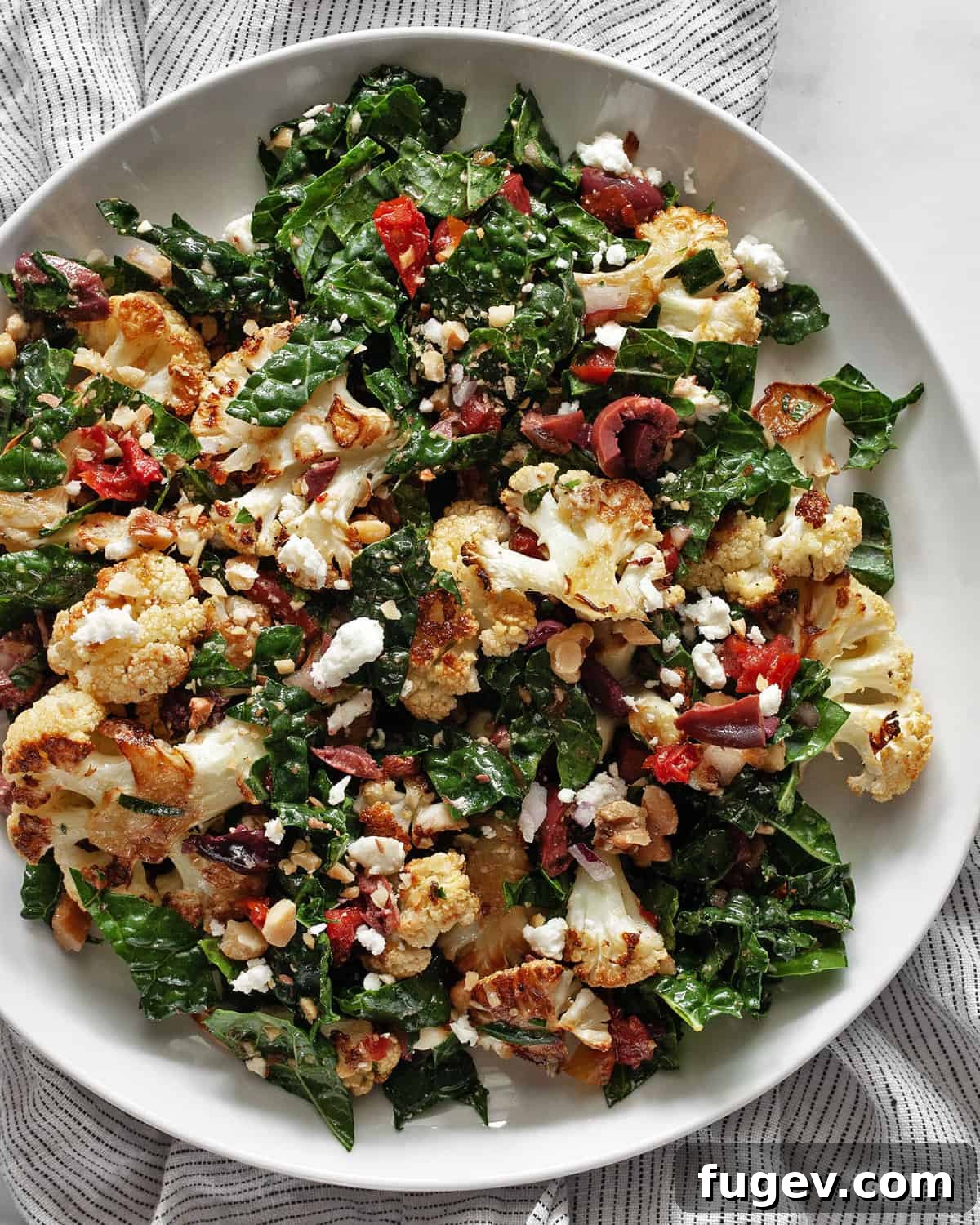
Expert Recipe Tips for Optimal Flavor and Texture
Follow these expert tips to ensure your roasted cauliflower and kale salad turns out perfectly every time:
- Choose Whole Cauliflower Over Pre-Cut Florets: While pre-cut cauliflower florets might seem like a time-saver, resist the temptation. Buying a whole head of cauliflower and slicing it yourself, as described above, is crucial for achieving superior roasting results. This method ensures you get those desirable flat surfaces on each piece, which caramelize beautifully when they make contact with the hot baking sheet, leading to a much richer flavor and better texture.
- Always Make Your Own Balsamic Vinaigrette: A homemade dressing is a game-changer for this salad. You can whisk together this simple balsamic vinaigrette in less than a minute. Not only will it taste significantly fresher and more vibrant than any store-bought alternative, but it also allows you to control the quality of ingredients and avoid unnecessary additives, sugars, or preservatives often found in commercial dressings.
- Utilize Cauliflower Stems: Don’t discard the stem pieces when cutting your cauliflower! Many people mistakenly throw them away, but they are perfectly edible and delicious. When roasted alongside the florets, the stem pieces will soften and caramelize, adding another layer of texture and flavor to your salad. It’s a great way to reduce food waste and enhance your dish.
- Massage Your Kale: For a more tender and less bitter kale salad, especially with curly kale, consider gently massaging the chopped kale with a tiny bit of olive oil or a squeeze of lemon juice for a minute or two before adding other ingredients. This breaks down the tough cell walls, making the kale softer and easier to digest.
- Toast Your Nuts: Don’t skip toasting the walnuts (or any other nuts you choose to use). A few minutes in a dry pan or a hot oven brings out their natural oils, intensifying their nutty flavor and enhancing their crunch. This small step makes a big difference in the overall taste and texture of the salad.
Frequently Asked Questions About This Salad
Can I substitute cauliflower with other vegetables in this recipe?
Absolutely! While cauliflower is excellent, you can certainly substitute it with other robust vegetables that roast well. Broccoli or romanesco are both fantastic options that will bring a similar texture and a slightly different, yet equally delicious, flavor profile to the salad.
Do I have to use kale in this salad, or can I use a different green?
While kale provides a sturdy base that holds up beautifully to the warm roasted cauliflower and rich dressing, you can substitute it with other greens. Baby spinach or chopped romaine lettuce would also work well. However, please be aware that the warm roasted cauliflower may weigh down and soften more tender lettuces like spinach more quickly than kale, so it’s best to serve immediately if using these alternatives.
How can I make this roasted cauliflower salad vegan?
It’s very simple to adapt this recipe for a vegan diet. The primary animal product is feta cheese. You can either omit the feta entirely or use a high-quality plant-based feta alternative, which is widely available in many grocery stores. Additionally, the vinaigrette calls for honey. Simply substitute the honey with an equal amount of maple syrup or agave nectar to make the dressing completely vegan-friendly.
What kind of olive oil should I use for roasting and for the dressing?
For roasting the cauliflower, a standard extra virgin olive oil is perfectly fine. For the balsamic vinaigrette, I recommend using a good quality, flavorful extra virgin olive oil. The nuanced flavor of a high-quality olive oil will truly shine through in the dressing, enhancing the overall taste of the salad.
Can I prepare any components of the salad in advance for quicker assembly?
Yes, absolutely! You can roast the cauliflower ahead of time and let it cool completely before storing it in an airtight container in the refrigerator for up to 2-3 days. The balsamic vinaigrette can also be made in advance and stored in a sealed jar in the fridge for up to a week. Just give it a good shake or whisk before using. Chopping the kale, sun-dried tomatoes, olives, red onion, and parsley can also be done a day ahead. This makes assembling the salad extremely quick when you’re ready to eat.
Explore More Delicious and Healthy Salad Recipes
If you loved this roasted cauliflower and kale salad, you’ll surely enjoy exploring these other fresh and flavorful salad creations:
- Fall Harvest Salad
- Roasted Fingerling Potato Salad
- Sweet Potato Kale Salad
- Carrot Salad with Tahini Dressing
- Kale Apple Salad
- Shaved Brussels Sprout Salad
- Apple Cabbage Salad
- Broccoli Cauliflower Salad with Tahini Vinaigrette
Creative Cauliflower Recipe Ideas to Inspire You
Cauliflower is a wonderfully versatile vegetable. If you’re looking for more ways to enjoy it, check out these fantastic recipes:
- Roasted Cauliflower with Chickpeas and Herby Tahini
- Roasted Curried Cauliflower with Tahini
- Homemade Cauliflower Pizza Crust
- Cauliflower Spinach Pesto Pasta
- Grilled Lemon Pepper Cauliflower Steaks
- Mediterranean Roasted Cauliflower Rice
- Roasted Cauliflower Steaks with Red Pepper Pesto
This salad is proudly featured in my comprehensive guide to easy salad recipes for every season, offering fresh and inspiring ideas all year long. And if you’re a fan of roasted vegetables, don’t miss my dedicated seasonal roasted vegetable recipe guide for even more delicious creations.
Roasted Cauliflower Salad
Paige Adams
10 mins
25 mins
35 mins
4
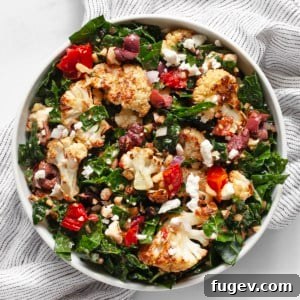
This simple roasted cauliflower salad is a flavor explosion! With savory chopped Kalamata olives and sweet sun-dried tomatoes, it’s perfectly tossed with creamy crumbled feta, crunchy toasted walnuts, and a vibrant homemade balsamic vinaigrette. A truly satisfying and healthy dish.
Ingredients
For the Roasted Cauliflower
- 1 head cauliflower (about 2 pounds), leaves removed, bottom stem trimmed, cut into 1/2-inch thick slices and broken into florets
- 1 tablespoon olive oil
- 1/2 teaspoon kosher salt
- 1/4 teaspoon black pepper
For the Balsamic Vinaigrette
- 1 garlic clove, minced
- 1 tablespoon whole grain mustard
- 1 teaspoon honey (or maple syrup for vegan)
- 1/2 teaspoon kosher salt
- 1/4 teaspoon black pepper
- 2 tablespoons balsamic vinegar
- 1/4 cup olive oil
For the Salad Assembly
- 1 bunch kale, ribs removed and chopped (about 4 cups)
- 1/2 small red onion, finely diced
- 1/2 cup chopped sun-dried tomatoes, oil drained
- 1/2 cup chopped pitted Kalamata olives
- 1/4 cup crumbled feta (or plant-based cheese for vegan)
- 1/4 cup chopped toasted walnuts
- 2 tablespoons chopped fresh parsley
Instructions
- Preheat your oven to 425 degrees F (220 degrees C).
- On a large sheet pan, toss the cauliflower florets with 1 tablespoon olive oil, 1/2 teaspoon kosher salt, and 1/4 teaspoon black pepper. Spread them into a single layer, ensuring maximum contact with the pan. Roast for 20-25 minutes, flipping the cauliflower halfway through, until it is tender and beautifully browned at the edges.
- While the cauliflower roasts, prepare the vinaigrette. In a small bowl, whisk together the minced garlic, whole grain mustard, honey (or maple syrup), 1/2 teaspoon kosher salt, 1/4 teaspoon black pepper, and balsamic vinegar. Gradually whisk in 1/4 cup olive oil until the dressing is well combined and emulsified.
- To assemble the salad, combine the chopped kale, roasted cauliflower, finely diced red onions, chopped sun-dried tomatoes, chopped Kalamata olives, crumbled feta, toasted walnuts, and fresh parsley in a large mixing bowl.
- Drizzle the prepared balsamic vinaigrette over the salad ingredients. Toss everything gently until all components are thoroughly coated in the dressing. Serve immediately and enjoy!
Notes
You can substitute broccoli or romanesco for the cauliflower if desired.
If you prefer a different green over kale, baby spinach or chopped romaine are good options. Keep in mind that roasted cauliflower may wilt more tender greens quicker.
Jarred roasted tomatoes or roasted red peppers can be used in place of sun-dried tomatoes for a similar flavor profile.
For the walnuts, feel free to substitute with other nuts like almonds, pecans, pine nuts, pistachios, or even sunflower seeds for a different crunch.
To make the salad vegan, simply omit the feta cheese or use a plant-based version. Also, swap out the honey in the dressing for an equal amount of maple syrup.
For meal prep, store the undressed salad components and the vinaigrette in separate airtight containers in the refrigerator for up to 3 days. Allow the vinaigrette to sit at room temperature for about 15 minutes before drizzling and tossing.
Since kale is a heartier green, any leftover dressed salad can still be stored in an airtight container for up to 3 days. While it might lose some crispness, it will remain delicious.
Nutrition
| Carbohydrates: 23g
| Protein: 9g
| Fat: 30g
| Saturated Fat: 5g
| Polyunsaturated Fat: 6g
| Monounsaturated Fat: 17g
| Cholesterol: 8mg
| Sodium: 1119mg
| Potassium: 1105mg
| Fiber: 8g
| Sugar: 8g
| Vitamin A: 3704IU
| Vitamin C: 158mg
| Calcium: 215mg
| Iron: 3mg
Nutrition information is automatically calculated and should be used as an approximation.
Additional Info
Salads
Mediterranean