
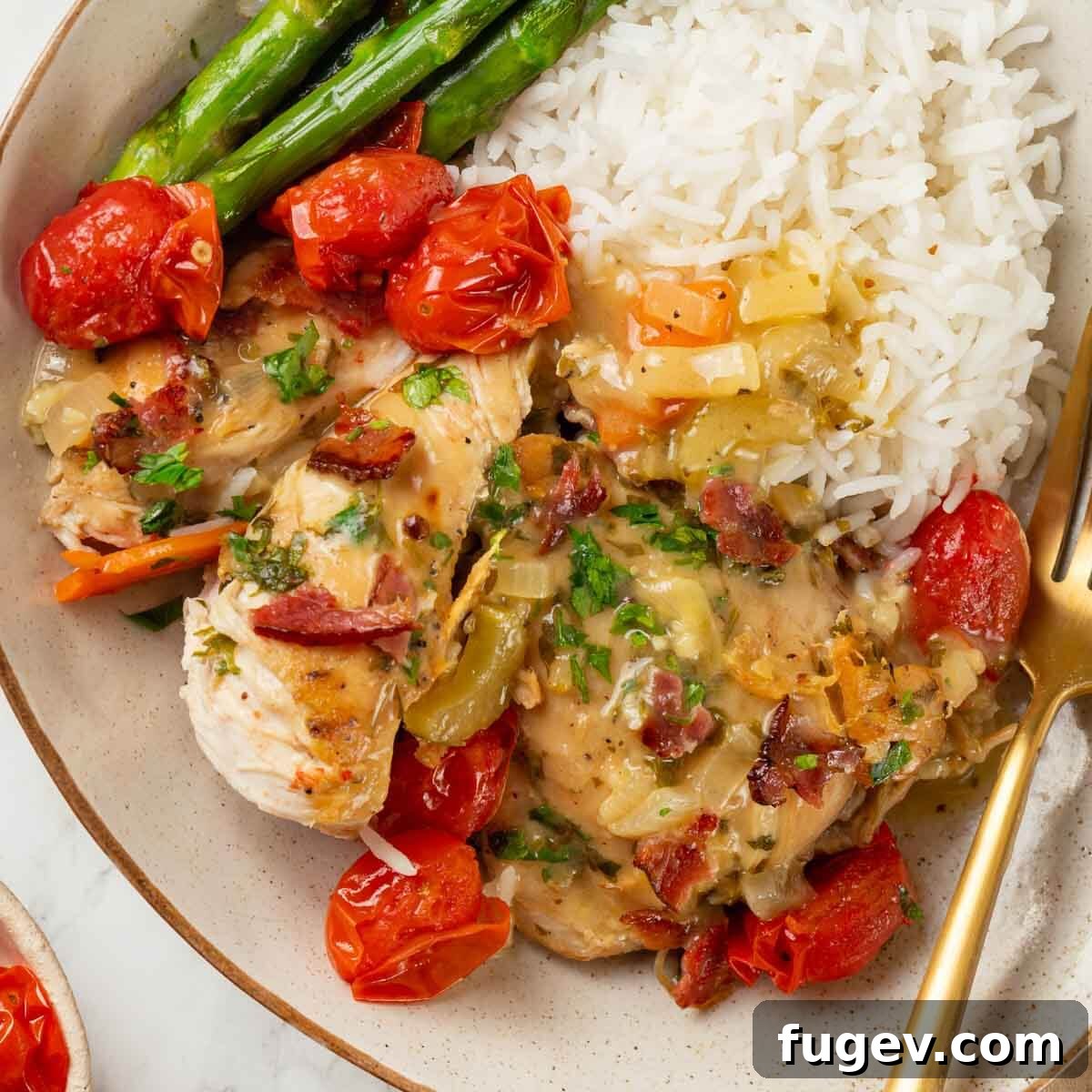
Exquisite Chicken in White Wine Sauce: A One-Pan Masterpiece with Blistered Tomatoes
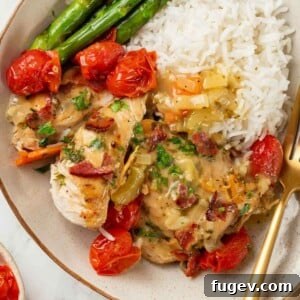
Discover the ultimate weeknight indulgence or impressive dinner party showstopper with this exquisite **chicken in white wine sauce**. Featuring succulent chicken complemented by sweet, delicate blistered tomatoes and a medley of fresh herbs, this dish is a symphony of balanced, delicious flavors. Best of all, this restaurant-quality meal comes together effortlessly in a single pan, ready to delight your senses in under an hour!
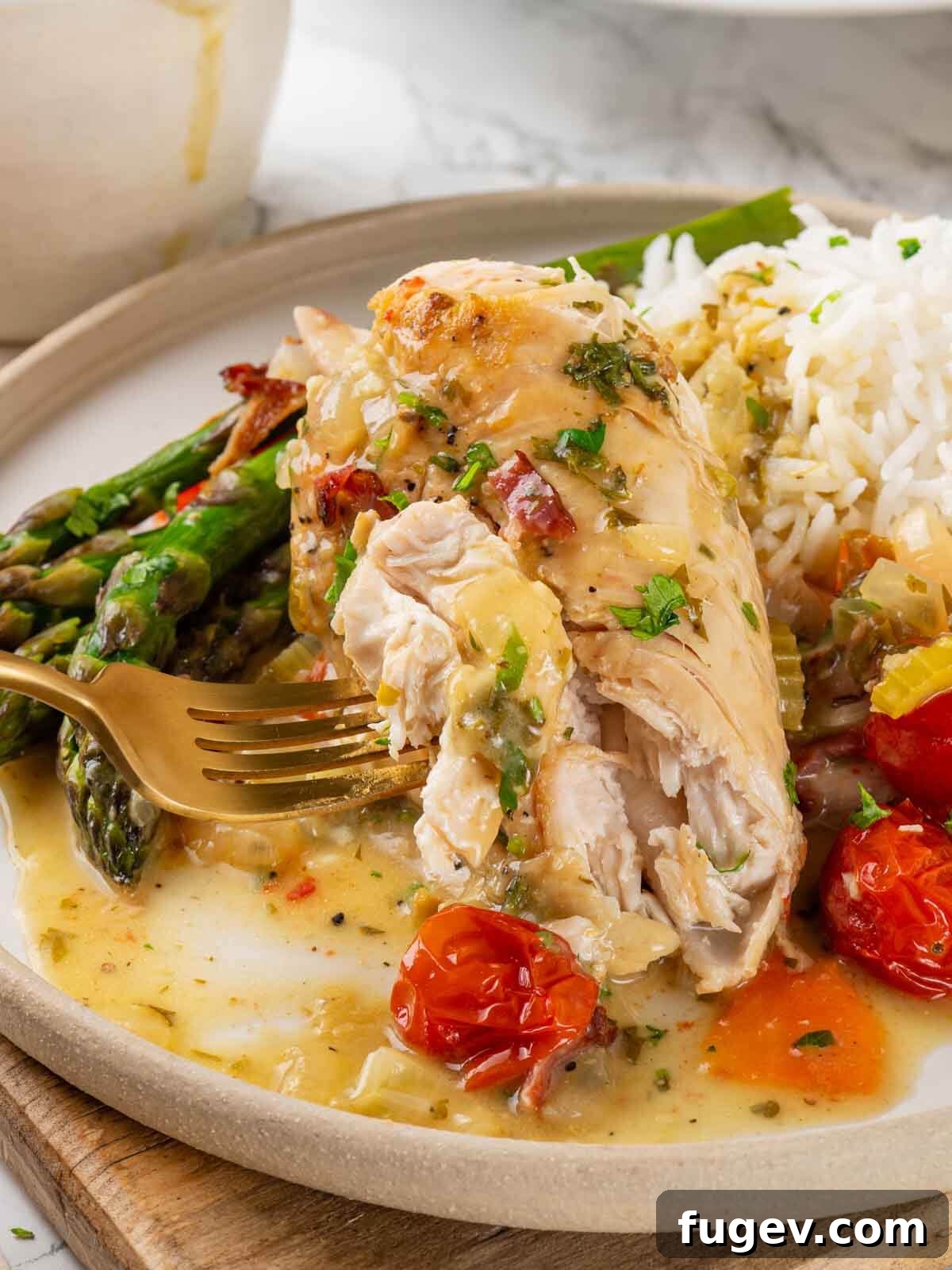
Inspired by a culinary gem from a 2013 edition of Cooking Light, this recipe elevates simple ingredients into a comforting Sunday dinner or an elegant main course for your most special gatherings. Imagine perfectly browned chicken pieces bathed in a luscious sauce crafted from crisp white wine, savory chicken stock, a hint of Dijon mustard, and vibrant fresh herbs, all beautifully contrasted by sweet and tangy blistered tomatoes. This dish is destined to become a beloved staple in your culinary repertoire, standing proudly alongside favorites like our zesty lemon chicken recipe and the ever-popular baked chicken marinara.
We’ve meticulously developed this recipe to ensure maximum flavor with minimal effort, making it accessible for home cooks while delivering a truly gourmet experience. From selecting the finest ingredients to mastering the pan sauce, every step is designed to guide you toward culinary success.
Table of Contents
- Why You Will Love This Chicken and White Wine Sauce Recipe
- Professional Tips for Perfect Chicken in White Wine
- Ingredients for Your Culinary Masterpiece
- Exciting Variations to Explore
- How to Make White Wine Chicken: Step-by-Step Guide
- Chef Lindsey’s Expert Recipe Tip
- Serving Suggestions for Your Elegant Meal
- Frequently Asked Questions
- Chicken in White Wine Sauce Recipe Card
- Before You Go: More Delicious Recipes
Why You Will Love This Chicken and White Wine Sauce Recipe
This isn’t just another chicken dish; it’s an experience waiting to happen in your kitchen. Here’s why this white wine chicken recipe is bound to become a new favorite:
- A Burst of Vibrant, Sophisticated Flavors: The thoughtful combination of crisp dry white wine, rich chicken stock, tangy Dijon mustard, and aromatic fresh herbs creates an incredibly complex yet harmonious flavor profile. Each ingredient plays a crucial role, resulting in a sauce that is both luxurious and perfectly balanced, elevating humble chicken to a gourmet level. The acidity from the wine and mustard cuts through the richness, while the herbs add layers of fragrant depth.
- Effortlessly Customizable for Every Palate: This recipe embraces flexibility, inviting you to tailor it to your preferences. While bone-in, skin-on chicken thighs offer unparalleled flavor and juiciness, you can easily substitute them with boneless, skinless chicken thighs or breasts for quicker cooking without sacrificing taste. Feel free to adjust the herbs or even omit the optional bacon if you prefer a more classic chicken with wine sauce. This adaptability ensures that the dish is always perfect for you and your guests.
- Chef-Tested and Approved for Restaurant Quality Results: Rest assured that this recipe has undergone rigorous testing multiple times by a professional chef. This meticulous process guarantees that the instructions are precise, the ingredient quantities are spot-on, and the final dish consistently achieves restaurant-quality excellence. You’re not just following a recipe; you’re receiving expert guidance for a flawless culinary outcome every time.
- A Convenient One-Pan Wonder: Say goodbye to stacks of dirty dishes! This entire dish, from searing the chicken to simmering the sauce and baking to perfection, all happens in a single oven-safe pan or Dutch oven. This not only streamlines the cooking process but also makes cleanup incredibly simple, giving you more time to savor your delicious meal.
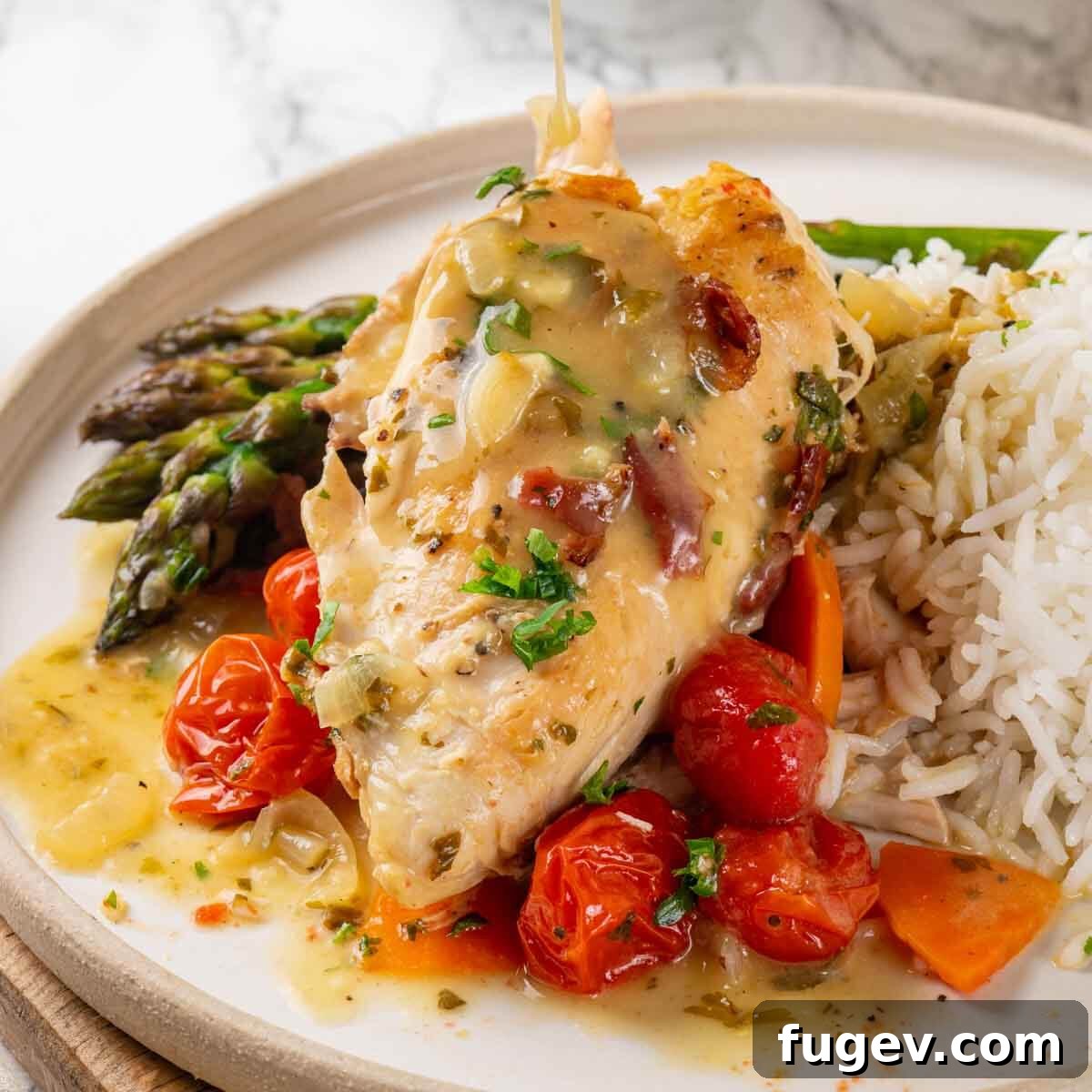
Professional Tips for Perfect Chicken in White Wine
Achieving a truly exceptional chicken in white wine sauce involves a few key techniques that can elevate your dish from good to unforgettable. Here are some professional tips to guide you:
- Master the Sauce Reduction Process: This is a critical step for intensifying flavors and achieving the perfect velvety texture. Allow the pan sauce ample time to simmer and reduce. As the liquid evaporates, the flavors concentrate, and the sauce thickens to coat the chicken beautifully. Don’t rush this process; patience will be rewarded with a rich, complex sauce that truly defines the dish. Look for a consistency that lightly coats the back of a spoon.
- Prioritize High-Quality Ingredients: The quality of your ingredients directly impacts the final taste. This is especially true for your chicken stock and white wine. Opt for a good quality dry white wine that you would enjoy drinking – a poor cooking wine will yield a poor-tasting sauce. For chicken stock, homemade is always best, offering a depth of flavor unmatched by store-bought varieties. If using packaged stock, choose a low-sodium option to control the overall saltiness of your dish. Fresh herbs also make a significant difference over dried.
- Taste and Adjust Seasoning as You Go: A professional chef always tastes their food at multiple stages. Before baking and certainly before serving, taste the sauce and adjust the seasoning. You know your preferences best, so feel free to add more salt, freshly ground pepper, or a pinch more herbs to perfectly suit your personal taste. Remember, it’s easier to add more seasoning than to remove it.
- Properly Brown Your Chicken: Achieving a deep golden-brown sear on your chicken pieces before adding the sauce is essential for developing rich flavor. This caramelization (Maillard reaction) adds a depth that cannot be replicated. Ensure your pan is hot enough and avoid overcrowding it, as this can steam the chicken instead of browning it. If necessary, brown the chicken in batches.
- Deglaze Your Pan Effectively: After browning the chicken and sautéing the vegetables, you’ll notice delicious brown bits stuck to the bottom of the pan – this is called “fond.” When you add the wine and scrape the bottom of the pan with a wooden spoon, you are deglazing. These flavorful bits dissolve into the liquid, adding incredible depth and richness to your sauce. Don’t leave any flavor behind!
Ingredients for Your Culinary Masterpiece
Gathering the right ingredients is the first step towards creating this delightful chicken in white wine sauce. Each component plays a vital role in building the layered flavors of this dish.
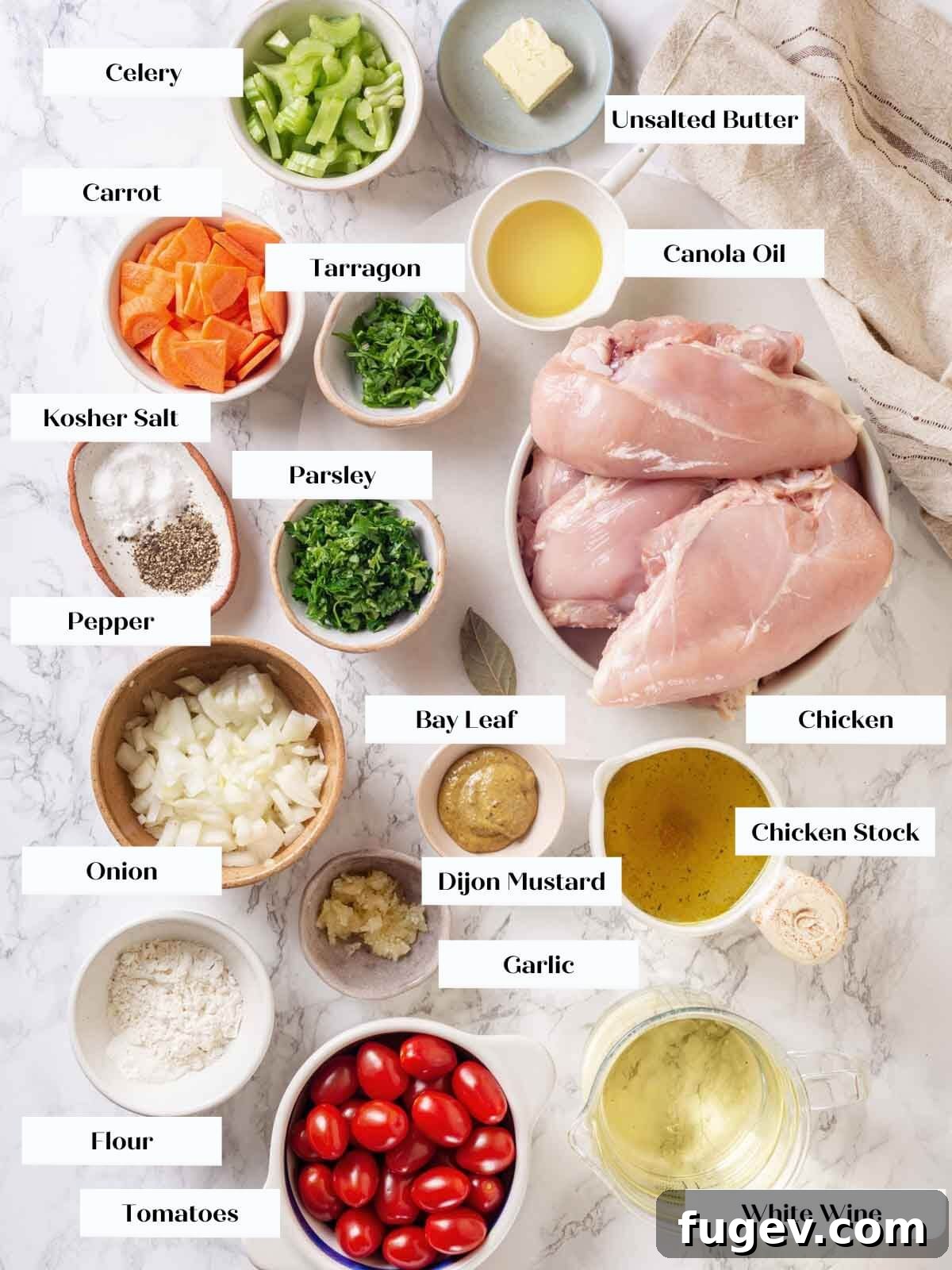
- Bone-in Chicken Thighs (skinned): We recommend bone-in chicken thighs for their rich flavor and moist texture, even after removing the skin. The bone helps infuse the meat with more flavor during cooking. For a faster cooking time and leaner option, feel free to use boneless, skinless chicken thighs.
- Bone-in Chicken Breasts (skinned): Including chicken breasts offers a mix of textures and preferences. If bone-in breasts are hard to find, boneless, skinless chicken breasts are a perfectly good substitute, though they will cook faster. Ensure all chicken pieces are roughly similar in thickness for even cooking.
- Kosher Salt: A fundamental seasoning that enhances all other flavors. Using kosher salt allows for easier control over salinity compared to table salt.
- Black Pepper: Freshly ground black pepper provides a sharper, more aromatic flavor than pre-ground.
- Canola Oil: With its high smoke point, canola oil is ideal for browning the chicken without burning. You can also use other neutral oils like grapeseed or vegetable oil.
- Onion (chopped): About 1 medium onion will yield 1 cup chopped. Sweet or yellow onions are perfect for building a sweet and savory base for the sauce. They become wonderfully translucent and sweet as they cook down.
- Carrot (thinly sliced): Carrots add a subtle sweetness and beautiful color to the sauce. Thinly slicing the carrot ensures it cooks evenly and integrates well with the other aromatics. Peeling is optional, but recommended for a smoother texture.
- Celery (thinly sliced): Along with onion and carrot, celery forms the classic mirepoix, providing an aromatic foundation and depth of flavor. Thin slices help it break down nicely into the sauce.
- Garlic (minced): Fresh garlic is key for its pungent aroma and flavor. Approximately 3 cloves of fresh garlic, minced, or 1 tablespoon of good quality jarred minced garlic, will do.
- Dry White Wine: This is the star of the sauce! A dry white wine, such as Pinot Grigio, Sauvignon Blanc, or an unoaked Chardonnay, is crucial. It provides acidity and fruit notes without adding unwanted sweetness. Avoid “cooking wines” as they often contain salt and additives. If you have a bottle of dry red wine you adore, consider making a red wine pasta sauce another night!
- Low-Sodium Chicken Stock: Using low-sodium stock allows you to control the seasoning precisely. For the absolute best flavor, we highly recommend making your own homemade chicken stock by simmering bones and vegetables.
- All-Purpose Flour: This is used not for dredging the chicken but for thickening the luxurious sauce. Regular all-purpose flour works perfectly. For a gluten-free version, rice flour or almond flour can be substituted effectively.
- Fresh Tarragon (chopped): Tarragon is distinctive with its sweet, slightly anisy, and peppery notes, providing a unique floral taste that pairs beautifully with chicken and white wine. Fresh tarragon is much more potent and flavorful than dried, so adjust accordingly if substituting.
- Flat-Leaf Parsley (chopped): Adds a fresh, bright, and slightly peppery finish. Use flat-leaf parsley (Italian parsley) for its superior flavor and texture over curly parsley.
- Whole-Grain Dijon Mustard: A spoonful of whole-grain Dijon mustard contributes a delightful tang and acidity, perfectly balancing the richness of the chicken and the chicken stock. It also helps to emulsify the sauce.
- Bay Leaf: Known for imparting a subtle, earthy, and slightly minty-peppery flavor, a bay leaf adds depth to the simmering sauce. Remember to remove it before serving.
- Unsalted Butter: Whisked in at the end, unsalted butter adds a luxurious gloss and richness, finishing the sauce beautifully. Always use unsalted butter to control the salt content.
- Cherry Tomatoes: Small, sweet, and bursting with flavor when blistered, cherry tomatoes or grape tomatoes provide a vibrant pop of color and a tangy counterpoint to the savory chicken.
- Bacon (optional): For those who love an extra layer of savory depth and a hint of smokiness, 2 slices of applewood-smoked bacon, cooked until crispy and crumbled, make an excellent optional garnish. While you’re at it, why not whip up some loaded mashed potatoes to go with it?
Please refer to the recipe card below for precise measurements and quantities for each ingredient.
Exciting Variations to Explore
This chicken in white wine sauce recipe is wonderfully versatile, allowing for creative twists and adaptations to suit your taste or what you have on hand. Don’t be afraid to experiment!
- Indulgent Creamy White Wine Sauce: To transform this into a richer, creamier dish, stir in a splash of heavy cream towards the end of the sauce reduction. It’s crucial not to bake the cream sauce in the oven, as it can separate or “break.” Instead, prepare the creamy white wine sauce separately on the stovetop after the chicken has finished baking, then pour it over the warm chicken before serving. This ensures a beautifully smooth and luscious result.
- Alternate Cuts of Chicken for Different Textures: While our recipe calls for a mix, you can certainly use a single cut of chicken throughout. If you prefer all boneless, skinless chicken breasts or thighs, simply adjust the cooking time accordingly. Boneless cuts will cook significantly faster, usually in half the time, so monitor them closely to prevent overcooking and drying out. This flexibility allows for delicious results, much like how you might adapt this Chicken Marsala recipe to your preferred chicken cut.
- Aromatic Herb Combinations: Tarragon and parsley are classic choices, but the world of herbs is vast! Experiment with different fresh herbs to discover new flavor profiles. Sprigs of fresh thyme and rosemary tucked into the sauce during baking infuse it with earthy, piney notes. A touch of oregano or chives could also add interesting dimensions. Consider what flavors you love and let your creativity guide you.
- Add More Vegetables: Boost the nutritional content and textural variety by adding other vegetables. Sliced mushrooms can be sautéed with the onion and carrots. A handful of fresh spinach or kale can be wilted into the sauce just before serving. Bell peppers, zucchini, or even small broccoli florets could also be added during the last 15-20 minutes of baking.
- A Touch of Citrus Brightness: For an extra layer of zest, a squeeze of fresh lemon juice or a sprinkle of lemon zest right before serving can brighten the entire dish, complementing the white wine beautifully.
How to Make White Wine Chicken: Step-by-Step Guide
Follow these detailed instructions to create the most tender and flavorful chicken in white wine sauce every single time. For precise measurements and a condensed overview, refer to the complete recipe card provided further down the page!
Step 1: Prepare Your Oven. Begin by preheating your oven to a moderate 325°F (160°C). This ensures it’s ready for the chicken to finish cooking gently, allowing flavors to meld beautifully.
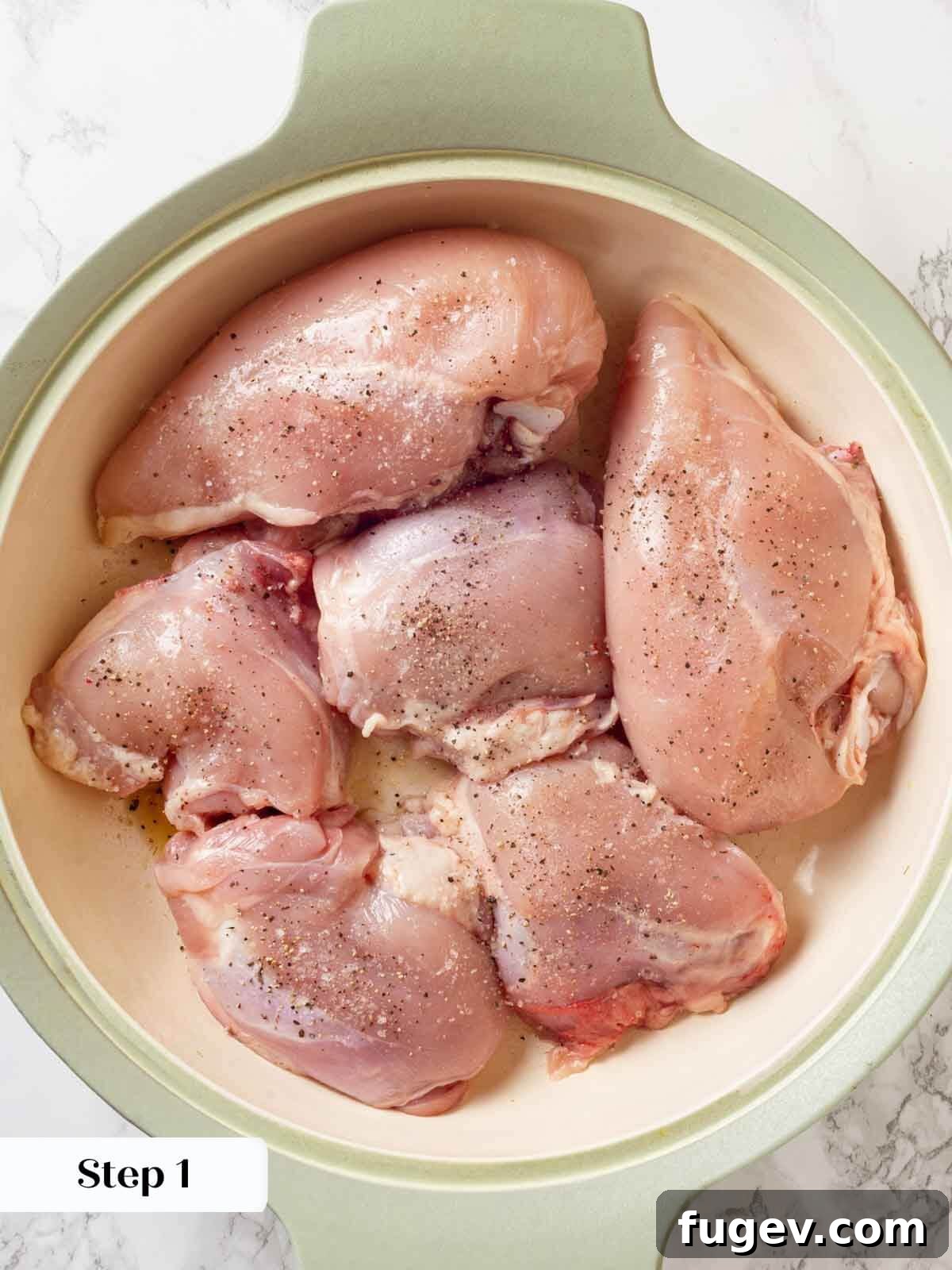
Step 2: Season and Prepare the Chicken. Place a Dutch Oven or a large, oven-safe pan with a lid over medium heat on your stovetop. While it heats, pat your chicken pieces thoroughly dry with paper towels. This crucial step helps achieve a golden-brown, crispy exterior. Season the chicken evenly on all sides with ¼ teaspoon of kosher salt and ¼ teaspoon of freshly ground black pepper. Add 2 teaspoons of canola oil to the hot skillet and swirl to coat the bottom evenly.
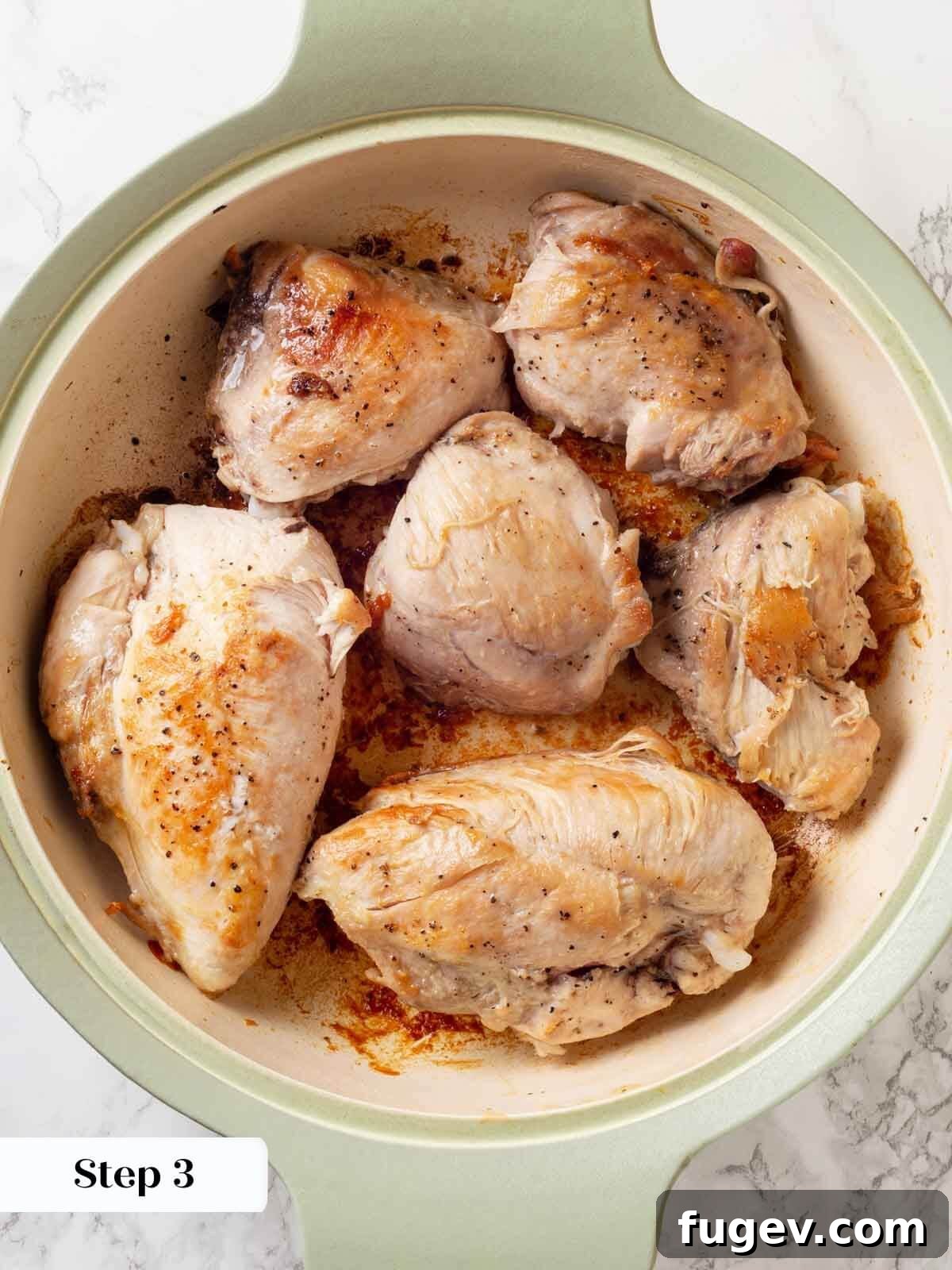
Step 3: Sear the Chicken for Flavor. Carefully place the seasoned chicken into the hot pan, skin-side down first if using skin-on pieces. Brown the chicken on both sides until a rich, golden-brown crust forms – this takes about 5-7 minutes per side, depending on thickness. If using a Dutch Oven or a smaller pan, you may need to brown the chicken in two batches to avoid overcrowding, which can lead to steaming instead of searing. Once browned, remove the chicken from the pan and set it aside on a plate; it doesn’t need to be cooked through at this stage.
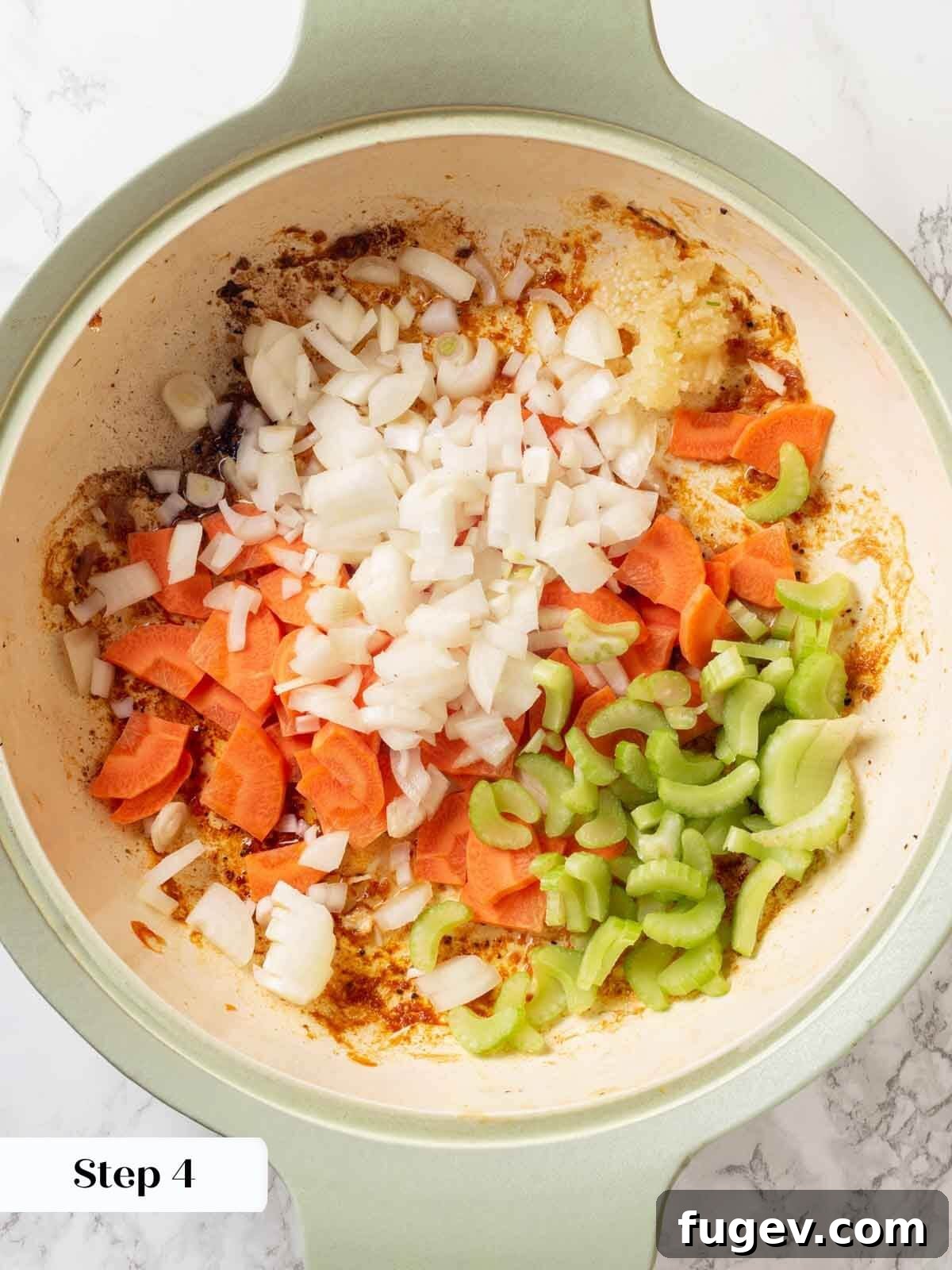
Step 4: Sauté the Aromatics. Reduce the heat slightly if necessary. To the same pan (do not clean it, those browned bits are flavor!), add the chopped onion, thinly sliced carrot, thinly sliced celery, and minced garlic. Cook for about 6 minutes, stirring occasionally, until the vegetables begin to soften and become fragrant. The vegetables will pick up the flavorful brown bits from the bottom of the pan as they cook, adding depth to your sauce.
Chef’s Tip for Even Cooking: Ensure you cut your vegetables as evenly as possible. This uniformity allows them to cook at approximately the same rate, preventing some from becoming mushy while others remain too firm.
Step 5: Deglaze with White Wine. Pour 2 cups of dry white wine into the pan with the sautéed vegetables. Cook for 2 minutes, using a wooden spoon to scrape the bottom of the pan vigorously. This action, called deglazing, lifts all the caramelized brown bits (fond) from the chicken and vegetables, infusing them into the wine to create a deeply flavorful foundation for your sauce. Once the wine has simmered for 2 minutes, return the browned chicken pieces to the pan.
Step 6: Prepare and Add the Stock Mixture. In a separate bowl, whisk together 1 cup of low-sodium chicken stock with 2 tablespoons of all-purpose flour until the mixture is completely smooth and lump-free. This creates a slurry that will thicken your sauce to a perfect consistency. Pour this stock mixture into the pan with the chicken and vegetables.
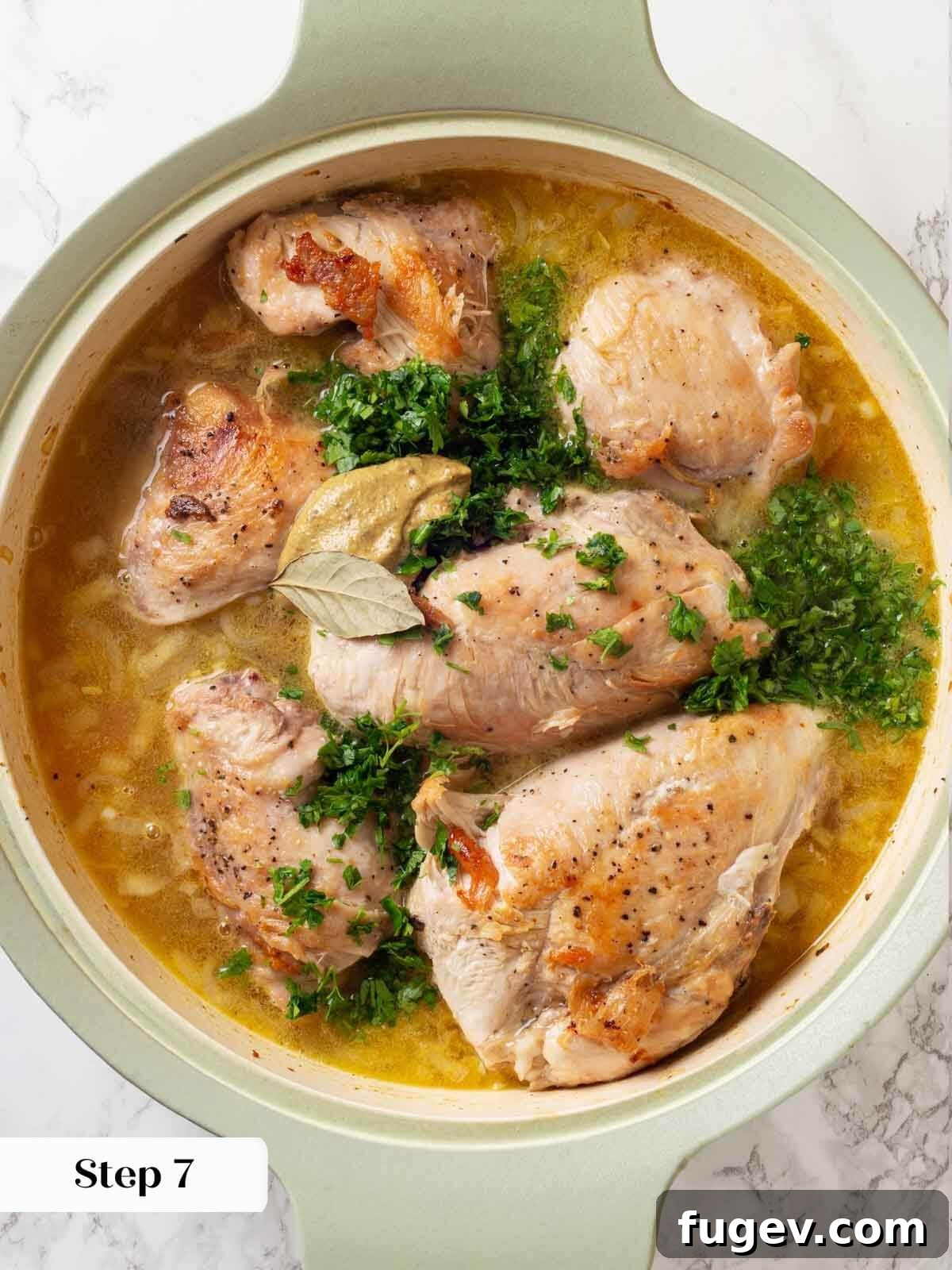
Step 7: Simmer, Cover, and Bake. Stir in the 3 tablespoons of fresh tarragon, 2 tablespoons of chopped parsley, 1 tablespoon of whole-grain Dijon mustard, and the bay leaf. Bring the mixture to a gentle boil on the stovetop. Once boiling, cover the pan tightly with its lid. Carefully transfer the covered pan to your preheated 325°F (160°C) oven and bake for 45 minutes, or until the chicken is thoroughly cooked through and incredibly tender. The internal temperature of the thickest part of the chicken should reach 165°F (74°C).
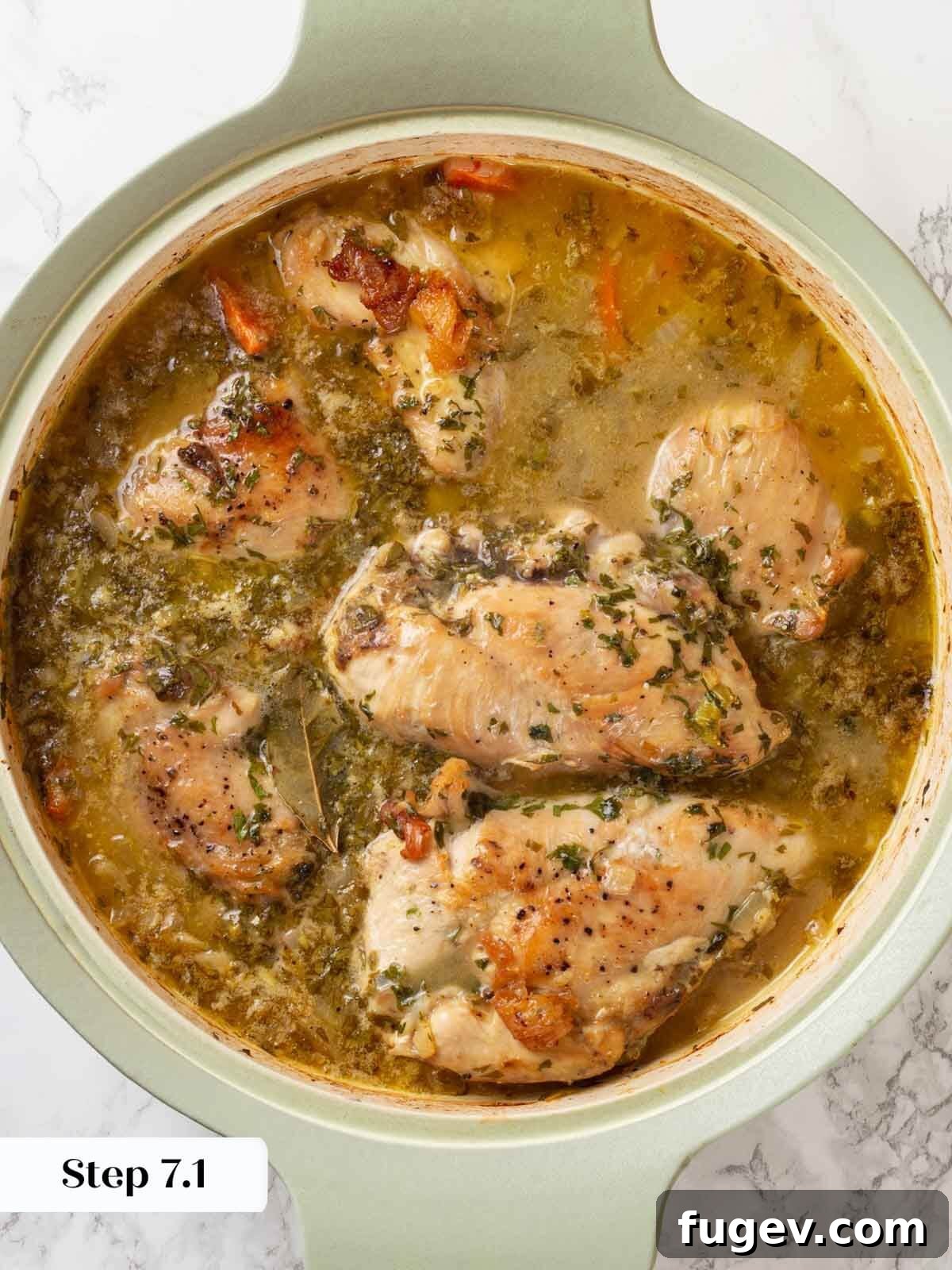
Step 8: Rest the Chicken. Carefully remove the pan from the oven. Using tongs, transfer the cooked chicken pieces from the pan to a separate plate. Spoon about ¼ cup of the cooking liquid over the chicken to keep it moist and flavorful. Cover the plate loosely with foil to keep the chicken warm while you finish the sauce.
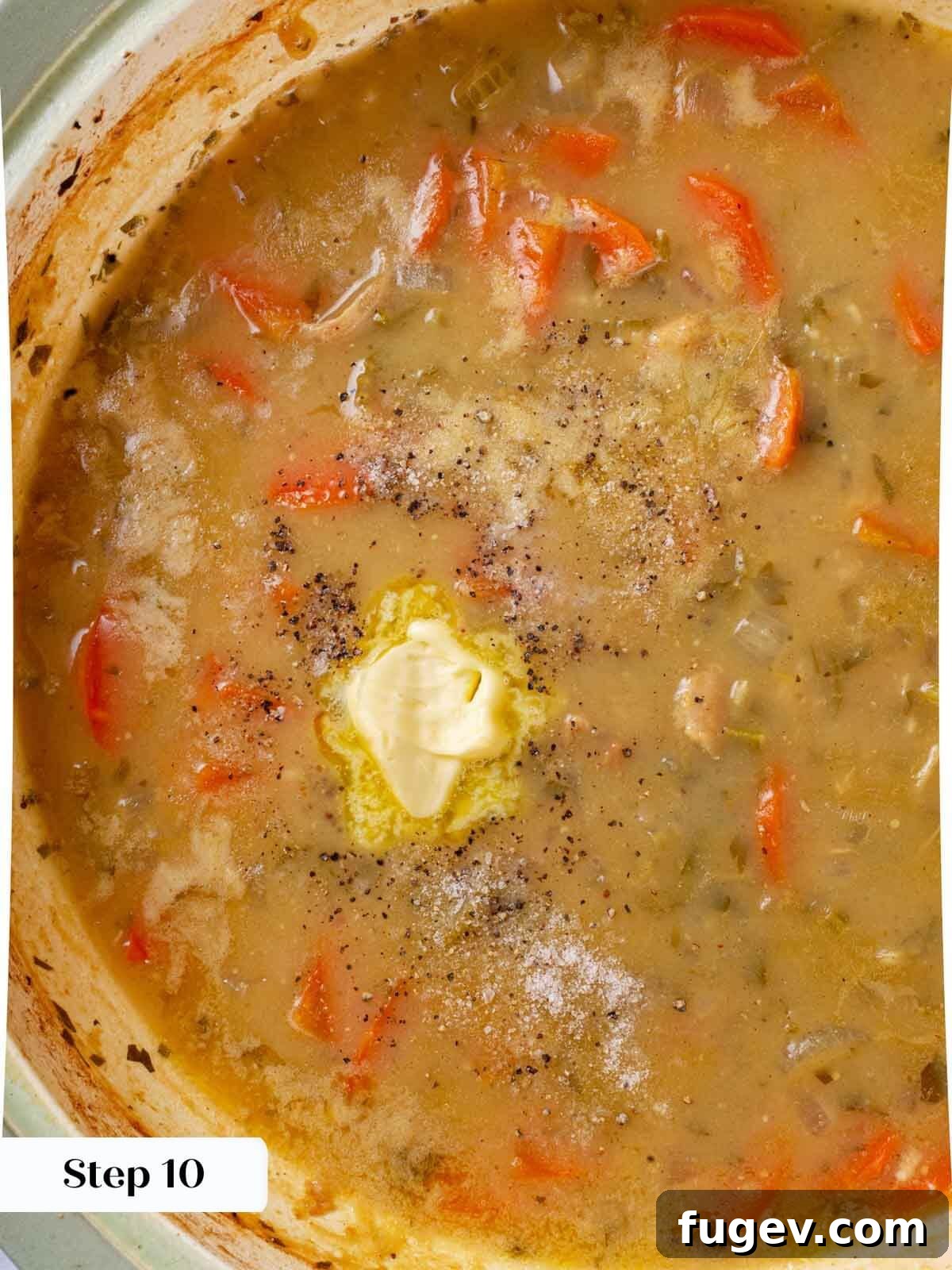
Step 9: Reduce the Sauce for Velvety Perfection. Place the pan with the remaining sauce back on the stovetop over medium-high heat. Bring the sauce to a rolling boil and let it simmer vigorously for about 5 minutes, or until the mixture has reduced to approximately 3 cups. This reduction concentrates the flavors and thickens the sauce to a rich, velvety consistency. Stir occasionally to prevent sticking.
Step 10: Finish the Sauce. Remove the pan from the heat. Whisk in 1 tablespoon of unsalted butter until it melts and is fully incorporated, adding a luxurious sheen and richness to the sauce. Stir in the remaining ¼ teaspoon of kosher salt and ¼ teaspoon of freshly ground black pepper, adjusting to your taste. Don’t forget to locate and discard the bay leaf at this point.
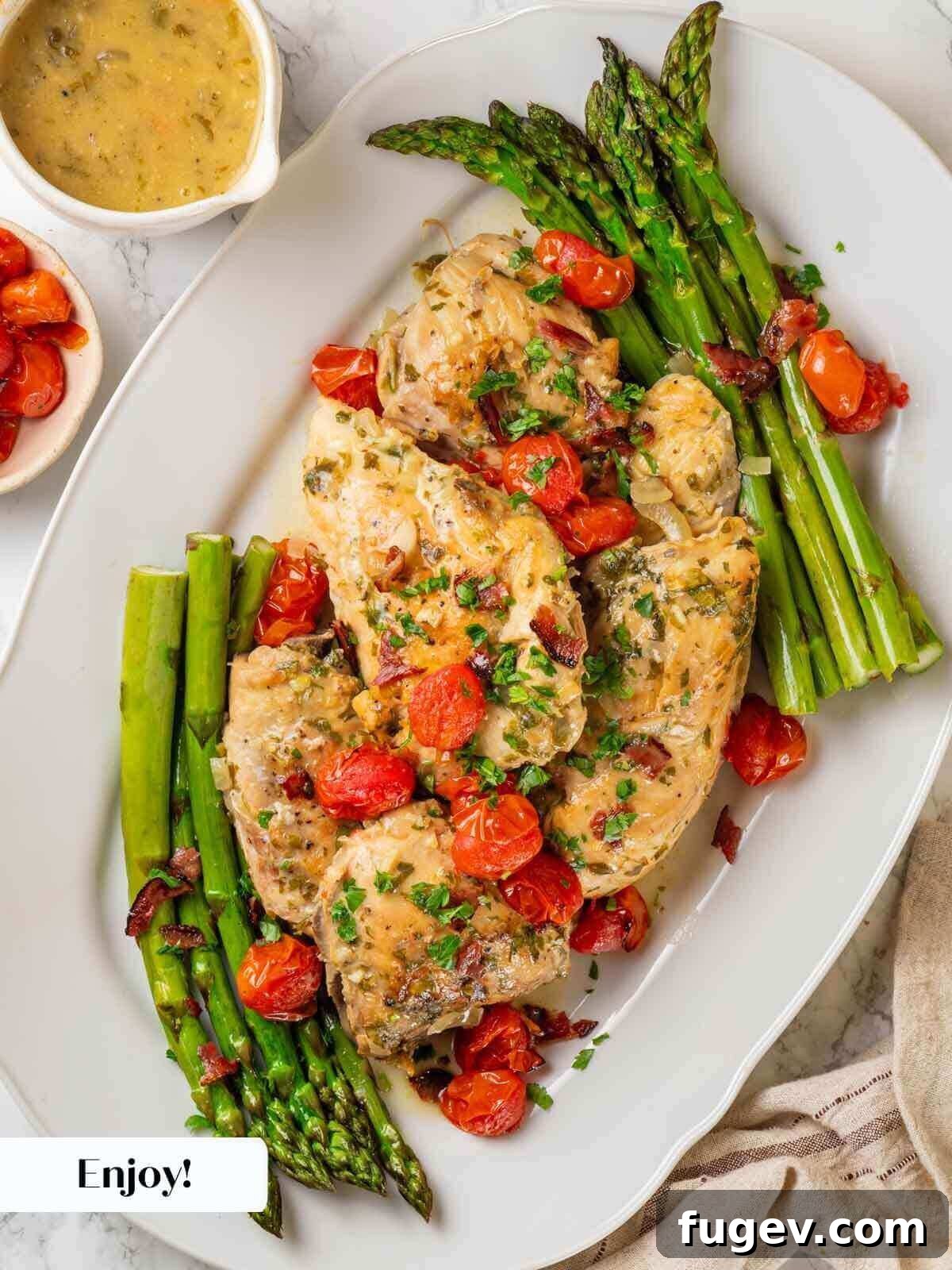
Step 11: Broil Blistered Tomatoes and Garnish. While the sauce is reducing, preheat your broiler on high. In a small bowl, gently toss 2 cups of cherry tomatoes with a teaspoon of olive oil. Arrange the tomatoes in a single layer on a jelly-roll pan or baking sheet. Broil for about 6 minutes, or until the tomatoes are beautifully blistered and slightly softened. Once the tomatoes are ready, sprinkle the warm chicken with the blistered tomatoes, any crumbled bacon (if using), and the remaining 1 tablespoon of chopped parsley.
Broiler Watch: Keep a close eye on your tomatoes while they are under the broiler! Broilers can cook very quickly, and you want them nicely blistered, not burnt. A slight char adds a wonderful roasted flavor that perfectly complements the dish.
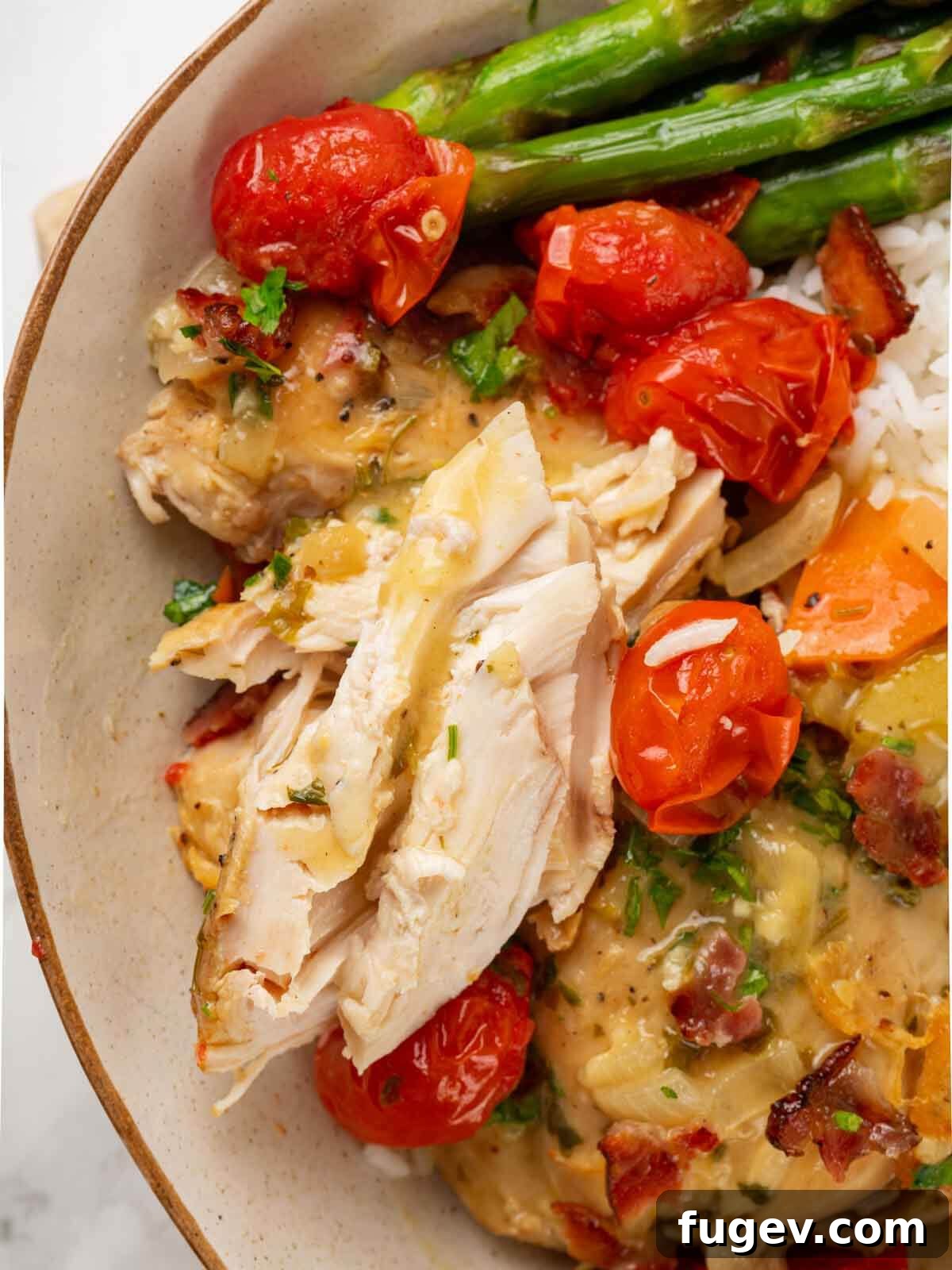
Step 12: Serve and Enjoy! Arrange the garnished chicken pieces on serving plates. Generously spoon the rich, velvety white wine sauce over and around the chicken. Serve immediately and prepare for rave reviews!
Chef Lindsey’s Expert Recipe Tip: The Art of Deglazing
Never underestimate the power of deglazing your pan. After you’ve seared your chicken and sautéed the vegetables, there will be delicious brown bits (fond) stuck to the bottom of your pan. When you pour in the white wine, use a sturdy wooden spoon or spatula to scrape up every single one of those bits. This is called deglazing, and it’s a fundamental technique in building incredible flavor. Those caramelized pieces are packed with concentrated taste that will dissolve into your sauce, adding an unmatched depth and richness to the overall dish. Be sure to deglaze your pan thoroughly and ensure all those flavor-packed bits become part of your sumptuous sauce!
Serving Suggestions for Your Elegant Meal
This exquisite chicken in white wine sauce is a complete meal on its own, but pairing it with the right side dishes can truly elevate the dining experience. The rich, savory sauce is perfect for soaking up with various accompaniments.
- Starchy Sides to Absorb the Sauce:
- Creamy Mashed Potatoes: The ultimate comfort food pairing. Their smooth texture and subtle flavor make them ideal for soaking up every drop of that luscious white wine sauce.
- Fluffy Rice: White rice, brown rice, or even a fragrant pilaf provides a neutral base that perfectly complements the complex flavors of the chicken.
- Crusty Bread: A fresh baguette (French bread) is essential for wiping the plate clean and enjoying every last bit of the delicious sauce.
- Pasta or Noodles: Simple buttered noodles or a light pasta like spring pea and asparagus pasta can be a wonderful, hearty accompaniment.
- Vibrant Vegetable Sides:
- Steamed Green Beans: Lightly steamed or sautéed green beans offer a crisp, fresh contrast to the rich sauce.
- Roasted Asparagus: A classic pairing for chicken, roasted asparagus brings a slight bitterness that balances the dish beautifully.
- Broccoli or Broccolini: Steamed or roasted broccoli adds a welcome pop of green and healthy crunch.
- Sautéed Mushrooms: If not adding them directly to the sauce, a side of garlic-sautéed mushrooms would be a fantastic addition.
- Wine Pairing Recommendations:
- Given the use of dry white wine in the sauce, a glass of the same varietal used in cooking – such as a crisp Pinot Grigio, a zesty Sauvignon Blanc, or an unoaked Chardonnay – would be an excellent choice. These wines will echo the flavors of the dish and cleanse the palate.
- For something a little different, a light-bodied, fruity red like a Pinot Noir could also complement the chicken without overwhelming the delicate sauce.
No matter your choice, ensure your side dishes are ready when the chicken comes out of the oven for a seamless and enjoyable dining experience.
Frequently Asked Questions About White Wine Chicken
Here are answers to some common questions about making and enjoying this delicious chicken in white wine sauce:
To maintain freshness and flavor, store any leftover chicken in white wine sauce in an airtight container in the refrigerator. It will remain delicious for 3-4 days. For longer storage, this dish freezes beautifully for up to 3 months. Thaw overnight in the refrigerator before reheating gently on the stovetop or in the oven.
This chicken pairs wonderfully with a variety of sides designed to complement its rich sauce. Classic choices include fluffy rice, creamy mashed potatoes, or even noodles – all excellent for soaking up every drop of that savory liquid. For vegetable sides, consider steamed green beans, roasted asparagus, or simple sautéed broccoli. A crusty baguette is also a must-have for wiping the plate clean!
For the best flavor in your chicken dishes, I always recommend using a dry white wine. Varietals like Pinot Grigio, Sauvignon Blanc, or an unoaked Chardonnay are excellent choices. Dry white wines contribute a complex acidity and subtle fruit notes without overpowering the other ingredients with sweetness. Their lower sugar content allows them to enhance the dish’s savory profile beautifully. Always choose a wine you would enjoy drinking.
In this recipe, we use all-purpose flour to effectively thicken the white wine sauce. Flour contains a high amount of starch, which, when mixed with liquid and heated, creates a smooth and consistent thickening agent. It not only adds body but also contributes to the sauce’s velvety texture, ensuring it perfectly coats the chicken. Alternatively, you could use a cornstarch slurry for a gluten-free option or reduce the sauce further.
Yes, this dish can be partially made ahead! You can brown the chicken and prepare the sauce base (up to the point before adding the chicken back and baking) a day in advance. Store the chicken and sauce separately in the refrigerator. On the day of serving, simply combine them in the oven-safe pan and proceed with the baking and sauce reduction steps. The flavors often deepen beautifully overnight.
A Dutch Oven or any large, oven-safe skillet with a tight-fitting lid is ideal for this recipe. Cast iron skillets or enameled cast iron Dutch ovens work wonderfully as they retain heat well, ensuring even browning on the stovetop and consistent cooking in the oven. Ensure your pan is large enough to comfortably hold all the chicken pieces in a single layer for searing.
If you tried this recipe and loved it, please leave a 🌟 star rating and let me know how it goes in the comments below. I love hearing from you; your comments make my day!
Chicken in White Wine Sauce
Comment
Print Recipe
Ingredients
- 4 bone-in chicken thighs skinned
- 2 bone-in chicken breasts skinned
- ½ teaspoon kosher salt divided
- ½ teaspoon freshly ground black pepper divided
- 2 teaspoons canola oil
- 1 cup chopped onion
- ½ cup carrot thinly sliced
- ½ cup celery thinly sliced
- 1 tablespoon garlic minced
- 2 cups dry white wine
- 1 cup low sodium chicken stock bonus points for homemade chicken stock
- 2 tablespoons all-purpose flour
- 3 tablespoons fresh tarragon chopped
- 3 tablespoons flat-leaf parsley chopped, divided
- 1 tablespoon whole-grain Dijon mustard
- 1 bay leaf
- 1 tablespoon unsalted butter
- 2 cups cherry tomatoes
Instructions
-
Preheat the oven to 325°F (160°C).
-
Heat a Dutch Oven or large oven-safe pan with a lid over medium heat. Pat chicken dry and sprinkle evenly with ¼ teaspoon salt and ¼ teaspoon pepper. Add oil to the skillet and swirl to coat.
-
Brown chicken on both sides. In a large pan, you can brown all of the chicken at one time. In a Dutch Oven, you will need to brown the chicken in two batches. Set chicken aside.
-
Add onion, carrot, celery, and garlic to the pan. Cook for 6 minutes, stirring occasionally.
-
Add the wine and cook for 2 minutes, scraping the pan to loosen the brown bits. Add the chicken back to the pan.
-
Combine stock and flour in a bowl, stirring with a whisk until smooth. Add stock mixture to pan.
-
Stir in tarragon, 2 tablespoons parsley, mustard, and bay leaf and bring to boil. Cover. Transfer to the oven and bake at 325°F for 45 minutes or until chicken is cooked through and very tender.
-
Remove dish from oven and remove chicken from pan. Top with ¼ cup cooking liquid. Keep warm.
-
Heat pan over medium-high heat and bring to a boil. Boil for 5 minutes or until the mixture is reduced to 3 cups.
-
Whisk in the butter, remaining ¼ teaspoon salt, and remaining ¼ teaspoon pepper. Discard bay leaf.
-
While the sauce is reducing, preheat the broiler on high. Toss tomatoes with a teaspoon of olive oil and arrange in a single layer on a jelly-roll pan. Broil for 6 minutes or until blistered. Sprinkle chicken with tomatoes, crumbled bacon (if using), and remaining 1 tablespoon of chopped parsley.
-
Serve with sauce.
Notes
Variations – Creamy: To make a creamy chicken in wine sauce, add heavy cream to the sauce after baking. I would not place this cream sauce in the oven as it can break; instead, cook the creamy white wine sauce separately on the stovetop just before serving.
Storage –Store leftover chicken in the fridge in an airtight container. It will remain delicious for 3-4 days. You can also freeze this dish for about 3 months; ensure it is fully cooled before freezing.
Nutrition
Before You Go: Explore More Delicious Recipes
We hope you thoroughly enjoyed preparing and savoring this professional chef-tested recipe for Chicken in White Wine Sauce. It’s a testament to how simple, quality ingredients and thoughtful techniques can transform an everyday meal into something truly special.
If this dish has inspired your culinary journey, we encourage you to explore our extensive collection of other delicious, chef-developed chicken recipes. You’ll find a variety of styles and flavors to suit every occasion and craving. Or, if you’re ready to switch gears and try something entirely different, why not cook up some flavorful Shrimp Curry tonight? There’s always something new and exciting to discover in the kitchen!
Thank you for cooking with us, and happy culinary adventures!