
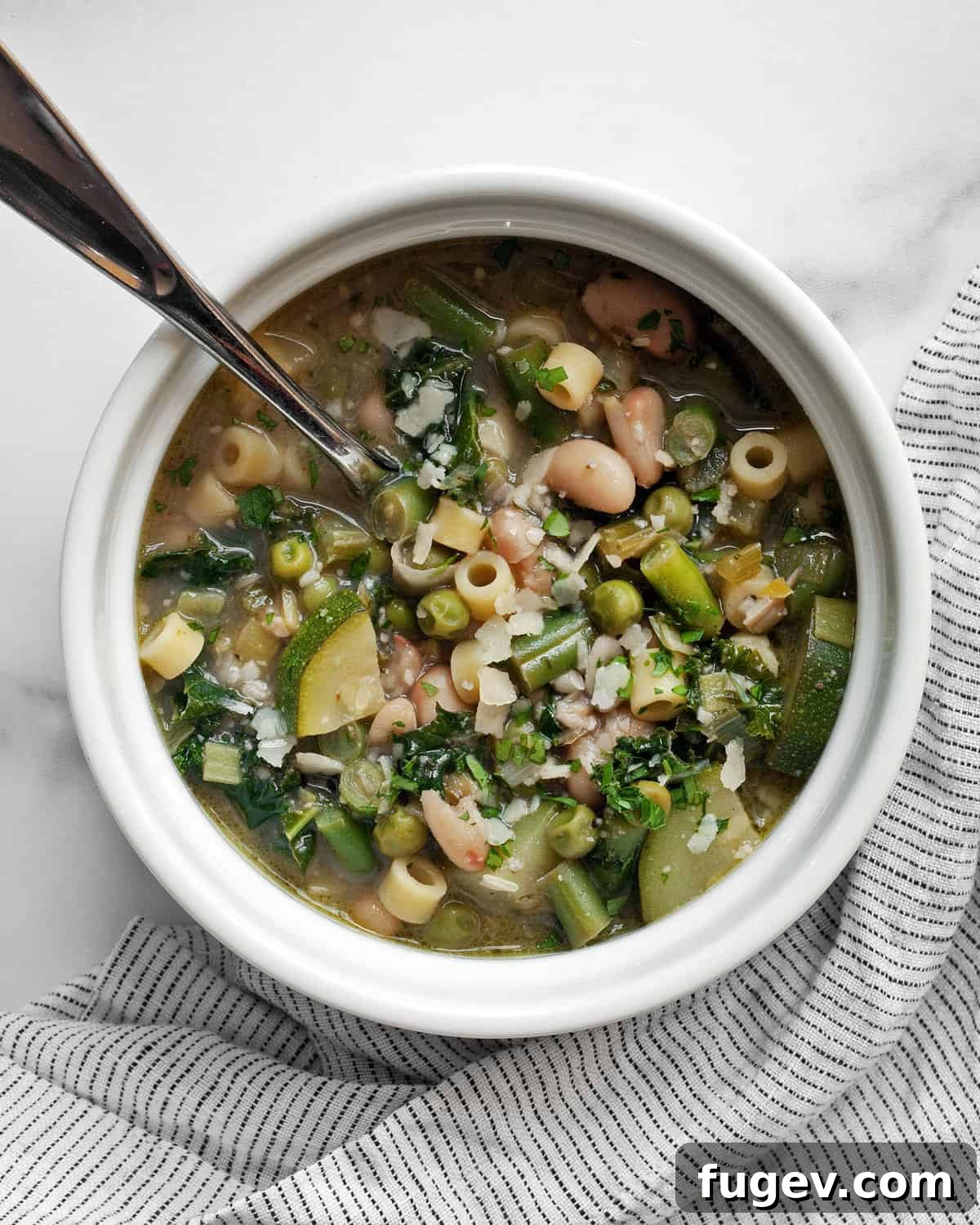
This green minestrone soup is a truly exceptional, simple spring soup recipe that you can whip up in approximately 20 minutes, making it perfect for busy weeknights or a light weekend lunch. As its name beautifully suggests, this nourishing soup is brimming with an abundance of fresh, verdant vegetables, including tender leeks, sweet peas, crisp green beans, firm zucchini, and hearty kale. While this delightful minestrone intentionally deviates from tradition by not featuring tomatoes, it certainly doesn’t skimp on the hearty goodness, boasting plenty of wholesome beans to make it wonderfully satisfying.
For those who cherish the timeless flavors of Italy, you might also enjoy exploring this vegetarian minestrone soup recipe, which offers a more classic Italian culinary experience.
Table of Contents
- Why You’ll Adore This Recipe
- Discover the Ingredients
- Crafting Your Spring Minestrone Soup
- Serving Suggestions for Your Minestrone
- Smart Storage: Leftovers & Freezing Tips
- Expert Recipe Tips for Success
- More Italian Soup Recipes to Explore
- Green Minestrone Soup Recipe Card
Why You’ll Adore This Recipe
Trust us, incorporating a few vibrant spring soups into your seasonal cooking repertoire is an absolute must. Especially if you reside in regions like the Midwest, where we often experience what’s affectionately termed “faux spring.” These are those tantalizingly warm days in March and April that playfully deceive you into believing the long, cold winter has finally departed, only for an unexpected late snowfall to surprise everyone. After months of comforting, heavy winter stews and robust soups, your palate craves a brighter, more optimistic recipe that celebrates the fresh, awakening flavors of spring. This green minestrone delivers just that, offering a refreshing culinary transition and a welcome burst of seasonal goodness.
You are not bound to always prepare traditional minestrone solely with tomatoes. The beauty of minestrone soup lies in its inherent flexibility; at its core, it’s a versatile vegetable soup typically enhanced with pasta and beans. This fundamental definition provides a wonderful canvas for culinary creativity. Why not embrace this adaptability and make thoughtful adjustments to craft a fresh, contemporary rendition of the classic recipe? This particular green minestrone stands as a testament to how delightful and inventive minestrone can truly be when you allow yourself to explore beyond the conventional. It proves that a “minestrone” doesn’t always have to be red to be rich in flavor and tradition, offering a unique and equally satisfying experience.
This green minestrone is an incredibly wholesome, highly nutritious, and remarkably filling soup. Every single spoonful offers a delightful medley of textures and vital nutrients, providing a perfect balance of protein-rich beans, a spectrum of fresh vegetables, and nutrient-dense leafy greens. From the crisp snap of green beans to the tender bite of zucchini and the earthy goodness of kale, it’s designed not just to tantalize your taste buds but also to genuinely satisfy your hunger and fuel your body. This soup is a testament to healthy eating without compromising on flavor or heartiness, making it an ideal choice for a complete and balanced meal that leaves you feeling good inside and out.
The addition of bright pesto and a generous squeeze of fresh lemon juice provides an instant, exhilarating flavor boost to the broth. This thoughtful pairing keeps entirely with the forward-looking, optimistic spirit of spring cooking. It’s an effortlessly elegant way to infuse the minestrone soup with a burst of vibrant, herby freshness and a delightful tang that brightens every single component. The lemon’s natural acidity cuts through the richness of the vegetables and pesto, while the pesto adds depth and a savory, aromatic complexity, transforming a simple broth into an extraordinary culinary experience. This simple technique elevates the soup from good to truly great, leaving a lasting impression on your palate.
Discover the Ingredients
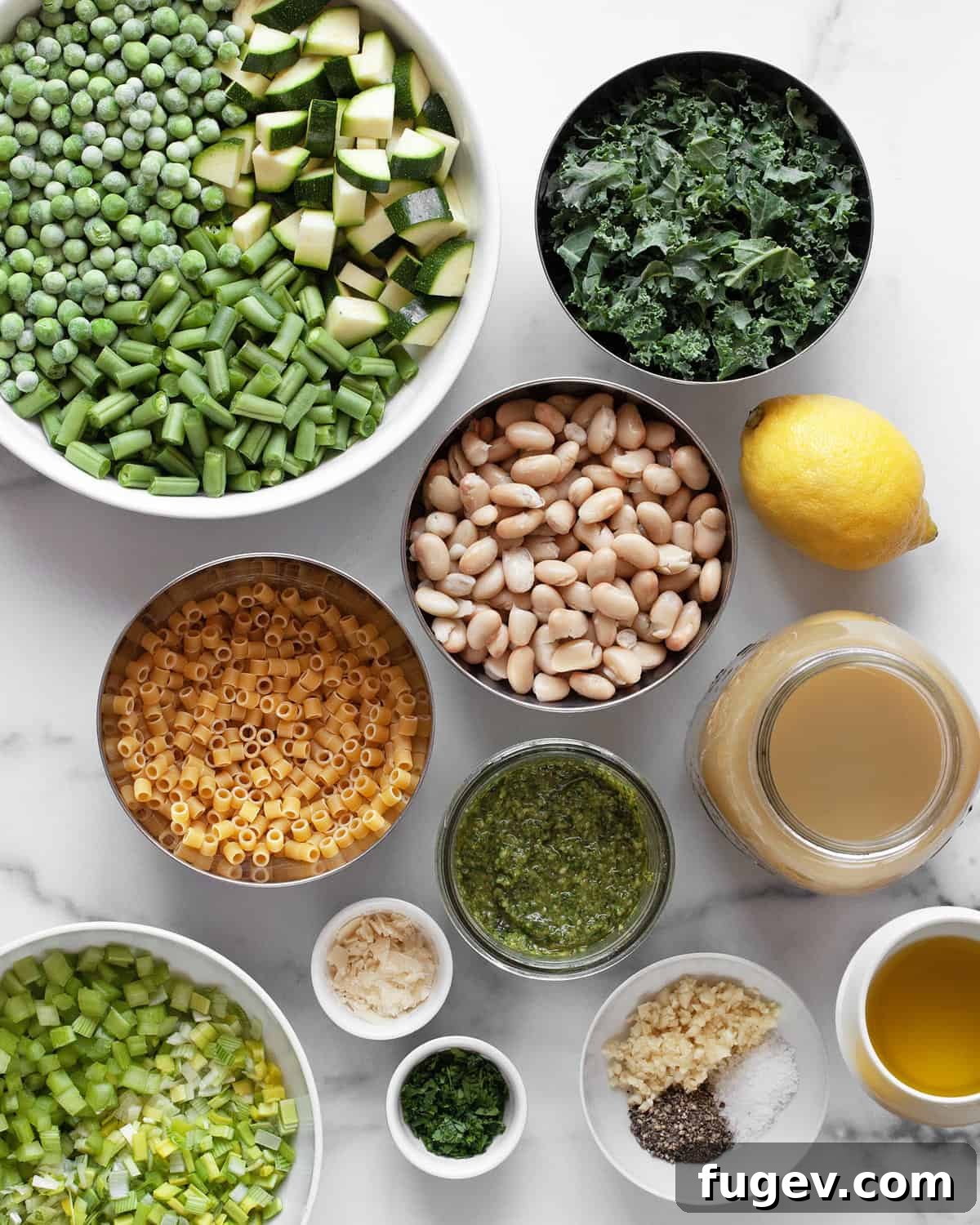
Crafting this vibrant green minestrone requires a selection of fresh, high-quality ingredients that truly sing of spring. Here’s a closer look at what you’ll need and why each component is essential for achieving the best flavor and texture:
- Peas: Whether you opt for fresh, sweet peas straight from the pod or the convenience of frozen peas, they are a quintessential spring ingredient that brings a pop of sweetness and vibrant green color to the soup. There’s no need to thaw frozen peas; simply stir them directly into the simmering broth, where they will quickly warm through and retain their delicate texture.
- Zucchini: Look for a zucchini with smooth, dark green skin and a slight natural sheen, free from any soft spots or blemishes, indicating its freshness and quality. To ensure perfect bite-sized pieces that fit gracefully onto your soup spoon, we recommend quartering the zucchini lengthwise before slicing it into uniform 1/4-inch thick segments. This preparation method guarantees consistent cooking and an appealing presentation.
- Green Beans: To complement the creamy white beans and other fresh vegetables, fresh green beans are an excellent choice. Trimmed and cut into 1/2-inch long pieces, they add a delightful crunch and another layer of vibrant green, contributing significantly to the soup’s overall fresh appeal and textural variety. Avoid canned green beans, as their softer texture won’t integrate as well with the other fresh components.
- Kale: Stirring in robust, finely chopped kale leaves introduces an additional layer of profound nutrition and a pleasant, slightly bitter counterpoint that balances the soup beautifully. Both lacinato kale (also known as dinosaur kale) and common green kale work wonderfully here, softening gently in the hot broth while retaining some of their satisfying texture and all their healthful properties, making each spoonful more hearty.
- Cannellini Beans: These creamy white beans are our top recommendation for this minestrone, thanks to their tender texture and mild flavor that perfectly complements the green vegetables. They add a wonderful richness and protein to the soup. However, if cannellini beans are unavailable, navy beans or great northern beans—which are slightly smaller but equally delicious—make excellent substitutes, providing that essential hearty and comforting element.
- Pasta: The choice of pasta is crucial for a balanced minestrone. Small to medium-sized pasta shapes such as ditalini, small shells, or orecchiette are ideal. Their compact size ensures they cook evenly and integrate seamlessly with the vegetables and beans, making every spoonful a delightful mix of ingredients and preventing any one component from overwhelming another.
- Leeks & Celery: Moving beyond the traditional mirepoix (which typically includes carrots and onions), we opt for this delicate, pale green duo as the foundational aromatic base for our spring soup. Leeks offer a milder, sweeter onion flavor with less pungency, while celery provides a subtle herbaceous note and essential aromatic depth, creating a truly refreshing and light base that perfectly suits the spring theme.
- Garlic: Aromatic minced garlic cloves are sautéed alongside the leeks and celery, infusing the soup base with their indispensable pungent and warming fragrance. Garlic is a flavor enhancer, adding complexity. Feel free to add an extra clove or two if you prefer a more pronounced garlicky flavor, enhancing the depth of the broth without overpowering the fresh vegetables.
- Pesto: This bright, herbaceous sauce is a game-changer for this green minestrone, adding an immediate burst of fresh basil, garlic, pine nuts, and Parmesan flavor. You can use a high-quality jarred pesto for convenience or elevate the flavors even further with homemade basil pesto. Its fresh, savory notes and rich texture contribute significantly to the soup’s vibrant character and green theme.
- Lemon: A crucial component, a generous squeeze of fresh lemon juice is added right as the soup finishes simmering. The lemon’s bright acidity is vital here, as it compensates for the absence of tomatoes, lifting and brightening all the flavors in the soup and adding a zesty, fresh finish that truly awakens the palate and brings all the green notes to life.
- Vegetable Broth: For optimal flavor control, especially regarding sodium levels, we always recommend using a low-sodium vegetable broth. This allows you to season the soup precisely to your taste. Choosing a good quality broth is essential as it forms the liquid base of your soup. If you’re not strictly vegetarian, chicken broth can be used as an alternative, though vegetable broth best highlights the green theme.
- Parmesan: For a finishing touch of savory richness and a delightful umami flavor, garnish your bowls with freshly shaved Parmesan cheese. Its salty, nutty notes provide a lovely contrast to the fresh vegetables. For a vegan-friendly version, simply omit the Parmesan or choose a high-quality plant-based substitute.
- Fresh Parsley: A sprinkle of freshly chopped parsley just before serving adds a burst of vibrant color and a fresh, herbaceous aroma, enhancing the overall presentation and taste of the soup. It’s a simple garnish that makes a big impact.
- Olive Oil: Essential for sautéing the foundational leeks and celery, a good quality extra virgin olive oil helps to build the initial aromatic layers of the soup, lending a subtle fruity note and facilitating the cooking process.
- Salt & Black Pepper: These fundamental seasonings are crucial for balancing and enhancing all the diverse flavors within the soup, ensuring every component shines and the overall taste is well-rounded. Adjust to your personal preference throughout the cooking process.
Crafting Your Spring Minestrone Soup
Creating this delightful green minestrone is a straightforward process, designed for efficiency without compromising on flavor. Follow these simple steps to bring your vibrant spring soup to life, ensuring each stage contributes to its delicious complexity:
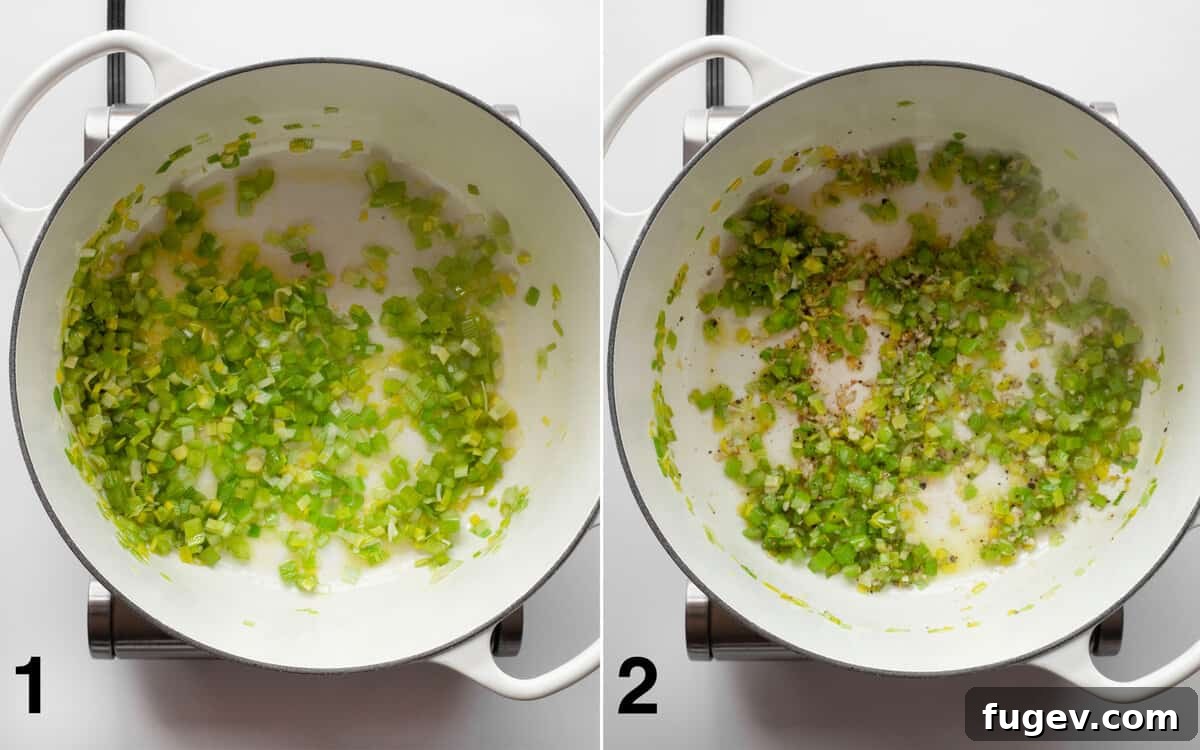
1. Sauté the Leeks and Celery. Begin by warming the olive oil in a large, heavy-bottomed pot or Dutch oven over medium heat. Once shimmering, add the finely chopped leeks and celery. Sauté them gently, stirring occasionally, until they become beautifully translucent and begin to soften, which typically takes about 4 minutes. This step is crucial for building the aromatic foundation of your soup, releasing their subtle, sweet flavors.
2. Infuse with Garlic and Seasoning. Stir in the minced garlic, along with the kosher salt and freshly ground black pepper. Continue to cook for just about 1 minute more, stirring constantly, allowing the garlic to become wonderfully fragrant and release its pungent aroma. Be careful not to let the garlic brown, as it can quickly turn bitter and detract from the soup’s fresh taste.
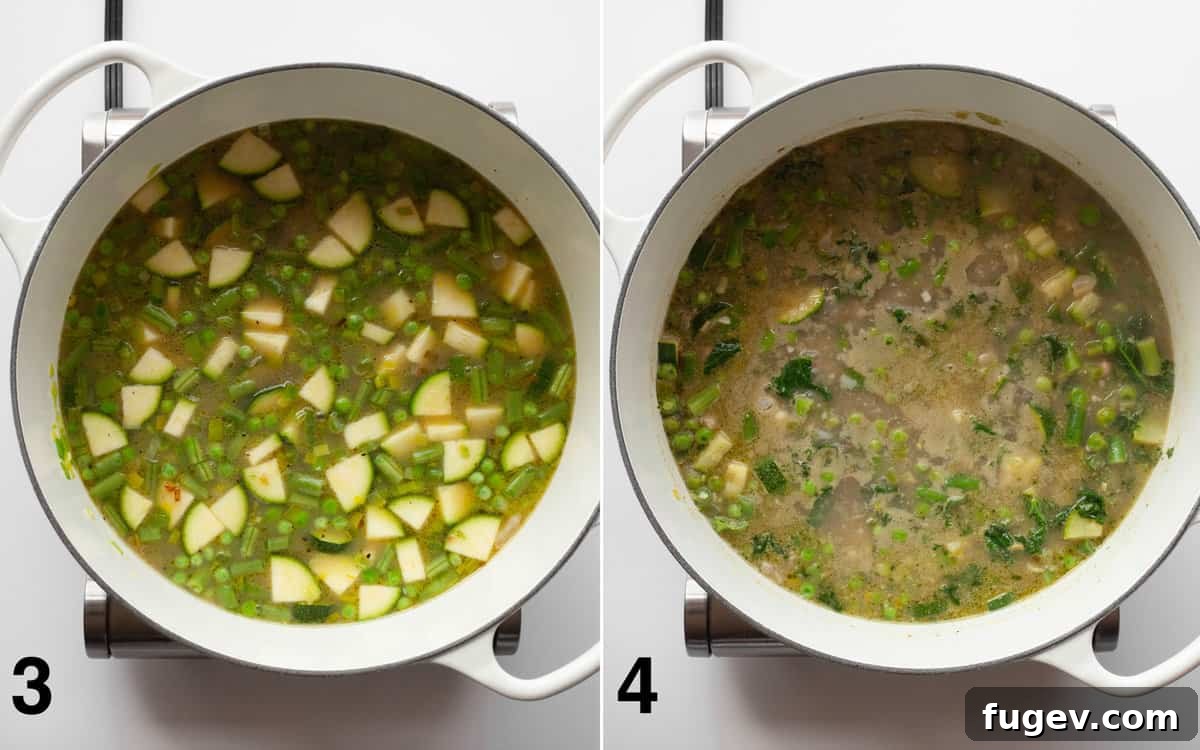
3. Add Vegetables and Simmer. Introduce the shelled peas, sliced zucchini, cut green beans, and rinsed cannellini beans to the pot. Pour in the low-sodium vegetable broth. Bring the entire mixture to a gentle boil over medium-high heat. Once boiling, reduce the heat to a low simmer, cover the pot partially, and let it cook for approximately 10 minutes. During this simmering period, the vegetables will tenderize perfectly, and the soup will thicken ever so slightly, allowing all the diverse flavors to meld and deepen beautifully.
4. Finish with Greens and Zest. Remove the pot from the heat or turn off the burner. Stir in the chopped kale leaves, fresh pesto, and the bright juice of one lemon. Gently mix these additions into the hot broth. Allow the residual heat of the soup to gently wilt the kale leaves; they will soften in just a couple of minutes, infusing their goodness into the broth. The lemon and pesto will add their signature fresh, vibrant notes, brightening the entire soup.
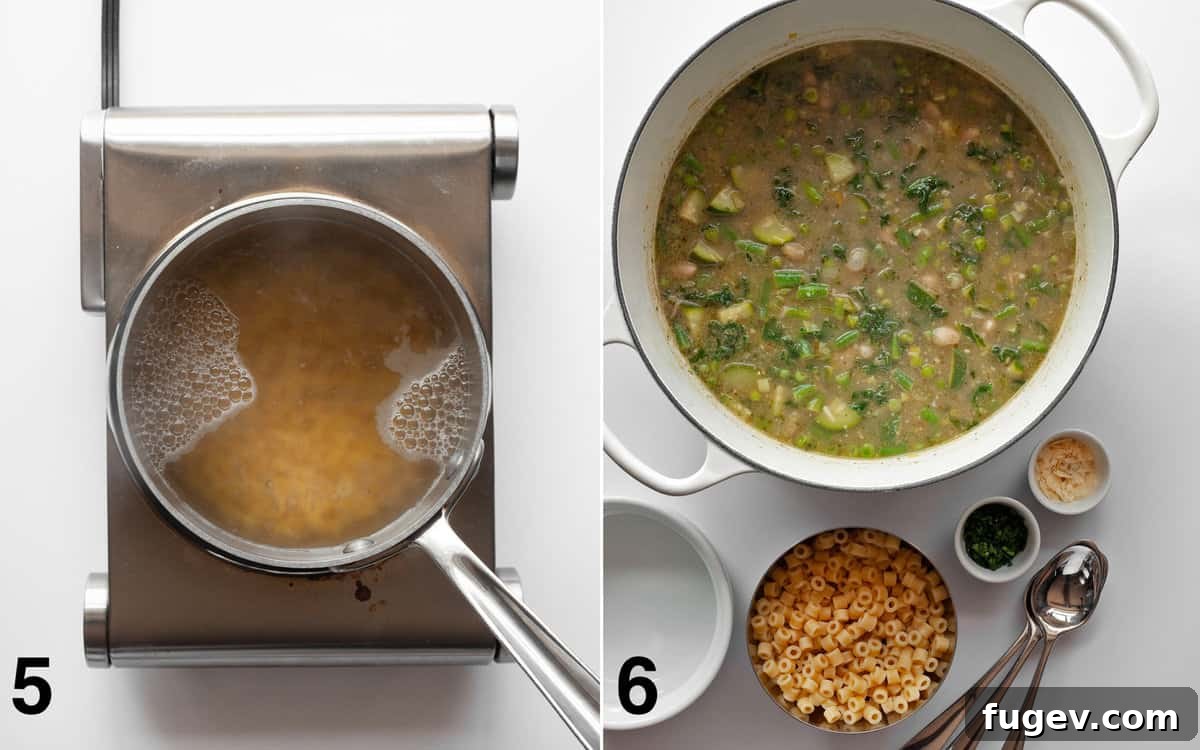
5. Cook Pasta Separately. While your soup is simmering, bring a separate small pot of generously salted water to a rolling boil. Cook your chosen small to medium pasta (such as shells, orecchiette, or ditalini) according to the package instructions until it reaches a perfect al dente texture. Cooking the pasta separately is a crucial tip for preventing it from becoming overly soft or absorbing too much broth, thus maintaining its ideal bite and keeping the soup broth clear.
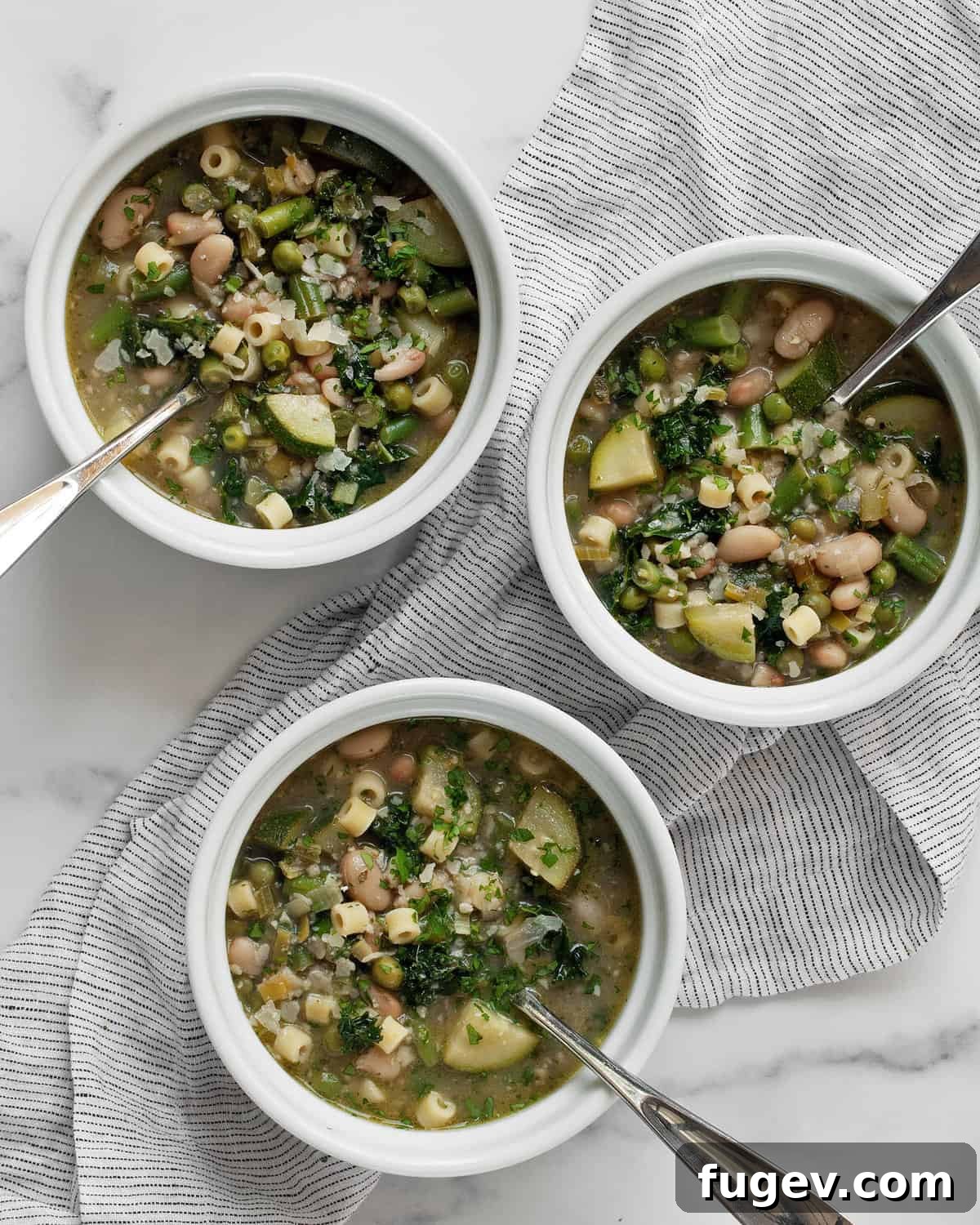
6. Serve and Garnish. Once the pasta is ready, drain it well. Ladle the hot, aromatic green minestrone soup into individual serving bowls. Add a generous portion of the freshly cooked pasta to each bowl. For a final flourish, sprinkle generously with freshly shaved Parmesan cheese (or a vegan alternative if preferred) and a scattering of fresh chopped parsley before serving immediately. Enjoy the harmonious blend of flavors and textures!
Serving Suggestions for Your Minestrone
Given its rich array of pasta, hearty beans, and abundant fresh vegetables, this vibrant green minestrone soup recipe is wonderfully substantial and can absolutely stand alone as a complete, satisfying meal. It’s packed with everything you need for a wholesome and filling dining experience, making it perfect for a light lunch or a comforting dinner on its own.
However, if you wish to complement its goodness or transform it into a more elaborate spread, consider pairing it with a few simple, yet delightful, accompaniments. A rustic piece of crusty bread is always an excellent choice; its sturdy texture makes it perfect for dipping into the flavorful broth, soaking up every last drop and ensuring no deliciousness is left behind. A warm, artisanal bread can elevate the entire meal.
For a fresh contrast, serve alongside a simple green salad. A light and refreshing arugula salad with a zesty lemon vinaigrette would beautifully echo the citrus notes already present in the soup, creating a harmonious flavor profile. Alternatively, a classic house salad with your favorite dressing can also provide a welcome fresh element and a delightful textural counterpoint. If you’re looking for something a bit heartier and truly comforting, a gourmet grilled cheese sandwich makes a fantastic companion. Instead of traditional cheddar, try an elevated blend of flavorful Italian cheeses like sharp asiago, creamy provolone, and melty mozzarella for an authentic take that perfectly complements the Italian essence of the minestrone. This combination offers both comforting warmth and culinary sophistication, making for a truly memorable meal.
Smart Storage: Leftovers & Freezing Tips
Properly storing your green minestrone soup ensures you can enjoy its fresh flavors for days to come, maximizing its convenience and minimizing food waste. These tips will help maintain the quality and texture of your delicious homemade soup:
You can safely store any leftover soup in an airtight container in the refrigerator for up to 3 days. This ensures its freshness and flavor are preserved. A key tip for maintaining the best possible texture for your pasta: if possible, avoid stirring all the cooked pasta directly into the main pot of soup when you first prepare it. Instead, store the cooked pasta separately from the broth and vegetables in its own airtight container. When stored apart, the pasta will retain its pleasing al dente texture much better and won’t become overly soft or absorb too much liquid from the soup, which can lead to a mushy consistency.
To reheat the soup, gently warm the broth and vegetables in a pot on the stove over low heat until it’s almost hot enough to eat, stirring occasionally to ensure even heating. Then, add the cold, pre-cooked pasta to the warming broth for just 1-2 minutes, allowing it to heat through without overcooking. This method ensures both the soup and pasta are perfectly textured and delicious, as if freshly made.
For longer preservation, this versatile soup freezes beautifully for up to 1 month. **It is crucial not to freeze the soup with any pasta mixed in.** The pasta’s texture significantly degrades when frozen and thawed within a liquid, becoming soft and unappetizing. Instead, freeze only the broth and vegetable mixture. Use freezer-safe containers or bags, leaving a little headspace for expansion. When you’re ready to enjoy the frozen soup, simply thaw it in the refrigerator overnight or at room temperature for a few hours. Reheat the thawed soup gently on the stove, and then cook a fresh batch of small pasta according to package directions to stir in just before serving. This ensures a fresh-tasting, perfectly textured meal every time, even from frozen.
Expert Recipe Tips for Success
Achieving the perfect green minestrone soup is all about paying attention to a few key details. These expert tips will help ensure your soup is a resounding success, bursting with fresh flavors and optimal textures:
- Use Fresh Green Beans: While convenience often calls for canned goods, for this recipe, always opt for fresh green beans. Canned green beans are typically very soft and will not provide the desirable crisp-tender consistency that elevates this soup. Fresh beans contribute significantly to both the texture and the vibrant flavor profile, making a noticeable difference in the final dish.
- Always Cook Pasta Separately: This is perhaps the most critical tip for any minestrone. It is vastly superior to simmer the pasta in a separate pot of generously salted boiling water rather than directly in the soup broth. When pasta cooks directly in the soup, it continuously absorbs liquid, swells, and can quickly become soggy and mushy. Furthermore, it releases starches into the broth, potentially making the soup cloudy and overly thick. Cooking it separately ensures your pasta remains perfectly al dente and your broth stays clear, flavorful, and visually appealing.
- Freeze Leftovers Without Pasta: Reiterating an important point from our storage section, if you plan to freeze any leftover soup, ensure you do not include any pasta in the freezer-bound portion. The freezing and thawing process dramatically alters the texture of pasta, turning it soft and unappetizing. As previously advised, simply cook a fresh batch of pasta when you thaw and reheat the soup for a much better culinary experience, preserving the integrity of both the soup and the pasta.
- Quality Broth Makes a Difference: The broth forms the backbone of your soup and is key to its depth of flavor. Using a high-quality, low-sodium vegetable broth (or chicken broth if not strictly vegetarian) can significantly impact the overall taste. Taste your broth before adding it and adjust seasonings accordingly throughout the cooking process. A good broth provides a robust foundation for all the other ingredients to shine.
- Don’t Overcook Vegetables: While you want your vegetables tender, avoid cooking them until they are mushy. The aim is a pleasant bite, retaining some texture and their vibrant green color, which also preserves more nutrients. Pay attention to cooking times; softer vegetables like zucchini might be added slightly later if you prefer them firmer.
- Adjust Seasoning Throughout: Taste your soup at various stages of cooking – after sautéing aromatics, after simmering vegetables, and especially before serving. Flavors can change as they meld and reduce, so frequent tasting allows you to adjust salt, pepper, and lemon to perfection, ensuring a balanced and harmonious final flavor profile.
More Italian Soup Recipes to Explore
If you’ve enjoyed this fresh and vibrant take on minestrone, you’ll certainly want to delve into more of our comforting and flavorful Italian-inspired soup creations. Each recipe offers a unique blend of traditional tastes and delightful twists, perfect for any season or occasion:
- Rosemary White Bean Tomato Soup
Aromatic rosemary perfectly complements tender white beans and sweet, sun-ripened tomatoes in this hearty and herbaceous soup. It’s a deeply satisfying and fragrant meal, ideal for a cozy evening. - Pasta e Fagioli
A beloved classic Italian “pasta and bean” soup, rich and satisfying, often featuring a medley of hearty vegetables and a deeply flavorful broth. Our recipe provides that authentic, comforting experience you crave. - Roasted Tomato Soup
Experience the concentrated sweetness and rich depth of roasted tomatoes transformed into a deeply flavorful and comforting soup. Roasting the tomatoes intensifies their natural sugars, creating an unparalleled taste. - Creamy Tomato Tortellini Soup
Indulge in a luxurious, creamy tomato broth generously filled with tender cheese tortellini for a truly decadent and easy-to-make meal. It’s pure comfort in a bowl, perfect for a special treat.
Green Minestrone Soup
Print Recipe
With zucchini, peas, green beans, kale and white beans this vegetable-filled green minestrone soup is a fresh, spring twist on the classic Italian soup, offering both nutrition and exceptional flavor.
Ingredients
- 1 tablespoon olive oil
- 1 leek, white and pale green parts finely chopped
- 2 celery stalks, roughly chopped
- 2 garlic cloves, minced (add more for extra garlicky flavor)
- 1 teaspoon kosher salt
- 1/2 teaspoon black pepper
- 1 cup shelled peas, fresh or frozen (no need to thaw)
- 1 zucchini, cut into quarters lengthwise and sliced 1/4-inch thick
- 1 cup trimmed green beans, cut 1/2-inch long
- 1 (15-ounce) can cannellini beans, drained and rinsed (navy or great northern beans also work)
- 4 cups low-sodium vegetable broth (or chicken broth if not vegetarian)
- 1 cup chopped kale leaves (lacinato or green kale)
- 1/4 cup pesto (jarred or homemade basil pesto)
- Juice of 1 lemon (freshly squeezed for best flavor)
- 3 ounces small to medium pasta (e.g., shells, orecchiette, ditalini)
- Shaved Parmesan for serving (optional, omit for vegan)
- Chopped parsley for serving (fresh is best)
Save this recipe
Get it sent to your inbox plus new recipes every week by signing up for our newsletter!
Instructions
-
In a large saucepan, heat the olive oil over medium heat. Sauté the finely chopped leeks and celery until they start to soften and become translucent, about 4 minutes.
-
Add the minced garlic, kosher salt, and black pepper. Continue cooking for another minute, until the garlic is aromatic and fragrant, being careful not to let it burn.
-
Add the shelled peas, sliced zucchini, cut green beans, cannellini beans, and vegetable broth. Bring the mixture to a boil, then reduce the heat to a gentle simmer. Cover partially and let it cook for 10 minutes, until the vegetables are tender and the soup thickens slightly.
-
Remove the soup from the heat. Stir in the chopped kale leaves, fresh pesto, and the juice of the lemon. Let it sit for a couple of minutes to allow the kale to soften and the pesto and lemon to infuse their vibrant flavors.
-
In a separate small saucepan, bring salted water to a rolling boil. Cook the small to medium pasta according to package instructions until it is perfectly al dente. Drain well.
-
To serve, ladle the hot green minestrone soup into individual bowls. Add a portion of the freshly cooked pasta to each bowl. Garnish generously with shaved Parmesan cheese (if using) and a sprinkle of fresh chopped parsley. Serve immediately and enjoy!
Notes
If you want the soup to be gluten-free, use gluten-free pasta.
To make the soup vegan, leave out the cheese or use a plant-based Parmesan substitute.
Store any leftover soup in an airtight container in the refrigerator for up to 3 days. For best texture, keep the cooked pasta and the soup broth/vegetables in separate containers.
You can freeze soup for up to 1 month. Crucially, do not freeze it with pasta in the broth. Make fresh pasta when you are planning to eat leftovers.
When reheating soup that was stored separately from pasta, warm the broth and vegetables in a saucepan over low heat on the stove. Stir in the cold, pre-cooked pasta for 1-2 minutes to warm it through once the soup is almost hot.
Nutrition
Calories: 340kcal | Carbohydrates: 50g | Protein: 14g | Fat: 11g | Saturated Fat: 2g | Polyunsaturated Fat: 1g | Monounsaturated Fat: 3g | Cholesterol: 1mg | Sodium: 1017mg | Potassium: 689mg | Fiber: 12g | Sugar: 10g | Vitamin A: 1786IU | Vitamin C: 43mg | Calcium: 122mg | Iron: 3mg
Nutrition information is automatically calculated, so should only be used as an approximation.
Additional Info
Did you make this recipe?Mention @lastingredient on Instagram and tag it #lastingredient!