
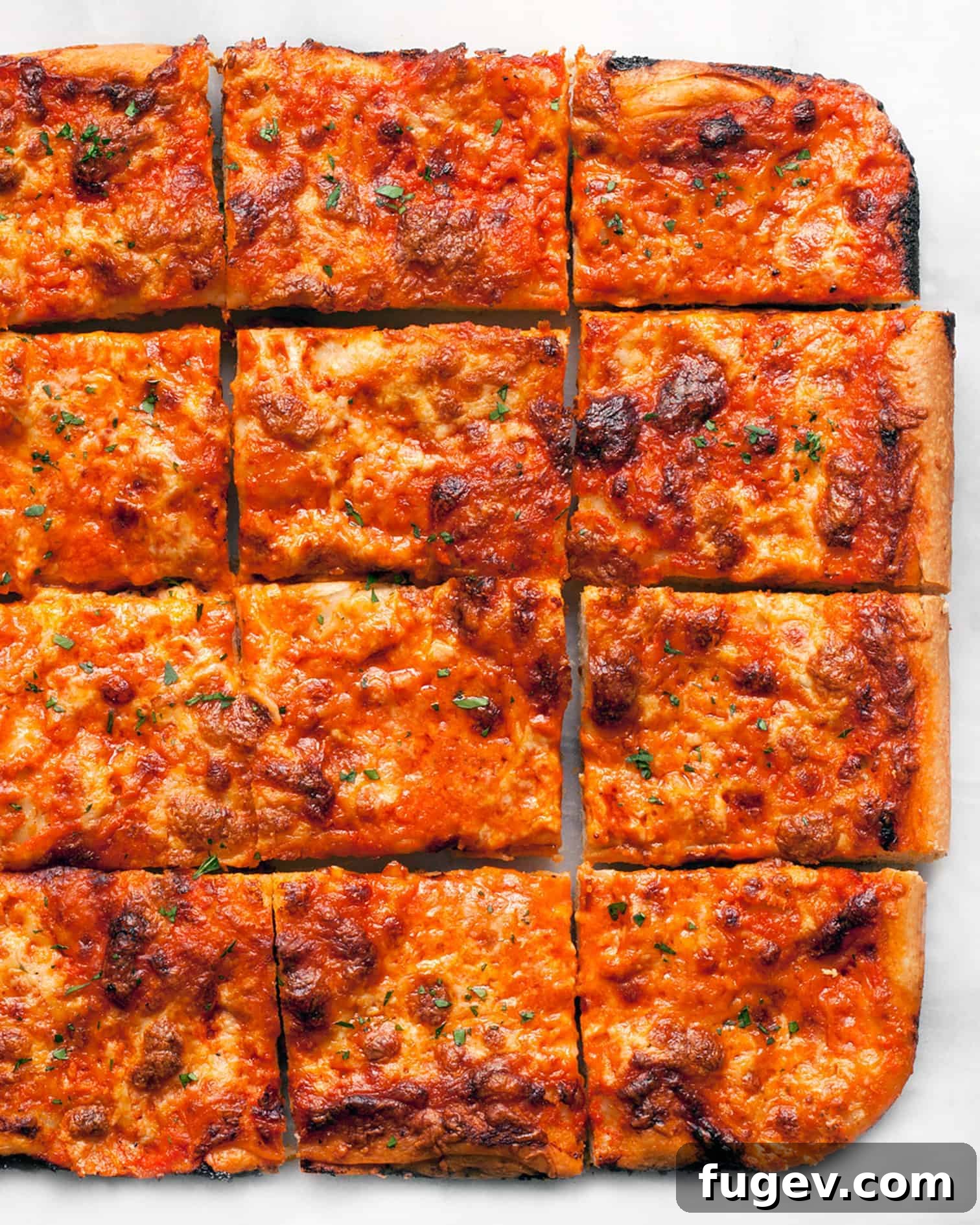
Step into the inviting warmth of an old-school Italian pizza parlor with every bite of a classic Grandma Pizza. This beloved, rectangular delight, often baked in a simple sheet pan, is more than just a meal; it’s a culinary tradition, a testament to humble beginnings, and a guaranteed crowd-pleaser. Perfect for a bustling family dinner or ensuring delicious leftovers for days, the Grandma Pizza offers a uniquely thin, crispy crust topped with bright, fresh tomato sauce and a generous blanket of melted cheese. It’s a pizza that screams comfort, nostalgia, and authentic flavor, making it a staple in homes and pizzerias alike.
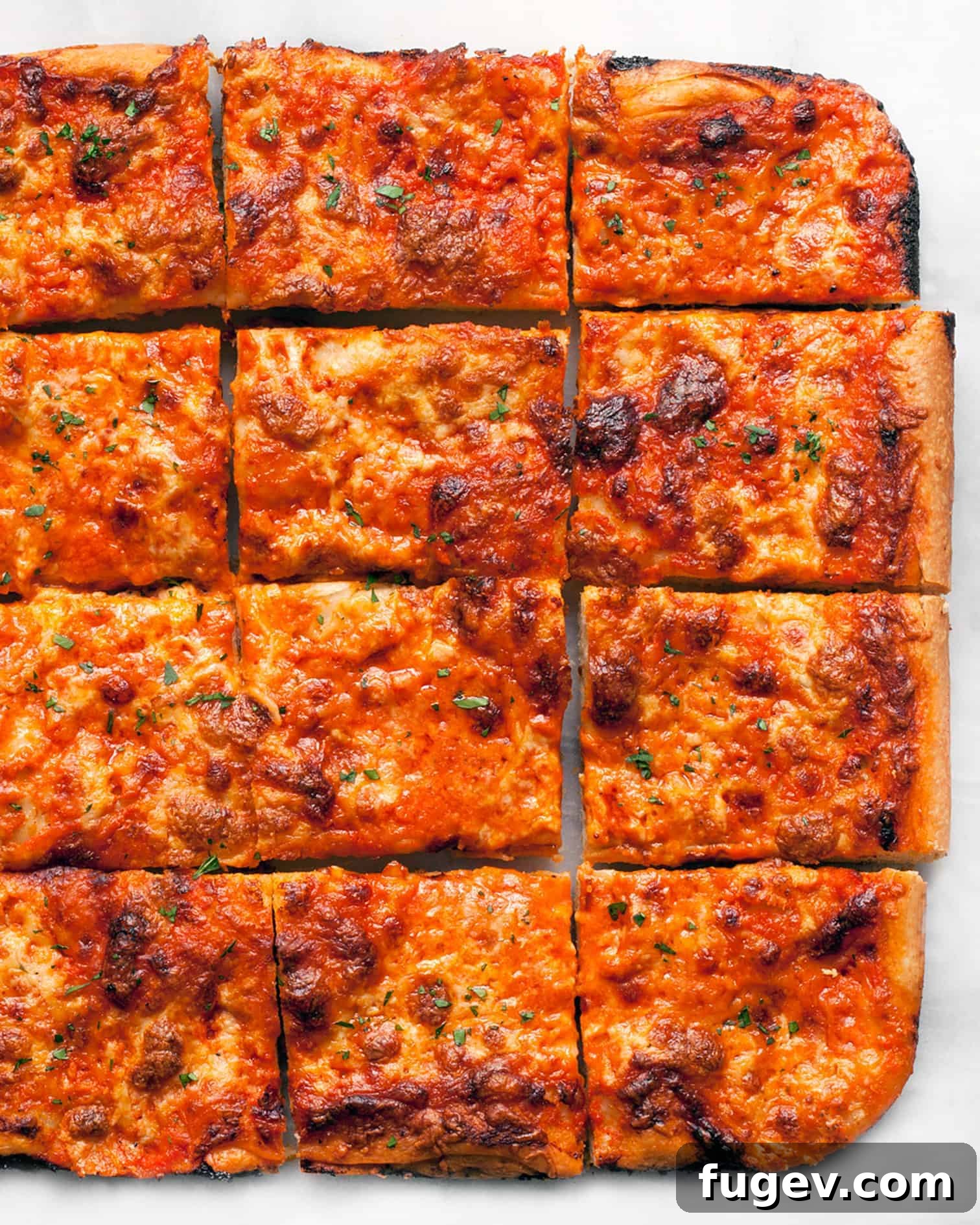
Pizza holds a special place in our hearts and on our dinner table. At our house, it’s not just a dish; it’s a weekly ritual, whether we’re crafting homemade masterpieces or venturing out to one of our cherished local pizzerias. My son, in particular, has an enduring love affair with pizza, even if his definition stretches the boundaries of tradition. His school lunch often features what he affectionately calls “pizza”—a simple crust slathered with nut-free pesto. No cheese, no tomato sauce, just crust and vibrant green goodness. While I might scratch my head at the omission of core ingredients, I’ve learned not to impose rules on a child’s culinary imagination. If he calls it pizza, then pizza it is!
Given our family’s deep affection for this versatile dish, I’m constantly on the lookout for fresh and inspiring ways to reinvent our pizza routine. There’s a particular joy in taking a familiar favorite and discovering a new twist that makes it feel exciting all over again. It’s about keeping the kitchen vibrant and the meals memorable, even amidst the everyday hustle.
Life with a child means some passions take a backseat. For me, that meant my magazine subscriptions. The stacks of unread food magazines used to pile up, filled with tantalizing recipes and glossy photographs that I rarely had time to truly savor. Despite this, the first thing I do when I get home each day is check the mailbox, always with a glimmer of hope. And every now and then, a colorful food magazine peeking out from amidst the junk mail and bills sparks a genuine thrill. I try not to dwell on the inevitable fate of many issues – destined for the recycling bin before I can even flip past the table of contents.
But then there are those rare, irresistible finds. A recipe so captivating, an image so mouthwatering, that it demands immediate attention. I’ll meticulously rip out these gems, tucking them into a special folder, awaiting their turn in the kitchen spotlight. One such image, from an old issue of Bon Appetit, depicted a glorious, blistered-crust pizza baked to perfection in a simple sheet pan. It was love at first sight. That image, with its promise of a wonderfully crisp and flavorful crust, spoke to me. I knew then and there that I had to recreate that cover star – the iconic Grandma Pizza.
The Enduring Charm of Grandma Pizza: A Culinary Journey
The Grandma Pizza, known for its rustic simplicity and incredible flavor, traces its roots back to the Italian-American grandmothers (nonnas) of Long Island, New York. These resourceful home cooks, often working with limited resources and equipment, devised a method of making delicious pizza right in their own kitchens using readily available sheet pans. Unlike its more famous cousins, the Neapolitan or classic New York thin crust, Grandma Pizza doesn’t require a super-hot pizza oven or specialized tools. Its charm lies in its accessibility and the honest, hearty flavors that evoke memories of family kitchens and shared meals.
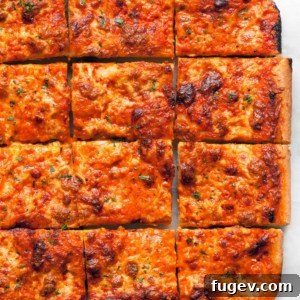
What sets Grandma Pizza apart? It’s not just its distinctive rectangular shape, a direct result of being baked in a standard sheet pan. It’s also the crust – thin, yet surprisingly chewy in the center with wonderfully crisp edges, often lightly charred from the olive oil-coated pan. The cheese and sauce application is also unique. Traditionally, a thin layer of vibrant tomato sauce is spread directly onto the dough, followed by a medley of cheeses, allowing the sauce to truly sing. This contrasts with many other styles where cheese often forms the first layer. The result is a pizza that’s less about elaborate toppings and more about the harmonious balance of its core components: a superb crust, a bright sauce, and perfectly melted cheese.
Its simple origins and straightforward preparation make it incredibly approachable for home cooks. There’s no need to master complex dough-tossing techniques or worry about stone ovens. The beauty of a Grandma Pizza is its ability to deliver authentic, delicious results with minimal fuss, making it an ideal choice for a busy weeknight dinner or a weekend gathering. The slightly irregular, rustic appearance only adds to its homemade appeal, inviting everyone to dig in and enjoy a slice of comforting tradition.
Crafting Your Own Grandma Pizza: A Step-by-Step Guide
Making a Grandma Pizza from scratch is a rewarding experience that transforms simple ingredients into a culinary masterpiece. The process, while requiring a bit of patience for the dough’s rise, is surprisingly straightforward and yields a pizza that rivals your favorite pizzeria. Let’s dive into the key steps to achieve that perfect Long Island classic, complete with its characteristic thin, crispy crust and rich, flavorful toppings.
The Dough: The Foundation of Flavor
The journey to an authentic Grandma Pizza begins with the dough. In a large mixing bowl, you’ll combine a packet of dry active yeast with warm water. This crucial first step, known as proofing, ensures the yeast is alive and ready to work its magic. Allow the mixture to sit for about 10 minutes until a foamy layer appears on the surface, indicating active yeast. Next, whisk in a generous measure of olive oil and salt, adding depth and richness to the dough. Gradually incorporate the all-purpose flour, stirring until a shaggy, somewhat sticky dough forms. The dough doesn’t need to be perfectly smooth at this stage; its rustic texture is part of its charm.
Transfer the shaggy dough to a lightly floured work surface. Knead it by hand for approximately 10-12 minutes. This kneading process is vital for developing the gluten, which gives the crust its characteristic chewiness and elasticity. You’ll notice the dough becoming progressively smoother and more supple under your hands. Once it’s smooth and elastic, shape it into a ball and place it in a large bowl that has been lightly coated with olive oil. This prevents the dough from sticking during its long rest. Cover the bowl tightly with plastic wrap and transfer it to the refrigerator. The dough will undergo a slow, cold ferment for 24 hours. This extended cold rise is a game-changer, allowing flavors to deepen and complexities to develop, resulting in a significantly more flavorful and digestible crust.
After its long slumber in the refrigerator, the dough is ready for its final transformation. Liberally coat an 18-inch by 13-inch rectangular sheet pan with the remaining olive oil. This not only prevents sticking but also contributes significantly to the pizza’s signature crispy, golden-brown bottom crust. Gently transfer the dough to the prepared pan and begin to stretch it out, working from the center outwards, until it evenly covers the entire pan. If the dough resists and springs back, don’t force it. Simply let it rest for 10 minutes, allowing the gluten to relax, and then try stretching again. Once stretched, tightly cover the sheet pan with plastic wrap and let the dough rise in a warm spot (around 70 degrees F) for another 30-40 minutes. During this second rise, the dough will puff up noticeably, creating a light and airy texture for the final crust.
The Sauce: Simple Brilliance
While the dough rests and rises, prepare the simple yet intensely flavorful sauce. In a blender, combine a 28-ounce can of whole peeled tomatoes, three peeled garlic cloves, six tablespoons of olive oil, a pinch of red pepper flakes (for a subtle kick), salt, and black pepper. Puree the mixture until it’s perfectly smooth. The beauty of this sauce lies in its fresh, uncooked nature, which allows the bright, natural sweetness of the tomatoes to shine through once baked. It’s a minimalist approach that delivers maximum flavor, characteristic of authentic Italian home cooking.
Assembling and Baking: The Grand Finale
With the dough perfectly puffed and the sauce ready, it’s time to assemble your Grandma Pizza. Preheat your oven to a blazing 500 degrees F. This high heat is crucial for achieving that coveted blistered crust and perfectly melted cheese. Spread the pureed tomato sauce in a thin, even layer across the risen dough in the sheet pan. Follow this with a generous sprinkling of grated fresh mozzarella and provolone cheeses. The fresh mozzarella provides a creamy, milky texture and beautiful melt, while the provolone adds a sharper, more complex flavor profile.
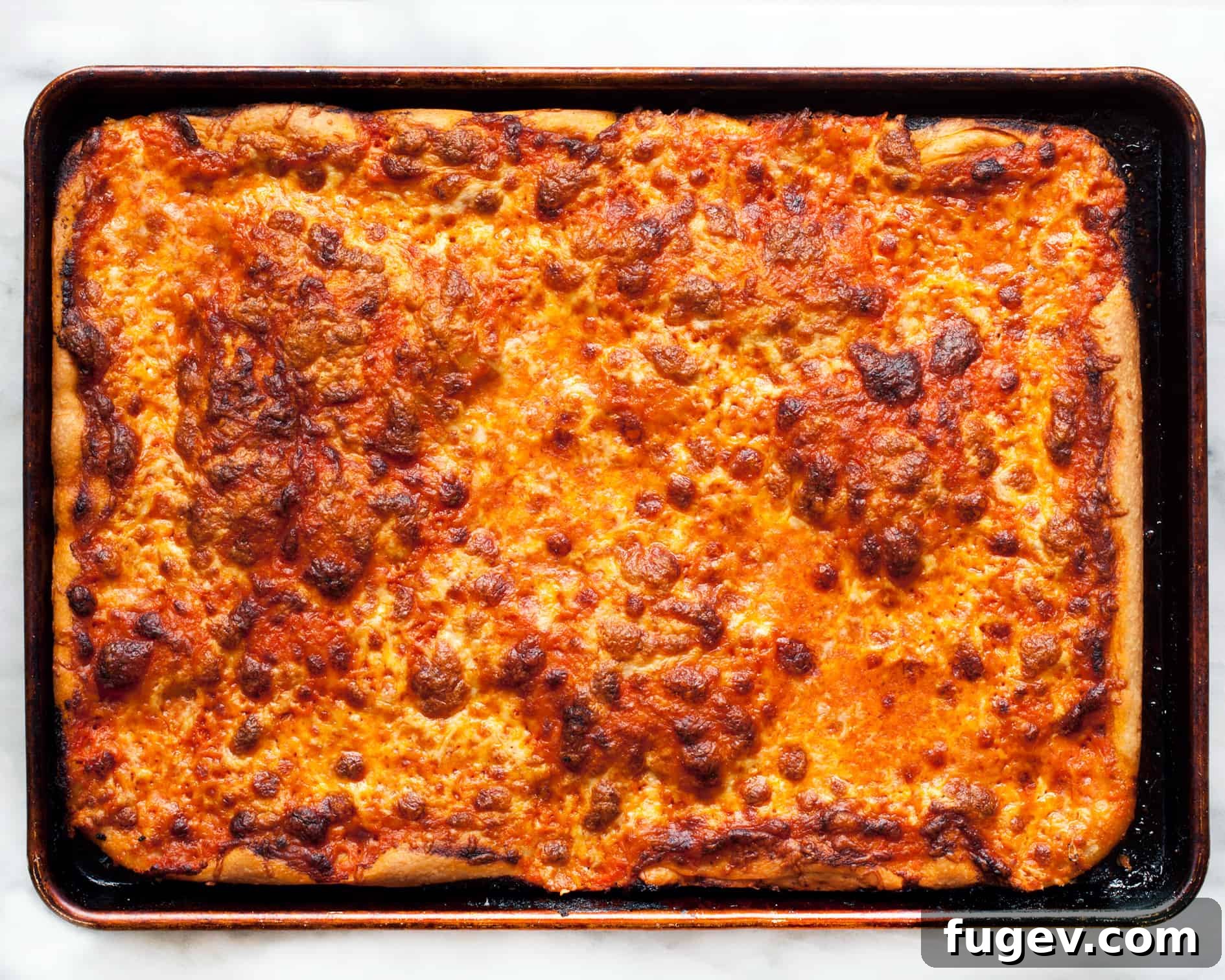
Carefully transfer the loaded sheet pan to the preheated oven. Bake the pizza for 20-30 minutes. Keep a close eye on it: you’re looking for the cheese to be gloriously melted, bubbly, and slightly caramelized in spots, and the crust to be a beautiful golden brown with those desirable crispy, blistered edges. The aroma filling your kitchen will be irresistible.
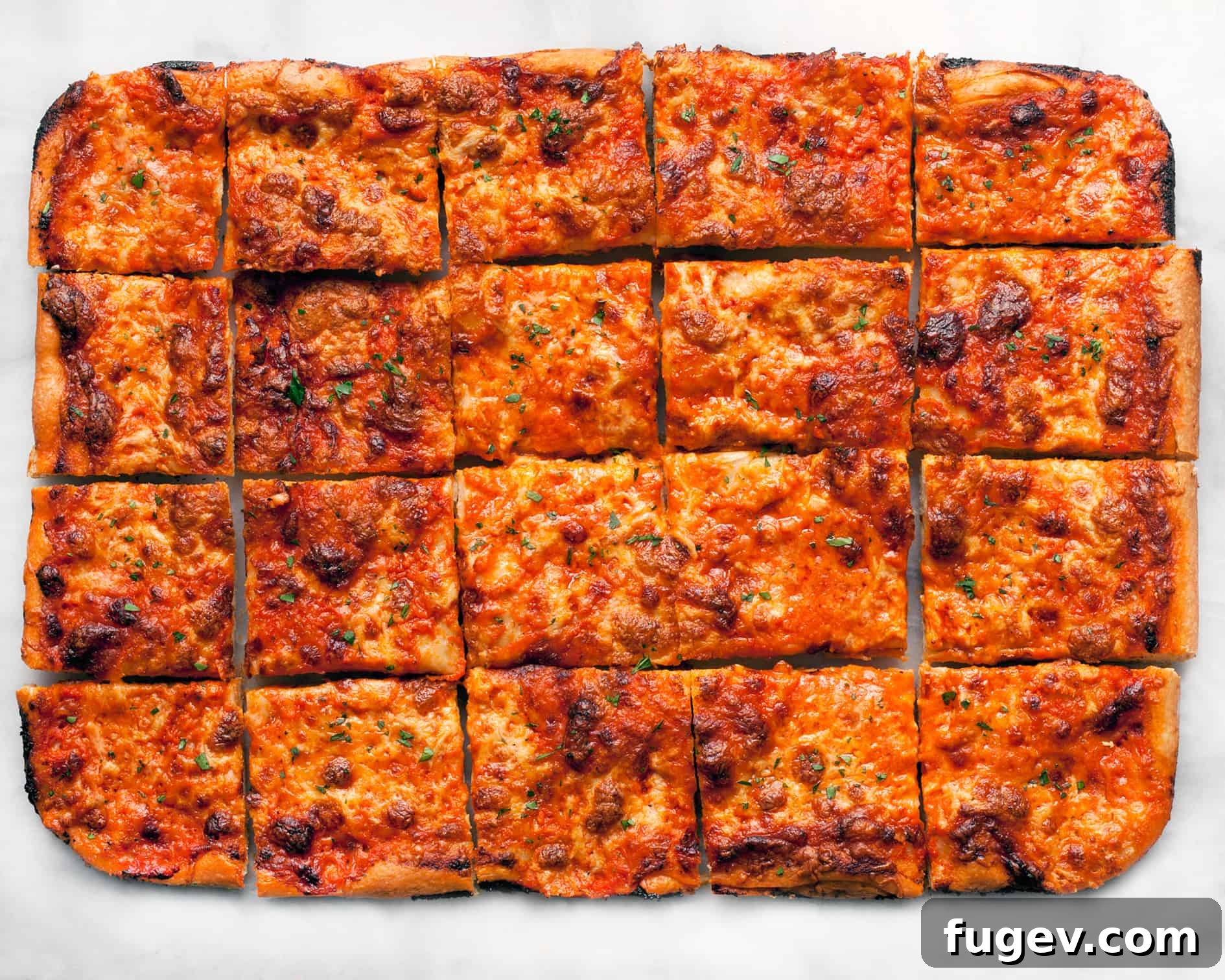
Once baked to perfection, remove the pizza from the oven and let it rest for a few minutes before slicing. This brief resting period allows the cheese to set slightly and makes for cleaner cuts. Slice your magnificent Grandma Pizza into squares, and prepare for a truly satisfying culinary experience. This substantial pizza is ideal for feeding a hungry crowd, and any leftovers reheat beautifully, making it a fantastic meal prep option for the week ahead. Serve it with a fresh green salad or a side of crusty bread for a complete and delicious Italian-inspired feast.
Grandma Pizza
Ingredients
- For dough
- 1 packet dry active yeast
- 2 tablespoons plus 1/2 cup olive oil plus more for bowl
- 2 teaspoons kosher salt
- 4 cups all-purpose flour plus more for work surface
- For sauce
- 1 28- ounce can whole peeled tomatoes
- 3 garlic cloves peeled
- 6 tablespoons olive oil
- Pinch red pepper flakes
- 1/4 teaspoon kosher salt
- 1/4 teaspoon black pepper
- For pizza
- 8 ounces fresh mozzarella grated
- 4 ounces Provolone grated
Save this recipe
Get it sent to your inbox plus new recipes every week.
Instructions
-
In a large bowl, combine the yeast with 1-1/2 cups warm water. Let the mixture sit until the yeast is foamy, about 10 minutes. Whisk in 2 tablespoons olive oil and then the salt and half the flour. Stir in the remaining flour until a shaggy dough forms.
-
Transfer the dough to a lightly floured work surface and knead for about 10-12 minutes until the dough becomes smooth and elastic. Shape the dough into a ball and place in a large oiled bowl. Cover with plastic wrap and transfer to the refrigerator to rise for 24 hours.
-
Coat an 18-inch x 13-inch rectangular sheet pan with the remaining olive oil. Gently stretch the dough to fit the entire sheet pan. If the dough springs back, let it rest for 10 minutes before trying again. Tightly cover the sheet pan with plastic wrap and let it rest in a warm spot (about 70 degrees) until the dough has puffed up, about 30-40 minutes.
-
For the sauce, combine the tomatoes, garlic, olive oil, red pepper flakes, salt and pepper in a blender and puree until smooth.
-
Preheat the oven to 500 degrees F. Spread the sauce in a thin layer on the dough and sprinkle both cheeses on top. Bake 20-30 minutes until the cheese has melted and the crust is golden brown.
Notes
Nutrition
Nutrition information is automatically calculated, so should only be used as an approximation.