
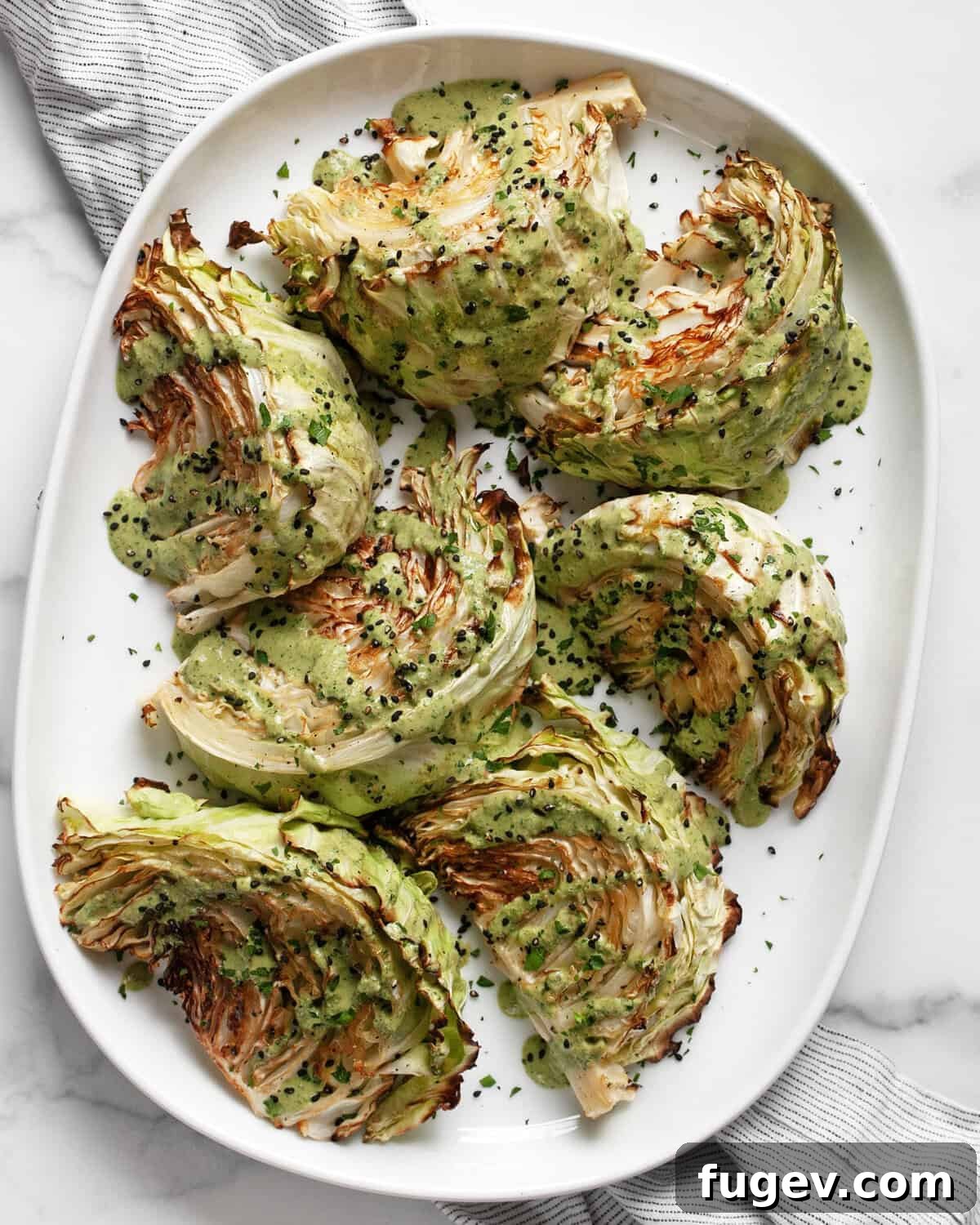
Perfect Roasted Cabbage Wedges with Creamy Tahini Sauce
Transform humble cabbage into an extraordinary culinary delight with these incredibly easy **roasted cabbage wedges**. This versatile recipe shines as a vibrant vegan side dish, or you can elevate it to a hearty main course when paired with wholesome lentils or grains. While your cabbage roasts to perfection in the oven, you’ll whip up a quick, no-cook tahini sauce, brimming with fresh scallions and aromatic herbs, creating the ideal finishing drizzle. It’s a simple yet elegant vegetable recipe that comes together in just about 30 minutes, making it perfect for weeknights or impressive enough for guests.
For another delicious variation, be sure to try this balsamic roasted red cabbage recipe.
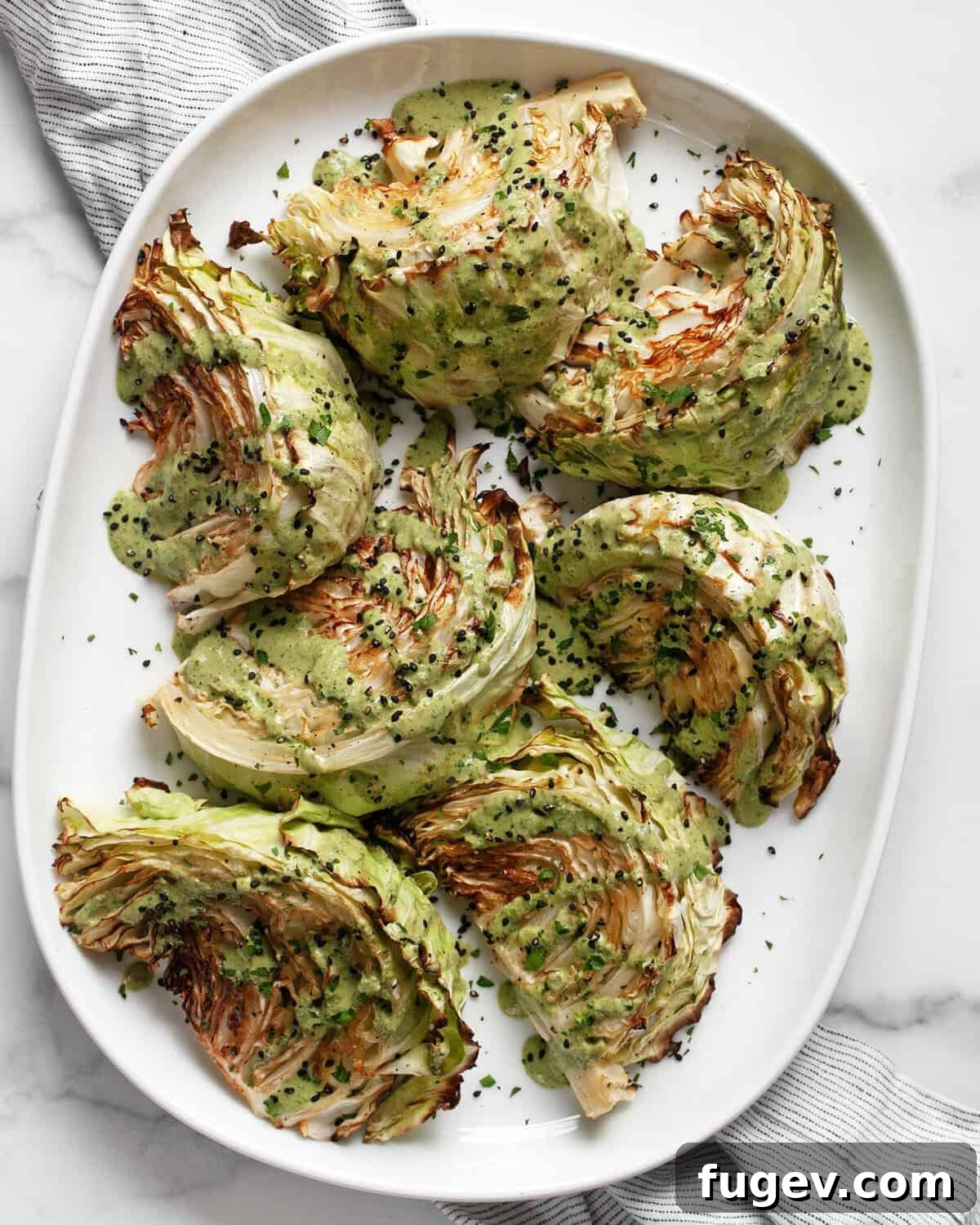
Table of Contents
- Why You’ll Love This Recipe
- The Ingredients for Irresistible Roasted Cabbage
- For the Cabbage Wedges
- For the Creamy Tahini Sauce
- How To Make Roasted Cabbage Wedges
- Serving Suggestions
- Leftovers & Storage
- Expert Recipe Tips
- More Delicious Cabbage Recipes
- Roasted Cabbage Wedges Recipe Card
Why You’ll Love This Recipe: A Game-Changer for Cabbage Enthusiasts
If cabbage isn’t typically a vegetable that sparks excitement in your kitchen, prepare to have your perceptions delightfully challenged. Roasting cabbage fundamentally transforms its flavor and texture, unlocking a depth and sweetness you might never have expected. This simple cooking method turns an often-overlooked vegetable into a star, making it a staple in your healthy eating repertoire.
Experience the Magic of Roasting: Crispy Edges, Tender Heart, Nutty Flavor. In the high heat of the oven, a beautiful metamorphosis occurs. The outer edges of the cabbage leaves crisp up delicately, offering a satisfying crunch. The sides that make contact with the hot baking sheet caramelize, developing a rich, slightly sweet, and deeply savory flavor due to the Maillard reaction. Meanwhile, the inner leaves soften to a tender-crisp texture, retaining a pleasant bite that prevents them from becoming mushy. This creates a wonderful contrast of textures and flavors – a far cry from bland, boiled cabbage – revealing a delicious, nutty essence that’s utterly addictive.
A Nutritious and Budget-Friendly Gem. Cabbage is truly an unsung hero of the produce aisle. It’s an incredibly budget-friendly, nutritious, and versatile fall-winter vegetable that is readily available year-round. When you cut into a head of cabbage, its dense, layered leaves hint at its incredible nutritional value. As a cruciferous vegetable, cabbage is packed with essential vitamins (like Vitamin C and K), minerals, and powerful antioxidants. It’s naturally low in carbohydrates and calories, yet remarkably filling, making it an excellent choice for health-conscious meals. Incorporating more cabbage into your diet is a simple way to boost your nutrient intake without breaking the bank.
The Tahini Sauce: An Effortless Burst of Flavor. The accompanying tahini sauce isn’t just a drizzle; it’s a flavor explosion that perfectly complements the roasted cabbage. There are countless reasons to always keep a jar of tahini (sesame seed paste) in your pantry, and this recipe highlights its incredible versatility. Here, we blend creamy tahini with fresh scallions, vibrant herbs, pungent garlic, and a splash of bright lemon juice. The result is a smooth, savory, and slightly tangy sauce that cuts through the richness of the roasted cabbage, adding a layer of sophisticated flavor and luxurious creaminess. Best of all, it’s a no-cook sauce that comes together in minutes while the cabbage roasts, simplifying your meal prep.
The Ingredients for Irresistible Roasted Cabbage
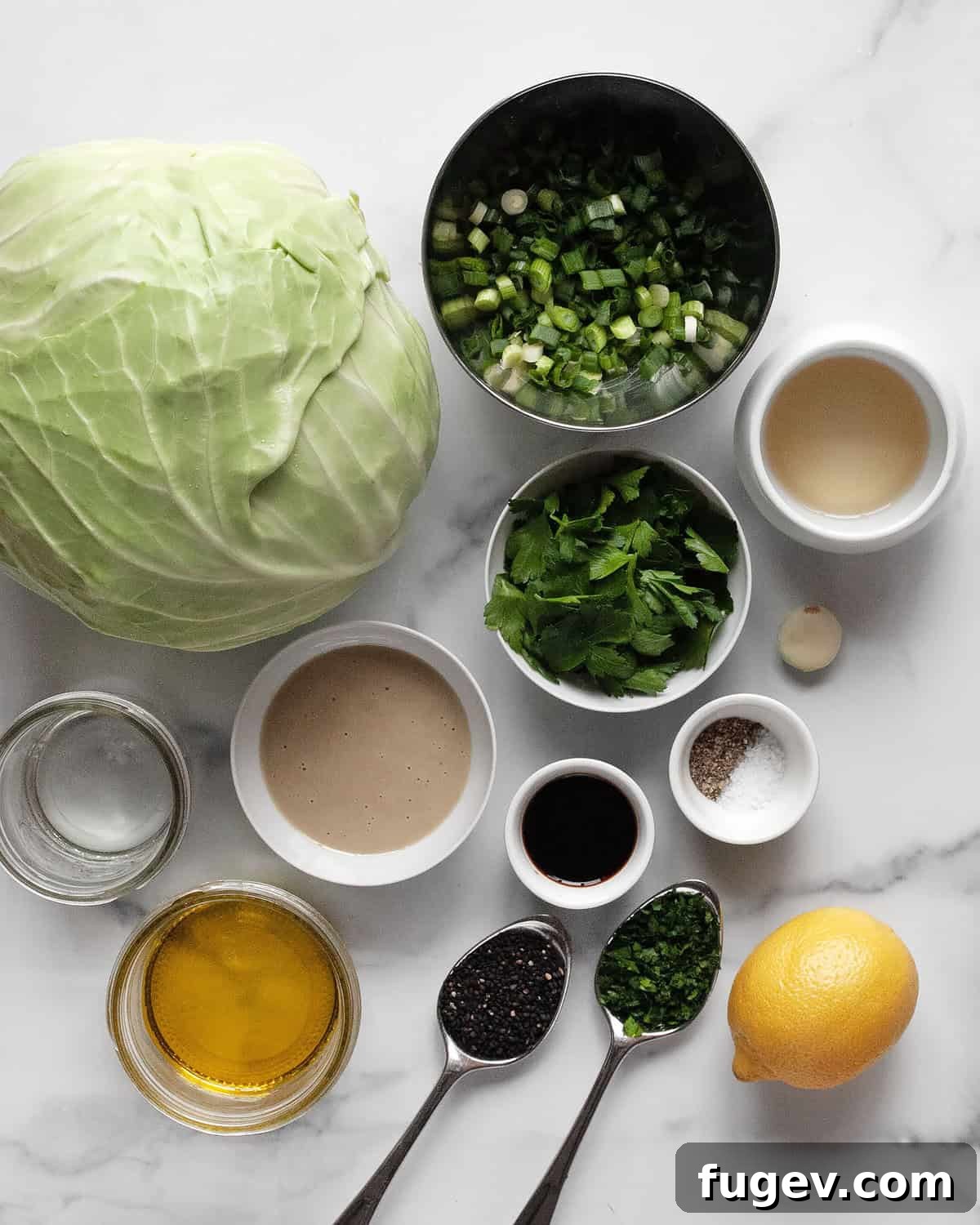
Here’s a detailed look at what you’ll need to create this fantastic dish, along with tips for selection and substitutions:
For the Cabbage Wedges:
- Cabbage: Opt for a fresh green cabbage that feels firm and heavy for its size, indicating good moisture content and crispness. Before cutting, remember to pull off any wilted, bruised, or dirty outer leaves. You’ll cut the head into 8 substantial wedges, ensuring each piece has a bit of the core to hold it together during roasting. While green cabbage is specified, red cabbage makes an excellent substitute, offering a slightly sweeter flavor and beautiful color.
- Olive Oil: Extra virgin olive oil is crucial for both flavor and function. We whisk it with rice vinegar to create a flavorful brushing mixture that helps the cabbage achieve that beautiful caramelization and prevents sticking to the pan. You’ll also use a small amount to lightly grease your baking sheet for extra insurance against sticking.
- Rice Vinegar: This ingredient, made from fermented rice, adds a delicate tang and bright acidity that complements the roasted cabbage and harmonizes perfectly with the other sauce ingredients. If you don’t have rice vinegar on hand, white wine vinegar is a suitable alternative that will still provide the necessary acidic lift.
- Kosher Salt and Black Pepper: These essential seasonings enhance the natural sweetness and savory notes of the cabbage. Be generous but mindful, seasoning the brushed cabbage wedges evenly before roasting. Freshly ground black pepper offers the best flavor.
- Sesame Seeds: As a finishing touch, a sprinkle of sesame seeds adds a wonderful nutty crunch and a visual appeal to the roasted cabbage. You can use either white or black sesame seeds, or a mix of both, for a pop of flavor and texture.
For the Creamy Tahini Sauce:
- Tahini: This rich, creamy paste made from ground sesame seeds is the heart of our sauce. Look for it in the global foods aisle of your grocery store. High-quality tahini, like Soom Tahini, will be smooth and pourable, not pasty or bitter. Store an open jar in the refrigerator, and if the sesame oil separates, simply give it a good stir (or let it sit at room temperature for 15 minutes first) to re-emulsify before using.
- Scallions: These provide a mild, fresh onion flavor that’s less intense than raw onion, adding a subtle herbaceous bite to the sauce without overpowering other ingredients. Use both the white and light green parts.
- Fresh Parsley: Flat-leaf (Italian) parsley contributes a bright, earthy freshness to the sauce. Ensure you pull the leaves off the stems before pureeing for the smoothest consistency. A little extra chopped parsley is also wonderful for garnishing the finished dish, adding a pop of color and fresh aroma.
- Garlic: Just one clove of garlic is enough to infuse the sauce with its signature aromatic punch. Adjust to your preference if you like a stronger garlic flavor.
- Lemon Juice: Freshly squeezed lemon juice is paramount here. It provides essential brightness and tang, balancing the richness of the tahini and the earthy flavor of the cabbage. While it adds a lively zest, the sauce won’t taste overtly “lemony.”
- Low-Sodium Soy Sauce: This ingredient adds a crucial depth of umami and a hint of saltiness to the sauce. Using low-sodium ensures you can control the overall saltiness of the dish. Remember that traditional soy sauce contains wheat, so if you require a gluten-free option, substitute with tamari and always double-check the label to confirm it is wheat-free.
- Water: A small amount of water is key to achieving the perfect pourable consistency for the tahini sauce – thick enough to cling to the cabbage, but not too runny. You can adjust the amount as needed to reach your desired texture.
- Kosher Salt and Black Pepper: These fundamental seasonings act as an “on-switch” for all the other flavors in the tahini sauce, ensuring each ingredient truly shines.
How To Make Roasted Cabbage Wedges: Step-by-Step Guide
Get ready to create perfectly roasted cabbage with a delectable tahini sauce in just a few simple steps. This method ensures tender, caramelized cabbage every time!
Before you begin, preheat your oven to 400 degrees F (200 degrees C) and lightly grease a sturdy sheet pan with a little olive oil. This prevents sticking and promotes even browning.
-
1. Prepare the Cabbage:
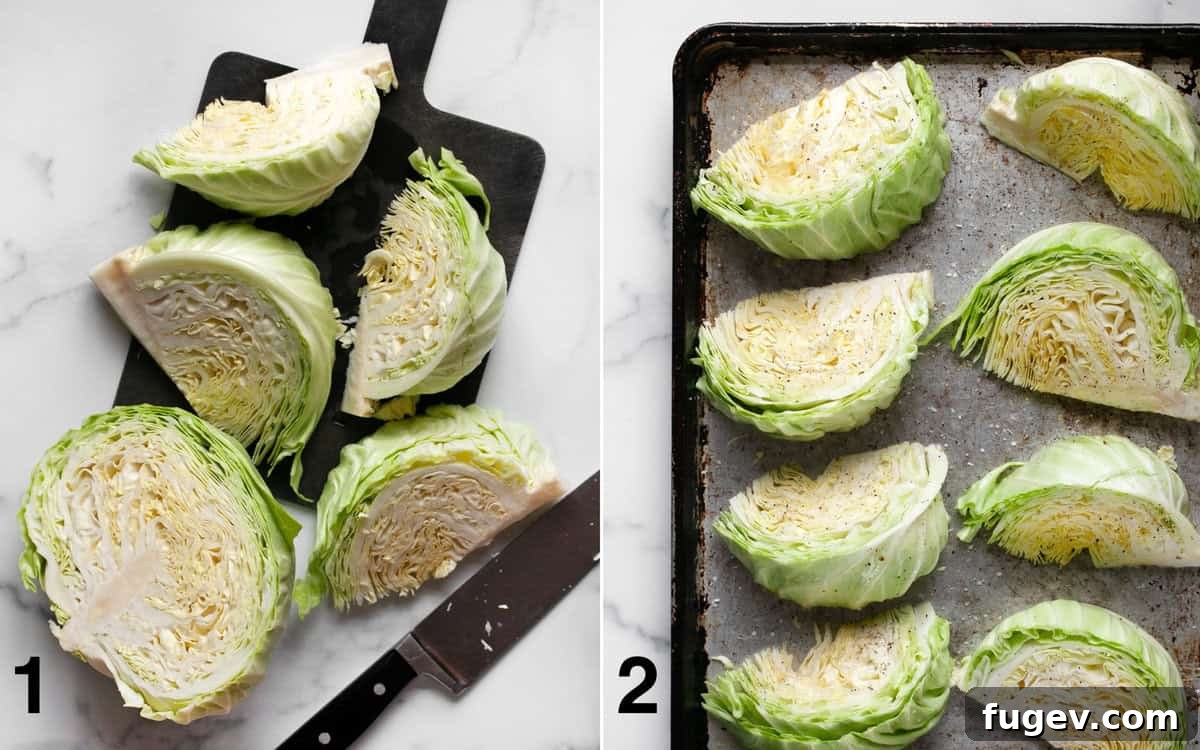
Begin by carefully tearing off any wilted, damaged, or tough outer leaves from the head of green cabbage. Place the cabbage stem-side down on a stable cutting board. Using a sharp chef’s knife, cut the cabbage cleanly in half through the core. Then, take each half and slice it into 4 equal wedges. This will give you a total of 8 sturdy cabbage wedges, each with a piece of the core attached to hold the leaves together during roasting. A stable wedge is key to even cooking.
-
2. Season and Arrange for Roasting:
In a small bowl, whisk together the 2 tablespoons of olive oil and 1 tablespoon of rice vinegar until well combined. Arrange the prepared cabbage wedges on your lightly greased baking sheet, ensuring they are in a single layer without touching or overlapping. This is crucial for proper caramelization and prevents steaming. Using a pastry brush or silicone brush, generously coat all sides of each cabbage wedge with the oil-vinegar mixture. Finally, season them evenly with a good pinch of kosher salt and freshly ground black pepper.
-

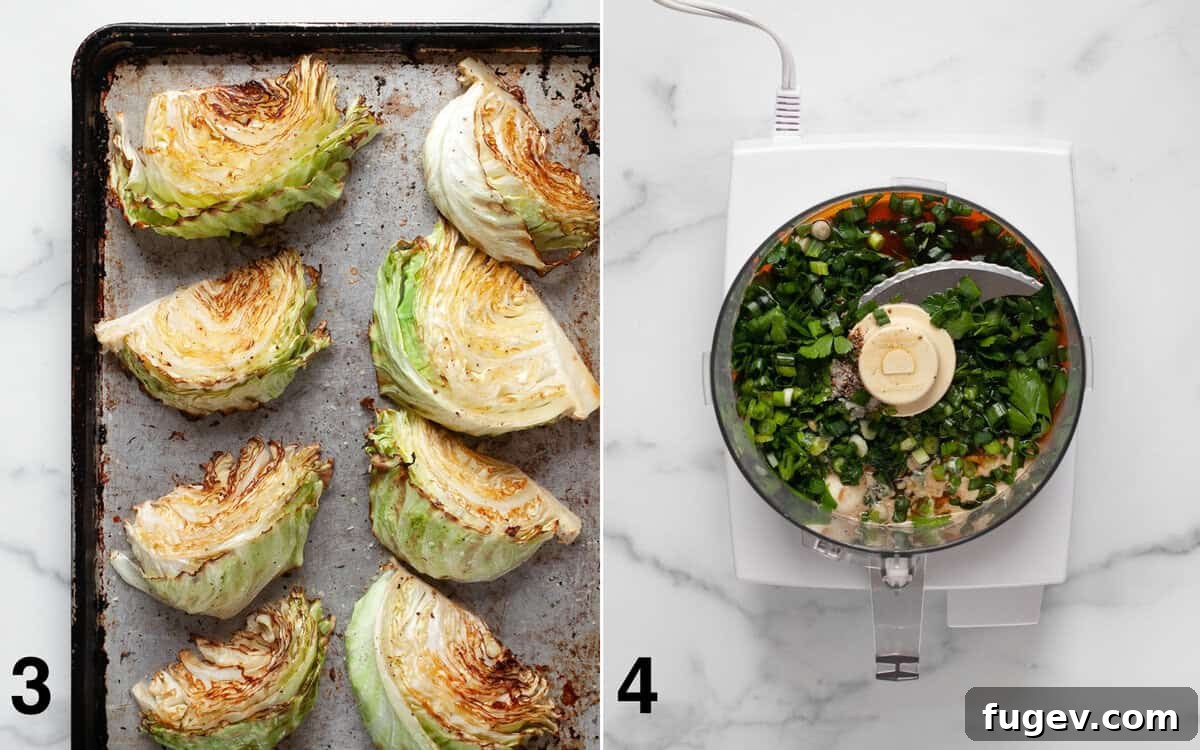
Ensure your cabbage wedges are evenly sized and properly seasoned for the best roasting results. 3. Roast to Perfection:
Place the baking sheet with the seasoned cabbage wedges into your preheated 400°F (200°C) oven. Roast for 20-25 minutes. To ensure even cooking and browning, flip the cabbage wedges over halfway through the roasting time. The cabbage is ready when it is tender, beautifully browned in spots, and caramelized at the edges, offering a delightful crispness.
-
4. Prepare the Tahini Sauce:
While the cabbage roasts, gather all the ingredients for the creamy tahini sauce: 1 garlic clove, 1/3 cup tahini, 1/3 cup fresh parsley leaves (stems removed), 3 thinly sliced scallions, 1 tablespoon low-sodium soy sauce, the juice from 1 lemon, a pinch of kosher salt, 1/4 teaspoon black pepper, and 2-3 tablespoons of water. Combine all these ingredients in the bowl of a food processor or a high-speed blender.
-
The cabbage roasts while the vibrant tahini sauce comes together effortlessly. 5. Puree for Creaminess:
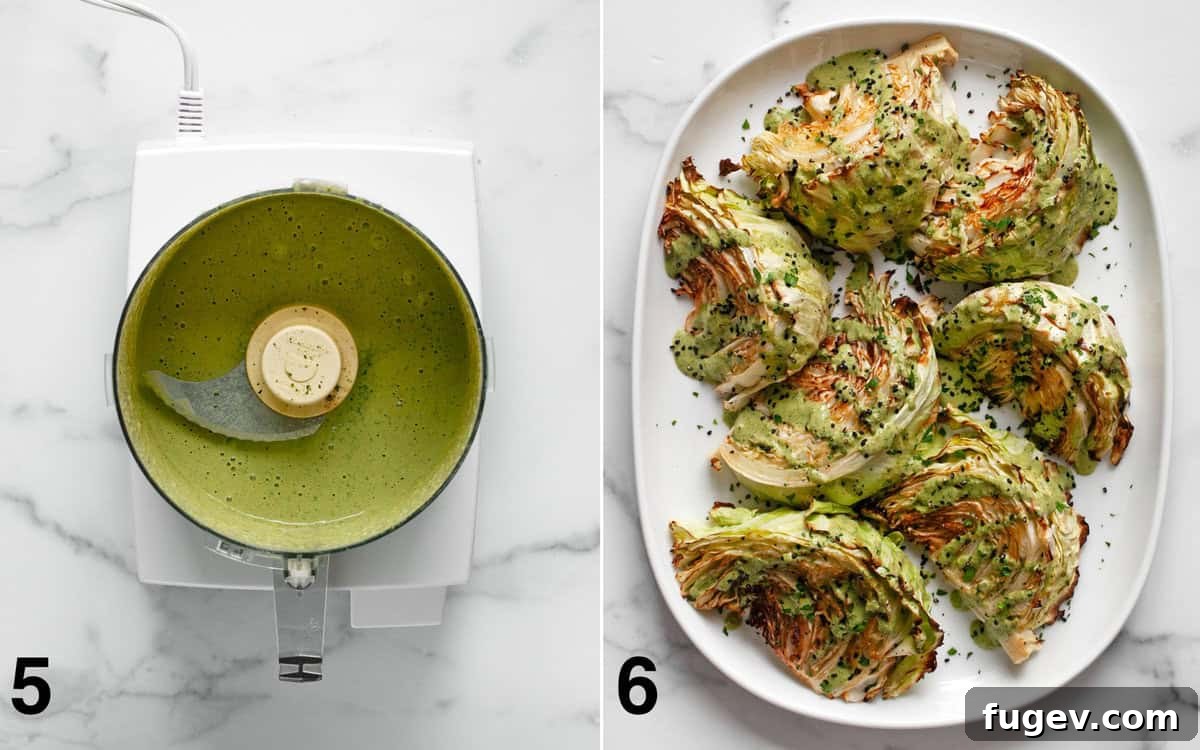
Process the tahini sauce ingredients until completely smooth and creamy. You are aiming for a pourable consistency that is thick enough to coat a spoon but not overly runny. If the sauce is too thick, add an additional tablespoon of water at a time, processing after each addition, until you reach your desired texture. It should be a pale green color with lovely flecks of darker green herbs.
-
6. Serve and Garnish:
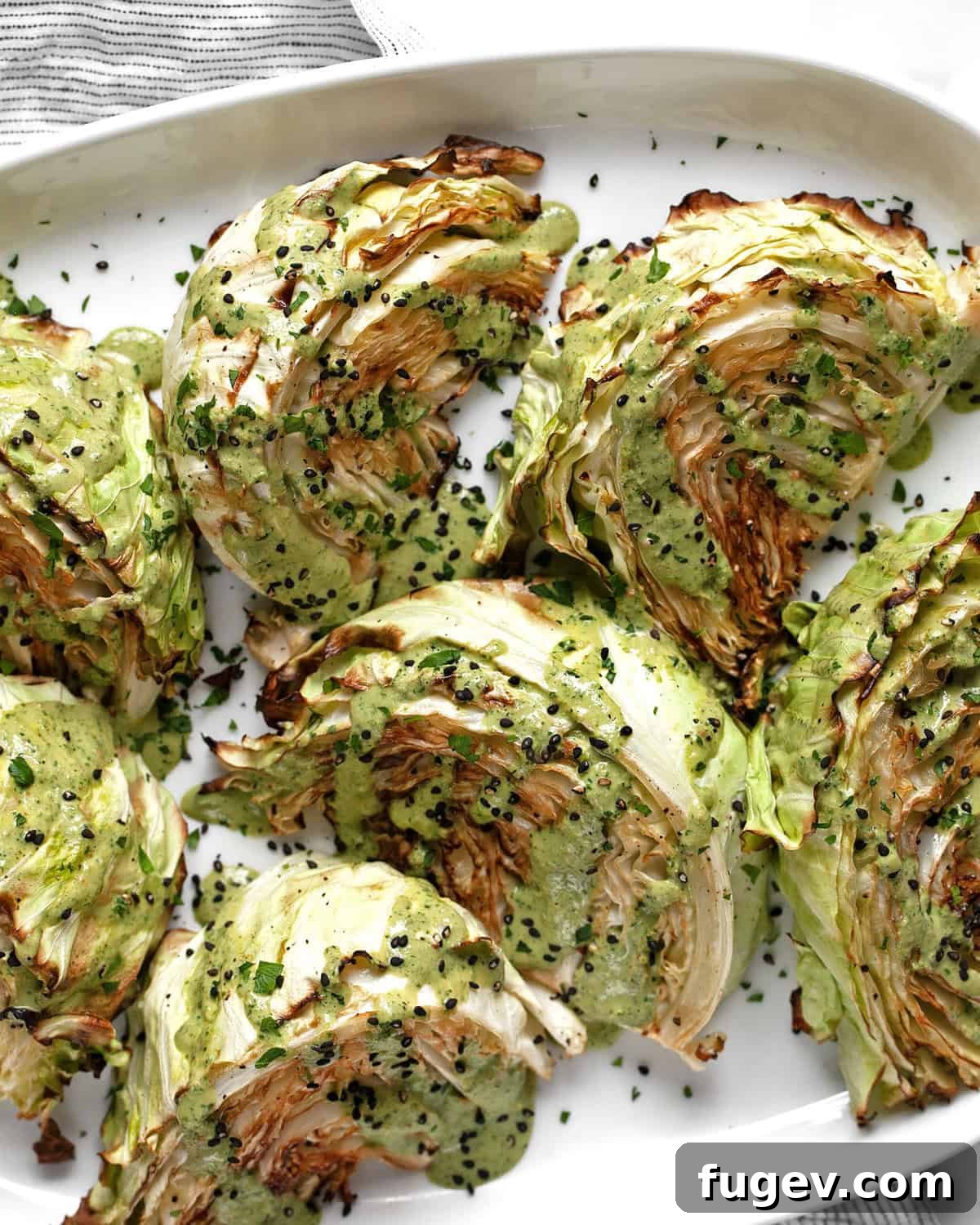
Once roasted, carefully transfer the warm cabbage wedges to a beautiful serving platter. Drizzle generously with the freshly made creamy tahini sauce. For a final flourish and added texture, sprinkle the dish with 1 tablespoon of sesame seeds (white or black) and a tablespoon of freshly chopped parsley. Serve immediately and enjoy the delightful combination of flavors!
-
The finished dish: roasted cabbage drizzled with creamy tahini sauce, ready to be enjoyed.
Serving Suggestions: Versatility on a Plate
These roasted cabbage wedges are incredibly versatile and can be adapted to fit various meal needs. As mentioned, they make an excellent, flavorful vegan side dish that complements almost any meal. Their robust flavor and satisfying texture pair well with everything from simple proteins to more elaborate spreads. However, don’t limit yourself to just a side – these wedges are hearty enough to anchor a meal.
To transform this into a fulfilling main dish, consider pairing the caramelized cabbage wedges with cooked grains such as fluffy quinoa, hearty brown rice, or earthy farro. Alternatively, a serving of protein-rich lentils, whether green, brown, or beluga, creates a well-rounded and deeply satisfying vegan meal. The savory, tangy scallion tahini sauce isn’t just for cabbage; it’s a remarkably adaptable dressing that elevates other roasted vegetables too. Try drizzling it over sweet potatoes, tender Brussels sprouts, roasted cauliflower florets, crisp broccoli, or cubes of butternut squash. You can even create an impressive and nutritious “Buddha bowl” by building a base of your favorite grains, topping it with a few roasted cabbage wedges, and adding a mix of other seasonal roasted vegetables, all brought together by a generous swirl of that irresistible tahini sauce. This approach allows for endless creativity and makes for an incredibly satisfying and wholesome meal.
Leftovers & Storage: Keeping the Flavor Alive
While roasted cabbage is undeniably at its best when enjoyed warm, fresh from the oven, or at room temperature, any leftovers can be stored and repurposed beautifully. To maintain optimal flavor and texture, it’s recommended to store the roasted cabbage and the tahini sauce separately. Place the leftover cabbage in an airtight container in the refrigerator for up to 2 days. Keep the tahini sauce in a separate sealed jar in the fridge. When reheating, be aware that the cabbage will lose some of its initial crispy edges, becoming softer. However, this doesn’t diminish its deliciousness!
Leftover roasted cabbage is fantastic when chopped and added to fresh green salads, offering a tender, savory component. It also integrates wonderfully into grain bowls with other roasted vegetables and proteins. You can even toss it into a quick stir-fry for added flavor and texture, or lightly warm it in a skillet to serve alongside eggs for a hearty breakfast or brunch. The separated tahini sauce can be used as a dressing for salads, a dip for raw vegetables, or even spread in wraps, ensuring none of its vibrant flavor goes to waste.
Expert Recipe Tips for Perfect Roasted Cabbage
Achieving perfectly roasted cabbage is simple with these helpful tips:
- Cabbage Size Matters: Heads of green cabbage can vary significantly in size, ranging from small to medium to large. If you happen to pick up a particularly large cabbage, you might need to increase the quantities of your olive oil-rice vinegar mixture to ensure all the wedges are adequately brushed and seasoned. Additionally, a larger cabbage might require the use of a second baking sheet to prevent overcrowding. If you use two pans, remember to rotate them halfway through roasting when you flip the cabbage, ensuring even cooking and caramelization across both sheets.
- Skip the Lining: You don’t necessarily need to line your baking pan with aluminum foil or parchment paper for this recipe. Thoroughly oiling the pan before arranging the cabbage, combined with brushing the wedges with the oil-vinegar mixture, will effectively prevent the cabbage from sticking. This direct contact with the hot metal also helps achieve that desirable crisp, caramelized crust.
- Achieving Silky Smooth Tahini Sauce: When blending the tahini sauce in your food processor or blender, allow it to run for a full couple of minutes. This ensures that all ingredients are thoroughly combined and pureed, resulting in a beautifully smooth, creamy, and homogenous sauce. The sauce should be a lovely pale green with subtle flecks of darker green herbs distributed throughout. If your tahini is very thick to start, you might need to add an extra tablespoon or two of water to reach the desired pourable consistency. Don’t be afraid to adjust gradually.
- Don’t Overcrowd the Pan: A common mistake when roasting vegetables is overcrowding the pan. When too many items are packed onto a single baking sheet, they tend to steam rather than roast, preventing that delicious browning and caramelization. Always ensure your cabbage wedges are arranged in a single layer with a little space between each piece. If necessary, use two baking sheets.
- Customize Your Sauce: The tahini sauce recipe is flexible! Feel free to experiment with different fresh herbs like cilantro or dill for a new flavor profile. You can also add a pinch of red pepper flakes for a subtle kick or a dash of maple syrup for a touch of sweetness to balance the tang. Taste and adjust seasonings to your personal preference.
More Delicious Cabbage Recipes
If you’ve fallen in love with cabbage through this recipe, explore these other fantastic ways to enjoy this versatile vegetable:
- Asian Cabbage Salad
- Crunchy Apple Cabbage Salad
- Cold Soba Noodle Salad
- Sesame Ginger Noodles
- Napa Cabbage Salad
- Crispy Baked Tofu Salad
- Savoy Cabbage Apple Salad
- Red Cabbage Slaw
- Grilled Cabbage Steaks
- Red Cabbage Salad
For even more fresh ideas all year long, don’t miss our comprehensive seasonal roasted vegetable recipe guide.
Roasted Cabbage Wedges Recipe Card
Roasted Cabbage Wedges
Paige Adams
5 mins
25 mins
30 mins
4

Print Recipe
These roasted cabbage wedges are an easy vegan side dish that can also be served as a satisfying main dish with lentils or grains. The quick, no-cook tahini sauce adds a creamy, flavorful finish.
Ingredients
For the Cabbage
- 1 head green cabbage
- 2 tablespoons olive oil, plus more for greasing pan
- 1 tablespoon rice vinegar
- Kosher salt and black pepper, to taste
For the Tahini Sauce
- 1 garlic clove
- 1/3 cup tahini
- 1/3 cup parsley leaves
- 3 scallions, thinly sliced
- 1 tablespoon low-sodium soy sauce
- 1 lemon, juiced
- Pinch of kosher salt
- 1/4 teaspoon black pepper
- 2-3 tablespoons water (adjust as needed)
For Serving
- 1 tablespoon sesame seeds (white or black)
- 1 tablespoon chopped fresh parsley
Instructions
- Preheat the oven to 400°F (200°C). Lightly grease a large sheet pan with olive oil.
- Tear off any wilted outer leaves from the cabbage. With the stem side down, cut the cabbage in half, then cut each half into 4 wedges, resulting in 8 wedges total.
- In a small bowl, whisk together 2 tablespoons of olive oil and 1 tablespoon of rice vinegar.
- Arrange the cabbage wedges in a single layer on the prepared sheet pan, ensuring they do not touch or overlap. Brush all sides of the cabbage with the oil-vinegar mixture and season generously with salt and pepper.
- Roast for 20-25 minutes, flipping the wedges halfway through, until the cabbage is tender, browned in spots, and caramelized at the edges.
- For the tahini sauce, combine the garlic, tahini, parsley leaves, scallions, soy sauce, lemon juice, pinch of salt, 1/4 teaspoon pepper, and water in a food processor or blender. Puree until smooth and creamy, adding a little more water as needed to reach a thick, pourable consistency.
- Arrange the roasted cabbage wedges on a serving platter. Drizzle generously with the tahini sauce and garnish with sesame seeds and chopped fresh parsley before serving.
Notes
You can easily make this recipe using red cabbage instead of green cabbage for a different flavor and color.
If rice vinegar is unavailable, white wine vinegar makes an excellent substitute.
For a very large cabbage head, you may need to whisk additional olive oil-rice vinegar mixture. Also, use a second sheet pan if necessary to prevent overcrowding; rotate pans halfway through roasting.
Store leftovers in an airtight container in the refrigerator for up to 2 days. Keep the tahini sauce in a separate container. The cabbage will soften upon storage; it’s great chopped into salads with other greens, leftover vegetables, and grains.
Nutrition
Nutrition information is automatically calculated and should be used as an approximation.
Additional Info
Side Dish, Main Dish
Mediterranean / Asian, Vegan, Vegetarian
Did you make this delicious recipe?
Share your creation! Mention @lastingredient on Instagram and tag it #lastingredient!