
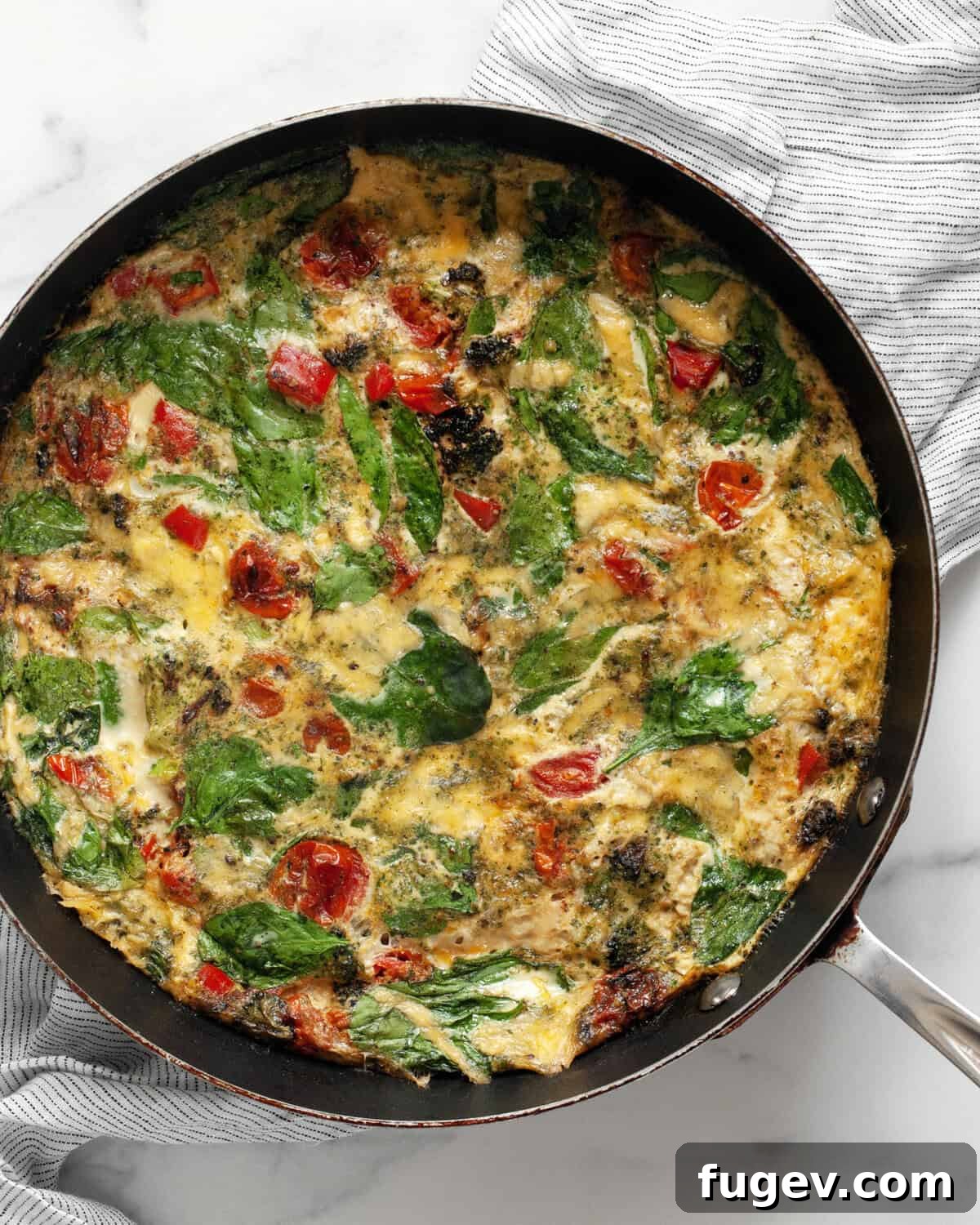
There are countless reasons to adore baked egg dishes, and this egg white frittata with roasted vegetables truly stands out. It’s generously filled with an array of colorful roasted vegetables, including tender bell peppers, sweet tomatoes, and crisp broccoli. A swirl of aromatic pesto infuses it with a delightful herby flavor, complemented by a generous handful of fresh baby spinach and a sprinkle of grated cheddar cheese. The result is an effortlessly easy, wholesome vegetarian recipe that transcends the traditional boundaries of breakfast and brunch, making it a perfect meal for any day of the week.
For those who prefer individual portions, consider trying these spinach feta egg white bites, conveniently baked in a muffin pan.
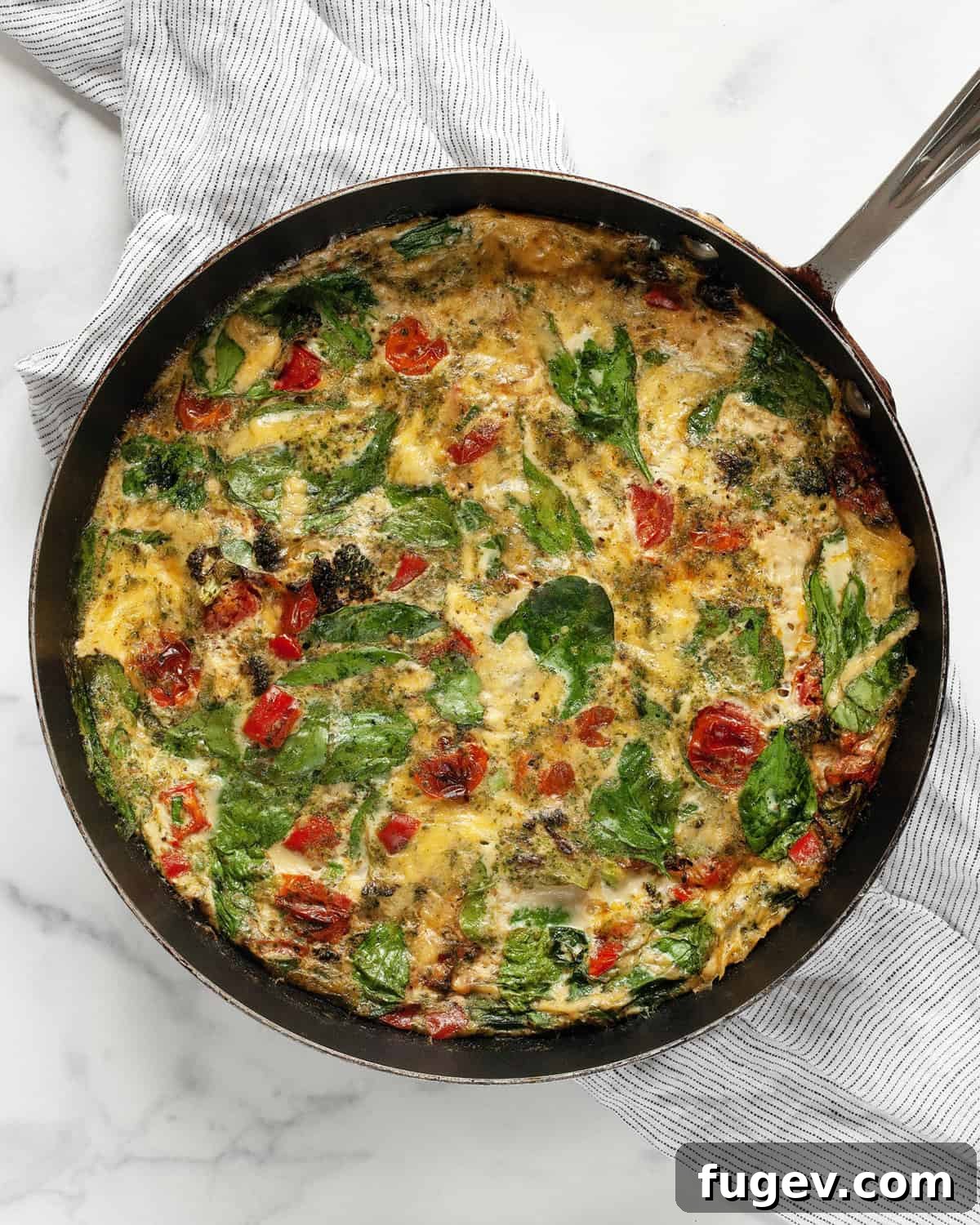
Table of Contents
- Why You’ll Love This Egg White Frittata
- The Nutritional Benefits of Egg Whites
- Key Ingredients for the Perfect Frittata
- Step-by-Step Guide to Making Your Egg White Frittata
- Serving Suggestions
- Storage and Meal Prep Tips
- Expert Recipe Tips and Variations
- Common Frittata FAQs
- Explore More Egg Recipes
- Egg White Frittata with Roasted Vegetables Recipe Card
Why You’ll Love This Egg White Frittata
This roasted vegetable egg white frittata is designed for both convenience and flavor, making it a fantastic addition to your culinary repertoire. Here’s why it’s destined to become a household favorite:
Effortless Vegetable Roasting: You can efficiently utilize your preheated oven by roasting the vegetables directly on a sheet pan for your frittata. Roasting is a much more hands-off approach compared to sautéing, allowing the vegetables to develop deeper flavors and a tender-crisp texture. Crucially, roasting also reduces the moisture content in the vegetables, preventing the frittata from becoming watery or dense – a common pitfall with egg white dishes.
Pesto for a Flavorful Boost: The addition of pesto is a game-changer for this frittata. As one of the most versatile and flavorful condiments, pesto instantly elevates the simple egg white base with its bright, herbaceous notes of basil, garlic, pine nuts, and Parmesan. It transforms the frittata into a dish that’s rich in character and depth, far beyond plain eggs.
Perfect for Meal Prep: This frittata recipe is an absolute dream for anyone looking to streamline their meal prep. Whether you’re planning breakfasts, lunches, or even light dinners for the week ahead, this dish performs beautifully. Leftovers can be enjoyed cold, at room temperature, or easily warmed up, offering incredible flexibility. Frittatas are no longer just for entertaining a crowd; they are a practical and delicious solution for everyday healthy eating.
The Nutritional Benefits of Egg Whites
Egg whites have long been celebrated in the health and fitness community, and for good reason. They are an excellent source of high-quality protein, making them incredibly satisfying and beneficial for muscle maintenance and growth. What’s more, they are remarkably low in calories, cholesterol, and fat, aligning perfectly with healthy eating goals and dietary preferences. Their popularity isn’t just about health; convenient cartons of liquid egg whites make them incredibly easy to use, saving you time and effort in the kitchen by eliminating the need for separating yolks.
Opting for egg whites allows you to create lighter, yet still incredibly filling and flavorful dishes. They provide a clean canvas for incorporating a multitude of vegetables and seasonings without adding excessive richness, making them a cornerstone for balanced meals.
Key Ingredients for the Perfect Frittata
Crafting this vibrant egg white frittata requires a selection of fresh, wholesome ingredients that come together to create a symphony of flavors and textures. Here’s a detailed look at what you’ll need:
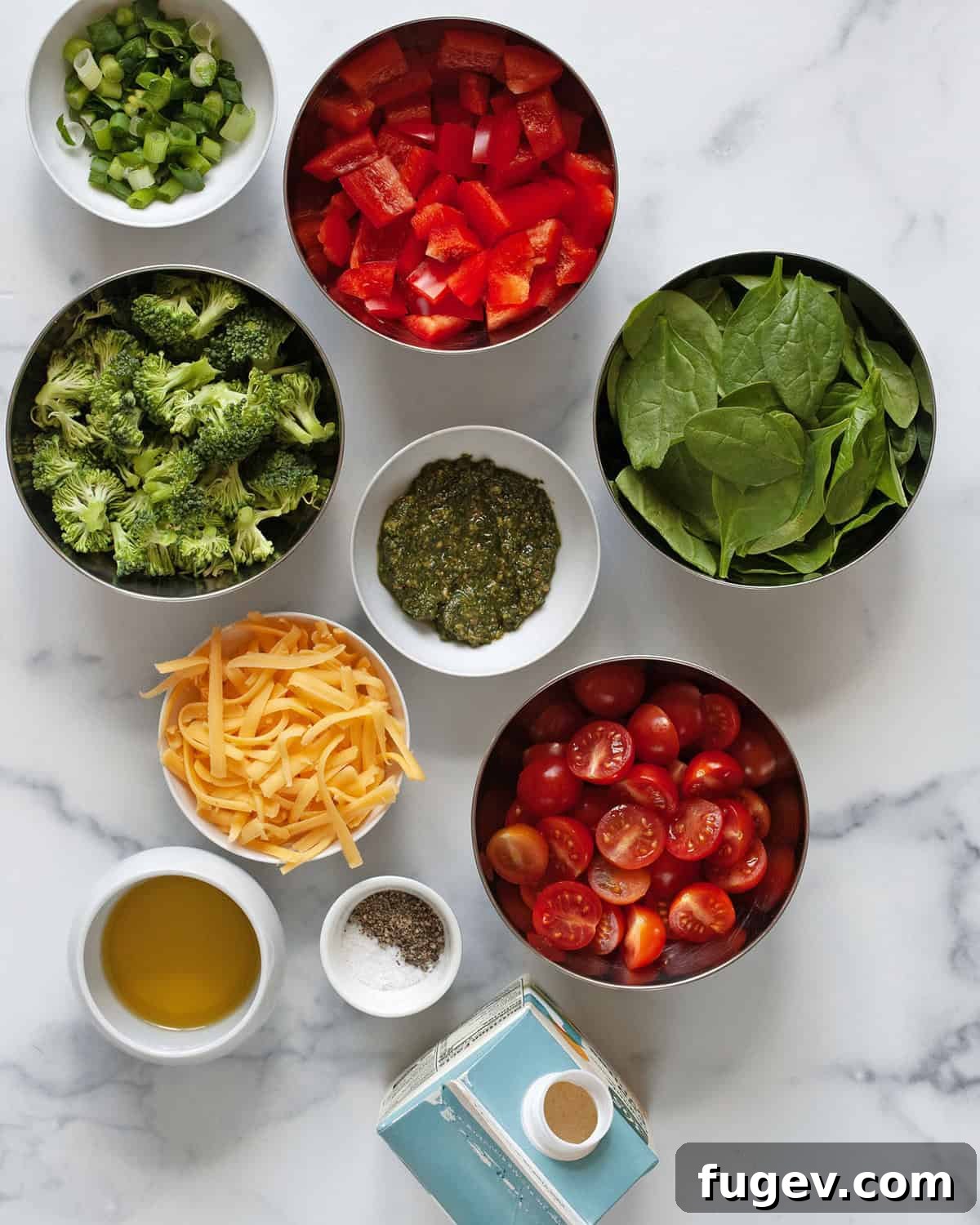
- Egg Whites: For ultimate convenience, a 16-ounce carton of liquid egg whites is highly recommended. This saves you the time and effort of separating individual eggs and avoids accumulating excess yolks (unless you have plans for them, perhaps in a delicious custard or ice cream!).
- Bell Peppers: Choose red, yellow, or orange bell peppers for their naturally sweeter flavor, which complements the dish beautifully. Green peppers can also be used if you prefer a slightly more piquant note. Dice them into bite-sized pieces for even cooking.
- Cherry or Grape Tomatoes: Halved cherry or grape tomatoes burst with juicy flavor when roasted. Their small size makes them perfect for distributing throughout the frittata, adding pops of sweetness and color.
- Broccoli: Cut your broccoli into small, uniform florets. This ensures they cook thoroughly and evenly during the roasting process and integrate seamlessly into the frittata. If using pre-cut broccoli, ensure any larger pieces are trimmed down.
- Pesto: Whether you opt for homemade fresh basil pesto or a good quality jarred version, pesto is crucial for adding a depth of herby, savory flavor. I often make my own pesto and freeze it in individual portions for easy use, but many grocery stores offer excellent fresh pesto in their refrigerated sections.
- Scallions: Also known as green onions, scallions are quickly sautéed to release their delicate oniony aroma before the other ingredients are added. They provide a mild, fresh onion flavor that enhances the overall taste.
- Baby Spinach: This leafy green is a superb addition to any frittata or quiche, wilting down beautifully and adding nutrients. For a slightly peppery kick, you can substitute baby arugula.
- Cheddar Cheese: A modest amount of grated cheddar cheese adds a lovely savory, salty dimension to the frittata. The goal is to layer flavors rather than overwhelm the dish with cheese. If cheddar isn’t your preference, consider Parmesan cheese for a sharp, salty taste or crumbled feta for a Mediterranean twist.
- Olive Oil: Essential for both tossing the vegetables before roasting and sautéing the scallions in the skillet, good quality olive oil contributes to the rich flavor and helps achieve that desirable golden finish.
- Salt & Pepper: Simple kosher salt and freshly ground black pepper are vital for seasoning both the roasted vegetables and the egg white mixture, bringing out their natural flavors.
Step-by-Step Guide to Making Your Egg White Frittata
Creating this delicious egg white frittata is a straightforward process. Follow these steps for a perfectly cooked, flavorful meal:
First, preheat your oven to 400 degrees F (200 degrees C). This ensures your vegetables roast efficiently and your frittata bakes evenly.
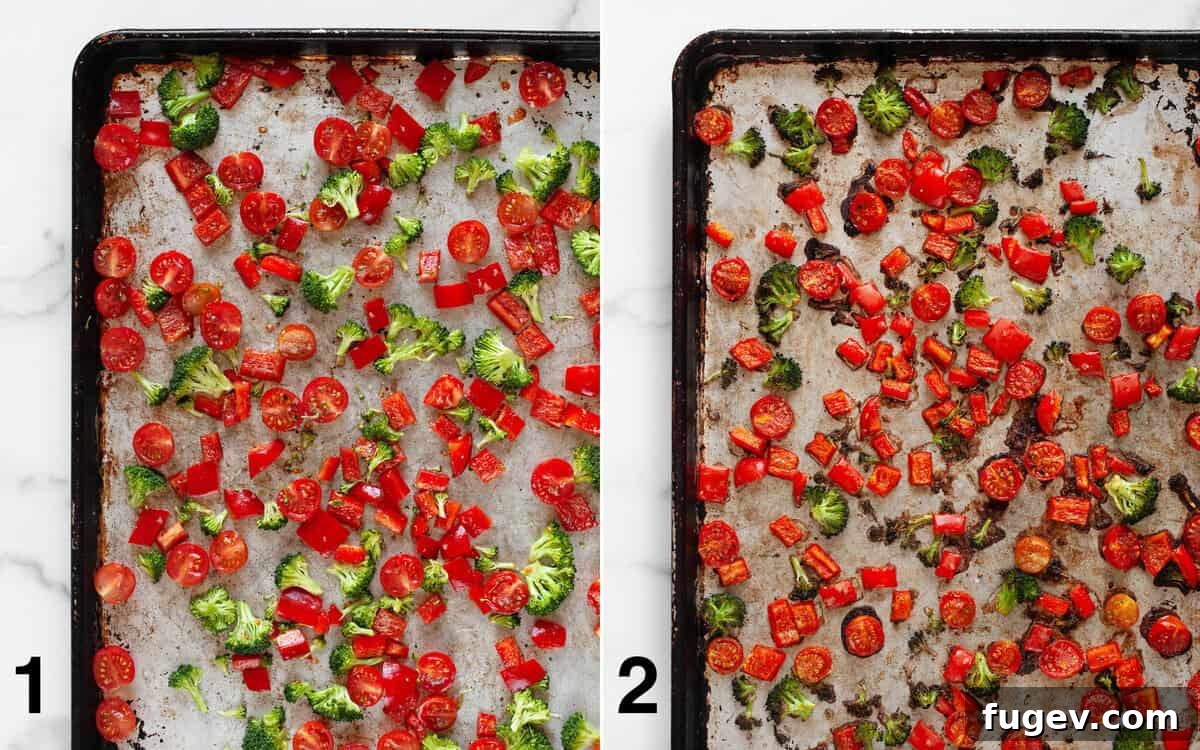
1. Prepare and Toss the Vegetables: On a large baking sheet, combine the diced bell peppers, halved cherry or grape tomatoes, and small broccoli florets. Drizzle them with 1 tablespoon of olive oil, 1 teaspoon of kosher salt, and 1/2 teaspoon of black pepper. Toss gently until all vegetables are evenly coated. Spread them in a single layer, making sure the tomatoes are cut-side up to prevent them from becoming soggy.
2. Roast the Vegetables: Place the baking sheet with the seasoned vegetables into the preheated oven. Roast for approximately 20 minutes, or until the vegetables are tender-crisp and show slight browning at the edges. This caramelization adds significant depth of flavor.
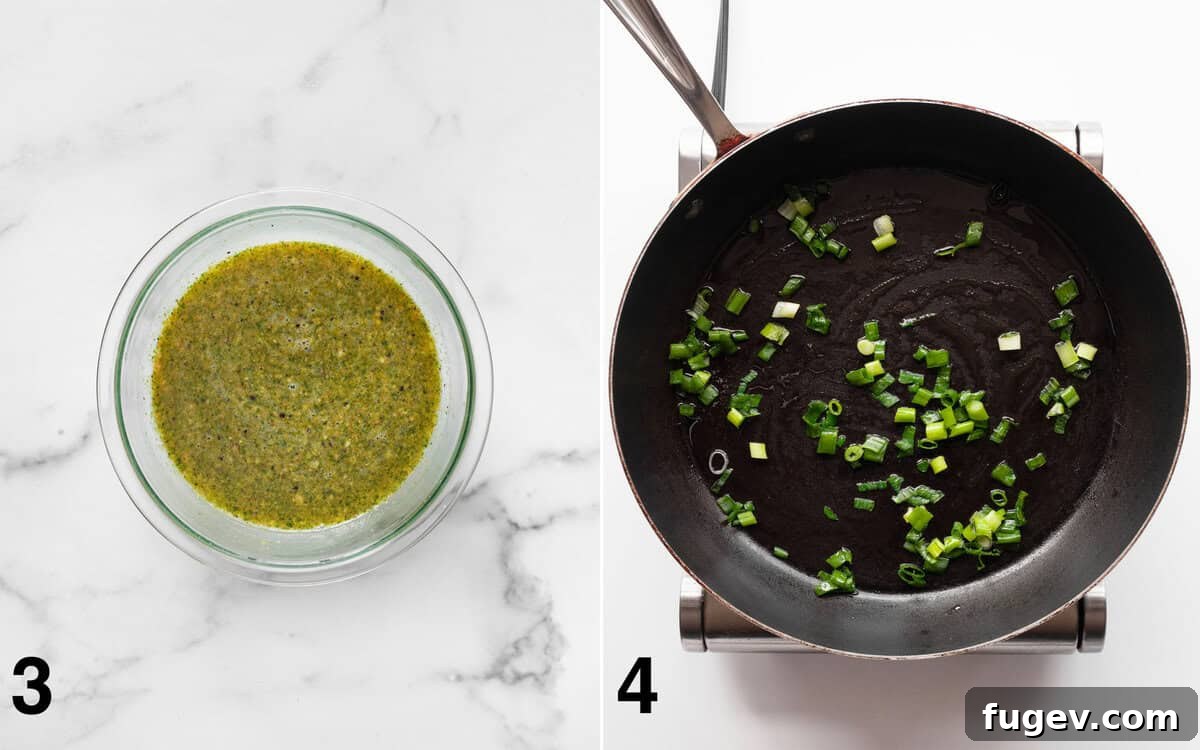
3. Prepare the Egg White Mixture: While the vegetables are roasting, whisk the egg whites in a large bowl. Add 2 tablespoons of pesto, 1/2 teaspoon of kosher salt, and 1/4 teaspoon of black pepper. Whisk vigorously until everything is well combined and slightly frothy. The pesto will incorporate beautifully, adding its distinctive herbaceous aroma.
4. Sauté the Scallions: Heat 1 tablespoon of olive oil in a 10-inch non-stick, oven-safe skillet over medium heat. Add the thinly sliced scallions and sauté for 1-2 minutes until they become fragrant and slightly softened. This quick sauté enhances their subtle onion flavor.
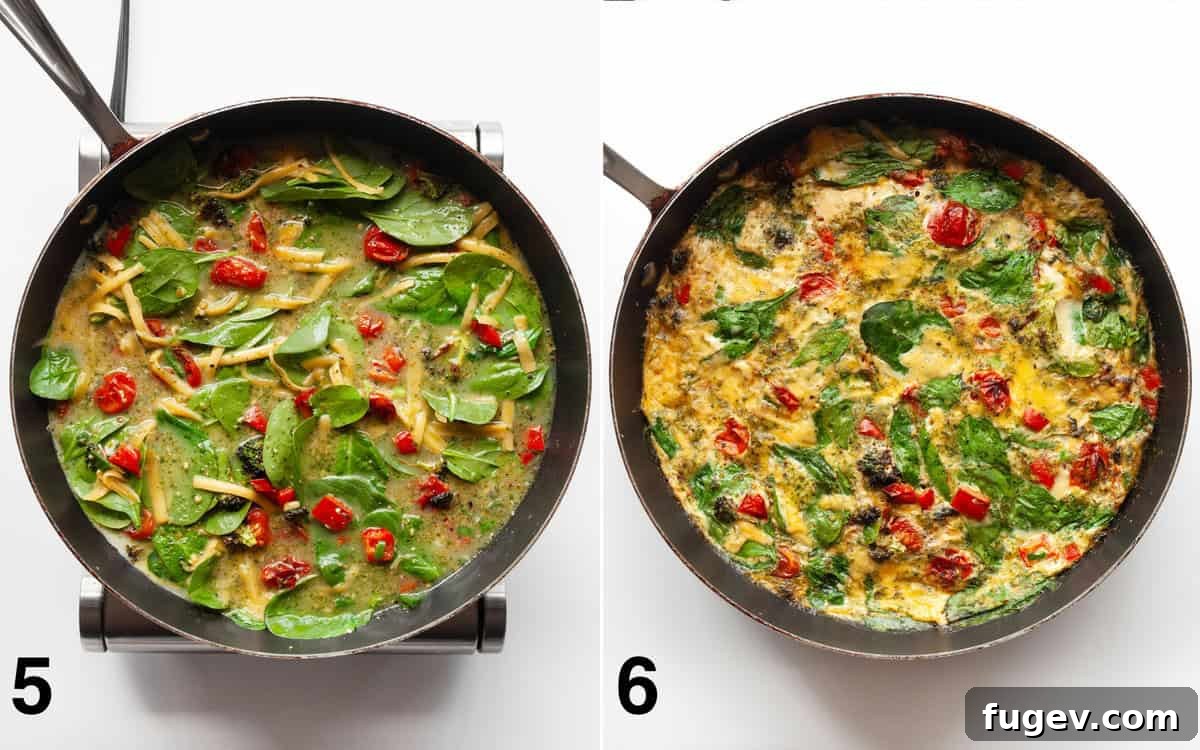
5. Assemble and Set the Frittata: Carefully spoon the roasted vegetables into the skillet with the sautéed scallions, distributing them evenly. Add the baby spinach and grated cheddar cheese, gently folding them in. Pour the whisked egg white mixture over the vegetables. Cook the frittata on the stovetop for 2-3 minutes without stirring, allowing the edges to firm up and set. This initial stovetop cooking helps create a stable base for the frittata.
6. Bake to Perfection: Transfer the skillet to the preheated oven. Bake for approximately 12-14 minutes, or until the frittata is fully set in the middle and slightly golden on top. A gentle jiggle of the pan should show no liquid movement in the center. Carefully remove the skillet from the oven using oven mitts.
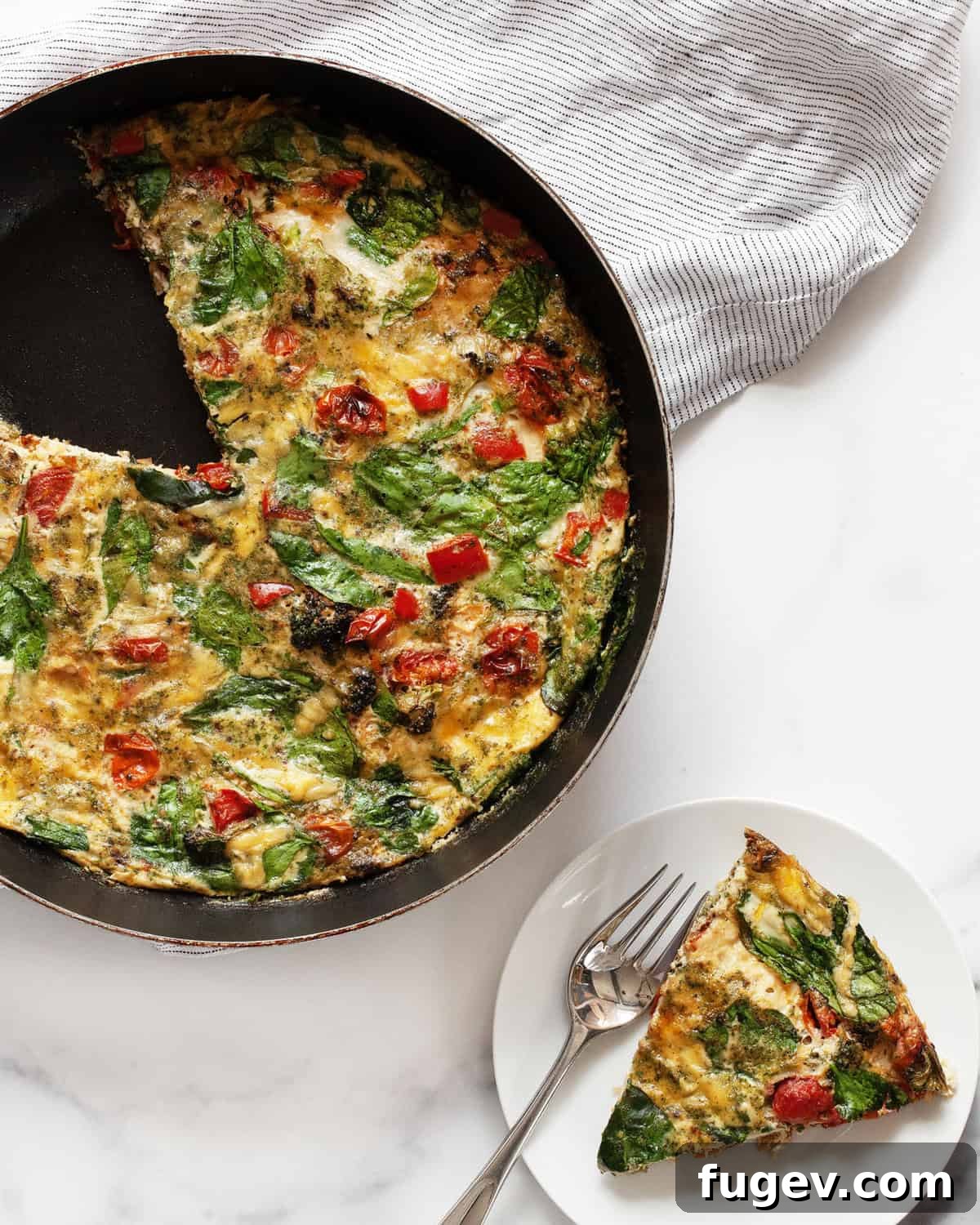
Allow the frittata to cool slightly before slicing and serving. Enjoy your homemade, healthy, and delicious egg white frittata!
Serving Suggestions
As highlighted, frittatas are exceptionally versatile and serve as a wonderful foundation for breakfast, lunch, or dinner. This particular recipe is a powerhouse of protein and fresh vegetables, making it a nutritious and satisfying choice. I personally adore keeping the accompanying dishes simple to let the frittata truly shine. A light and refreshing arugula salad with a bright lemon vinaigrette provides a perfect counterpoint to the richness of the eggs and vegetables. Pair it with a good piece of crusty bread or a warm whole-grain toast to complete the meal. For a heartier option, a side of roasted potatoes or a bowl of fresh fruit can also be fantastic complements.
Storage and Meal Prep Tips
This egg white frittata is a fantastic candidate for meal prepping, ensuring you have healthy and convenient meals ready throughout the week. Proper storage is key to maintaining its freshness and flavor:
- Refrigerator Storage: Allow any leftover frittata to cool completely to room temperature before storing. Transfer slices or the entire frittata to an airtight container and keep it in the refrigerator for up to 4 days.
- Reheating & Enjoying Cold: You can absolutely enjoy leftover frittata slices cold or at room temperature, making them perfect for grab-and-go lunches. If you prefer it warm, simply heat a slice in the microwave for a quick 10-12 second burst, or gently warm it in a skillet on low heat until heated through.
- Freezing for Longer Storage: To extend the life of your frittata, leftovers can be frozen for up to 1 month. Ensure the frittata is thoroughly cooled before freezing. Wrap individual slices tightly in aluminum foil, then place them in a freezer-safe bag or container. This prevents freezer burn.
- Thawing Frozen Frittata: When you’re ready to enjoy a frozen slice, transfer it to the refrigerator to thaw overnight. Once thawed, you can reheat it using the methods mentioned above.
Expert Recipe Tips and Variations
To ensure your egg white frittata turns out perfectly every time, and to inspire you with creative adaptations, consider these expert tips and variations:
- The Importance of Roasting Vegetables: Do not skip the crucial step of roasting your vegetables. Adding raw vegetables directly to a frittata will result in undercooked, potentially crunchy ingredients because the egg mixture sets relatively quickly in the oven. Roasting ensures tender, flavorful vegetables that are perfectly cooked before they even hit the skillet.
- Customize with Leftover Vegetables: Think of this egg white frittata recipe as a versatile starting point. It’s an excellent way to use up other cooked vegetables you might have on hand. Consider adding sautéed mushrooms, roasted sweet potatoes, grilled asparagus, or steamed cauliflower. This flexibility makes it a wonderful “leftover veggie frittata.”
- Dairy-Free Adaptation: If you need to make this recipe dairy-free, simply omit the cheddar cheese or replace it with a plant-based cheese substitute that melts well. Additionally, ensure that the pesto you use is vegan, as traditional pesto often contains Parmesan cheese.
- Choosing the Right Skillet: While a non-stick skillet is ideal for easy release and cleanup, you can certainly use a well-seasoned stainless steel or cast iron skillet. Regardless of the material, it is absolutely essential that your skillet is oven-safe. If using stainless steel or cast iron, make sure to grease it generously with non-stick cooking spray or a good layer of olive oil to prevent sticking.
- Seasoning is Key: Don’t underestimate the power of proper seasoning. Taste your egg mixture before adding it to the skillet (a tiny drop on a hot pan will tell you if it needs more salt). Adjust salt and pepper to your preference.
- Don’t Overbake: Overbaking can lead to a dry, rubbery frittata. Keep an eye on it in the oven; it’s done when the center is just set, with perhaps a very slight jiggle, and the edges are golden.
Common Frittata FAQs
Yes, absolutely! If you prefer to use whole eggs, simply substitute the 16 ounces of liquid egg whites with 9 large whole eggs. To achieve a similar creamy texture, whisk them with approximately 1/4 cup of milk (dairy or non-dairy).
Lining your baking sheet with parchment paper is completely optional. It primarily serves to make cleanup easier, preventing vegetables from sticking to the pan. If you choose not to use parchment paper, it’s particularly important to ensure that the halved tomatoes are placed cut-side up. This helps them release moisture and caramelize without sticking.
A fully cooked frittata will be set in the center. You can gently jiggle the pan, and if there’s no liquid movement in the middle, it’s done. A knife inserted into the center should come out clean. Avoid overbaking, as this can make the frittata dry and rubbery.
Yes, feel free to experiment with different cheeses! Besides cheddar, great options include Parmesan for a sharper flavor, crumbled goat cheese for a tangy note, Monterey Jack for extra meltiness, or a blend of Italian cheeses. Adjust the quantity to your liking.
Explore More Egg Recipes
If you love the versatility and ease of egg-based dishes, you’re in luck! Here are more delicious recipes featuring eggs, perfect for any meal:
Mini Spinach Frittatas: Bite-sized frittatas perfect for entertaining or individual servings.
Pesto Eggs with Roasted Tomatoes: A flavorful twist on classic eggs, enhanced with pesto and sweet roasted tomatoes.
Crustless Mushroom Quiche: A light and savory quiche packed with mushrooms and feta, without the crust.
Roasted Pepper Frittata with Black Beans: A hearty and smoky frittata featuring roasted peppers and protein-rich black beans.
Mushroom Tomato Frittata: A classic combination of earthy mushrooms and juicy tomatoes in a simple frittata.
Roasted Vegetable Egg Bake: A comforting egg bake with roasted seasonal vegetables and a creamy cottage cheese base.
Asparagus Mushroom Cottage Cheese Egg Bake: A spring-inspired egg bake featuring fresh asparagus, mushrooms, and cottage cheese.
Roasted Sweet Potato Kale Egg Bake: A wholesome and nutritious egg bake with sweet potatoes and nutrient-dense kale.
Egg White Frittata with Roasted Vegetables
Paige Adams
10
mins
40
mins
50
mins
6
This egg white frittata is packed with vibrant roasted vegetables including bell peppers, tomatoes, and broccoli. It also features fresh baby spinach and savory cheddar cheese, all infused with fragrant pesto whisked into the egg whites, creating a light yet satisfying meal.
Ingredients
For roasted vegetables
- 1 bell pepper, diced
- 1 cup halved cherry tomatoes or grape tomatoes
- 1 cup small broccoli florets
- 1 tablespoon olive oil
- 1 teaspoon kosher salt
- 1/2 teaspoon black pepper
For frittata
- 16 ounces egg whites
- 2 tablespoons pesto
- 1/2 teaspoon kosher salt
- 1/4 teaspoon black pepper
- 1 tablespoon olive oil
- 2 scallions, thinly sliced
- 1-1/2 cups baby spinach
- 1/2 cup grated cheddar cheese
Instructions
- Preheat the oven to 400 degrees F (200°C).
- On a sheet pan, toss the peppers, tomatoes, and broccoli with 1 tablespoon olive oil, 1 teaspoon kosher salt, and 1/2 teaspoon black pepper. Spread them in a single layer with the tomatoes cut side up.
- Roast the vegetables until they are lightly browned at the edges, about 20 minutes.
- In a large bowl, whisk the egg whites, pesto, 1/2 teaspoon kosher salt, and 1/4 teaspoon black pepper.
- Heat 1 tablespoon oil in a 10-inch non-stick, oven-safe skillet over medium heat. Sauté the scallions for 1-2 minutes until fragrant.
- Transfer the roasted vegetables to the skillet.
- Gently fold in the spinach and cheese, then pour in the egg whites. Cook the frittata on the stove for 2-3 minutes, allowing the edges to set.
- Then, bake the frittata in the oven until it has fully set in the middle, about 12-14 minutes.
Notes
If you don’t have a non-stick skillet, you can use a stainless steel or cast iron skillet. Make sure to grease it well with non-stick cooking spray or a generous amount of oil.
Instead of using egg whites, you can use 9 whole large eggs plus 1/4 cup milk for a richer frittata.
You can substitute baby arugula for spinach if you prefer a slightly more peppery flavor.
If you need the frittata to be dairy-free, leave out the cheese or use a plant-based substitute. Also, ensure you are using vegan pesto.
Store leftovers in the refrigerator in an airtight container for up to 4 days. You can eat them cold, or warm slices in the microwave for 10-12 seconds.
You can freeze leftovers for up to 1 month. Wrap them tightly with aluminum foil or plastic wrap before freezing. Thaw them in the fridge overnight before reheating. Always let leftovers cool to room temperature before storing them.
Nutrition
Calories: 157 kcal | Carbohydrates: 5g | Protein: 12g | Fat: 10g | Saturated Fat: 3g | Polyunsaturated Fat: 1g | Monounsaturated Fat: 4g | Cholesterol: 10mg | Sodium: 829mg | Potassium: 335mg | Fiber: 2g | Sugar: 3g | Vitamin A: 1862IU | Vitamin C: 45mg | Calcium: 103mg | Iron: 1mg
Nutrition information is automatically calculated, so should only be used as an approximation and may vary based on specific ingredients and preparation methods.
Additional Info
Breakfast & Brunch
American, Italian
Did you make this recipe?
Mention @lastingredient on Instagram and tag it #lastingredient!