
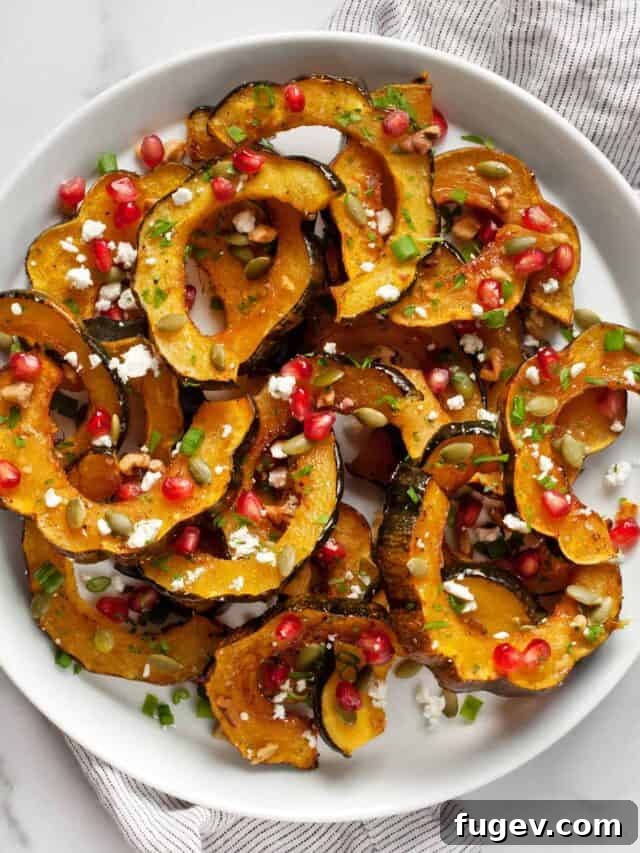
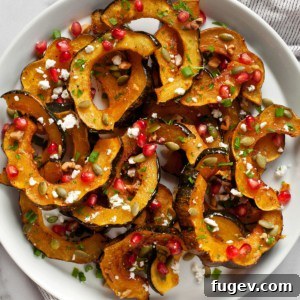
Embrace the vibrant flavors of fall and winter with this incredibly easy and delicious roasted acorn squash recipe. Infused with a harmonious blend of savory, sweet, and a touch of spicy notes, this dish transforms simple acorn squash into a show-stopping side. Each tender slice is seasoned with a hint of cayenne pepper and beautifully glazed with rich maple syrup, creating an irresistible caramelized exterior. Once perfectly roasted, these golden-brown squash half-rings are artfully arranged and elevated with a colorful sprinkle of crunchy pumpkin seeds, wholesome walnuts, juicy pomegranate arils, tangy goat cheese, and fresh, aromatic herbs. It’s a culinary masterpiece that promises to delight your taste buds and impress your guests, making it a staple for holiday gatherings and cozy weeknight dinners alike.
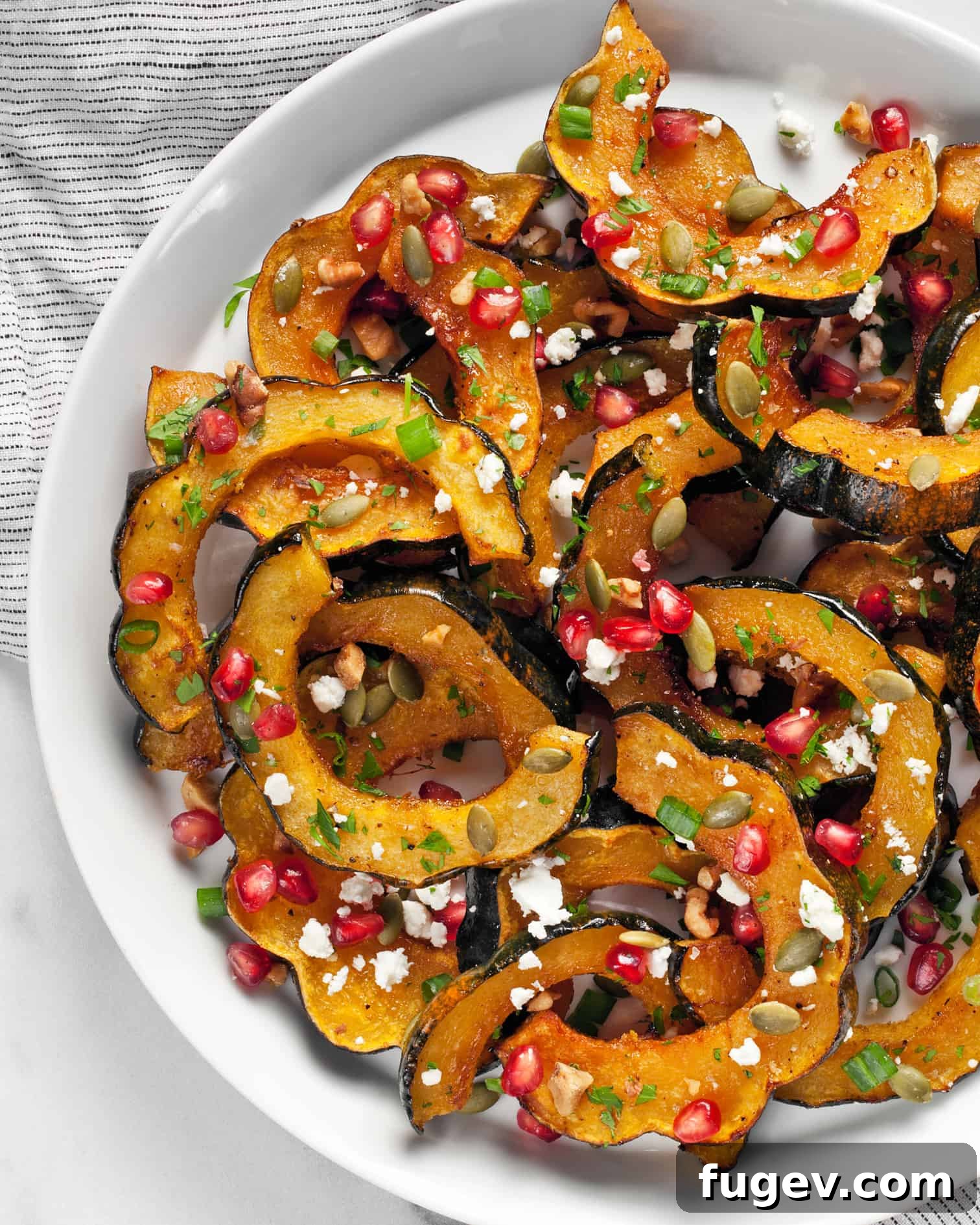
Table of Contents
- Why You’ll Absolutely Love This Recipe
- How To Select & Cut Acorn Squash
- The Essential Ingredients
- Step-by-Step Guide: How To Make Maple Roasted Acorn Squash
- Serving Suggestions & Perfect Pairings
- Leftovers, Storage & Repurposing
- Pro Tips for Perfect Roasted Squash
- Frequently Asked Questions (FAQs)
- More Delightful Squash Recipes
- Maple Roasted Acorn Squash Recipe Card
Why You’ll Absolutely Love This Maple Glazed Acorn Squash Recipe
This roasted acorn squash recipe isn’t just another side dish; it’s a culinary experience designed for ease, flavor, and visual appeal. Here’s why it’s destined to become a firm favorite in your kitchen:
- Effortless Preparation – No Peeling Required! One of the greatest advantages of using acorn squash is that you don’t need to peel it! Unlike some other winter squash varieties, acorn squash skin softens beautifully during roasting, becoming delightfully tender and completely edible. This saves you significant prep time and effort, especially when dealing with its uniquely bumpy shape, allowing you to get this delicious dish on the table faster. The roasted skin also adds a lovely textural element and additional nutrients.
- A Symphony of Flavors in Every Bite. The simple yet incredibly effective marinade is a game-changer. Crafted with just five key ingredients – primarily rich maple syrup and a hint of fiery cayenne pepper – it creates a dynamic flavor profile. The maple syrup accentuates the natural sweetness of the squash, while the cayenne pepper introduces a subtle warmth and ‘kick’ that perfectly balances the sweetness without overpowering it. This savory-sweet-spicy combination is truly addictive and elevates the humble squash to gourmet status.
- Versatile & Adaptable for Any Winter Squash. While acorn squash is fantastic, this recipe’s robust flavor profile is incredibly forgiving. You can easily substitute it with other delicious winter squashes that also don’t require peeling. Varieties like delicata squash, kabocha squash, or red kuri squash are excellent alternatives, offering similar textures and flavors that will beautifully absorb the maple-cayenne glaze. This flexibility allows you to enjoy this recipe with whatever seasonal squash you have on hand, or to explore different textures and tastes.
- Impressive & Festive Presentation. Beyond its incredible taste, this dish is visually stunning. The vibrant colors of the roasted squash, ruby-red pomegranate seeds, emerald pumpkin seeds, and creamy goat cheese create an inviting and festive platter that’s perfect for holiday tables, special occasions, or simply adding a touch of elegance to your everyday meals.
How To Select & Cut Acorn Squash Safely and Easily
Prepping acorn squash is straightforward, requiring just a sharp chef’s knife, a sturdy cutting board, and a spoon. Selecting the right squash is the first step to success. Look for acorn squash that feels heavy for its size, indicating a good moisture content. The skin should be smooth and firm, with a dark green color, and free from any soft spots or blemishes. A small patch of orange is common where it rested on the ground, but avoid large orange areas which can indicate overripeness.
Follow these simple steps to safely cut your acorn squash:
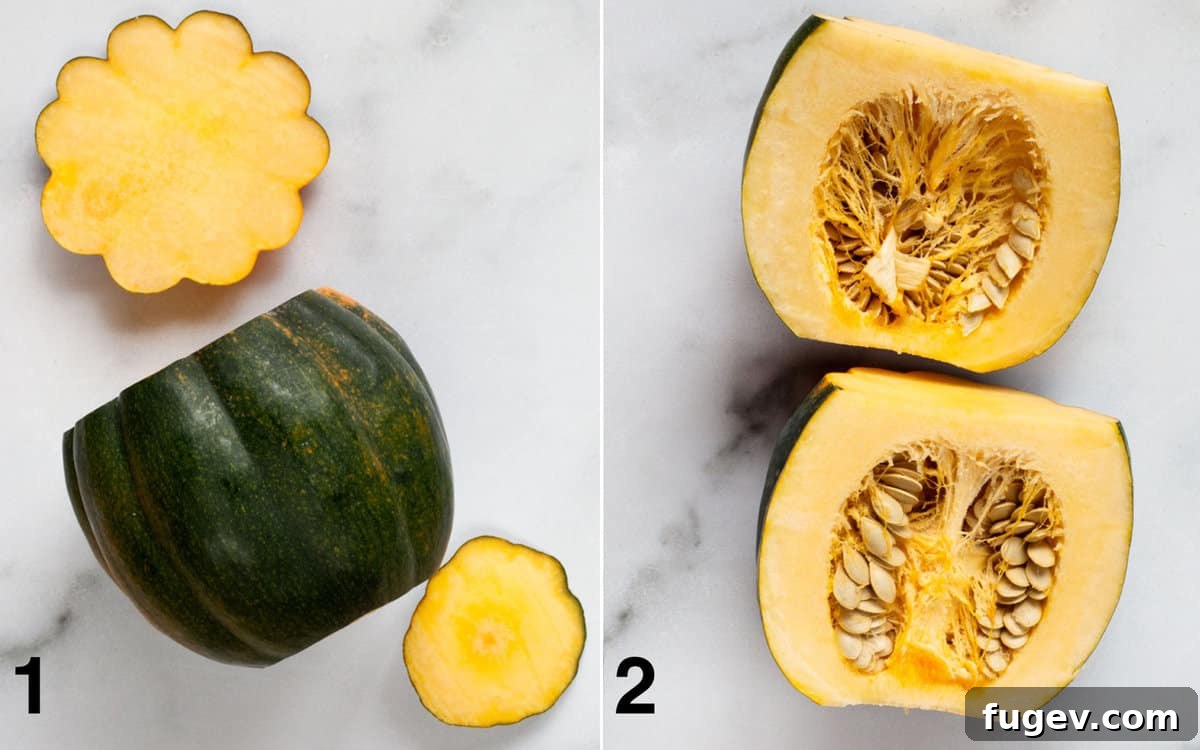
- Prepare Your Squash: Start by washing the squash thoroughly. Then, trim a thin slice off both the top stem end and the bottom of the squash. This crucial step creates a stable, flat surface on both ends, allowing you to safely rest the squash on your cutting board without it wobbling. Stability is key for safe knife handling!
- Halve the Squash Lengthwise: Carefully place the squash on one of its flat ends. Using your sharp chef’s knife, carefully cut the squash in half lengthwise, from the top trimmed end to the bottom trimmed end. A sharp knife is extremely helpful here to make clean cuts with minimal effort and reduce the risk of slippage. Take your time, applying steady pressure.
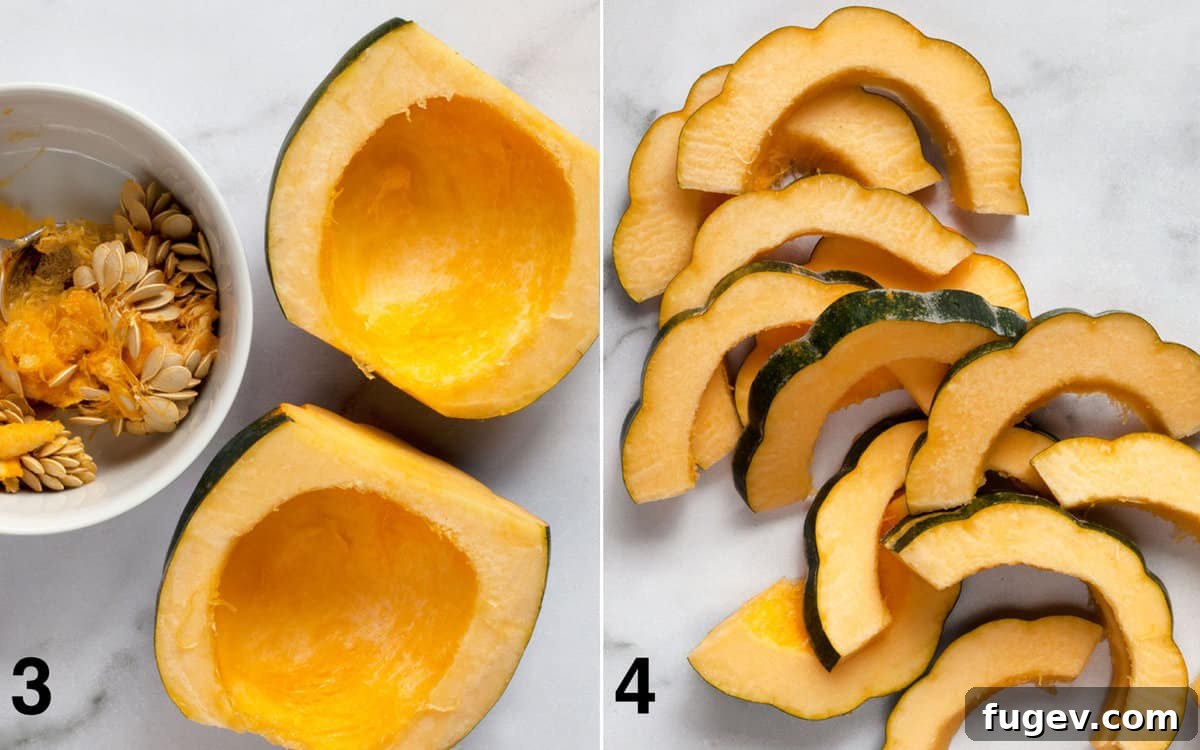
- Scoop Out the Seeds: Once halved, you’ll see the fibrous strings and seeds in the center cavity. Use a sturdy spoon, such as an ice cream scoop or a metal serving spoon, to thoroughly scoop out all the seeds and stringy bits. Drag the spoon firmly along the flesh to ensure no loose strings remain, which can become tough when roasted.
- Slice into Half-Rings: Place each squash half cut-side down on your cutting board. Carefully slice the squash crosswise into beautiful half-ring pieces, approximately 1/2-inch thick. Aim for consistent thickness across all slices to ensure even cooking and browning. These half-rings will create a lovely presentation on your serving platter.
The Essential Ingredients for Maple Roasted Acorn Squash
This recipe relies on a thoughtful combination of fresh produce, pantry staples, and vibrant toppings to create its signature flavor and texture. Here’s a closer look at what you’ll need:
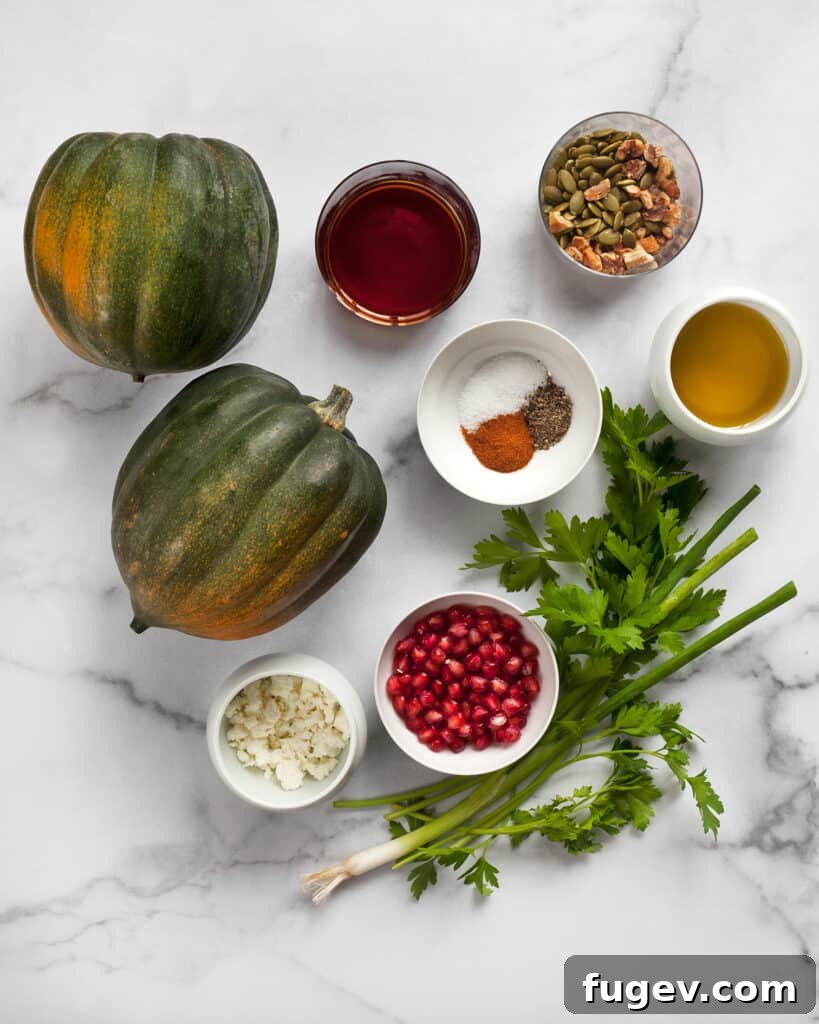
- Acorn Squash: The star of our dish! When selecting acorn squash, look for ones that are dark green, firm, and feel heavy for their size. Avoid squash with soft spots or blemishes. Its naturally sweet, nutty flavor is perfectly complemented by the maple glaze.
- Maple Syrup: This isn’t just for sweetness; it brings an undeniable essence of fall and winter. Pure maple syrup adds a depth of flavor and a beautiful caramelized glaze that distinguishes this dish from others. You can use any grade of maple syrup, though darker grades often offer a richer flavor profile.
- Olive Oil: Forms the flavorful base of our marinade, helping to tenderize the squash and ensure even coating of the spices and syrup. Use a good quality extra virgin olive oil for the best results.
- Cayenne Pepper, Kosher Salt, and Black Pepper: This trio of seasonings provides the perfect balance. Kosher salt and freshly ground black pepper are fundamental, while a touch of cayenne pepper introduces a gentle warmth and subtle spice that beautifully contrasts the maple’s sweetness, making the overall flavor profile more complex and exciting. Adjust the cayenne to your preferred heat level.
- Walnuts (Roughly Chopped): Adding walnuts as a topping introduces a wonderful nutty crunch and earthy flavor that pairs exceptionally well with the sweetness of the squash. They also provide healthy fats and a satisfying texture. Pecans or almonds could also be used for a similar effect.
- Pumpkin Seeds (Pepitas): These vibrant green seeds contribute a delightful crunch and a distinct, slightly savory nuttiness that enhances the overall texture and flavor complexity of the dish. Toasted pumpkin seeds are particularly flavorful.
- Pomegranate Seeds (Arils): These jewel-like seeds are a highlight! Their burst of sweet, tart, and juicy flavor provides a refreshing counterpoint to the rich, roasted squash. They also add a stunning pop of color, making the dish visually captivating, especially for holiday tables.
- Goat Cheese (Crumbled): Creamy, slightly tangy, and wonderfully savory, crumbled goat cheese melts slightly from the residual heat of the squash, adding a luxurious creaminess and a sophisticated flavor dimension. Its tartness cuts through the richness, creating a perfectly balanced bite. For a vegan option, simply omit the cheese or use a plant-based feta alternative.
- Scallions (Thinly Sliced): Fresh scallions offer a crisp texture and a mild, oniony bite. They add a fresh, vibrant element that brightens the entire dish and provides a subtle aromatic finish.
- Fresh Parsley (Chopped): A final garnish of fresh parsley not only adds a touch of color but also a fresh, herbaceous note that perfectly rounds out all the flavors. Other fresh herbs like thyme or rosemary can also be lovely additions.
Step-by-Step Guide: How To Make Maple Roasted Acorn Squash
Creating this flavorful side dish is straightforward. Follow these steps for perfectly roasted, glazed acorn squash:
- Preheat Oven & Prepare Squash: Preheat your oven to a precise 375°F (190°C). While the oven heats, wash your acorn squash thoroughly. Using a sharp knife, trim off both ends to create flat surfaces. Halve the squash lengthwise, scoop out the seeds and fibrous strings with a spoon, then slice each half crosswise into uniform ½-inch thick half-rings. Aim for consistent thickness to ensure all pieces cook evenly.
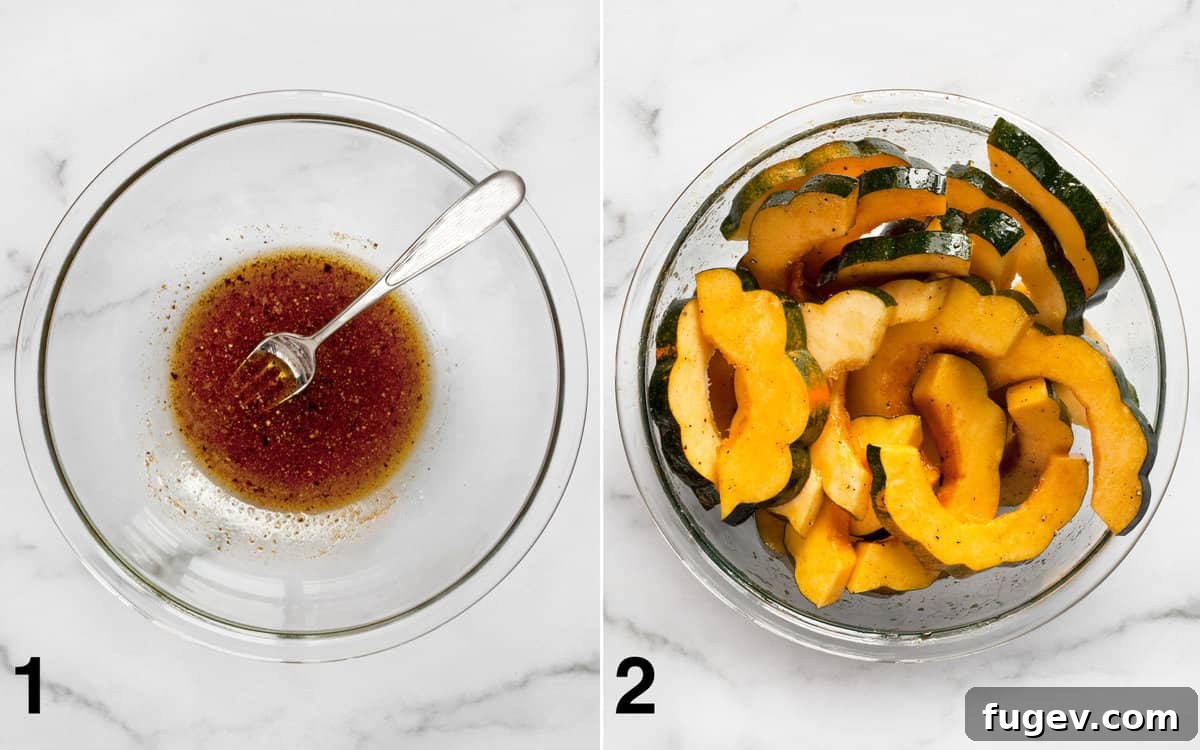
- Whisk the Marinade: In a large mixing bowl, combine the olive oil, maple syrup, cayenne pepper, kosher salt, and black pepper. Whisk these ingredients together until they are thoroughly combined, creating a smooth, aromatic marinade. This blend of sweet, savory, and spicy flavors is what will transform your squash.
- Coat the Squash: Add the prepared acorn squash slices to the bowl with the marinade. Using your hands or a spatula, gently toss the squash until every slice is well coated with the flavorful mixture. Ensure each piece gets an even layer of the glaze for maximum flavor and caramelization.
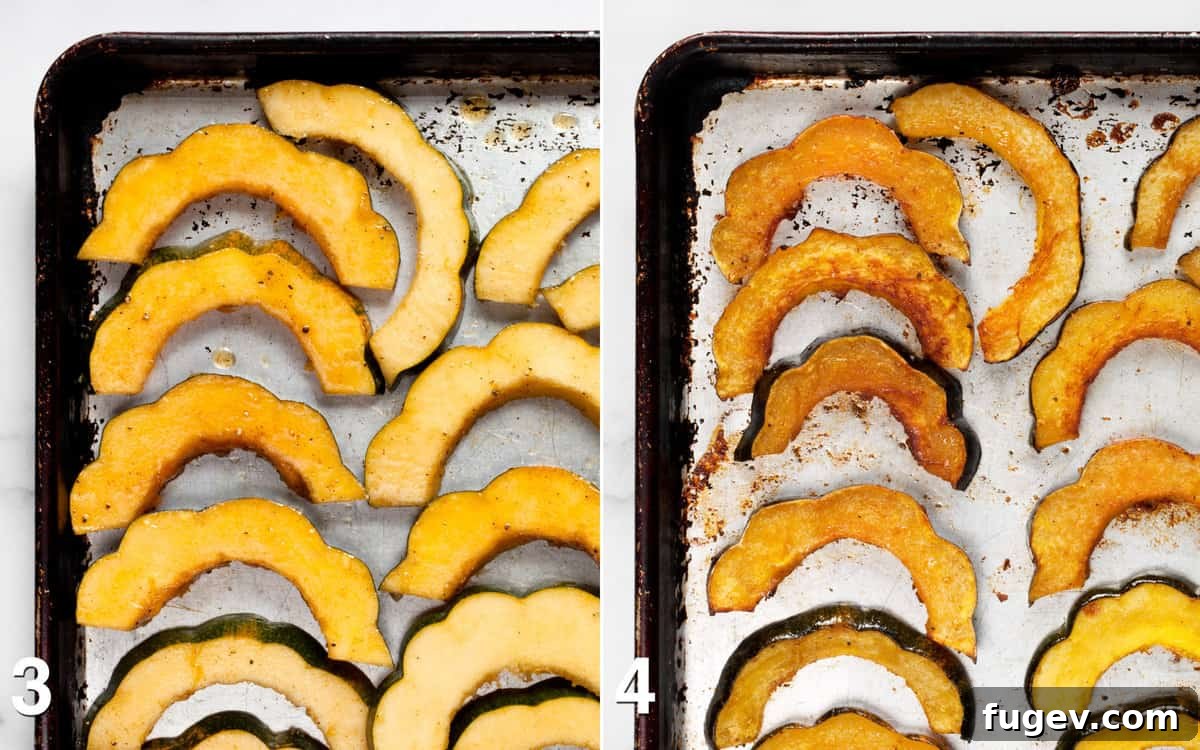
- Arrange on Baking Sheet: Arrange the marinated squash slices in a single layer on a large baking sheet. It’s crucial not to overcrowd the pan and to ensure the slices are not overlapping. This maximizes contact with the hot pan, promoting optimal browning and caramelization. Resist the urge to use parchment paper if you want the best browning; direct contact with the metal pan is key for those crispy edges.
- Roast to Perfection: Place the baking sheet in the preheated oven. Roast for an initial 20 minutes. After this time, carefully remove the pan, flip each squash slice to its other side using tongs or a spatula, and return to the oven for another 15-20 minutes. Continue roasting until the squash is fork-tender, beautifully golden brown at the edges, and slightly caramelized. The cooking time may vary slightly depending on your oven and the thickness of your squash slices, so keep an eye on them for desired tenderness and browning.
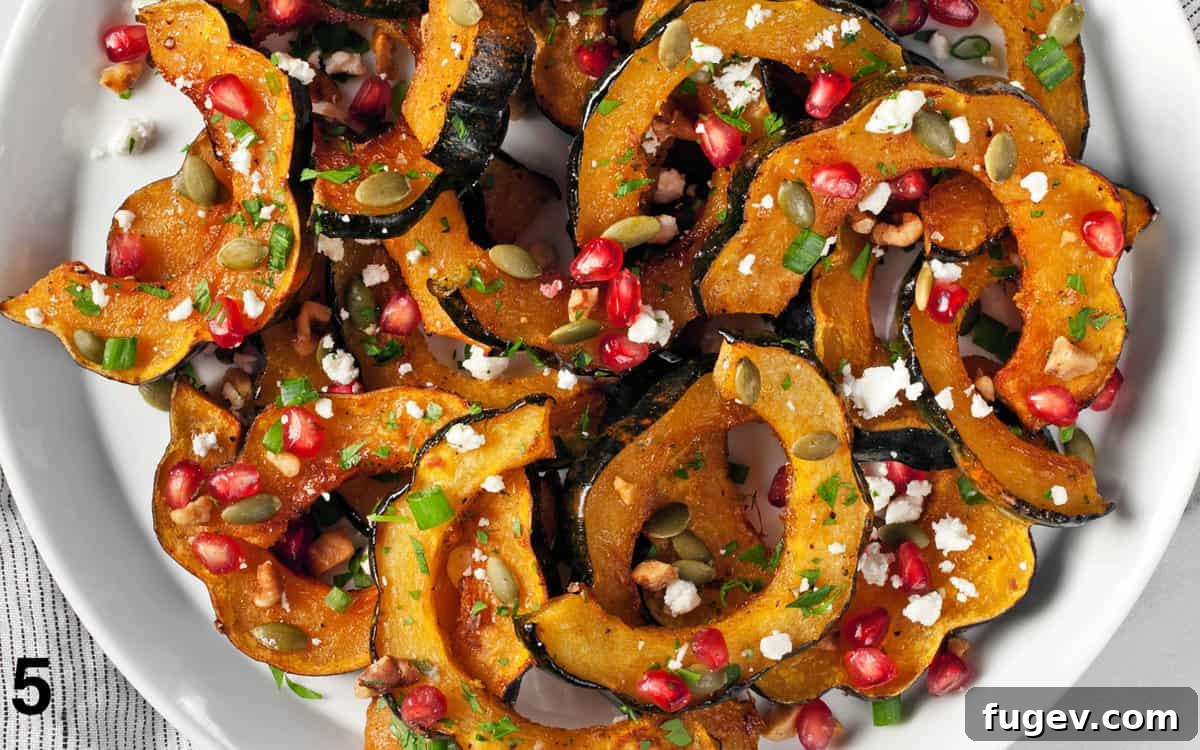
- Garnish and Serve: Once roasted, carefully transfer the hot squash slices to a beautiful serving platter. Immediately sprinkle generously with the roughly chopped walnuts, vibrant pomegranate seeds, crunchy pumpkin seeds, crumbled goat cheese, thinly sliced scallions, and fresh chopped parsley. The warmth of the squash will slightly soften the goat cheese, enhancing its creamy texture. Serve warm and enjoy the symphony of flavors and textures!
Serving Suggestions & Perfect Pairings
This maple glazed roasted acorn squash is more than just a side; it’s a versatile dish that can elevate a variety of meals. Its sweet, savory, and festive profile makes it particularly ideal for the cooler months, from early fall right through the heart of winter.
Think of this vibrant dish for your holiday feasts! The rich colors and comforting flavors, especially with the addition of pomegranate seeds, make it a natural fit for Thanksgiving and Christmas dinner tables. It pairs exquisitely with classic holiday mains such as roasted turkey, glazed ham, or a succulent prime rib. For a vegetarian holiday spread, it stands beautifully alongside lentil roasts or mushroom wellingtons.
Beyond the holidays, this roasted squash is an excellent accompaniment to everyday meals. Serve it alongside:
- Roasted or Grilled Chicken: The sweetness of the squash beautifully complements lean poultry.
- Pork Chops: A classic pairing, the maple glaze is a natural partner for savory pork.
- Salmon or White Fish: Provides a delightful contrast to delicate seafood.
- Steak: A flavorful alternative to traditional potato sides.
- Grain Bowls: Add it to a warm grain bowl with quinoa, farro, and other roasted vegetables for a hearty vegetarian meal.
- Winter Salads: Toss warm pieces into a bed of mixed greens with a light vinaigrette for a fulfilling salad.
Its robust flavors and delightful textures ensure it’s always a welcome addition to any plate.
Leftovers, Storage & Repurposing
While this roasted acorn squash is absolutely divine served fresh and warm straight from the oven, you might find yourself with delicious leftovers. Here’s how to manage them:
- Storage: Allow any leftover roasted squash slices to cool completely to room temperature. Transfer them to an airtight container and store in the refrigerator for up to 3 days. It’s best to store the squash separately from the fresh toppings (pomegranate seeds, goat cheese, scallions, parsley) if possible, to maintain their freshness and texture.
- Reheating: To reheat, arrange the squash slices (without any added fresh toppings) on a baking sheet. Warm them in a preheated 350°F (175°C) oven for about 10-15 minutes, or until heated through. This method helps the squash retain some of its tender-crisp texture. Alternatively, you can gently reheat in a microwave, though the texture might be softer. Once reheated, add fresh toppings as desired.
- Repurposing Leftovers: Don’t let a small amount of leftover squash go to waste! Even if there isn’t enough for a full side dish, it can be wonderfully repurposed:
- In Salads: Dice the roasted squash and toss it into a vibrant fall harvest salad or a dedicated roasted squash salad. Its sweet and savory notes add depth and a hearty element.
- Soups: Blend leftover squash into a creamy winter soup for added body and flavor.
- Grain Bowls: Incorporate diced squash into your breakfast or lunch grain bowls for a nutritious boost.
- Quesadillas or Wraps: Mash or dice the squash and add it to quesadillas with cheese and black beans, or tuck it into wraps with other vegetables.
- Puree: A simple squash puree can be a delicious base for baby food, or mixed into oatmeal for a hint of natural sweetness.
Pro Tips for Perfect Roasted Acorn Squash Every Time
Achieving perfectly roasted, tender, and beautifully caramelized acorn squash is simple with these expert tips:
- Ensure Uniform Slices: The most crucial tip for even cooking is to slice your acorn squash into pieces of roughly the same thickness, ideally ½-inch. This ensures that all the squash pieces cook through at the same rate, preventing some from being undercooked while others are perfectly done. Take your time during the slicing step to achieve this consistency.
- Don’t Overcrowd the Pan: Give your squash room to breathe on the baking sheet. Arranging the slices in a single layer without overlapping is essential. Overcrowding traps steam, leading to soggy squash rather than beautifully browned and caramelized edges. If you have a lot of squash, use two baking sheets.
- Monitor Your Oven & Rotate Pan: Ovens can have hot spots, causing some areas of your squash to brown faster than others. Keep a close eye on your squash, especially during the second half of roasting. If you notice uneven browning, rotate the baking sheet halfway through cooking. If a particular wedge is browning too quickly, you can loosely tent a small piece of aluminum foil over it to slow down the browning process without hindering the cooking of other pieces.
- The “No Parchment Paper” Advantage: While parchment paper is often convenient, for achieving the best caramelization and slightly crispy edges, direct contact between the squash and the hot metal baking sheet is key. The metal conducts heat more efficiently, creating that desirable browning. If you’re concerned about sticking, a light brush of olive oil on the pan before arranging the squash should suffice.
- Taste and Adjust Seasoning: Before adding the toppings, taste a piece of the roasted squash. You might want to add a tiny pinch more salt or a dash of maple syrup, depending on your preference and the natural sweetness of your squash.
- Consider the Maple Syrup Grade: Different grades of maple syrup (e.g., Grade A Amber, Grade A Dark) have varying intensities of flavor. Experiment to find your favorite, but generally, a good quality pure maple syrup will yield the best results.
Frequently Asked Questions (FAQs)
No, you absolutely do not need to peel acorn squash! The skin softens beautifully as it roasts, becoming tender and completely edible. It even adds a pleasant, slightly chewy texture and extra nutrients to the dish. This saves you significant prep time and effort.
For perfectly tender and caramelized acorn squash, I recommend roasting it at 375°F (190°C). This temperature allows the squash to cook through evenly while developing a lovely golden-brown exterior and a slightly sweet glaze.
Typically, acorn squash takes about 35-40 minutes to roast. Start by roasting it on one side for 20 minutes, then flip the slices to the other side and continue roasting for another 15-20 minutes, or until it’s tender, golden, and slightly browned at the edges. The exact time may vary based on your oven and the thickness of your squash slices.
Yes, absolutely! To make this maple roasted acorn squash entirely vegan, simply omit the crumbled goat cheese. The dish is still incredibly flavorful and satisfying without it, or you can opt for a plant-based feta or cashew cream drizzle for a similar creamy texture.
The topping possibilities are endless! Beyond the suggested walnuts, pumpkin seeds, pomegranate, goat cheese, scallions, and parsley, consider adding toasted pecans, chopped dried cranberries or cherries, a sprinkle of toasted shredded coconut, a drizzle of balsamic glaze, or even a different type of crumbled cheese like feta or blue cheese for a stronger flavor. Fresh sage or thyme would also make excellent herbal additions.
More Delightful Squash Recipes to Explore
If you’re a fan of the humble, versatile squash, you’ll love exploring these other delicious recipes, perfect for various seasons and occasions:
- Miso-Glazed Red Kuri Squash: A savory-sweet delight with an umami kick.
- Parmesan Herb Roasted Acorn Squash: A classic savory take on roasting acorn squash.
- Sautéed Butternut Squash and Kale: A healthy and flavorful medley.
- Butternut Squash Black Bean Quinoa: A hearty and complete vegetarian meal.
- Baked Butternut Squash Risotto: A comforting and creamy alternative to traditional risotto.
- Easy Roasted Honeynut Squash: A naturally sweet, smaller squash perfect for roasting.
- Roasted Delicata Squash Salad: A light yet satisfying salad featuring tender delicata squash.
Craving more roasted vegetable inspiration? Dive into our comprehensive seasonal guide to easy roasted vegetable recipes, featuring ideas for pastas, vibrant salads, satisfying sides, and much more to brighten your meals year-round.
Maple Roasted Acorn Squash
Paige Adams
10 mins
35 mins
45 mins
4
Print Recipe
Ingredients
- 2 acorn squash
- 2 tablespoons olive oil
- 1/4 cup maple syrup
- 1/2 teaspoon cayenne pepper
- 1 teaspoon kosher salt
- 1/2 teaspoon black pepper
- 1/4 cup roughly chopped walnuts
- 1/4 cup pomegranate seeds
- 2 tablespoons pumpkin seeds
- 1/4 cup crumbled goat cheese
- 1 scallion, thinly sliced
- 1 tablespoon chopped parsley
Save this recipe
Get it sent to your inbox plus new recipes every week.
Instructions
- Preheat the oven to 375°F (190°C).
- Trim the bottom off the acorn squash and cut it in half lengthwise. Scoop out the seeds and discard them. Slice crosswise into 1/2-inch-thick wedges.
- In a large bowl, whisk together the olive oil, maple syrup, cayenne pepper, salt, and pepper. Add the squash and stir it around, coating all the slices evenly.
- Arrange the squash in a single layer on a baking sheet, making sure the slices are not overlapping.
- Roast the squash for 20 minutes. Flip the squash to the other side and continue roasting for another 15 minutes, until it is tender and golden brown in spots.
- Arrange the roasted squash on a serving platter and top with walnuts, pomegranate seeds, pumpkin seeds, goat cheese, scallions, and parsley. Serve warm.
Notes
You can use chopped almonds or pecans instead of walnuts for a different nutty flavor.
Feta cheese can be substituted for goat cheese if preferred, offering a saltier, tangier profile.
To make this recipe vegan, simply omit the goat cheese.
This roasted squash is best served warm immediately after cooking. Store leftovers in an airtight container in the refrigerator for up to 3 days. Reheat in a 350°F (175°C) oven, but only reheat the squash slices, not the fresh pomegranate seeds or goat cheese, as they are best added fresh.
Nutrition
Calories: 327kcal | Carbohydrates: 40g | Protein: 7g | Fat: 18g | Saturated Fat: 4g | Polyunsaturated Fat: 5g | Monounsaturated Fat: 7g | Trans Fat: 0.003g | Cholesterol: 7mg | Sodium: 644mg | Potassium: 916mg | Fiber: 5g | Sugar: 14g | Vitamin A: 1159IU | Vitamin C: 27mg | Calcium: 129mg | Iron: 3mg
Nutrition information is automatically calculated and should only be used as an approximation.
Additional Info
Side Dish
American
Did you make this recipe?
Mention @lastingredient on Instagram and tag it #lastingredient!