
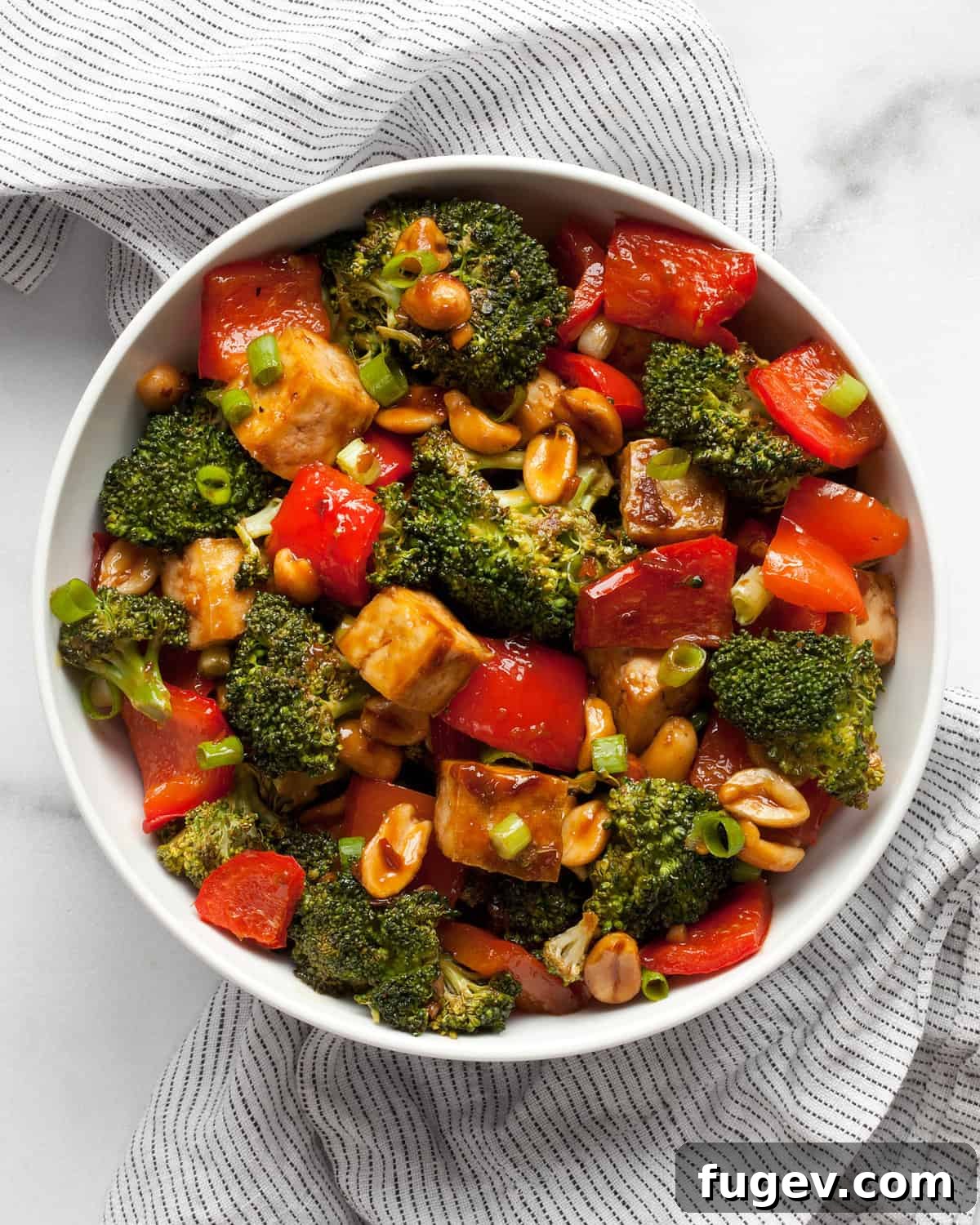
Embark on a culinary adventure with this incredibly flavorful and hassle-free vegan Kung Pao tofu recipe. We’re taking a beloved classic and giving it a modern, sheet pan twist, transforming what’s traditionally a stir-fry into a hands-off roasting masterpiece. Imagine perfectly crisped tofu and tender-crisp vegetables, all roasted together on a single sheet pan, then generously coated in a vibrant, homemade Kung Pao sauce. This innovative approach makes for an effortlessly elegant and profoundly satisfying weeknight dinner that truly delivers on both taste and convenience.
Beyond this fantastic sheet pan creation, explore more of our easy tofu recipes designed for simplicity and incredible flavor. Don’t miss our other crowd-pleasing sheet pan tofu dishes like the irresistible honey garlic tofu, the hearty sweet potato black bean tofu, and the savory teriyaki tofu broccolini.
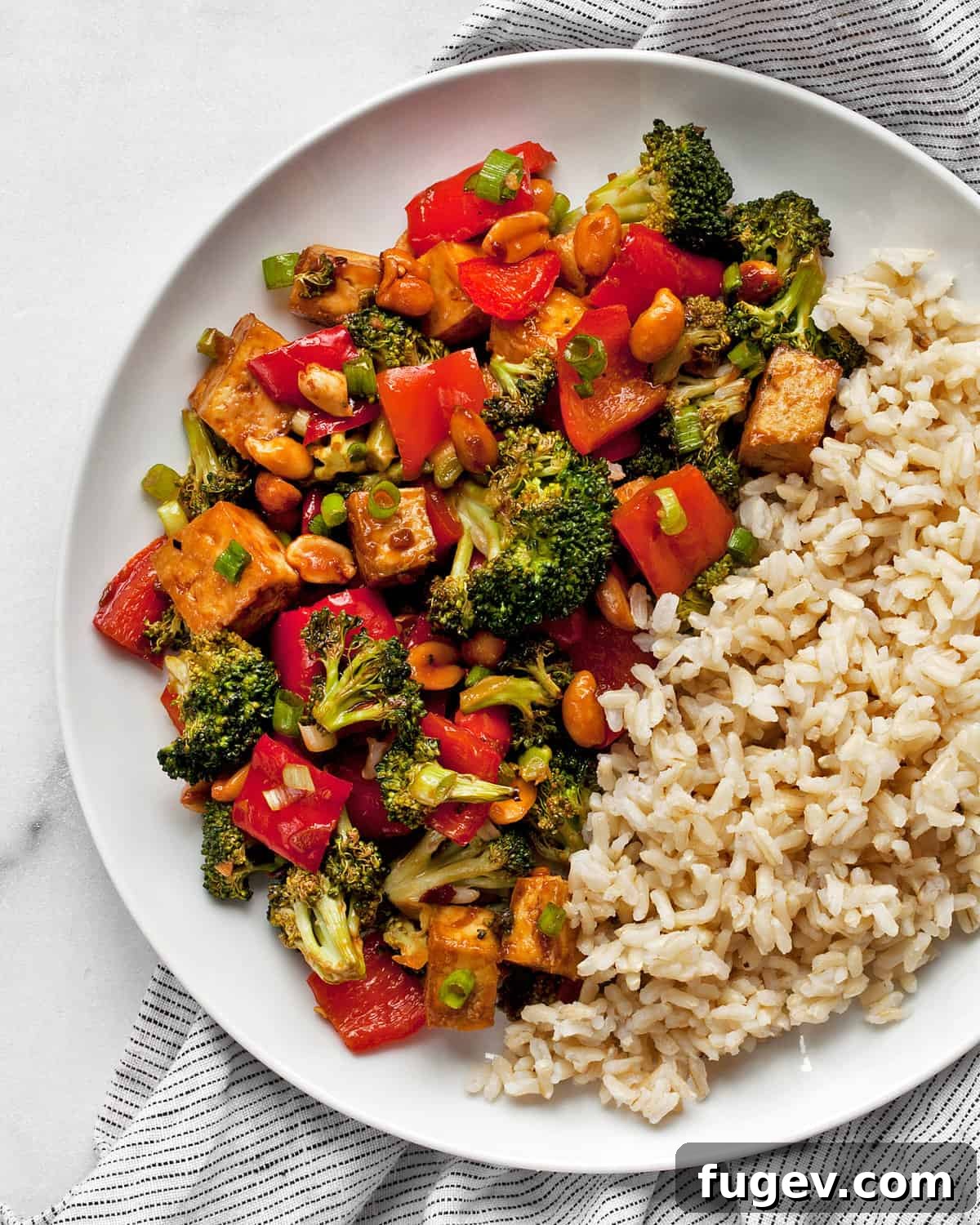
Table of Contents
- Why You’ll Love This Recipe
- Understanding Kung Pao Sauce
- The Healthier Sheet Pan Approach
- Gathering Your Essential Ingredients
- How To Make Vegan Kung Pao Tofu
- Serving Suggestions
- Storing and Reheating Leftovers
- More Tofu Recipes to Explore
- Kung Pao Tofu Recipe Card
Why You’ll Love This Recipe
As a devoted fan of stir-fries, I understand the appeal of a quick, flavorful meal. However, sometimes the constant stirring and tending at the stovetop isn’t ideal for a busy evening. That’s precisely why this **sheet pan vegan Kung Pao tofu** has become a staple in my kitchen. It offers a revolutionary hands-off method that’s just as simple, if not simpler, than a traditional stir-fry, delivering all the robust flavors with significantly less effort.
This recipe epitomizes what a convenient weeknight meal should be: incredibly flavorful, packed with nourishing vegetables, and remarkably straightforward to prepare. The sheet pan technique allows the tofu and veggies to roast to perfection, developing beautiful textures and concentrated flavors that a pan-fry often can’t achieve. It’s a truly healthy dinner recipe that doesn’t compromise on the bold, spicy, and sweet notes characteristic of authentic Kung Pao cuisine.
While the star ingredients roast in the oven, the rich and aromatic Kung Pao sauce comes together swiftly on the stove. In mere minutes, you’ll whisk together the sauce ingredients and let it gently simmer, thickening into a glossy, irresistible coating. This semi-hands-off approach means you can manage other kitchen tasks or simply relax while your dinner practically cooks itself. It’s the perfect blend of efficiency and gourmet taste, making it an absolute must-try for anyone seeking an easy yet impressive plant-based dish.
Understanding Kung Pao Sauce
Kung Pao sauce is a celebrated staple of Sichuan cuisine, a provincial cooking style renowned for its bold and complex flavors. Traditionally, this vibrant sauce is characterized by a harmonious balance of spicy, sweet, savory, and tangy notes, often featuring a distinct numbing sensation from Sichuan peppercorns. It’s typically paired with ingredients like chicken, peanuts, and various vegetables in a dynamic stir-fry. While the authentic version derives its heat and unique “ma la” (numbing spicy) flavor from these peppercorns, our accessible rendition utilizes readily available red pepper flakes to achieve a similar, fiery kick.
The essence of Kung Pao lies in its intricate combination of soy sauce for umami depth, vinegar for a bright tang, and sugar for sweetness, all interwoven with aromatic garlic and ginger. This versatile sauce is not limited to chicken; you’ll often find it gracing dishes with beef, shrimp, or, in our case, delicious plant-based tofu. Its rich, multi-layered profile makes it an incredibly popular and satisfying choice for anyone craving a taste of authentic Asian flavors. This recipe captures that essence, adapting it for a vegan diet and a simpler cooking method without sacrificing any of its iconic deliciousness.
The Healthier Sheet Pan Approach
Opting for a sheet pan method for our plant-based Kung Pao tofu offers significant health advantages compared to traditional stir-frying. When stir-frying, a substantial amount of oil is often necessary to achieve a good sear and prevent sticking. With oven roasting, you can achieve wonderfully browned and crisp tofu using minimal or even just a non-stick cooking spray. This drastically reduces the fat content, making for a much lighter yet equally satisfying meal.
The consistent, dry heat of the oven allows the tofu to develop a delightful chewy texture and a golden-brown exterior, akin to what you’d get from deep-frying but without the added oil. Simultaneously, the vegetables roast beautifully, becoming tender and slightly caramelized, which enhances their natural sweetness. This hands-off cooking method also liberates you from standing over the stove, giving you more freedom to multitask in the kitchen, whether that’s preparing a side dish, cleaning up, or simply taking a moment to relax. It’s a smart, efficient, and health-conscious way to enjoy your favorite Asian-inspired flavors, proving that healthy eating can be both easy and incredibly delicious.
Gathering Your Essential Ingredients
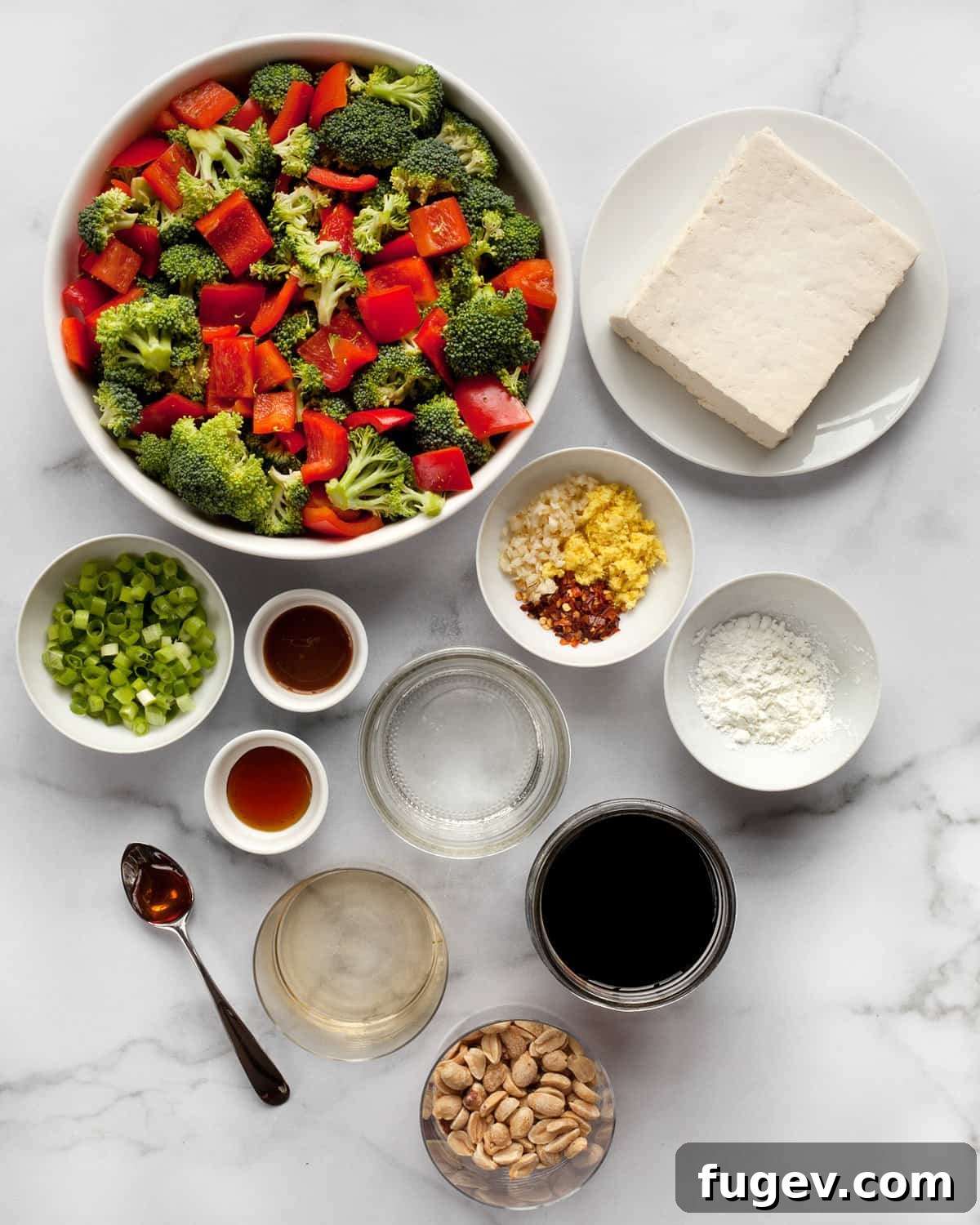
To create this delightful vegan Kung Pao tofu, you’ll need a selection of fresh produce and pantry staples. Here’s a detailed look at the ingredients that make this dish truly special:
- Tofu: The foundation of this plant-based dish. Always opt for extra-firm tofu, as its dense texture holds up exceptionally well during roasting, yielding a satisfyingly chewy bite that beautifully complements the vibrant broccoli florets and bell peppers. Proper pressing is key for the best texture.
- Vegetables: We highly recommend a colorful mix of broccoli and red bell peppers. Their textures and flavors meld perfectly with the Kung Pao sauce. Feel free to customize with other quick-roasting vegetables like cauliflower florets, crisp snow peas, or even other colors of bell peppers, such as green or yellow. The key is to ensure your chosen vegetables are cut into similar-sized pieces for even cooking and spread in a single layer on the sheet pan to prevent steaming.
- Peanuts: Roasted and salted peanuts are not just a garnish; they’re an integral part of the flavor profile, adding a delightful crunch and savory seasoning to the entire dish. Their inherent saltiness means you can often reduce or omit added salt in the sauce, allowing for better control of the overall sodium level.
- Soy Sauce: This provides the essential umami base for our Kung Pao sauce. Using a low-sodium variety is highly recommended, as it gives you more control over the seasoning. For a gluten-free version, simply substitute with tamari, ensuring the rest of your ingredients are also gluten-free.
- Maple Syrup (or Honey): To balance the savory and spicy notes, a touch of sweetness is crucial. Maple syrup is an excellent vegan option, while honey can be used if you’re vegetarian. This natural sweetener integrates smoothly into the sauce, providing a delicate sweetness without the need for granulated sugar.
- Rice Vinegar: Derived from fermented rice, this vinegar adds a mild, yet distinct acidity to the sauce, cutting through the richness and brightening the overall flavor profile. It’s a staple in Asian cooking for its balanced tang.
- Hoisin Sauce: A rich, tangy, and sweet Chinese barbecue sauce made from fermented soybean paste, garlic, chilies, and spices. Hoisin sauce adds incredible depth and a complex sweetness that is vital for an authentic Kung Pao flavor.
- Sesame Oil: Just a teaspoon of toasted sesame oil infuses the sauce with its signature nutty aroma, elevating the entire dish with a hint of warmth and richness.
- Ginger: Freshly minced ginger is non-negotiable for its pungent, zesty, and slightly peppery notes, forming an aromatic cornerstone when combined with garlic and soy sauce.
- Garlic: Two cloves of freshly minced garlic are included to round out the sauce. Its pungent flavor enhances the overall savoriness without overpowering the other ingredients.
- Red Pepper Flakes: These dried chili flakes are our chosen heat source for the Kung Pao sauce, providing a customizable kick. They offer a readily available alternative to Sichuan peppercorns, which aren’t always in every pantry. Adjust the amount from 1-1/2 to 2 teaspoons (or more!) based on your personal spice preference.
- Cornstarch: Whisked with a tablespoon of water, cornstarch acts as a thickening agent, transforming the sauce into a smooth, silky consistency that clings perfectly to the tofu and vegetables.
- Scallions: Freshly sliced green onions are the final flourish. Sprinkled generously over the finished dish, they add a delightful crisp texture, a pop of fresh color, and a subtle oniony zest that brightens every bite. Use both the white and green parts for maximum flavor and visual appeal.
- Brown Rice: A healthy and satisfying side dish, brown rice perfectly complements the Kung Pao tofu, absorbing the flavorful sauce and completing this wholesome meal.
How To Make Vegan Kung Pao Tofu
Creating this easy and delicious vegan Kung Pao tofu is a straightforward process, largely thanks to the efficiency of sheet pan cooking. Follow these simple steps for a perfect meal:
Before you begin, preheat your oven to 400 degrees F (200 degrees C). Lightly grease a large sheet pan with non-stick cooking spray to ensure nothing sticks and for easy cleanup.
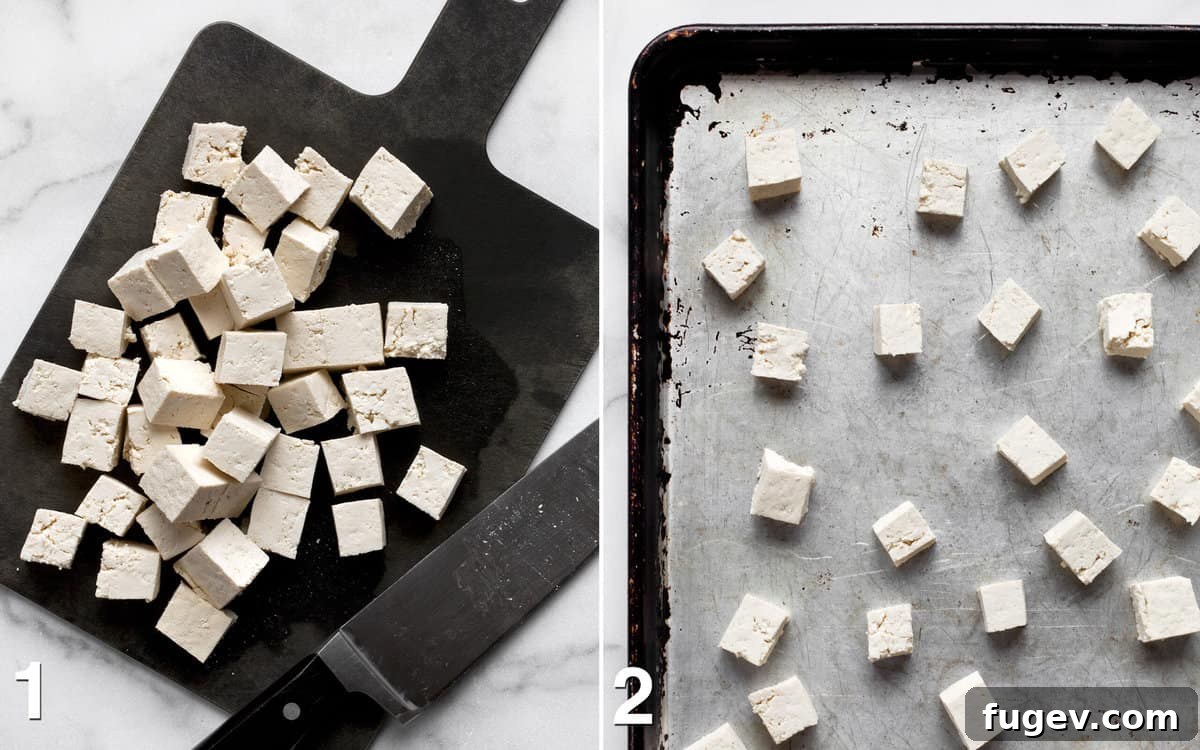
1. Prepare the Tofu: The key to crispy tofu lies in proper pressing. Begin by gently patting the block of extra-firm tofu dry with a clean kitchen towel. Then, wrap it in a fresh set of paper towels and place it on a sturdy surface. Position a heavy object, such as a cast iron pan or a cutting board topped with cans, on top to press out any excess liquid. Allow it to sit for at least 15 minutes. This crucial step removes moisture, allowing the tofu to brown and crisp up beautifully in the oven. Once pressed, cut the tofu into uniform 1-inch cubes.
2. First Bake of Tofu: Arrange the prepared tofu cubes in a single layer on the greased sheet pan, ensuring they are not overcrowded. Place the pan in the preheated oven and bake for approximately 10-12 minutes, or until the tofu pieces begin to turn golden brown and develop a slight crispness on one side.
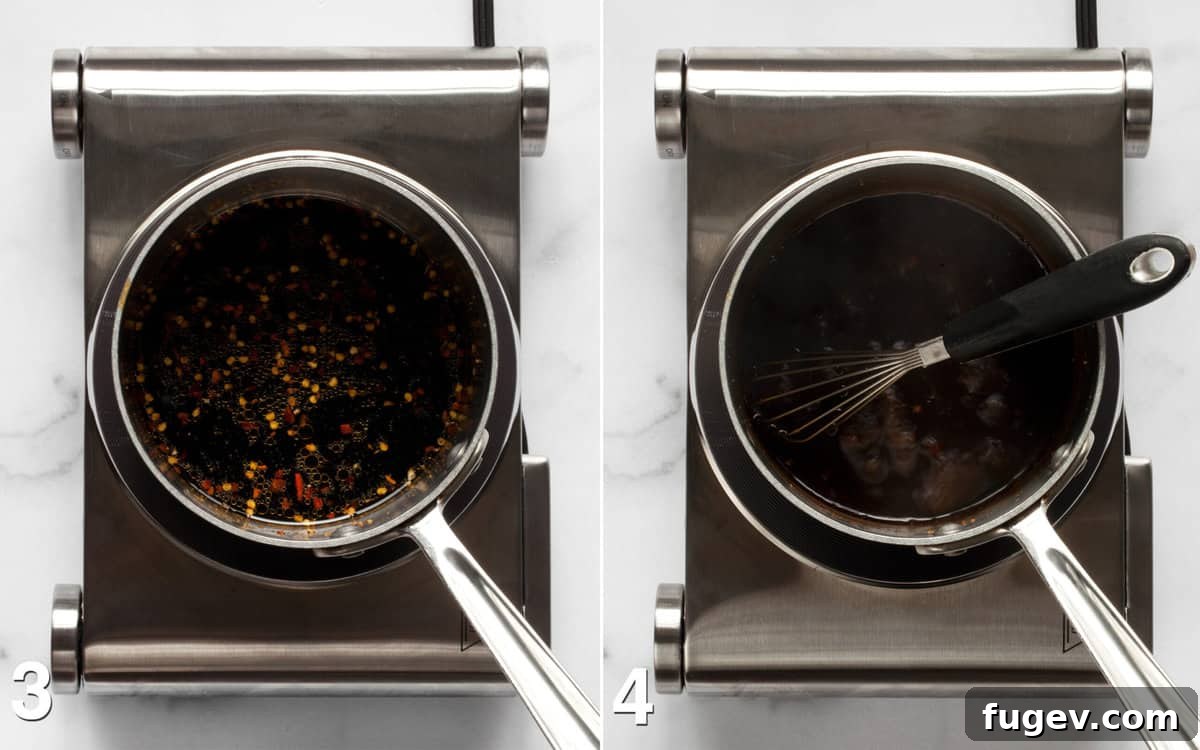
3. Craft the Kung Pao Sauce: While your tofu is in its initial bake, prepare the incredibly flavorful Kung Pao sauce. In a small saucepan, combine the low-sodium soy sauce, 1/4 cup of water, maple syrup (or honey), rice vinegar, hoisin sauce, sesame oil, minced fresh ginger, minced garlic, and red pepper flakes. Place the saucepan over medium heat and bring the mixture to a gentle simmer. Allow it to bubble for a couple of minutes until the aromatics release their fragrant oils.
4. Thicken the Sauce: In a separate small bowl, whisk together the cornstarch with the remaining 1 tablespoon of water to create a smooth slurry. Slowly pour this cornstarch mixture into the simmering sauce in the saucepan, whisking constantly to prevent lumps. Continue to simmer for another 2 minutes, or until the sauce noticeably thickens to a glossy, pourable consistency that will beautifully coat your tofu and vegetables.
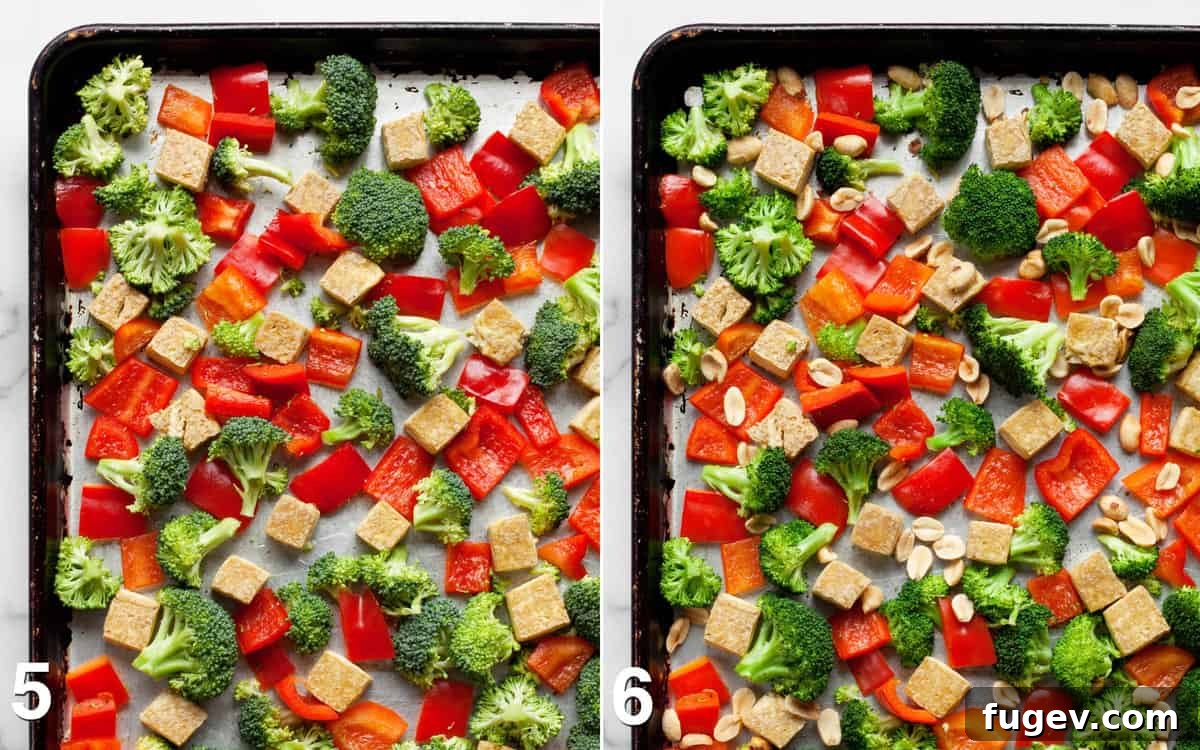
5. Add Vegetables to the Pan: Carefully remove the sheet pan from the oven. Using tongs or a spatula, flip the tofu cubes to expose the unbrowned side. Now, scatter the broccoli florets and diced red bell peppers evenly across the pan, filling the spaces between the tofu. Return the sheet pan to the oven and continue cooking for another 5 minutes.
6. Incorporate Peanuts for Crunch: After 5 minutes, remove the pan from the oven once more. Distribute the roasted salted peanuts evenly over the tofu and vegetables. Return the pan to the oven for a final 5 minutes of cooking. This last bake ensures the tofu is lightly browned and perfectly crispy, and the broccoli is tender-crisp and retains its vibrant green hue.
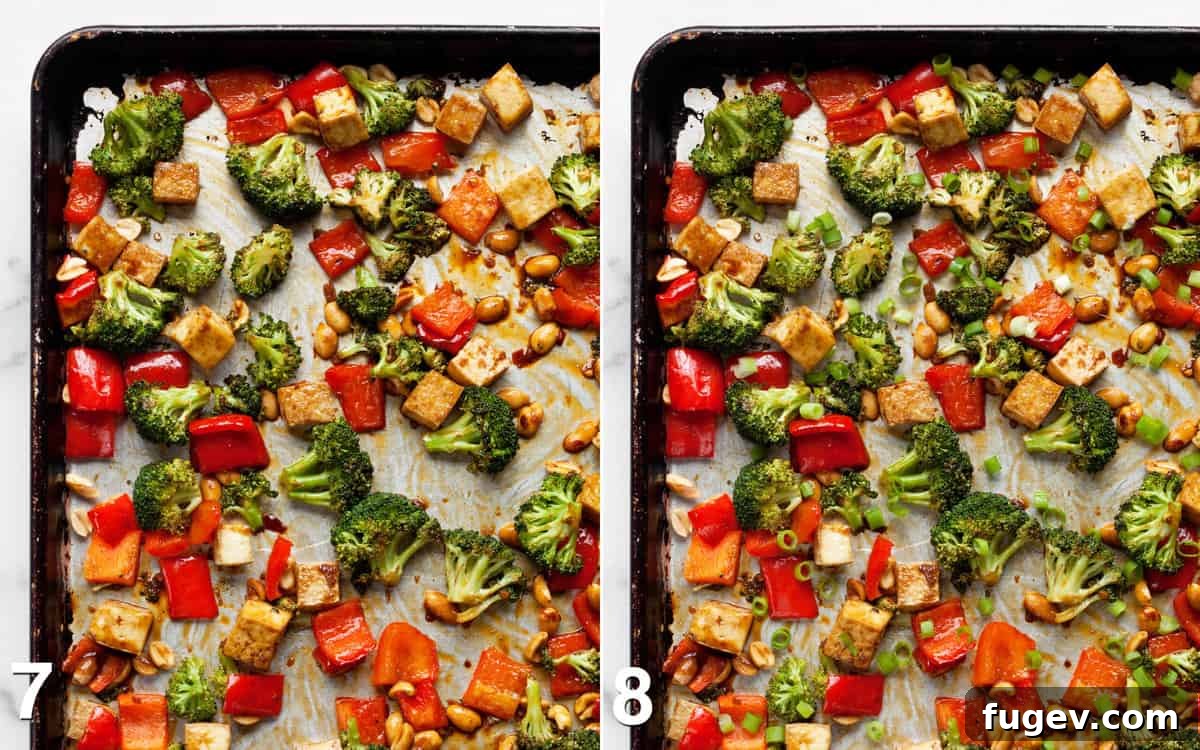
7. Toss with Sauce: Once everything is perfectly roasted, remove the sheet pan from the oven. Spoon about half of the prepared Kung Pao sauce directly onto the pan with the tofu, broccoli, peppers, and peanuts. Gently toss everything together until all the ingredients are evenly coated in the rich, glossy sauce. You can serve any extra sauce on the side for those who prefer an extra drizzle, or save it for another delicious meal.
8. Garnish and Serve: Finish your delectable vegan Kung Pao tofu by generously sprinkling with thinly sliced scallions. The fresh green onions add a burst of color, a hint of freshness, and a subtle oniony flavor that completes the dish.
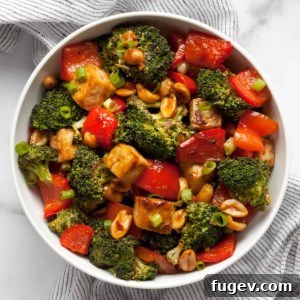
Serve immediately with a hearty portion of brown rice for a complete, nutritious, and incredibly satisfying meal. Enjoy the fruits of your labor!
Serving Suggestions
This vibrant vegan Kung Pao tofu is incredibly versatile and pairs wonderfully with a variety of sides to create a complete and satisfying meal. The most classic accompaniment is simple brown rice, which expertly sops up every drop of that irresistible, savory sauce. However, feel free to experiment with other grain options such as fluffy white rice, nutty quinoa, or even cauliflower rice for a low-carb alternative.
For those who enjoy noodles, consider serving this dish alongside a bed of stir-fried rice noodles or thin vermicelli. The sauce is also fantastic with soba noodles, adding an extra layer of flavor to their earthy taste. To enhance the vegetable content and add refreshing contrast, pair your Kung Pao tofu with a crisp salad. Our Asian cabbage salad with almond ginger vinaigrette offers a zesty crunch, while the cucumber carrot salad provides a cool and refreshing counterpoint. For a protein-packed side, the edamame salad with tahini dressing is an excellent choice. No matter your preference, this vegan Kung Pao tofu is designed to be the star of your plate, offering a burst of flavor that complements many different accompaniments.
Storing and Reheating Leftovers
One of the many advantages of this vegan Kung Pao tofu is how well it keeps, making it an excellent option for meal prep or enjoying convenient leftovers. To maintain optimal freshness and flavor, store any remaining tofu and vegetables in an airtight container in the refrigerator. They will remain delicious for up to 3 days. For best results, it’s often a good idea to store any extra Kung Pao sauce in a separate sealed jar. This prevents the vegetables from becoming overly soggy and allows you to add fresh sauce when reheating.
When it comes to reheating, you have a couple of options. You can enjoy the leftovers cold, which can be surprisingly refreshing, especially if you’re in a hurry. Alternatively, gently warm them in the microwave until heated through. If you prefer a slightly crisper texture, particularly for the tofu, you can reheat the dish in a preheated oven or toaster oven at around 350°F (175°C) for 5-10 minutes, or until warmed through and the tofu regains some of its crispiness. The extra sauce, if stored separately, can also be frozen for up to 1 month, ready to elevate future meals with its rich, savory notes.
More Tofu Recipes to Explore
If you’ve fallen in love with the versatility and deliciousness of tofu, there’s a whole world of plant-based culinary possibilities waiting for you. Tofu is an incredible canvas for flavors and textures, perfect for healthy and satisfying meals. Here are more fantastic tofu recipes to inspire your cooking adventures:
- Tofu Vegetable Stir-Fry with Peanut Sauce: A classic and comforting stir-fry, rich with creamy peanut sauce.
- BBQ Veggie Tofu Skewers: Perfect for grilling season, these skewers are packed with smoky flavor.
- Tofu Pumpkin Curry: A warming and aromatic curry, ideal for cooler weather.
- Grilled Tofu Shawarma: Experience Middle Eastern flavors with perfectly spiced grilled tofu.
- Sesame Tofu Asparagus: A simple yet elegant dish, highlighting fresh asparagus and nutty sesame.
- Ginger Garlic Veggie Tofu Stir Fry: A quick and healthy stir-fry bursting with fresh ginger and garlic.
- Roasted Broccoli Tofu Bowls: Simple, wholesome bowls featuring roasted ingredients for an easy meal.
Additionally, dive into our extensive collection of easy roasted vegetable recipes, thoughtfully organized by season. You’ll find a wealth of tips, go-to ingredient pairings, and many more sheet pan favorites to keep your meals fresh, exciting, and effortlessly delicious throughout the year.
We love hearing from you! If you tried this simple sheet pan recipe and loved it, please consider leaving a rating and a comment below. Your feedback is greatly appreciated!
Kung Pao Tofu
Ingredients
- Non-stick cooking spray
- 14 ounce block extra firm tofu
- 3/4 cup low-sodium soy sauce
- 1/4 cup + 1 tablespoon water
- 1 tablespoon maple syrup or honey
- 1 tablespoon rice vinegar
- 2 teaspoons hoisin sauce
- 1 teaspoon sesame oil
- 1 tablespoon minced fresh ginger
- 2 garlic cloves, minced
- 1-1/2 – 2 teaspoons red pepper flakes
- 1 tablespoon cornstarch
- 1 pound broccoli florets
- 2 red bell peppers, cut in 1/2-inch dice
- 1/3 cup roasted salted peanuts
- 3 scallions, thinly sliced
- Brown rice for serving
Instructions
-
Preheat the oven to 400 degrees F. Grease a sheet pan with non-stick cooking spray.
-
Pat the tofu dry with a towel. Wrap it with a dry towel and place a cast iron pan or cutting board on top to remove more liquid. Let stand for 15 minutes. Cut the tofu into 1-inch cubes.
-
Arrange the tofu in a single layer across the sheet pan and bake for 10-12 minutes.
-
While the tofu is in the oven, make the sauce. In a small saucepan over medium heat, combine the soy sauce, 1/4 cup water, maple syrup, rice vinegar, hoisin sauce, sesame oil, ginger, garlic and red pepper flakes. Simmer the mixture for a couple minutes until it is fragrant. In a small bowl, stir together the cornstarch and 1 tablespoon water and whisk into the sauce. Continue simmering until the sauce thickens, about 2 minutes.
-
Flip the tofu to the other side. Add the broccoli and the peppers to the pan between the cubed tofu. Continue cooking for 5 minutes.
-
Scatter the peanuts across the pan. Cook for an additional 5 minutes until the tofu is lightly browned and the broccoli is tender and bright green, but still crisp.
-
On the pan, toss the tofu, broccoli and peppers with half the kung pao sauce. Extra sauce can be served on the side or saved for another use.
-
Sprinkle with scallions.
-
Serve with brown rice.
Notes
To make the recipe gluten free, use tamari instead of soy sauce, but make sure to check the label on the bottle.
For the vegetables, you can also include cauliflower, snow peas or a mix of bell peppers in different colors. But don’t overcrowd the pan. The veggies should be spread out in a single layer and not on top of each other for optimal roasting.
Store leftovers in an airtight container in the refrigerator for up to 3 days. Keep the sauce in a separate jar. Eat cold or warm in the microwave. You can freeze extra sauce for up to 1 month.
Nutrition
Carbohydrates: 23g |
Protein: 13g |
Fat: 8g |
Saturated Fat: 1g |
Polyunsaturated Fat: 3g |
Monounsaturated Fat: 3g |
Sodium: 1920mg |
Potassium: 817mg |
Fiber: 6g |
Sugar: 8g |
Vitamin A: 2733IU |
Vitamin C: 180mg |
Calcium: 103mg |
Iron: 2mg
Nutrition information is automatically calculated, so should only be used as an approximation.
Additional Info
Originally published January 14, 2019. Updated: October 6, 2022.