
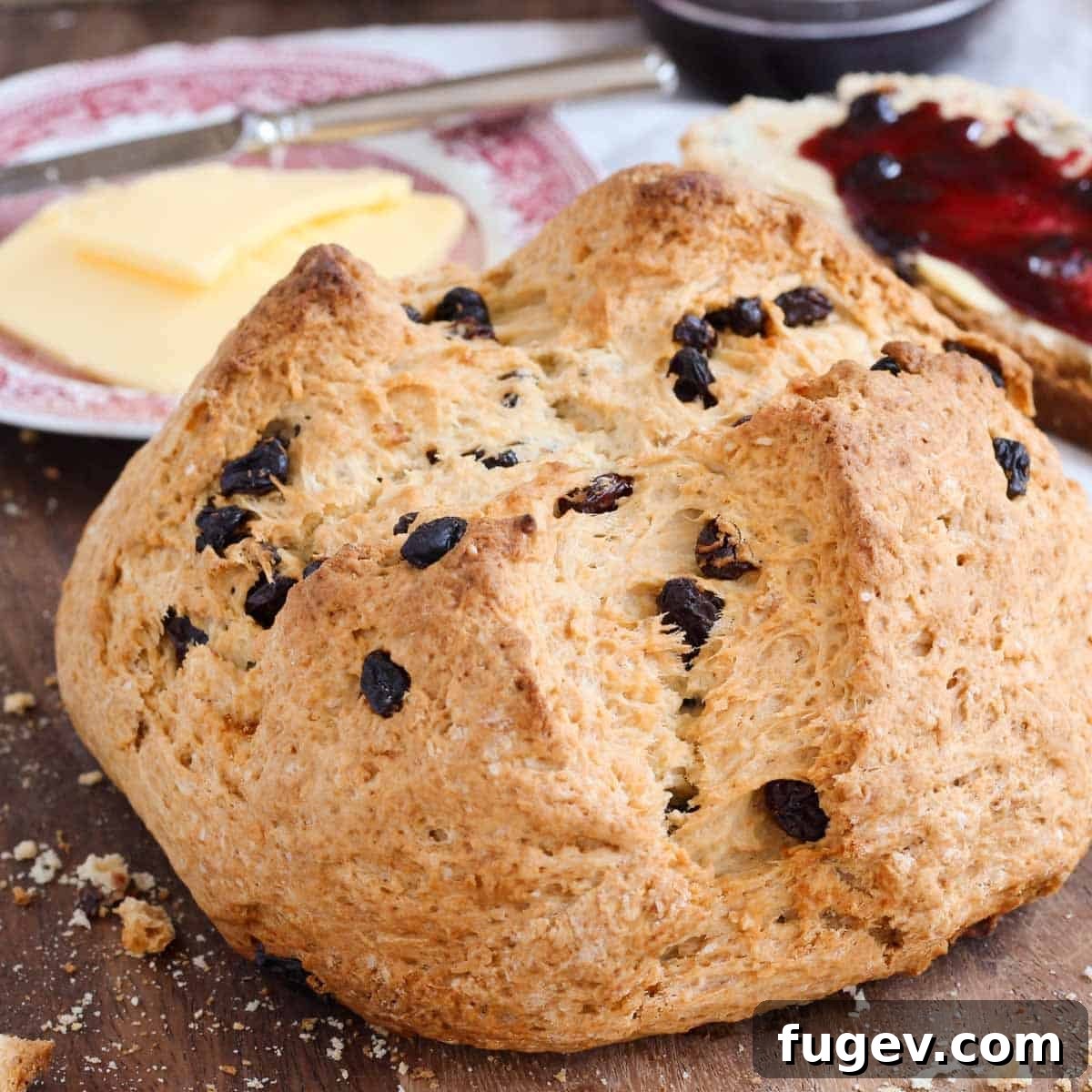
The Ultimate Traditional Irish Soda Bread with Raisins: A Chef’s Perfected Recipe
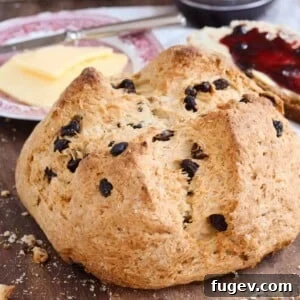
Experience the true taste of Ireland with this meticulously perfected Traditional Irish Soda Bread with raisins. Renowned for its soft, tender interior and wonderfully crusty exterior, this bread boasts a dense yet moist texture that remains delightfully crumbly. There’s truly nothing more comforting than a thick slice, still warm from the oven, generously slathered with rich Irish butter and your favorite fruit jam. This is not just a recipe; it’s a journey back to authentic Irish flavors, free from eggs and any bitterness often found in less balanced recipes.
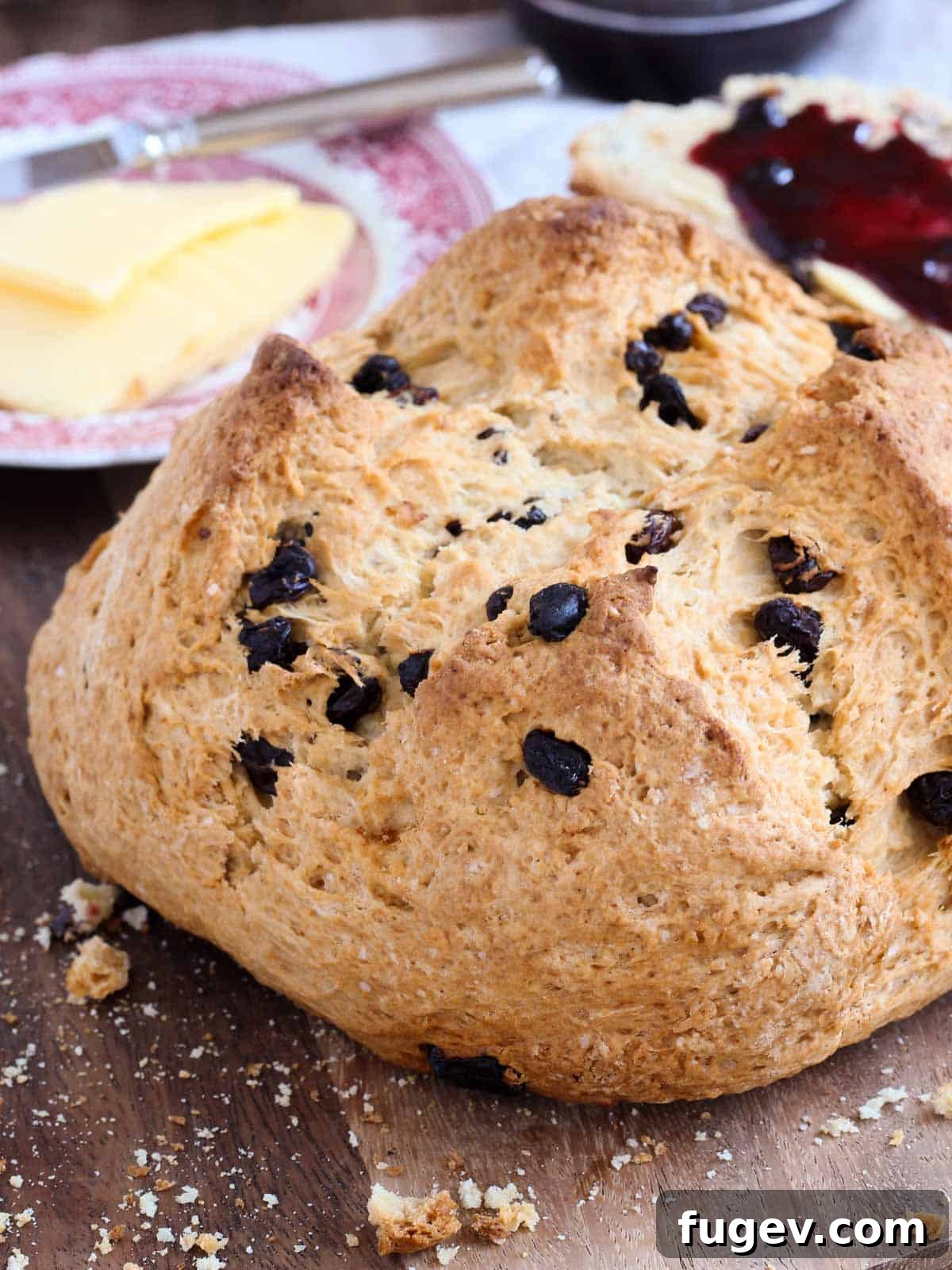
Every baker seeks something unique in their soda bread. For me, the ideal loaf features a tight, incredibly tender crumb that’s never dry, a hint of sweetness beyond what’s strictly necessary for a “bread,” and, crucially, it must contain raisins. This traditional recipe proudly maintains its authenticity by omitting eggs, focusing on the core ingredients that give it its distinctive character.
My quest for the perfect Irish soda bread began years ago, driven by a nostalgic desire to recreate the beloved flavors of my childhood. I baked my way through countless recipes, even the one taught in culinary school, but each fell short – often marred by an overpowering taste of baking soda. Frustrated but determined, I decided to craft my own recipe, meticulously adjusting ratios and techniques. The result is this perfect traditional Irish soda bread with raisins, a testament to countless hours of refinement.
This recipe achieves an impeccable balance: just the right amount of baking soda to react harmoniously with the buttermilk, yielding a delightful rise and a subtly sweet profile. This incredibly easy quick bread isn’t just for breakfast; it’s versatile enough to elevate various meals. Consider using thick slices to sop up the rich gravy from a hearty Dutch oven beef stew or a comforting rosemary lamb stew, offering a wonderful alternative to potatoes. It also makes an exquisite side dish for dipping into this vibrant lemon chicken recipe, a savory chicken shepherd’s pie, or the classic corned beef and cabbage.
Table of Contents
- Why This Irish Soda Bread Stands Out
- Essential Ingredients for Perfect Soda Bread
- Buttermilk Substitute: What to Do if You’re Short
- Creative Variations & Flavor Substitutions
- Chef’s Secrets for Flawless Irish Soda Bread
- Step-by-Step Guide: How to Make Traditional Irish Soda Bread
- Chef Lindsey’s Expert Baking Tip
- Frequently Asked Questions About Irish Soda Bread
- Recommended St. Patrick’s Day Recipes
- Traditional Irish Soda Bread Recipe Card
- Explore More Delicious Recipes
Why This Irish Soda Bread Stands Out as the Best
There are many reasons why this particular Irish soda bread recipe has earned its reputation for excellence:
- Optimized Baking Soda to Buttermilk Ratio: The critical element in preventing the metallic, bitter aftertaste often associated with poorly made soda bread lies in the precise balance of baking soda and buttermilk. Too much soda, and you’ll have unreacted leavening agent ruining the flavor. My recipe ensures every bit of baking soda reacts perfectly, yielding a clean, delightful taste.
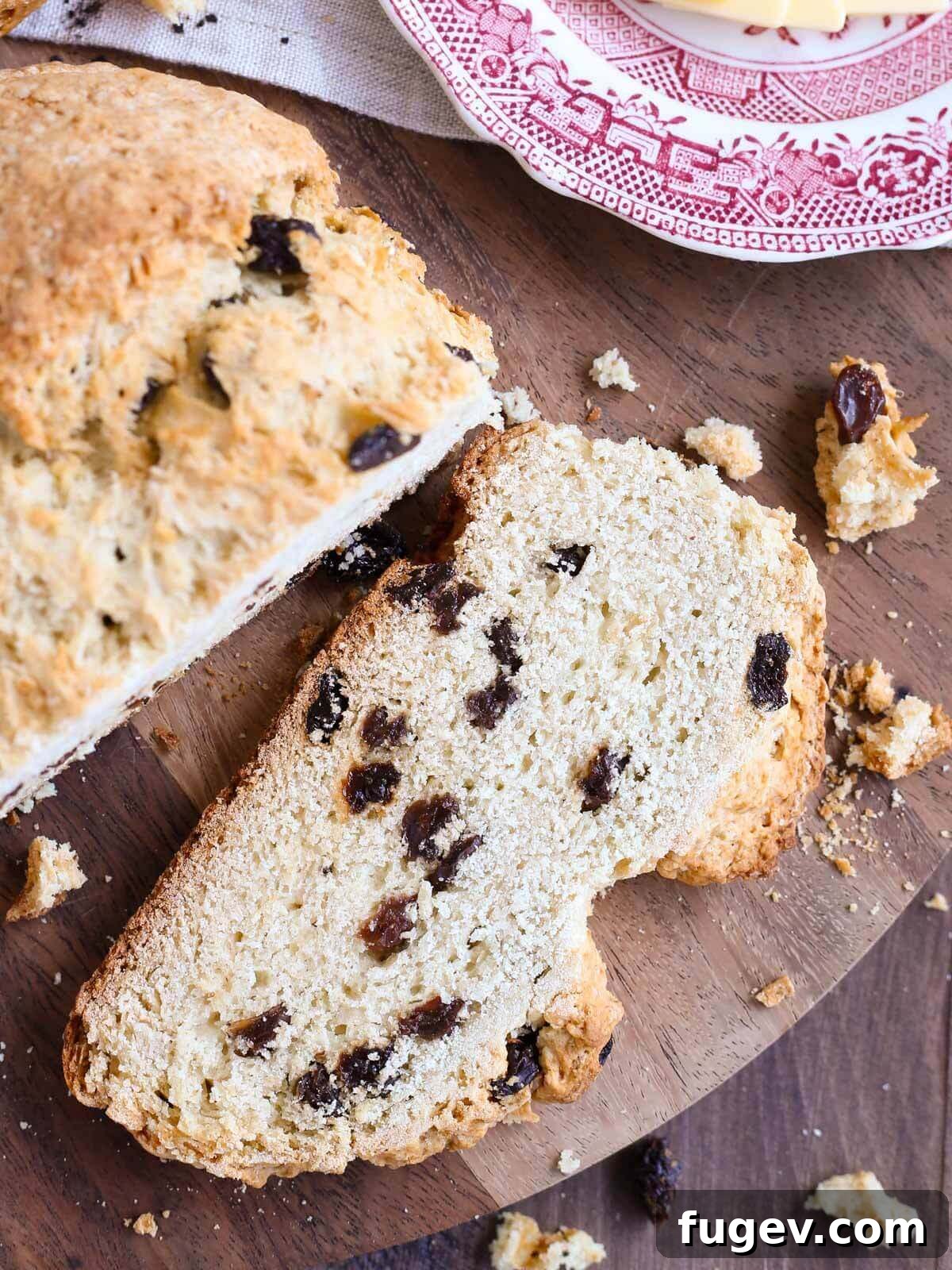
- Achieving a Tender, Moist Crumb: The secret to its incredibly tender and moist texture is the careful incorporation of butter and sugar into the flour. This duo works magic, shortening the gluten strands to create a tight, delicate crumb while simultaneously enriching the bread’s flavor profile. It melts in your mouth with every bite.
- Developed and Perfected by a Professional Pastry Chef: This isn’t just any home recipe; it’s a creation born from years of professional culinary experience. Dissatisfied with existing recipes, I embarked on a mission to engineer the ultimate Irish soda bread. Through countless iterations and refinements in bustling NYC restaurant kitchens, this recipe has been honed to perfection, reflecting a deep understanding of baking science and artistry.
- Effortlessly Simple Quick Bread: Irish soda bread is a true quick bread, meaning it requires no yeast or lengthy proofing times. Its leavening comes solely from baking soda, making it astonishingly fast to prepare – you can have the dough mixed and ready for the oven in as little as 5 minutes! It’s even easy enough to make entirely by hand, perfect for impromptu baking sessions.
Essential Ingredients for Perfect Soda Bread
Crafting exceptional Irish soda bread begins with understanding the role of each ingredient:
- All-Purpose Flour: The foundation of our bread, providing structure and body. Its moderate protein content is ideal for achieving a tender, rather than tough, crumb.
- Baking Soda: The namesake leavening agent. Baking soda reacts instantly upon contact with an acid (buttermilk in this case), creating carbon dioxide bubbles that give the bread its rise. This reaction is crucial not only for leavening but also for neutralizing the soda’s inherent flavor. An excess of baking soda, unreacted, can impart an unpleasant bitter or metallic taste and mouthfeel.
- Baking Powder: To ensure a robust, consistent rise without relying solely on baking soda (which can become bitter if overused), this recipe incorporates a touch of baking powder. This dual-action leavening strategy guarantees optimal lift and a light texture, complementing the soda’s immediate reaction.
- Kosher Salt: Essential for balancing the flavors and enhancing the overall taste of the bread. It plays a vital role in bringing out the subtle sweetness and richness of the other ingredients.
- Granulated Sugar: Beyond just adding a hint of sweetness, sugar works to tenderize the bread by interfering with gluten development, resulting in a softer, more delicate crumb. You can certainly omit it for a purely savory bread, but I find a little sweetness elevates the overall experience.
- Unsalted Butter: Cold, cubed unsalted butter is cut into the flour, contributing to the bread’s tender texture and rich flavor. The butter coats the flour particles, inhibiting gluten formation and creating a melt-in-your-mouth crumb. If you prefer, you can use a high-quality salted Irish butter, such as Kerrygold, and simply adjust or omit the added kosher salt. Don’t forget to save some extra for spreading on your warm slices, perhaps with a dollop of mixed berry jam.
- Buttermilk: This acidic ingredient is the powerhouse that activates the baking soda, driving the leavening process. I specifically developed this recipe using low-fat buttermilk. Full-fat buttermilk can be too thick, potentially requiring more liquid to achieve the correct dough consistency, which can throw off the delicate balance of the recipe.
- Raisins or Currants: While optional, I firmly believe these dried fruits are non-negotiable for the best Irish soda bread. Their sweet, chewy bursts provide a wonderful contrast to the dense, tender crumb. Any leftover raisins can be put to good use in other delightful recipes, such as hermit cookies, sourdough raisin bread, or my dedicated raisin bread recipe!
Please refer to the detailed recipe card below for precise measurements and quantities.
Buttermilk Substitute: What to Do if You’re Short
Running out of buttermilk can be a common kitchen dilemma. While fresh buttermilk yields the best results for this recipe, you can create a decent substitute by adding 1 tablespoon of lemon juice or white vinegar to every cup of regular milk (dairy or non-dairy). Stir it gently and let it sit for about 10 minutes until it visibly curdles and thickens slightly. While this substitute will work to activate the leavening, please note that it might not produce the exact depth of flavor and tender crumb that authentic buttermilk provides.
Creative Variations & Flavor Substitutions
While this traditional Irish soda bread is perfect as is, it also serves as a fantastic canvas for culinary creativity:
- Individual Soda Bread Rolls: For a delightful and quick side dish, transform the dough into individual rolls. Divide the prepared dough into 12 equal pieces, roll each into a smooth ball, and then make a small cross cut on the top with a sharp or serrated knife. Bake for 8-12 minutes, or until a cake tester inserted into the center comes out clean. These make excellent additions to any meal or soup.
- Experiment with Diverse Add-ins: While raisins are my preferred choice, feel free to explore other dried fruits like currants, cranberries, or chopped apricots. For a savory twist, consider adding caraway seeds, which are traditional in some Irish soda bread variations, or a mixture of nuts like walnuts or pecans. To infuse a subtle, floral citrus note, zest an orange or lemon directly into the granulated sugar before mixing it with the other dry ingredients.
- Craft a Savory Soda Bread: Easily pivot to a savory version by omitting the sugar and incorporating a selection of fresh herbs. Finely chopped rosemary, oregano, chives, and sage work beautifully. For an extra layer of flavor and richness, mix in some shredded low-moisture cheese such as Parmesan, Swiss, or Gruyère. This savory loaf pairs wonderfully with soups, stews, or as an accompaniment to a cheese board.
- St. Patrick’s Day Baking Extravaganza: Irish soda bread is a staple for St. Patrick’s Day celebrations. To complete your festive spread, explore other delicious, chef-developed recipes perfect for the occasion. Try these decadent St. Patrick’s Day Guinness Chocolate Cupcakes with Baileys Buttercream, our rich Baileys Irish Coffee Caramel Brownie recipe, or an impressive Guinness chocolate cake with ganache.
Chef’s Secrets for Flawless Traditional Irish Soda Bread
- Incorporate Butter Thoroughly for Tenderness: The key to an exceptionally tender, melt-in-your-mouth texture is to cut the cold butter into the flour mixture until the butter bits are almost imperceptible, resembling fine breadcrumbs. This technique, similar to making delicate blueberry scones, ensures the butter coats the gluten strands. This coating prevents excessive gluten development, resulting in a bread that is tender and flaky, never tough.
- The “Secret” Ingredient: Bake with Love: This might sound cliché, but baking with intention and care truly makes a difference. When adding the buttermilk and gently kneading the dough, use your hands to truly *feel* the dough. Observe its texture; it will tell you when it has absorbed enough liquid and is ready. A gentle touch, infused with “love,” will prevent over-mixing and result in a bread that is uniquely tender and superior to others.
- Master the Cross Cut for a Picture-Perfect Loaf: For that iconic, traditional Irish soda bread appearance, ensure the two cuts forming a cross on top of the dough are at least ½ inch deep. If the cuts are too shallow, the cross will likely disappear into the crust during baking as the bread expands, losing its distinct charm. A deeper cut ensures the cross remains prominent and beautiful.
- Avoid Over-mixing at All Costs: Like all quick breads, Irish soda bread benefits from minimal mixing once the wet ingredients are introduced. Quickly and gently incorporate the buttermilk without extensive kneading. Over-mixing develops gluten excessively, leading to a tough, chewy bread rather than the desired tender crumb. This principle is vital for delicate baked goods, much like achieving perfect chocolate chip scones.
- Embrace the “Quick Bread” Nature: Remember, traditional Irish soda bread is a quick bread, not a yeast bread. This fundamental difference means it relies on chemical leaveners like baking soda (and a touch of baking powder in this recipe) instead of yeast. This allows for rapid preparation, making it an ideal, simple bread recipe you can effortlessly whip up for dinner tonight without any waiting.
Step-by-Step Guide: How to Make Traditional Irish Soda Bread
Follow these precise instructions to bake the most delicious Irish soda bread with raisins. Comprehensive details and measurements can be found in the recipe card below.
- Prepare Your Oven and Baking Surface: Preheat your oven to 375°F (190°C). Line a baking sheet with parchment paper or prepare a cast iron pan (at least 12 inches in diameter) by lightly greasing it.
- Combine Dry Ingredients: In a large mixing bowl, thoroughly whisk together the all-purpose flour, baking soda, baking powder, kosher salt, and granulated sugar until well combined. Alternatively, you can dump the dry mixture onto a clean counter or a large wooden cutting board for easier handling.
- Incorporate the Butter: Scatter the cold, cubed unsalted butter evenly over the dry flour mixture. Using a bench scraper, two knives, or a pastry blender, cut the butter into the flour until the pieces are very small and almost indiscernible, resembling fine breadcrumbs. You can also achieve this by rubbing the butter into the flour with your fingertips until the mixture is uniform.
- Add Buttermilk and Form Dough: Gradually pour in the buttermilk, adding a little at a time. Using a bench scraper, scoop the flour mixture over the buttermilk and gently work it in. Continue this process, being careful not to over-mix. Once a cohesive dough starts to form, discard the bench scraper and use your hands to lightly knead the dough until it comes together. The goal is a dough that is not sticky but also has no dry patches.
- Fold in the Raisins: At this stage, gently and quickly knead in the raisins until they are evenly distributed throughout the dough. Remember, minimal kneading is key to maintaining a tender crumb, so work efficiently.
- Shape and Score the Loaf: Gently shape the dough into a round, rustic loaf. Using a sharp knife, make two deep cuts across the top in the shape of a cross. Ensure these cuts are approximately ½ inch deep; this depth is crucial for the cross to remain visible and beautiful after baking.
- Bake to Golden Perfection: Place the shaped loaf in your prepared cast iron skillet or onto the parchment-lined baking sheet. Bake in the preheated oven for 45-50 minutes. The bread is done when a wooden skewer or cake tester inserted into the center comes out clean. Be mindful not to over-bake, as this can lead to a dry loaf.
Chef’s Note: This step can also be done in a large bowl using a pastry blender or your hands for mixing.
Buttermilk Consistency: You might need slightly more or less buttermilk depending on your flour and environment. The dough should be soft and manageable, not overly wet or stiff.
Stand Mixer Method: For convenience, you can use a stand mixer fitted with the paddle attachment. Add all the dry ingredients and the cold, cubed butter to the bowl. Mix on low speed until the butter is almost completely incorporated into the flour mixture, with no large pieces remaining. Then, with the mixer still on low, slowly pour in the buttermilk just until a cohesive dough forms. Be extra vigilant not to over-mix with a stand mixer. Turn the dough out onto a clean counter and quickly knead in the raisins by hand.
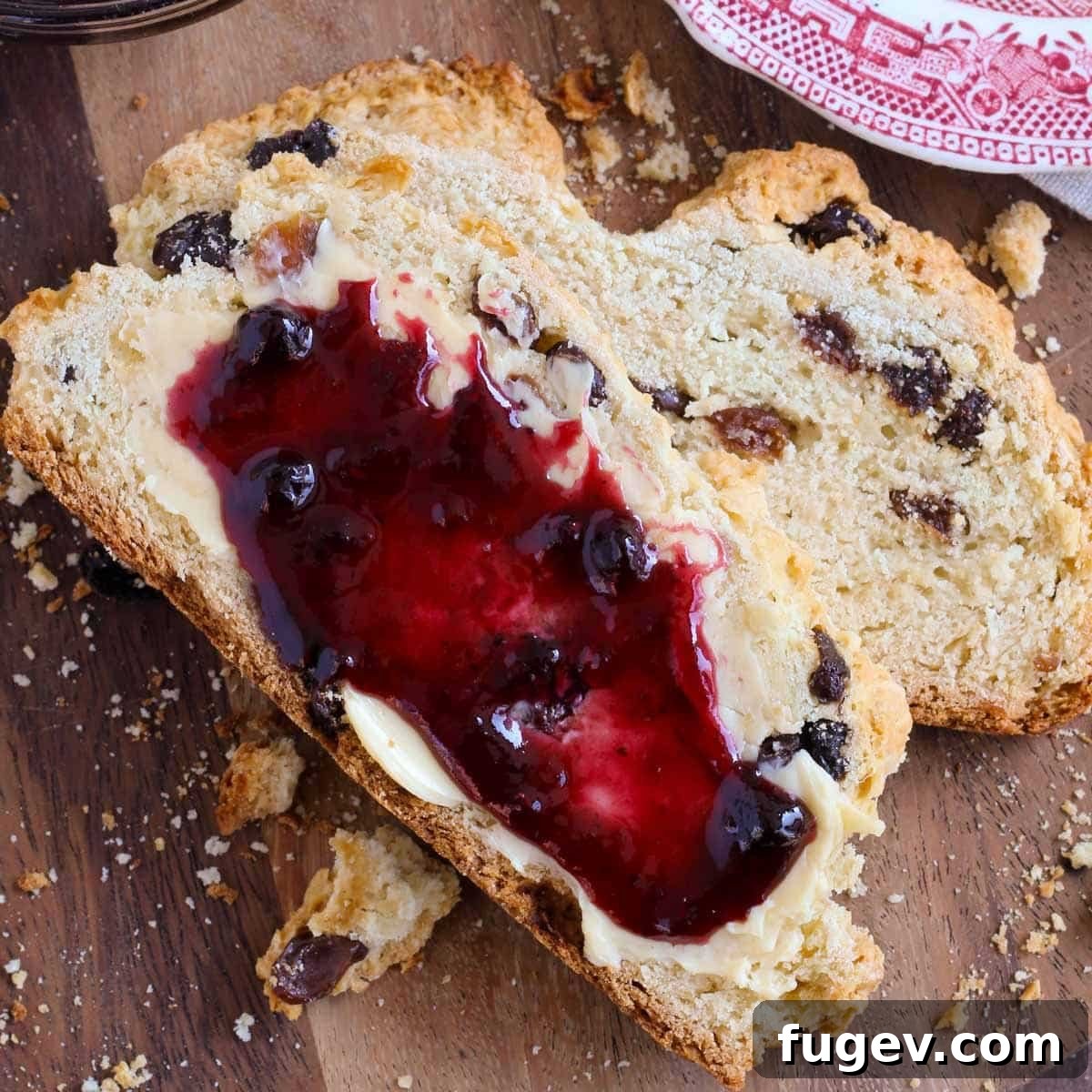
Serve your warm, freshly baked Irish soda bread generously slathered with Irish salted butter and your favorite jam (extra points for homemade quick strawberry jam)!
Chef Lindsey’s Expert Baking Tip
I find there’s no need to heavily flour your hands or the exterior of the dough during shaping. A slight stickiness is a small trade-off for superior flavor and texture. Excess raw flour on the outside of your loaf can lead to a dry, floury taste and an unappealing appearance. Embrace the dough’s natural feel!
Frequently Asked Questions About Traditional Irish Soda Bread
How do you store Irish soda bread to keep it fresh?
Irish soda bread is truly at its peak on the day it’s baked, or the day after. To maintain its freshness, store the bread in an airtight container at room temperature for up to 3 days. For longer storage, it freezes exceptionally well. Simply wrap it tightly in plastic wrap and then foil. Once thawed, toasting slices will revitalize them, making them taste almost as fresh as the day they were baked. Enjoy it either at room temperature or gently warmed.
Does traditional Irish soda bread typically include raisins?
The most traditional Irish soda bread, especially historically, was incredibly simple, relying on just four core ingredients: flour, baking soda, buttermilk, and salt. However, modern interpretations and even regional variations often incorporate butter, sugar, and delightful additions like raisins or caraway seeds. While not strictly “traditional” in the most purist sense, adding raisins is a widely accepted and beloved variation that many consider integral to a delicious loaf today. The beauty of this humble bread lies in its adaptability, with infinite flavor combinations stemming from the original, simple recipe.
Why do many Irish soda breads have a bitter taste?
The bitter or metallic taste sometimes found in Irish soda bread is almost always a result of an imbalanced ratio of baking soda to buttermilk. Baking soda requires an acid (like buttermilk) to react fully. If there’s too much baking soda relative to the acid, some of it remains unreacted after baking. This unreacted soda then imparts an unpleasant, lingering bitter flavor. This common issue is precisely what my perfected recipe addresses, ensuring a harmonious balance that eliminates any bitterness.
Recommended St. Patrick’s Day Recipes & More
Complete your festive celebration or explore other delightful dishes that pair perfectly with this Irish Soda Bread.
Cupcake Recipes
St. Patrick’s Day Guinness Chocolate Cupcakes
Cake Recipes
Decadent Guinness Chocolate Cake
Soup and Stew Recipes
Hearty Dutch Oven Beef Stew
Soup and Stew Recipes
Comforting Rosemary Lamb Stew Recipe
If you’ve tried this delightful recipe and loved it, please consider leaving a 🌟 star rating and share your experience in the comments section below. Your feedback truly brightens my day!
Rating: 5 out of 5 stars (based on 3 ratings)
Traditional Irish Soda Bread with Raisins
Chef Lindsey
This Traditional Irish Soda Bread with raisins is soft inside with a crusty exterior. It has a tender, dense texture that is moist but still crumbly. Nothing is better than a thick slice fresh from the oven generously slathered with Irish butter and fruit jam.
5 mins
40 mins
45 mins
12 slices
Comment
Print Recipe
Ingredients (US Customary)
- 2 ½ cups all-purpose flour
- 1 teaspoon baking soda
- 1 teaspoon baking powder
- ¾ teaspoon kosher salt
- ¼ cup granulated sugar
- ¼ cup unsalted butter, cold and cubed
- 1 cup buttermilk (low-fat recommended)
- ¾ cup raisins or currants
Instructions
- Preheat oven to 375°F (190°C).
- In a medium bowl, whisk together the flour, baking soda, baking powder, salt, and sugar.
- Sprinkle the cold butter cubes over the flour mixture and cut in with a bench scraper or rub in with your hands until the butter pieces are almost indiscernible, resembling fine breadcrumbs.
- Slowly add the buttermilk, scooping the flour over the buttermilk and working it in gently until a cohesive dough forms. Ensure there are no dry patches, but the dough should not be overly sticky. Minimal kneading is essential to prevent toughness.
- Stand Mixer Method: Alternatively, add dry ingredients and cubed butter to a stand mixer bowl with the paddle attachment. Mix on low speed until butter is nearly incorporated. With mixer on low, slowly add buttermilk until dough forms. Turn out and knead in raisins by hand quickly.
- Shape the dough into a round loaf and make two ½ inch deep cuts in the shape of a cross on the top with a sharp knife for the prettiest loaf.
- Place the loaf in a cast iron skillet or on a parchment-lined baking sheet, and bake in the preheated oven for 45-50 minutes, or until a wooden skewer or cake tester comes out clean. Watch carefully to avoid over-baking.
Recipe Video
(Video demonstration of this recipe would typically be embedded here.)
Notes
Yield: 1 round loaf (approximately 12 slices)
Presentation: Make sure the cross cuts on top of the loaf are ½ inch deep to ensure they remain visible and beautiful after baking.
Technique: As with all quick breads, be cautious not to over-mix the dough, as this can lead to a tough, dense bread.
Variations: Experiment with different dried fruits or nuts for a sweet variation, or incorporate chopped fresh herbs and low-moisture shredded cheese for a savory option.
Storage: Irish soda bread is best enjoyed fresh, on the day it’s made or the day after. Store any leftovers in an airtight container at room temperature for up to 3 days. For longer preservation, the bread can be frozen. Serve at room temperature or warm for the best experience.
Nutrition Information (per serving)
Calories: 180 kcal | Carbohydrates: 32g | Protein: 4g | Fat: 4g | Saturated Fat: 3g | Polyunsaturated Fat: 1g | Monounsaturated Fat: 1g | Trans Fat: 1g | Cholesterol: 11mg | Sodium: 305mg | Potassium: 134mg | Fiber: 1g | Sugar: 5g | Vitamin A: 128IU | Vitamin C: 1mg | Calcium: 50mg | Iron: 1mg
Bread
Irish
180
Like this recipe? Leave a comment below!
Explore More Delicious Recipes from Chef Lindsey
I hope you thoroughly enjoyed preparing and tasting this professional chef-tested recipe for Traditional Irish Soda Bread. For more culinary adventures, be sure to check out our other delightful, chef-developed easy quick bread recipes. If you’re ready to explore the world of yeasted breads, why not try your hand at this beloved classic, our rich and aromatic Panettone!