
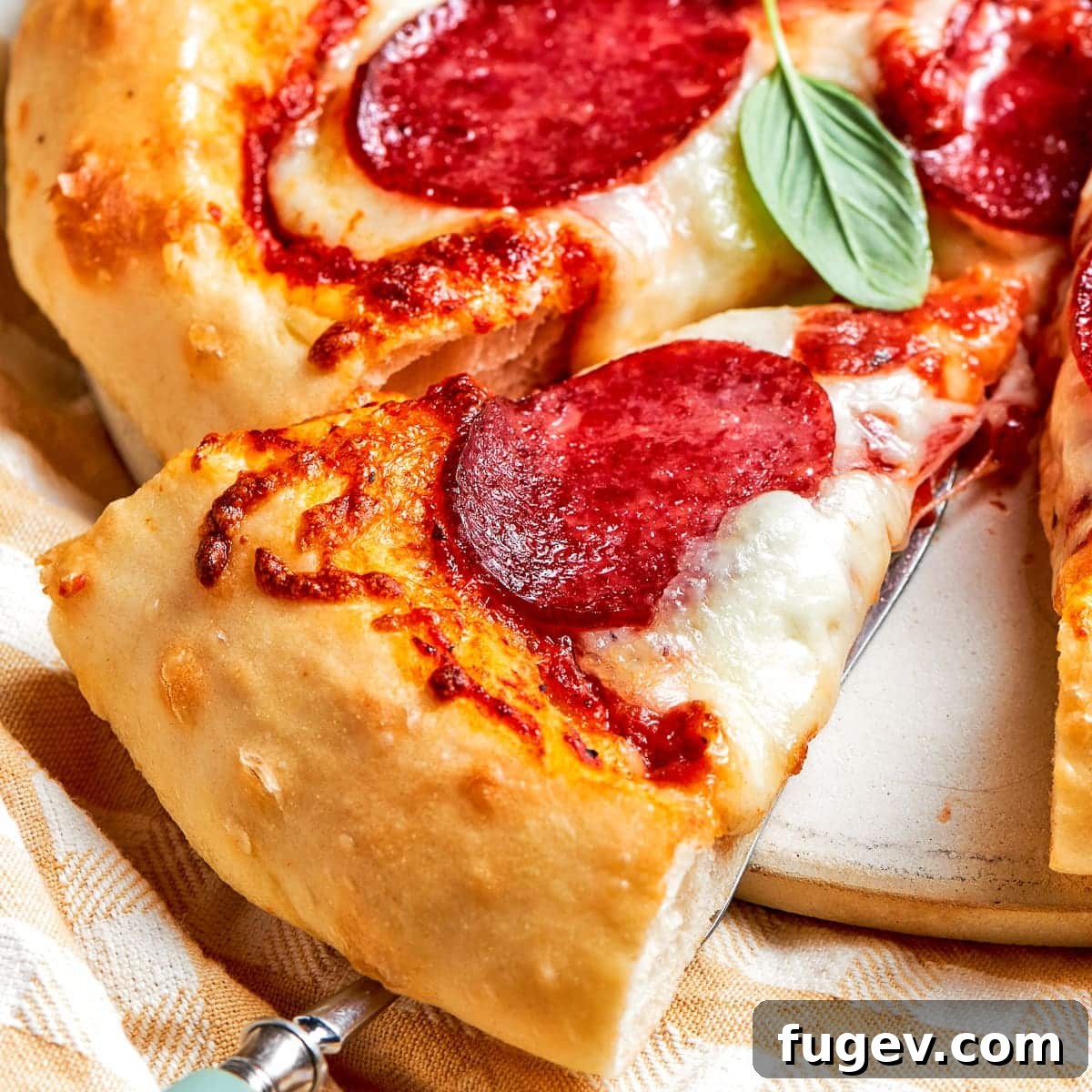
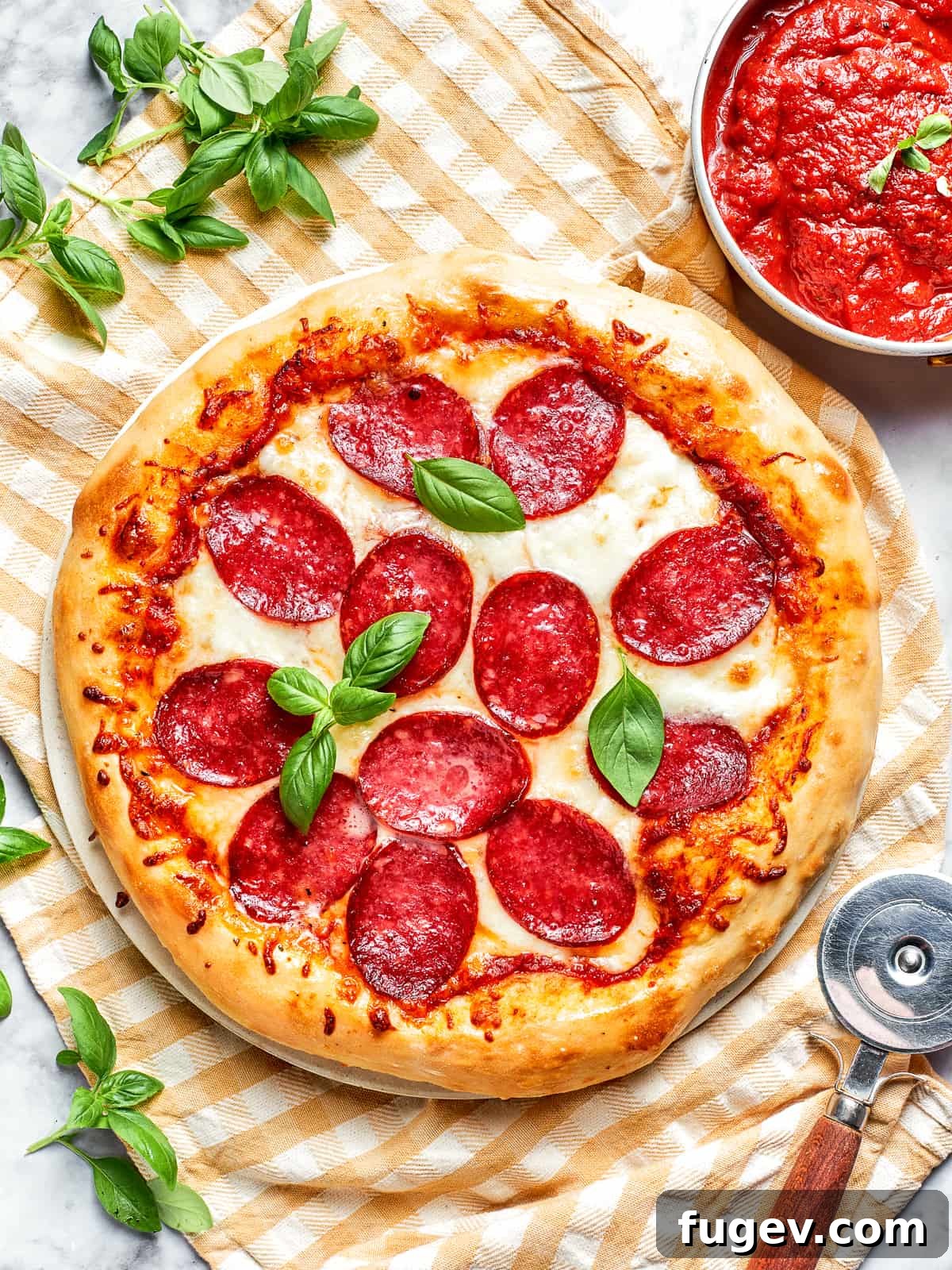
Craving the perfect slice of pizza? Our **Pepperoni Pizza** recipe, featuring a delectable sourdough crust, promises a fresh, fast, and incredibly cheesy experience with next-level texture. Forget soggy bottoms or bland flavors; with just a few simple ingredients and the power of high heat, you’ll achieve those coveted cheese pulls and that authentic pizzeria finish right in your own kitchen!
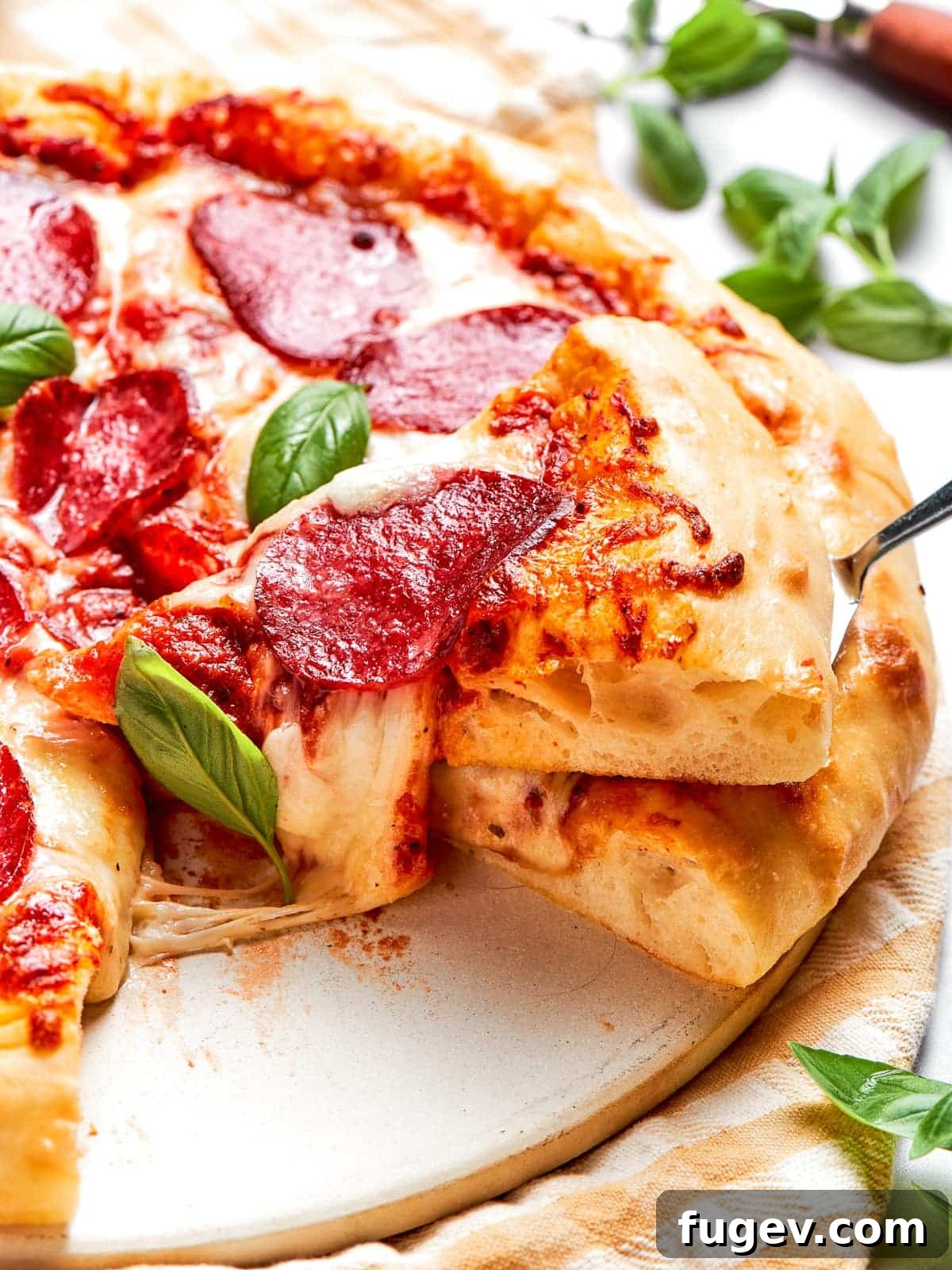
Whether you opt for a convenient store-bought dough or dive into the rewarding process of making your own, this recipe guarantees a superior pizza experience in under 15 minutes of bake time. Imagine bubbling, golden cheese, a perfectly crispy crust, rich and flavorful tomato sauce, and of course, perfectly crisp pepperoni slices. This pizza truly has it all and quickly becomes a cherished Friday night tradition for many families. Be sure to enjoy it hot – but not so hot that you burn the roof of your mouth, a common pizza mishap we’ve all experienced!
The secret to that irresistible stretchy, gooey cheese pull lies in a thoughtful blend of low-moisture and fresh mozzarella. Elevate your cheesy week with other indulgent dishes like our ultimate lasagna or a hearty pizza rustica. For a touch of balance, consider pairing your pizza night with a vibrant chopped kale salad or a refreshing shaved Brussels sprout salad. You’ll quickly become the favorite home cook for both kids and adults!
Table of Contents
- Why You’ll Love This Homemade Pepperoni Pizza
- Essential Ingredients for Perfect Pizza
- Creative Pizza Variations and Topping Ideas
- Professional Tips for Pizzeria-Quality Pizza at Home
- Step-by-Step Guide: How to Make Pepperoni Pizza
- Chef Lindsey’s Expert Dough Tip
- Frequently Asked Questions About Homemade Pizza
- Recommended Recipes to Complement Your Pizza Night
- Full Pepperoni Pizza Recipe
- Before You Go: Explore More Dinner Recipes
Why You’ll Love This Homemade Pepperoni Pizza Recipe
There’s an undeniable joy and satisfaction that comes with making pizza from scratch. This particular pepperoni pizza recipe will quickly become your go-to for several compelling reasons:
- Ultimate Customization at Your Fingertips: The beauty of crafting your own pizza is the absolute control you have over every detail. Love an abundance of cheese? Pile it on! Prefer less sauce? Just a subtle swipe or even a savory white pizza base is possible. If your family has divided opinions on toppings like onions or bell peppers, simply add them to one half, making everyone happy. This freedom ensures every pizza is perfectly tailored to your cravings.
- Guaranteed Crispy Crust, Every Time: Say goodbye to disappointing soggy pizza crusts. Our specialized method utilizes intense heat and a quick bake time, consistently delivering a beautifully golden and wonderfully crisp pizza crust bottom. Each bite offers that satisfying crunch and robust flavor you’d expect from a top-tier pizzeria.
- Pantry Staples, Gourmet Taste: This recipe cleverly uses ingredients you likely already have on hand, transforming humble pantry staples into an extraordinary culinary creation. The difference between store-bought and this homemade marvel is night and day – fresher, more flavorful, and imbued with the love and care of home cooking. It’s an elevated experience without requiring exotic ingredients.
- Faster Than Delivery: Once you get the hang of it, assembling and baking this pizza is remarkably quick. The high-temperature baking ensures your pizza is ready to enjoy in a fraction of the time it takes for most delivery services, meaning less waiting and more savoring.
- A Fun Family Activity: Pizza making is a fantastic activity to share with loved ones. From stretching the dough to arranging toppings, it’s an interactive and enjoyable process that creates lasting memories and delicious results everyone can be proud of.

Essential Ingredients for Perfect Pizza
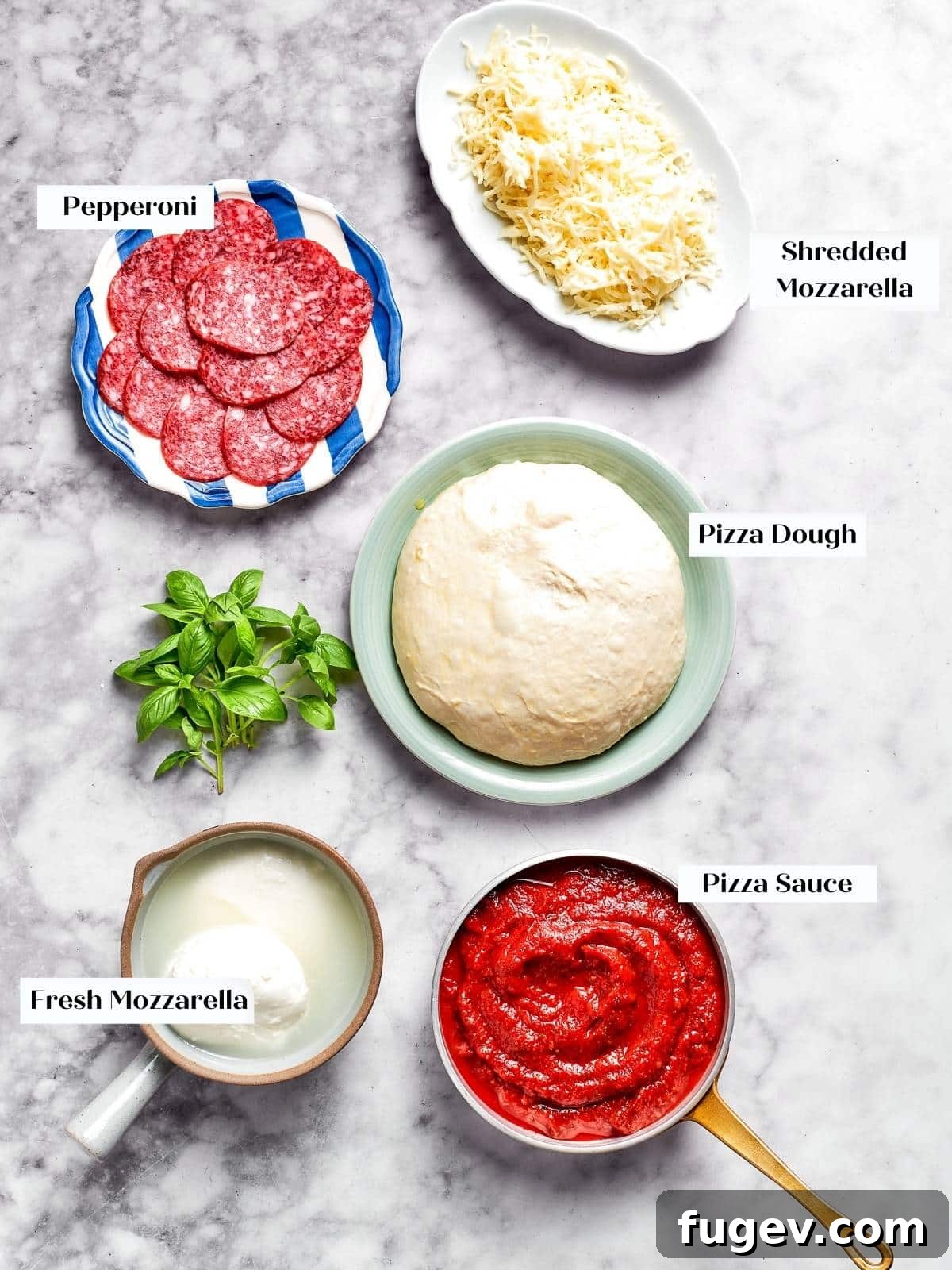
Creating an outstanding pepperoni pizza starts with high-quality ingredients. Here’s a closer look at what you’ll need:
- Pizza Dough: The foundation of any great pizza! While you can certainly use your favorite store-bought pizza dough for convenience, for an unparalleled depth of flavor and incredible texture, I highly recommend my homemade sourdough pizza dough recipe. Sourdough offers a unique tangy flavor and a wonderfully chewy yet crisp crust. If you opt for a yeast-free sourdough, remember to give it ample time for its final proof to develop those delicious air pockets. If using regular store-bought dough, ensure it’s at room temperature for easier stretching.
- Pizza Sauce: The robust flavor of a good pizza sauce is crucial. I’ve consistently used my tried-and-true homemade pizza sauce recipe for years, which delivers a perfect balance of sweet and savory. However, a high-quality jarred pizza sauce can also be a fantastic time-saver, just ensure it’s not too watery to avoid a soggy crust.
- Mozzarella Cheese: For that iconic, irresistible cheese pull and rich flavor, I advocate for a dynamic duo: a mixture of low-moisture shredded mozzarella and fresh mozzarella. The low-moisture shredded variety melts beautifully and provides a good base, while fresh mozzarella adds an incredible creaminess and superior flavor. Be mindful that fresh mozzarella has a higher water content, so ensure it’s well-drained or sliced thinly to prevent sogginess and potential drips onto your hot oven floor—which can lead to a holy mess!
- Pepperoni Slices: The star of the show! My personal preference for the best pepperoni pizza often leans towards turkey pepperoni for a slightly lighter option, but classic pork pepperoni is equally delicious if that’s what you prefer. Experiment with different styles: smaller “cup-and-char” pepperonis that curl up and crisp at the edges, or larger, thinner slices for broader coverage. The choice is yours for that perfect savory, slightly spicy kick!
- All-Purpose Flour or Cornmeal: Essential for a smooth transfer of your pizza to the hot oven, preventing sticking.
Refer to the complete recipe card below for precise measurements and quantities of each ingredient.
Creative Pizza Variations and Topping Ideas
While classic pepperoni pizza is a masterpiece on its own, homemade pizza offers endless possibilities for culinary creativity. Don’t be afraid to experiment and make it your own!
- Reinvent Leftovers for Pizza Night: Pizza is the ultimate canvas for giving new life to forgotten ingredients. Transform those leftover roasted vegetables like mushrooms, olives, or broccoli by cutting them into bite-sized pieces. Crumble up turkey burgers or dice remnants of a sausage, bell peppers, and onion stir-fry. Once melted together with glorious cheese, no one will even guess they were leftovers – they’ll just enjoy the delicious new creation!
- Ignite the Heat: Make it Spicy! For those who love a fiery kick, introduce some heat to your homemade pepperoni pizza. Sprinkle on crushed red pepper flakes, layer thinly sliced jalapeños, or finish with a drizzle of spicy hot honey after baking. Remember to balance the heat with a pinch of salt to enhance all the flavors.
- Switch Up the Sauce Game: While classic tomato sauce is fantastic, don’t limit yourself! Try a creamy garlic sauce for a rich, savory base, perhaps with an extra dash of garlic powder for intensity. A vibrant pesto sauce can also offer a fresh, herbaceous twist. For an extra flourish, garnish your finished pizza with fresh basil leaves or peppery arugula to brighten the flavors and add visual appeal.
- Add Fresh Greens: A handful of fresh arugula, spinach, or basil tossed on top immediately after the pizza comes out of the oven adds a wonderful fresh counterpoint to the rich, hot toppings.
- Gourmet Cheese Blends: Beyond mozzarella, consider adding a sprinkle of Parmesan, provolone, or a sharp cheddar for added complexity and nuttiness. A touch of smoked gouda can introduce a unique smoky note.
- Additional Meats: Craving more protein? Cooked Italian sausage, crumbled bacon, or even thinly sliced prosciutto can elevate your pepperoni pizza to a gourmet level.
- Vegetable Power-Up: Incorporate finely diced bell peppers, onions (caramelized for sweetness!), black olives, or sautéed mushrooms. Remember to pre-cook any high-moisture vegetables to prevent a soggy crust.
Professional Tips for Pizzeria-Quality Pizza at Home
Achieving a truly exceptional homemade pizza often comes down to a few key techniques and insights. These professional tips will help you elevate your pizza from good to gourmet:
- Master the Art of Topping Control: Resist the urge to overload your pizza with too many toppings. Excessive toppings introduce too much moisture, preventing your crust from achieving that desirable crispiness, and can weigh down the dough, leading to an undesirable “New York flop.” If you’re not concerned about the perfect structural integrity (and are willing to eat with a knife and fork, no judgment here!), then pile them on. Otherwise, aim for a balanced distribution to allow the crust to shine.
- Utilize Parchment Paper for Effortless Transfer: Simplify the assembly and transfer process by building your pizza on a piece of parchment paper placed on a cutting board or an upside-down baking sheet. This creates a non-stick surface that makes sliding the pizza onto a hot pizza stone or baking sheet much smoother, greatly reducing the risk of a misshapen or spilled pizza.
- Pre-cook High-Moisture or Dense Toppings: For pizzas that bake quickly at high temperatures, like this one, it’s best to pre-cook certain toppings. Onions, peppers, mushrooms, and any meat like sausage or chicken should be sautéed lightly in a little olive oil beforehand. Even thawed frozen vegetables, which are typically blanched, can benefit from a quick pat dry or sauté. This prevents them from releasing excess moisture onto your crust during baking and ensures they are cooked through when the pizza is done.
- The Importance of High Heat: A truly great pizza needs intense heat. Preheat your oven to its highest setting (typically 500-550°F / 260-290°C) with a pizza stone or steel inside for at least 30-60 minutes. This creates a super-hot surface that mimics a professional pizza oven, ensuring a rapid bake and a perfectly blistered, crispy crust.
- Don’t Overwork Your Dough: When stretching, be gentle. Overworking the dough can develop too much gluten, making it tough and difficult to stretch. Let the dough relax and do most of the work for you.
- Salt Your Dough, Not Just Your Sauce: Incorporate salt directly into your pizza dough recipe. This enhances the flavor of the crust itself, making it more than just a vehicle for toppings.
- Allow for a Brief Rest After Baking: Once your pizza comes out of the oven, allow it to rest for 1-2 minutes on a cutting board before slicing. This allows the cheese to set slightly, preventing it from sliding off, and makes for cleaner, more manageable slices.
Step-by-Step Guide: How to Make Pepperoni Pizza
Follow these detailed steps to create a show-stopping homemade pepperoni pizza. Further details and measurements can be found in the recipe card below!
Step 1: Prepare Your Pizza Dough. If you’re using homemade sourdough pizza dough, remove it from the refrigerator about 1-2 hours before you plan to bake to allow for a final proof at room temperature. This step is crucial for developing flavor and creating a light, airy crust. If your dough was frozen, ensure it’s fully thawed in the fridge overnight. For store-bought dough or freshly made non-sourdough dough, you can often use it directly from the counter or fridge without an extended rest, as long as it’s pliable.
Step 2: Preheat Your Oven to Perfection. Preheat your oven to its maximum temperature, typically 500°F (260°C). If you have a pizza stone or a baking steel, place it in the oven during preheating. This creates a super-hot cooking surface that will deliver a beautifully crispy crust. If you don’t have a stone, a sturdy metal baking sheet will work; simply build your pizza directly on it. While the crust might not be as intensely crisp, it will still be utterly delightful.
Step 3: Prepare Your Pizza Peel or Baking Sheet. If using a pizza stone, generously flour your pizza peel, or dust it with cornmeal. Cornmeal acts like tiny ball bearings, helping the pizza slide off smoothly. If you’re baking on a metal baking sheet, sprinkle a light layer of cornmeal directly onto the sheet.
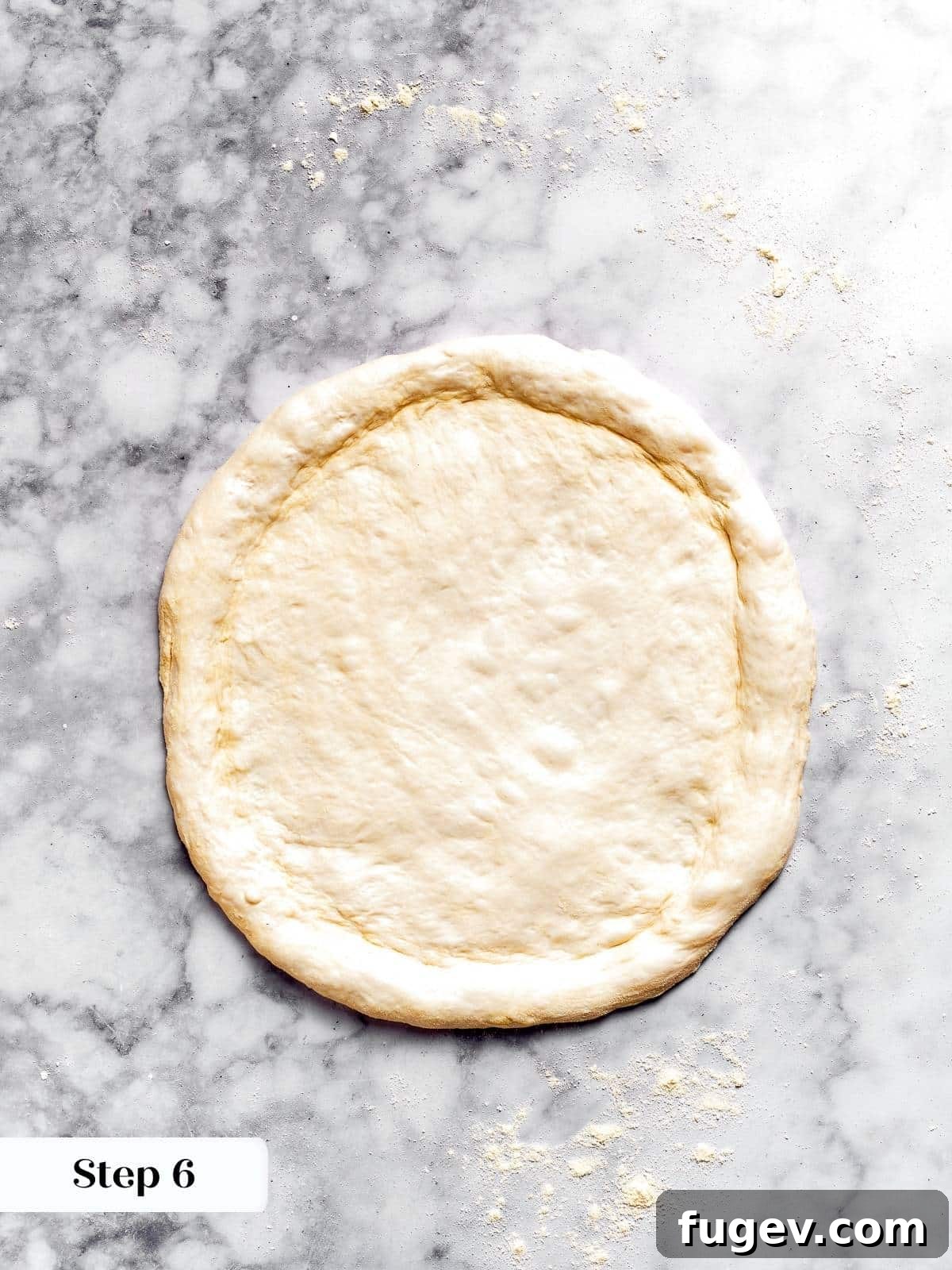
Step 4: Shape the Dough for Your Crust. Place one piece of dough onto a lightly floured flat surface. Dust the top of the dough with a little extra all-purpose flour. Using floured hands, gently tap your fingertips around the rim of the dough, about ¾ inch inside the edge. This action creates a clear boundary for your crust, allowing you to stretch the inner part of the dough while preserving a thicker, airy rim. If you prefer a very thin crust pizza and aren’t aiming for a classic New York-style edge, you can use a rolling pin, but for an authentic, chewy-crisp crust, hand-stretching is key. If a large bubble forms during shaping, simply pop it gently; it will become outrageous and beautiful once it hits the hot oven. Think of creating a slight trench around the edge and mounding the center to effectively form your crust.
Step 5: Master the Hand-Stretching Technique. Carefully lift the dough and place it on top of both your closed fists. Using a gentle outward motion, slowly separate your fists to thin out the center of the pizza. Work quickly and continuously move to different sections of the dough to ensure it thins out evenly and doesn’t become too fragile in one spot. When the dough is at room temperature, it’s quite pliable and typically requires only 3-5 gentle stretches to reach the desired thickness.
Step 6: Transfer and Reshape Your Dough. Once stretched, gently place the dough onto your floured pizza peel or dusted baking sheet. If needed, gently reshape it to form a perfect circle or your desired pizza shape.
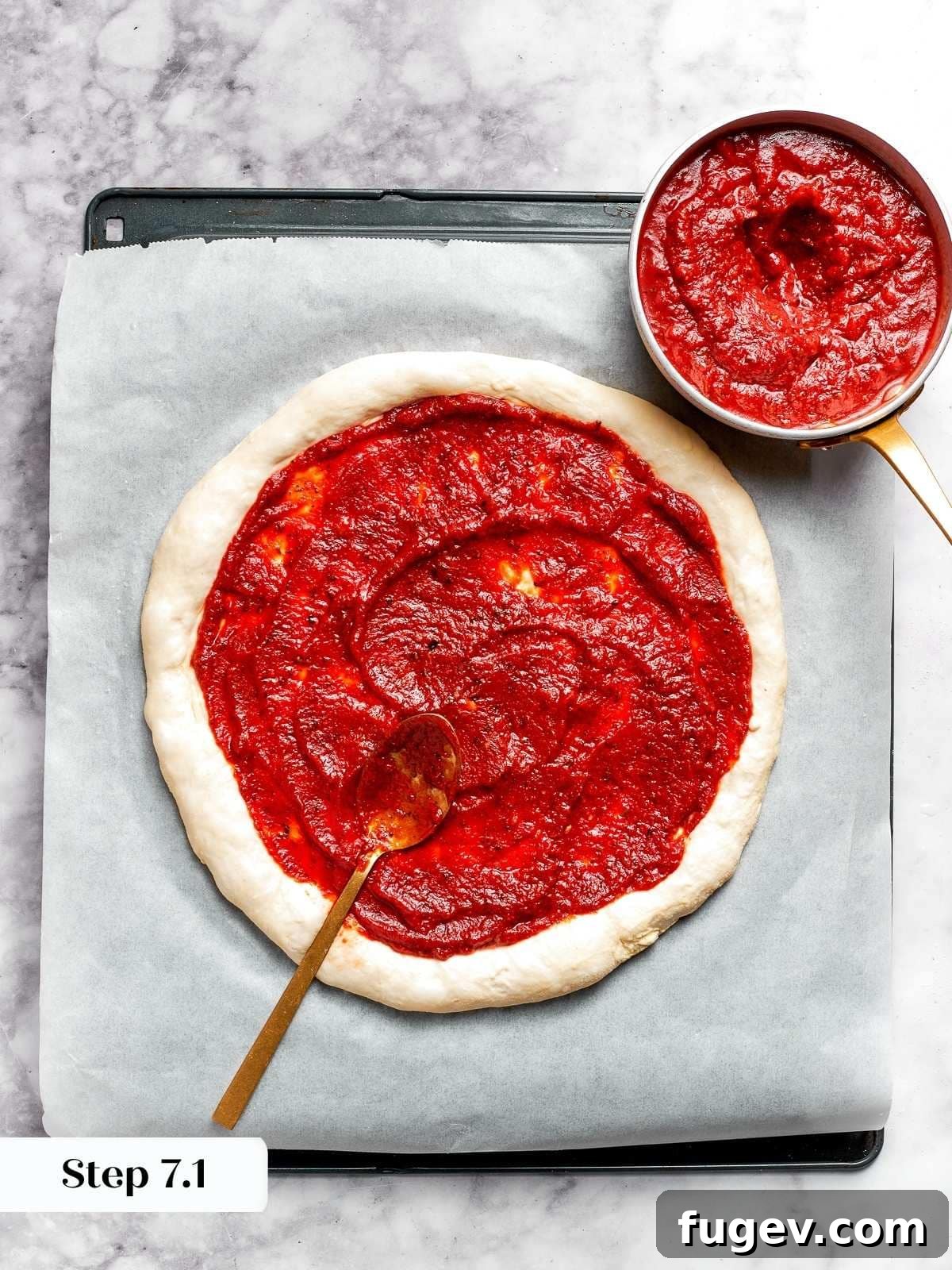
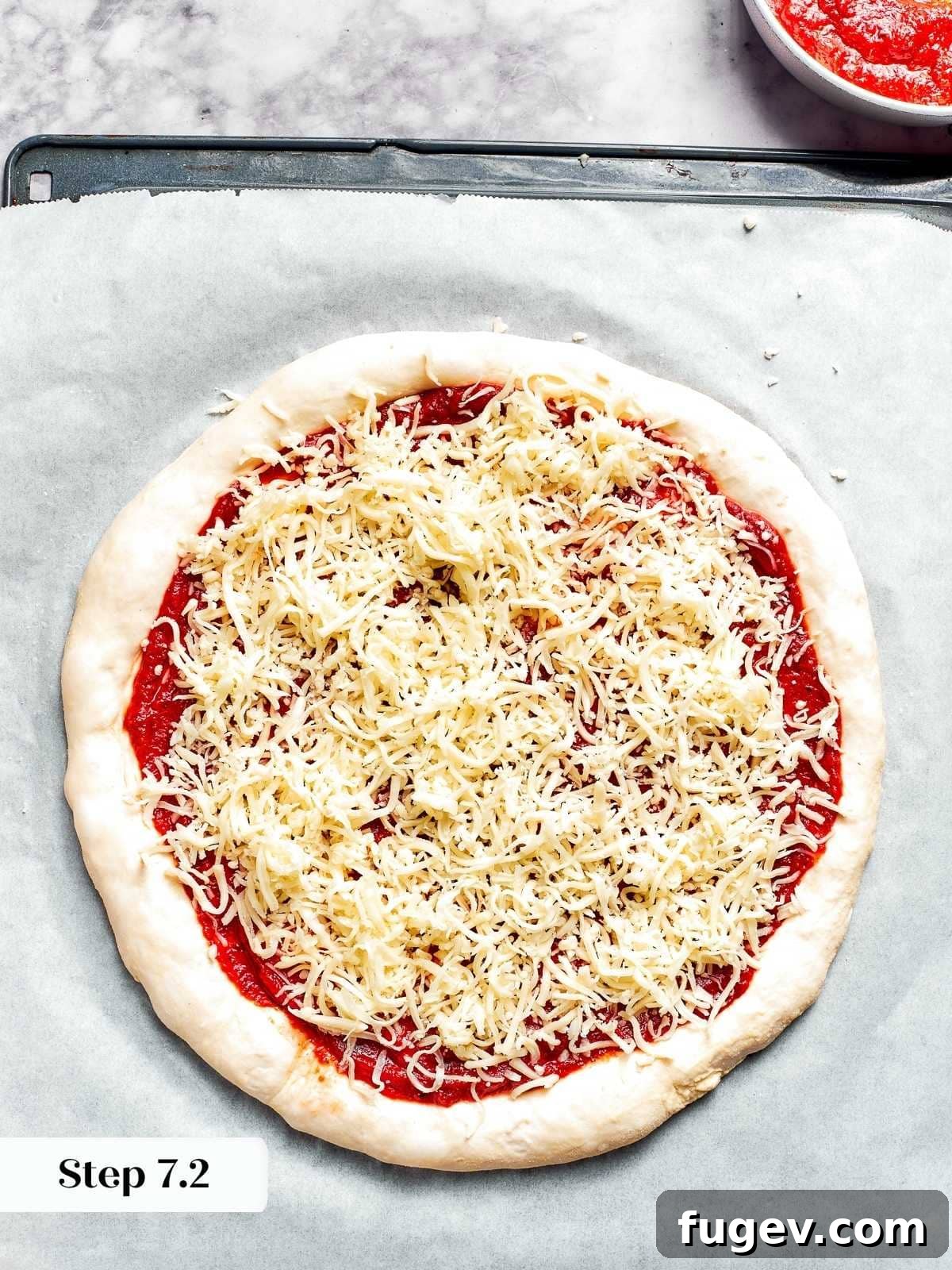
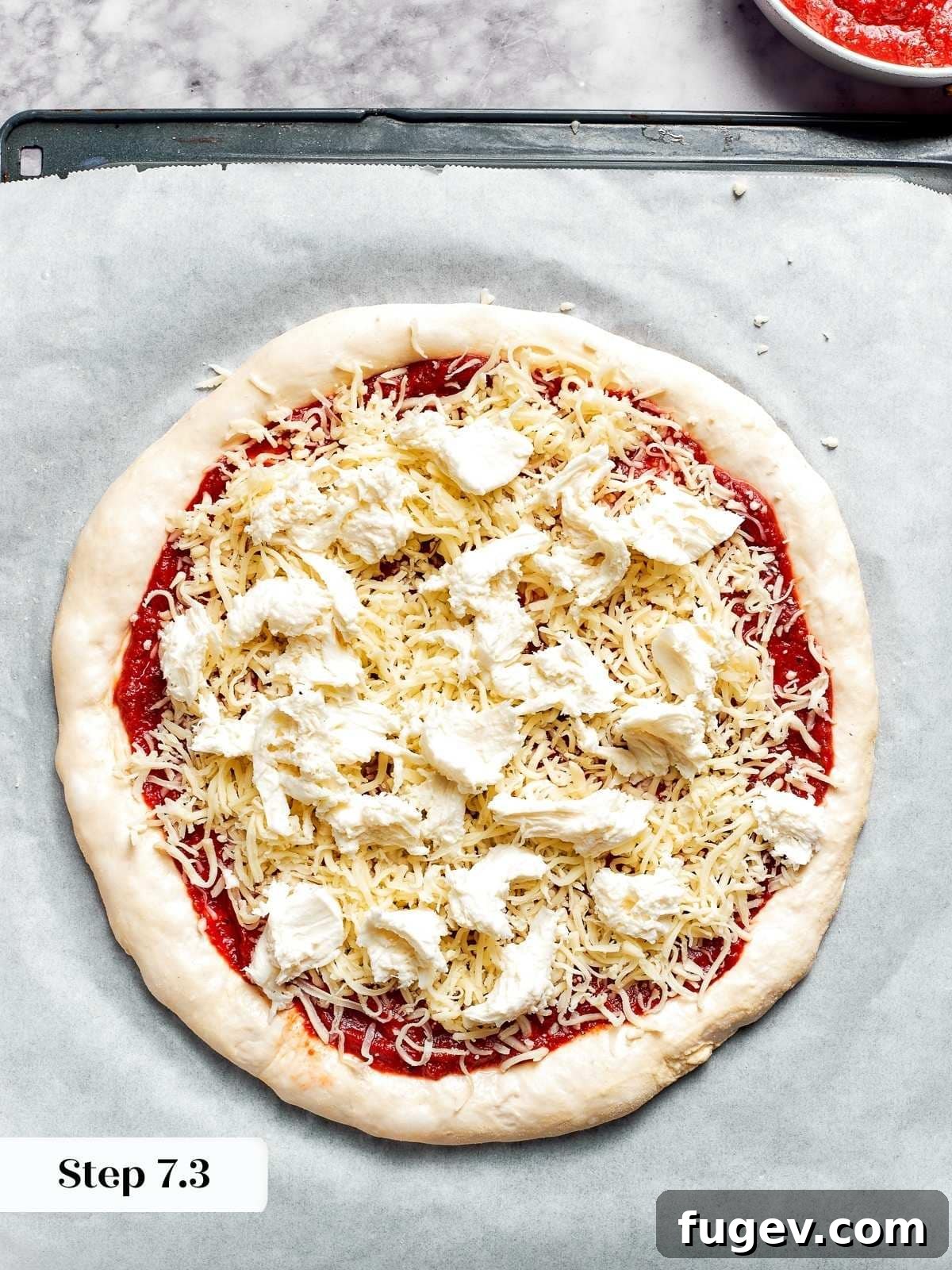
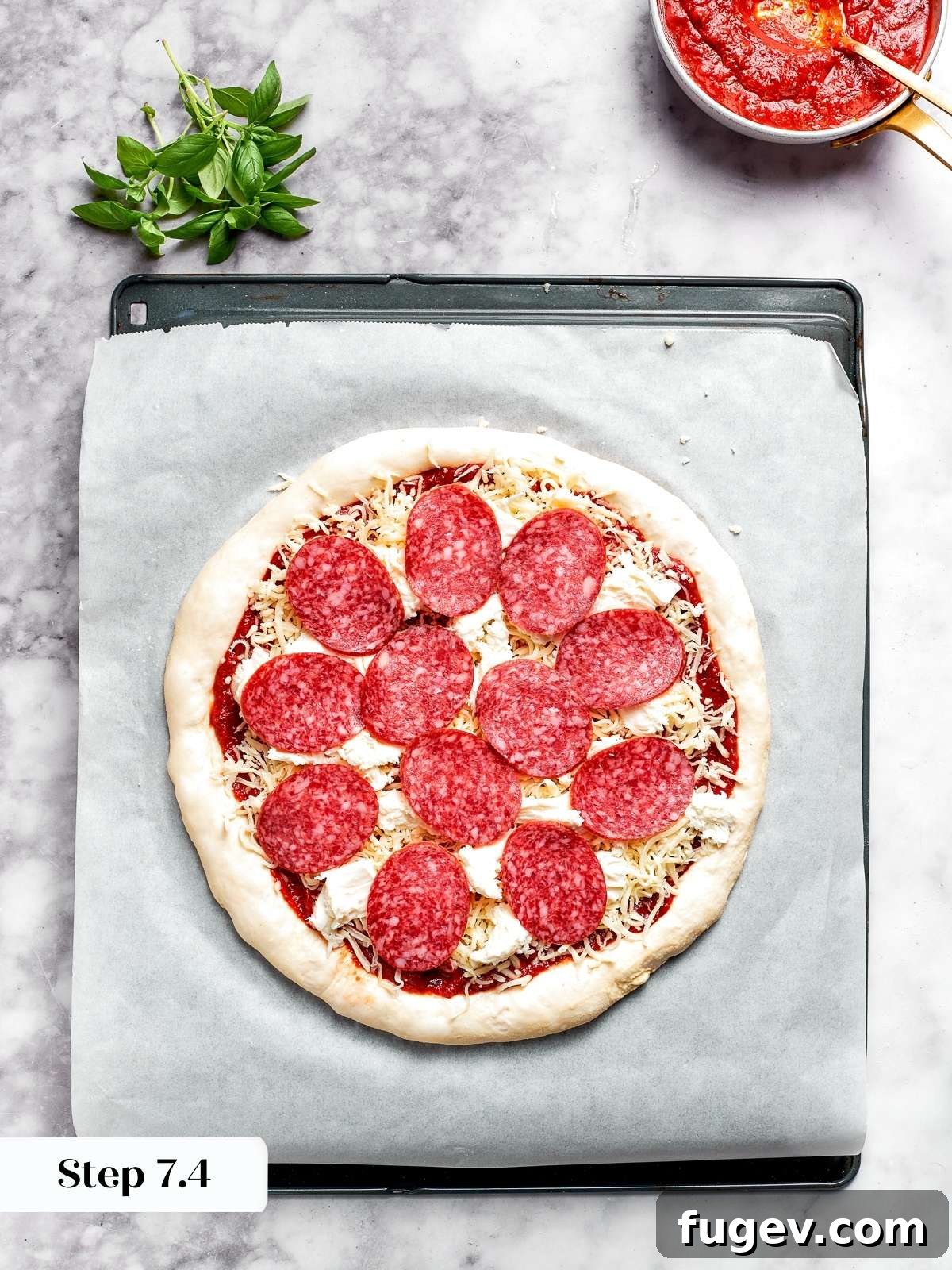
Step 7: Sauce and Top Your Pizza. Spoon your chosen pizza sauce onto the stretched dough. Spread it evenly, remembering to leave a small border (about ½ inch) around the edge for the crust. Next, generously top with the shredded low-moisture mozzarella, followed by crumbled or thinly sliced fresh mozzarella. Finally, arrange your pepperoni slices evenly over the cheese. Don’t be shy with the pepperoni!
Step 8: Perform the “Shake Test.” Before sliding your pizza into the oven, give the pizza peel a gentle shake to ensure the pizza moves freely. If it sticks in any spot, carefully lift that part of the dough and toss a little extra flour or cornmeal underneath it to prevent sticking. This simple step can save your pizza from a sticky situation!
Step 9: Bake Your Pizza at High Heat. Carefully open your preheated oven door. With confidence, slide the pizza onto the preheated pizza stone using the peel. I find it easiest to line up the back edge of the pizza with the back of the stone and then smoothly pull the peel back, allowing the pizza to slide into place. If you’re using a baking sheet, simply place the sheet pan with the pizza directly into the preheated oven.
Step 10: Monitor for Doneness. At 500°F (260°C), your pizza will cook very quickly. On a pizza stone, it typically takes only 5-7 minutes. If baking on a baking sheet, it will be closer to 8-10 minutes. Look for a golden brown and puffed crust, with bubbling, melted cheese and crispy, slightly curled pepperoni. For the ultimate crispy bottom, use tongs to gently lift the edge of the crust and peek underneath. If the bottom is golden and firm, your pizza is perfectly done!
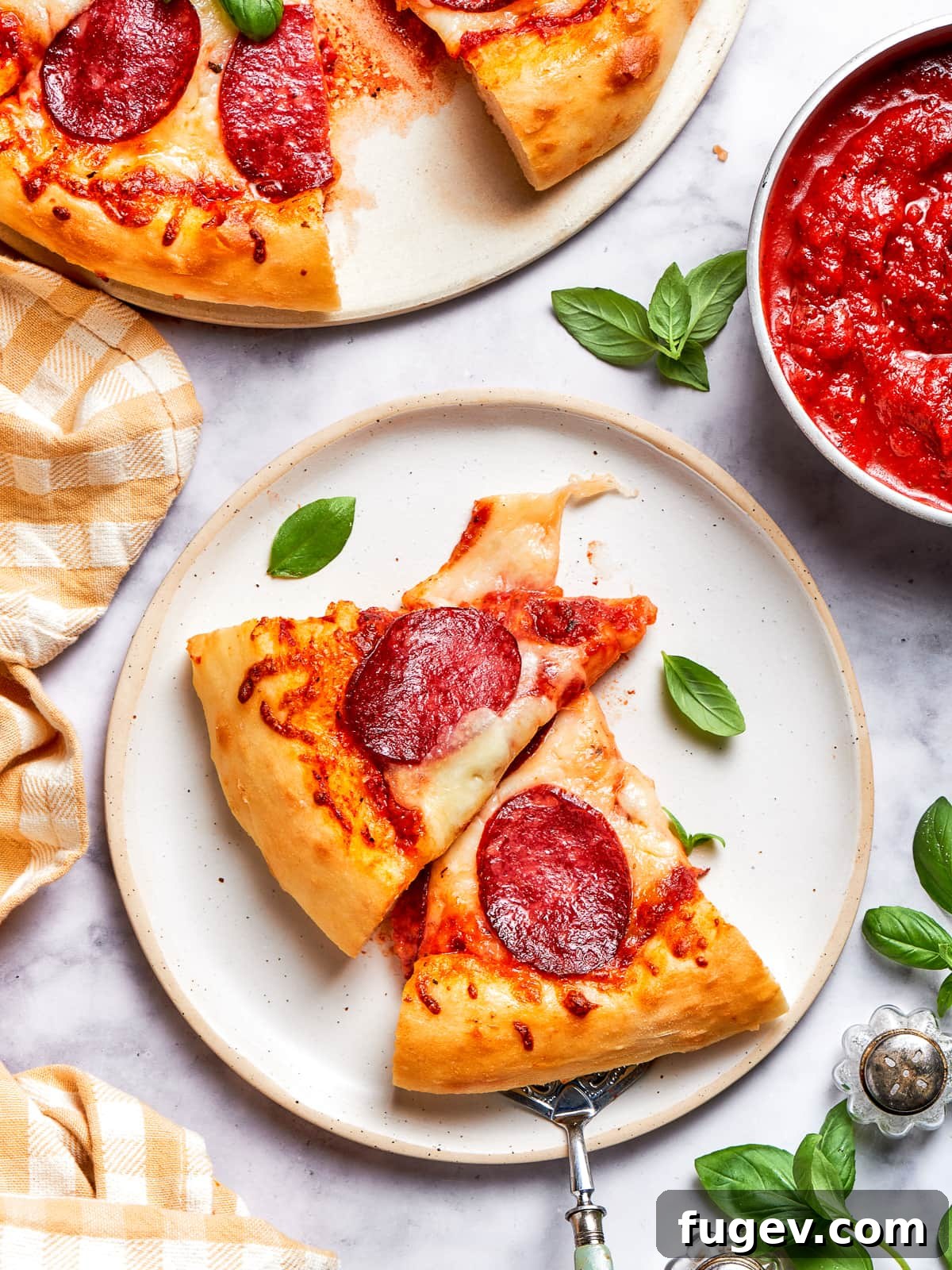
Step 11: Remove, Rest, and Slice. Using tongs (for a stone) or oven mitts (for a baking sheet), carefully remove the pizza from the oven. Transfer the hot pizza to a cutting board using tongs or by sliding it directly if it’s on a sheet pan. Allow it to rest for 1-2 minutes before slicing. This brief rest helps the cheese set and makes for cleaner cuts. Slice into your desired portions and serve immediately!
Chef Lindsey’s Expert Dough Tip
When it comes to shaping your pizza dough, please, please, please resist the urge to use a rolling pin. While it might seem easier, a rolling pin compresses the beautiful air pockets that form during fermentation, resulting in a dense, flat crust. Hand-stretching preserves those crucial air bubbles, giving you that desirable light, airy, and chewy texture characteristic of a true New York-style pizza slice. Trust me, your taste buds will thank you!
Frequently Asked Questions About Homemade Pizza
To maintain freshness and flavor, store any leftover pepperoni pizza in an airtight container or tightly wrapped in aluminum foil in the refrigerator. It will keep well for 3 to 5 days. For best reheating results, use a skillet on medium-low heat or a toaster oven to crisp up the crust.
For optimal results, bake your pizza at the highest temperature your oven can achieve, typically 500°F (260°C) or even 550°F (290°C). This high heat is essential for a rapid bake, which creates a beautifully blistered, crispy crust and perfectly melted, bubbling cheese. At this temperature, the pizza will cook quickly, usually within 5 to 7 minutes on a pizza stone, or 8 to 10 minutes on a baking sheet.
To ensure a smooth transfer of your pizza from the peel to the oven, always generously flour your pizza peel or cheese board with all-purpose flour or sprinkle it with cornmeal. Before sliding the pizza into the oven, give the peel a gentle shake to confirm the pizza moves freely. If it seems to stick, lift the dough slightly and dust a bit more flour or cornmeal underneath the problematic area. This creates a non-stick layer, preventing your pizza from tearing or getting stuck.
Absolutely! Pizza dough freezes exceptionally well. After its first rise, portion the dough, lightly coat it with olive oil, and place it in an airtight freezer bag or container. It can be frozen for up to 2-3 months. Thaw it overnight in the refrigerator, then bring it to room temperature before stretching and baking.
Low-moisture mozzarella, often found pre-shredded, has less water content, making it melt smoothly without making the pizza soggy. It’s great for overall coverage. Fresh mozzarella, usually sold in balls submerged in water, has a higher moisture content and a richer, creamier flavor. When used in combination, the low-moisture provides structure, while the fresh mozzarella adds incredible gooeyness and superior taste. Just remember to blot fresh mozzarella dry or slice it thinly to manage its moisture.
Recommended Recipes to Complement Your Pizza Night
Date Night
Tomato Goat Cheese Galette
Sourdough Bread Recipes
Sourdough Pizza Dough Recipe
Sauces & Condiment Recipes
Best Pizza Sauce Recipe
Easy Side Dish Recipes
Baked Mac and Cheese Recipe
If you tried this recipe and loved it, please consider leaving a ⭐ **star rating** and share your thoughts in the **comments** below. Your feedback makes my day!

Classic Homemade Pepperoni Pizza
10 minutes
5 minutes
15 minutes
9 slices
Print Recipe
Ingredients
- 8-11 ounces pizza dough
- 6 tablespoons pizza sauce
- ½ cup low-moisture shredded mozzarella cheese
- ¼ cup fresh mozzarella crumbled or sliced thinly
- 18 pepperoni slices or as many as you want
- ½ cup additional toppings if desired
- all-purpose flour or cornmeal, for oven transfer
Instructions
-
If you are using sourdough pizza dough, about 1-2 hours before you want to bake, remove the pizza dough from the refrigerator to final proof. If you froze it, be sure you thaw it in the fridge the night before. If not, you can use dough directly from the counter or from the fridge without allowing it to sit out.
-
Preheat the oven to 500°F with a pizza stone if you have one. If you don’t, you can just build the pizza on a metal baking sheet and bake it together. You won’t get as nice a crust but it will still be delightful.
-
If you are using a pizza stone, flour a pizza peel or dust with cornmeal. If not, sprinkle cornmeal on a metal baking sheet.
-
Place one piece of dough onto a floured, flat surface. Dust the top of the dough with additional all purpose flour and, using floured hands, tap your fingers around the rim of the dough about ¾ inch inside the edge. This will be your crust. Creating a physical marker allows you to stretch the dough inside while preserving the thick crust. If you want a thin crust pizza, you can use a rolling pin.
-
Lift up the dough and place it on top of both your closed fists. Using a gentle outward motion, gently separate your fists to thin out the center of the pizza. You’ll want to work quickly and move to different parts of the dough to keep it from getting too thin in any one place. It really only takes 3-5 stretches especially when the dough is room temperature.
-
Gently place the stretched dough onto your floured peel or dusted baking sheet and reshape to arrange it into a circle.
-
Spoon and spread out the pizza sauce. Top with shredded mozzarella and crumbled fresh mozzarella, and arrange pepperoni on top.
-
Give the pizza peel a little shake to check and make sure that the pizza moves freely. If not, lift and toss a little flour or cornmeal under the spot that is sticking.
-
Carefully open the oven door. Slide the pizza onto the preheated pizza stone using the peel. I find it easiest to line it up in the back and let it slide off the peel into place as you remove the peel. Alternately just put the sheet pan with the pizza in the preheated oven.
-
500°F is hot, so a pizza of this size will bake quickly. It will only take 5-7 minutes on a pizza stone. Baked on a baking sheet, it will be closer to 8-10 minutes. When the pizza crust is golden brown and puffed, take a peek underneath the crust using tongs. If the bottom is crispy and golden, then the pizza is done!
-
Use tongs to remove it from the stone, or oven mitts to remove the baking sheet from the oven. Use tongs to transfer the pizza to a cutting board, and slice!
Video
Notes
Technique – Avoid overloading toppings to ensure a crispy crust; too much weight and moisture can lead to a soggy bottom.
Variations – For a spicy kick, add crushed red pepper flakes, sliced jalapeños, or a drizzle of hot honey after baking.
Storage – Store leftover pizza in an airtight container in the refrigerator for 3 to 5 days. Reheat for best results.
Nutrition (per slice)
Carbohydrates: 13g |
Protein: 5g |
Fat: 5g |
Saturated Fat: 2g |
Polyunsaturated Fat: 0.5g |
Monounsaturated Fat: 1g |
Trans Fat: 0.1g |
Cholesterol: 11mg |
Sodium: 351mg |
Potassium: 48mg |
Fiber: 1g |
Sugar: 2g |
Vitamin A: 106IU |
Vitamin C: 1mg |
Calcium: 49mg |
Iron: 1mg
Before You Go: Explore More Delicious Dinner Recipes
I hope you thoroughly enjoyed this professionally tested and chef-developed pepperoni pizza recipe. There’s nothing quite like the satisfaction of creating a pizzeria-quality meal in your own home. If you loved this dish, I invite you to explore our extensive collection of other delicious, chef-developed dinner recipes, designed to bring gourmet flavors and approachable techniques to your kitchen. Happy cooking!