
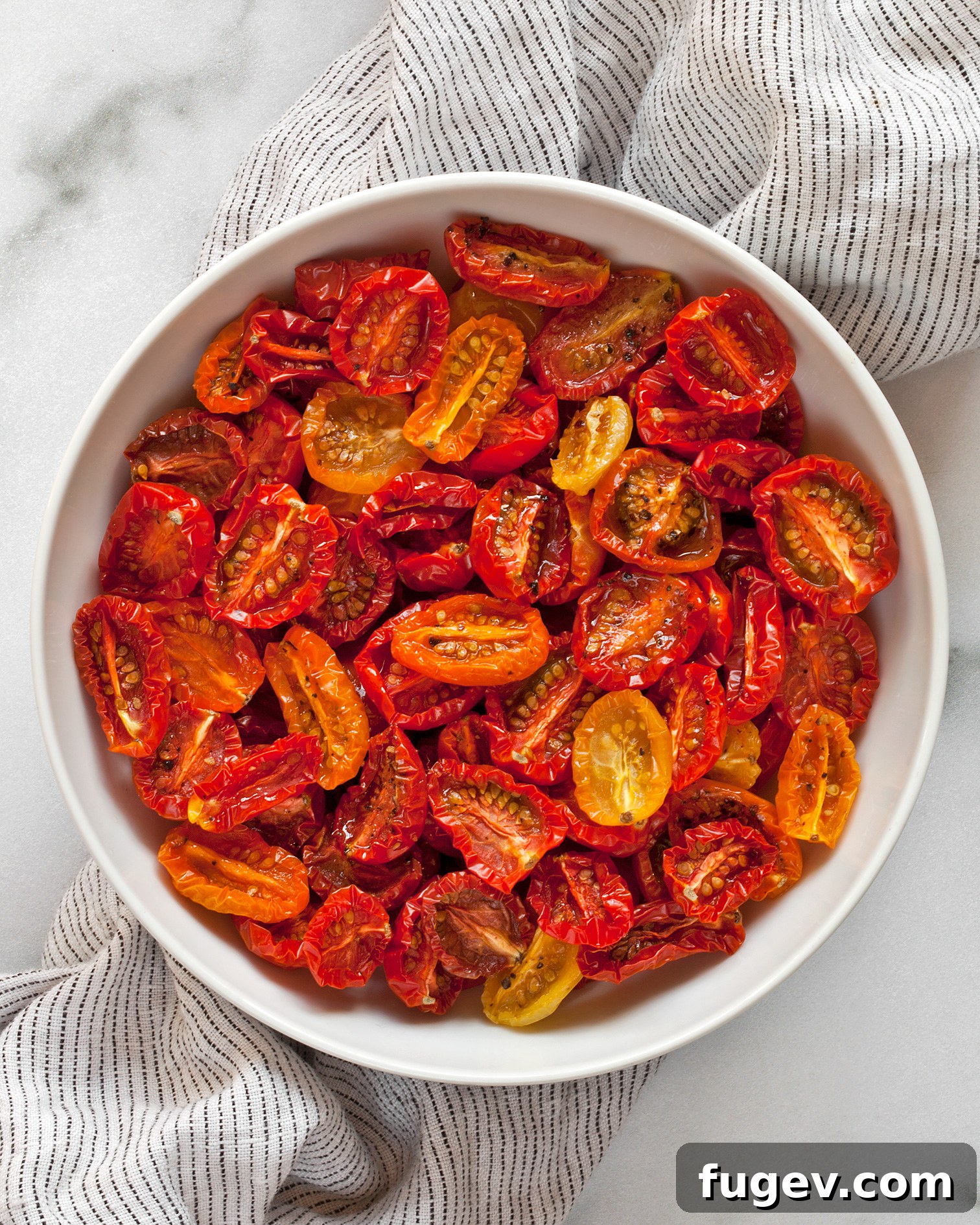
A true culinary gem, these easy slow-roasted tomatoes are a delightful way to capture and savor the peak flavors of the season. Their rich, concentrated essence makes them a versatile ingredient, perfect for elevating salads, topping pizzas, stirring into pasta, enhancing sandwiches, and much more.
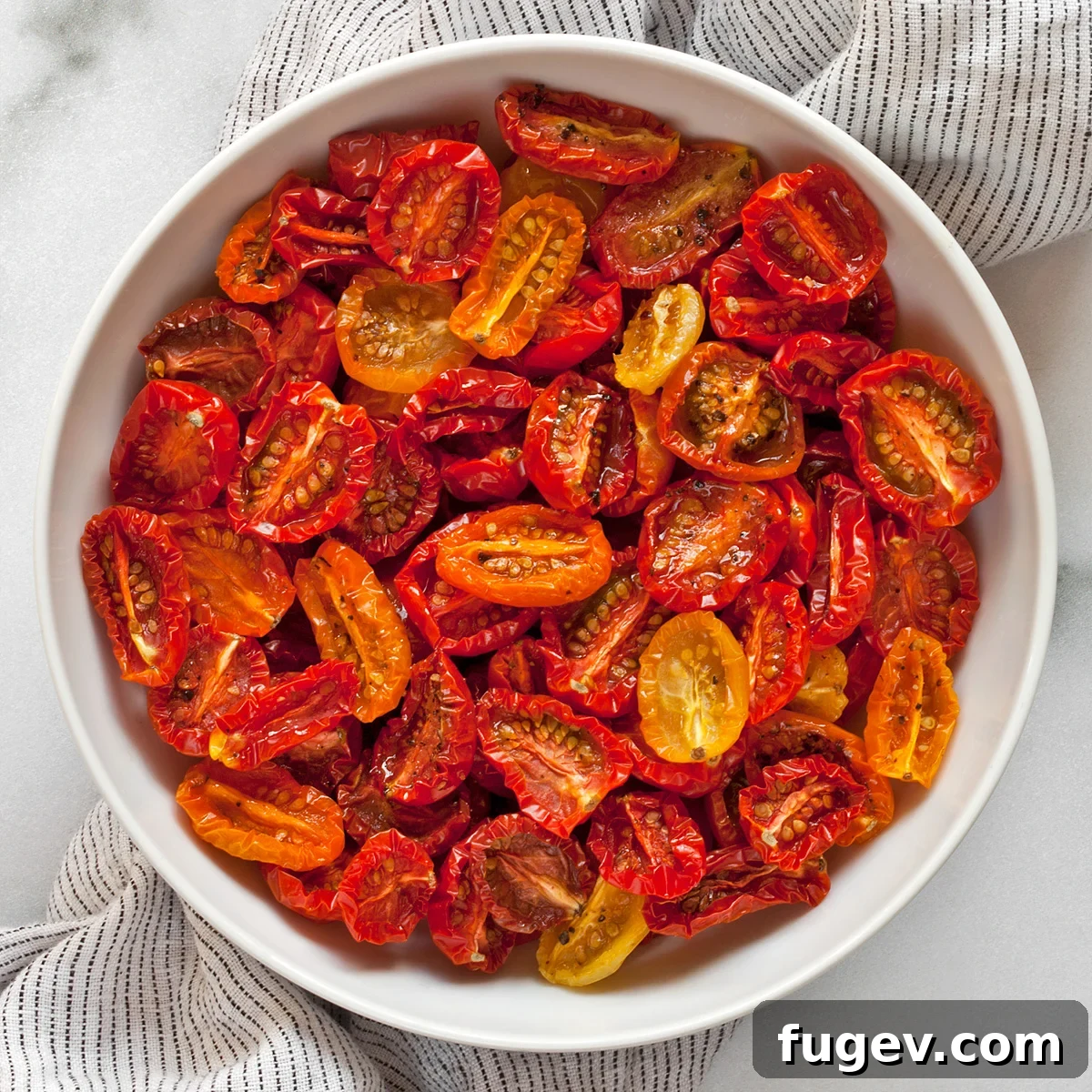
Table of Contents
- The Magic of Slow-Roasting Tomatoes
- Slow vs. Quick Roasting: Understanding the Difference
- Selecting the Best Tomatoes for Roasting
- Essential Ingredients and Flavor Boosters
- Step-by-Step Guide: How To Make Slow-Roasted Tomatoes
- Creative Ways to Enjoy Your Roasted Tomatoes
- Storing and Freezing for Extended Freshness
- More Delicious Roasted Tomato Inspirations
- Slow-Roasted Cherry Tomatoes Recipe
Summer offers a bounty of culinary delights, from vibrant fruits to crisp vegetables, all brimming with natural goodness. While the warmer weather and longer days often encourage a more relaxed pace, they also inspire us to make the most of seasonal produce. Embracing this easygoing approach in the kitchen means finding simple yet impactful ways to enhance the inherent flavors of fresh ingredients, transforming them into dishes that delight the senses.
This philosophy perfectly encapsulates the art of slow-roasting tomatoes. It’s a low-effort, high-reward method that transforms humble tomatoes into intensely flavored, succulent jewels. By simply slicing them, a light drizzle of olive oil, and a slow, gentle bake in the oven, you unlock a depth of sweetness and umami that is truly extraordinary. The result is a concentrated tomato flavor that tastes like the very essence of summer, inspiring thoughts of home gardens and frequent trips to the farmer’s market.
The Magic of Slow-Roasting Tomatoes
There’s a fundamental difference between cooking and merely heating ingredients. Slow-roasting tomatoes falls firmly into the former category, acting as a magical process that concentrates their natural sugars and flavors. As the tomatoes slowly dehydrate in the gentle heat of the oven, their water content evaporates, leaving behind a more intense, complex, and wonderfully sweet tomato essence. This extended cooking time allows the flavors to deepen and mellow, transforming the acidity of fresh tomatoes into a delightful, caramelized sweetness. It’s a testament to the idea that sometimes, the best things in life (and in the kitchen) truly are worth waiting for.
Slow vs. Quick Roasting: Understanding the Difference
While I adore slow-roasted tomatoes for their profound flavor, I also recognize that sometimes life calls for a quicker solution. There are indeed two main approaches to oven-roasting tomatoes: the patient, low-and-slow method, and the more rapid, high-heat technique. Both yield delicious results, but with distinct characteristics.
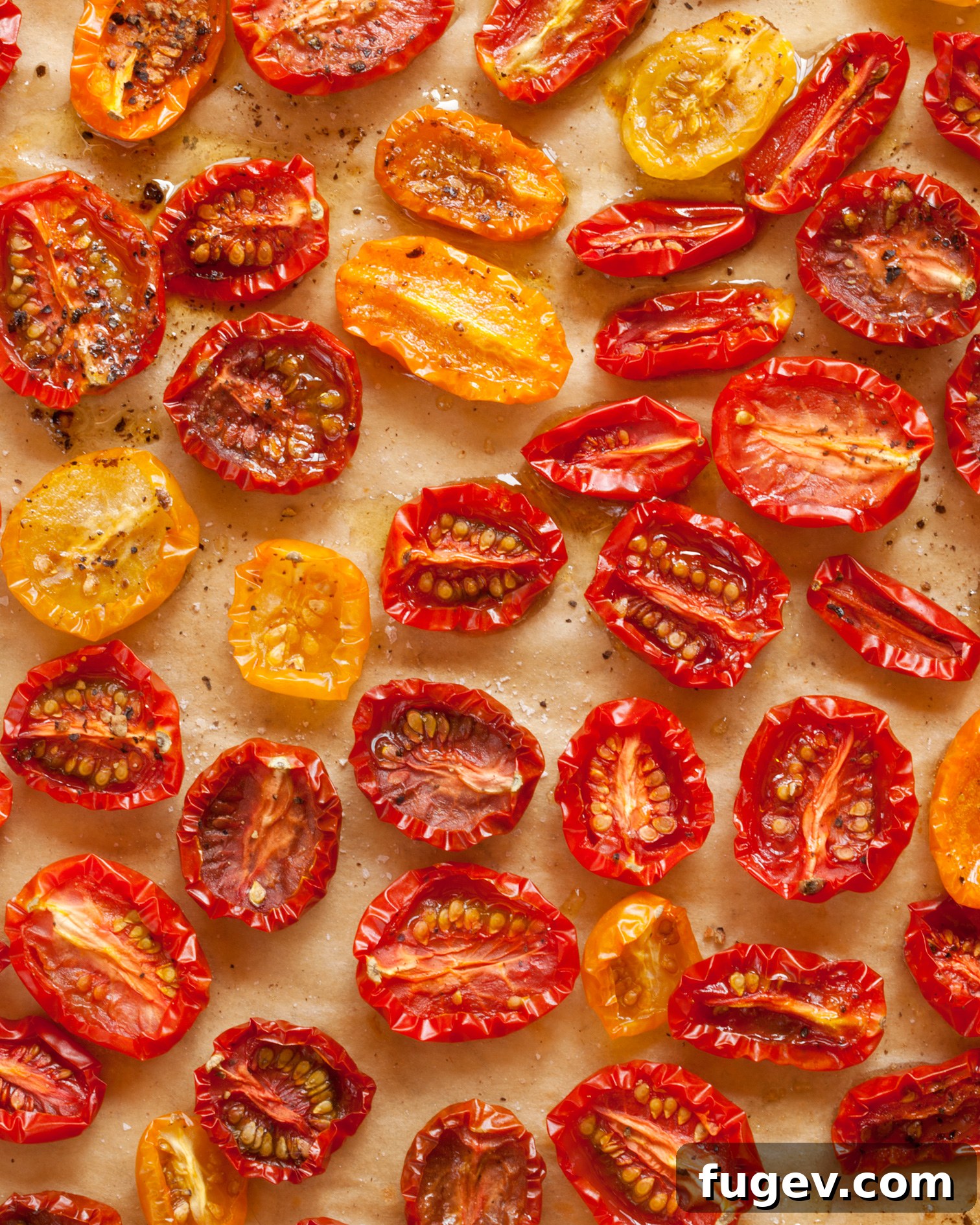
Slow-Roasted Tomatoes: Cooked at a lower temperature (around 200-250°F or 90-120°C) for a longer duration (2-4 hours), these tomatoes undergo a gradual dehydration. This process concentrates their sugars, resulting in a deeply sweet, almost jam-like flavor. The texture becomes tender, slightly wrinkled, and wonderfully chewy, with some edges developing a delicate crispness. They are perfect when you desire an intense burst of pure tomato essence and have the time to let the oven do its work.
Quick-Roasted Tomatoes: When time is of the essence, a higher oven temperature (around 400°F or 200°C) for a shorter period (20-30 minutes) will produce excellent results. These tomatoes tend to remain juicier inside, with a slightly blistered skin and a vibrant, fresh-roasted flavor. While still delicious and sweet, they won’t have the same deep caramelization and concentrated intensity as their slow-roasted counterparts. They are ideal for quick weeknight meals or when you want a lighter, brighter tomato component.
Ultimately, neither method is inherently “better” than the other; your choice depends on your schedule and the desired outcome for your dish. However, for that truly unforgettable, deeply savory-sweet experience, slow-roasting is the clear winner.
Selecting the Best Tomatoes for Roasting
The beauty of roasted tomatoes lies in their adaptability, meaning almost any type of ripe tomato can be used. However, certain varieties shine brighter when subjected to the slow roasting process, offering superior texture and flavor concentration.
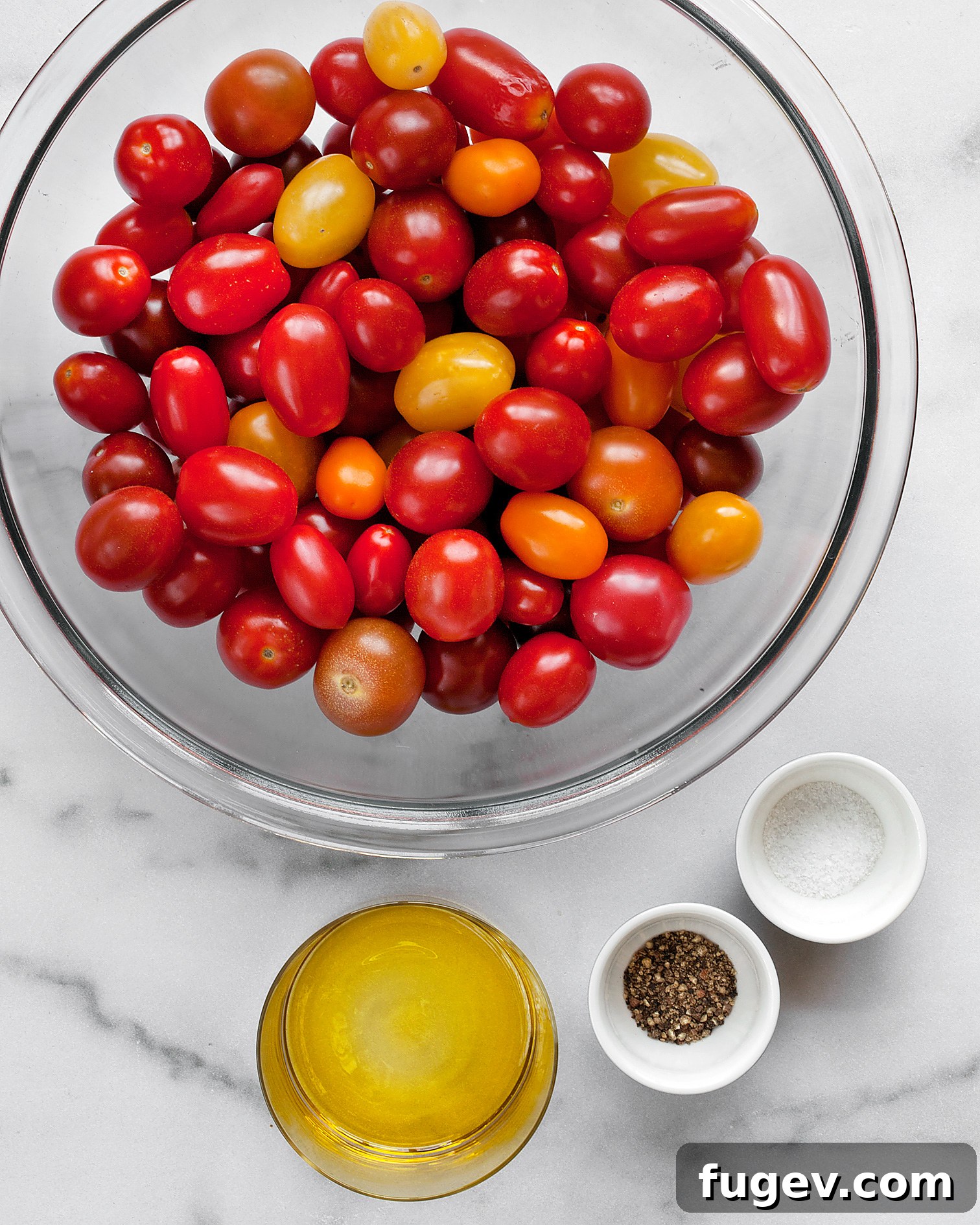
- Small Varieties (Cherry & Grape Tomatoes): These are often my top recommendation for slow-roasting. Their small size means they roast relatively quickly and consistently, and their high skin-to-flesh ratio leads to intense flavor concentration. Halving them before roasting exposes more surface area, encouraging caramelization and preventing them from bursting unevenly. They hold their shape beautifully, making them perfect for salads, pasta, or as a garnish.
- Medium Varieties (Plum & Roma Tomatoes): These elongated, less seedy tomatoes are excellent choices. Their firm flesh and lower water content make them ideal for drying out slowly in the oven, resulting in a wonderfully chewy texture and deep flavor. Slice them into 1/4-inch thick rounds or wedges to ensure even cooking.
- Large Varieties (Beefsteak & Heirloom Tomatoes): While they can be slow-roasted, larger tomatoes require more attention to preparation. They contain more water, so slicing them uniformly (1/4- to 1/2-inch thick) is crucial for even dehydration. You might also want to gently squeeze out some excess seeds and liquid before roasting. While they may not achieve the same chewy texture as smaller varieties, they will still yield a rich, sweet flavor.
Feel free to mix and match different kinds of tomatoes on a single baking sheet. The key to successful roasting is consistency: ensure all tomatoes, regardless of type, are sliced to a similar thickness. This guarantees they roast in approximately the same amount of time, preventing some from burning while others remain underdone. Always opt for the ripest, most flavorful tomatoes you can find, as their inherent sweetness will only be amplified by the roasting process.
Essential Ingredients and Flavor Boosters
Creating truly exceptional slow-roasted tomatoes requires only a handful of fundamental ingredients. However, the quality of these components, along with a few optional additions, can significantly elevate the final taste and aroma.
- Tomatoes: As discussed, while cherry and grape tomatoes are often preferred for their ease and intense flavor, any ripe tomato can be used. The most important factor is freshness and ripeness. Choose firm, blemish-free tomatoes with a vibrant color, smelling faintly sweet and earthy. Ensure uniform slicing (1/4-inch thickness for larger varieties, halved for small ones) for even roasting.
- High-Quality Extra Virgin Olive Oil: This is not the place to skimp! A good quality extra virgin olive oil contributes significantly to the overall flavor profile. It coats the tomatoes, helps them caramelize, and prevents sticking. It also infuses a subtle fruity and peppery note that complements the tomatoes beautifully.
- Kosher Salt & Freshly Ground Black Pepper: These humble seasonings are critical. Salt draws out moisture, enhances sweetness, and provides a necessary balance to the rich tomato flavor. Freshly ground black pepper adds a hint of pungent warmth that rounds out the profile. Don’t be shy with seasoning; tomatoes can take it.
- Optional Dried Spices and Herbs: To further customize your slow-roasted tomatoes, consider incorporating dried herbs. A classic Italian seasoning blend, featuring a combination of oregano, basil, rosemary, and thyme, works wonderfully. These herbs impart an aromatic depth that can steer your roasted tomatoes towards a Mediterranean or Italian culinary theme, depending on your planned usage. Garlic powder or a pinch of red pepper flakes can also add a delightful kick. Add these seasonings along with the salt and pepper before roasting.
- Optional Fresh Garlic Cloves: For an even more intense savory note, you can thinly slice a few fresh garlic cloves and scatter them among the tomatoes on the baking sheet. As they roast alongside the tomatoes, the garlic will soften and sweeten, adding a profound aromatic layer.
- Optional Balsamic Glaze: A drizzle of balsamic glaze or a splash of balsamic vinegar before roasting can add a wonderful tangy-sweet complexity that deepens the overall flavor.
The beauty of this recipe lies in its simplicity, allowing the natural star – the tomato – to truly shine. Yet, these thoughtful additions provide opportunities to tailor the flavor to your specific culinary creations.
Step-by-Step Guide: How To Make Slow-Roasted Tomatoes
The process of making slow-roasted tomatoes is remarkably straightforward, requiring minimal effort for maximum flavor payoff. Follow these simple steps for perfectly concentrated, sweet tomatoes every time:
- Prepare Your Oven and Baking Sheet: Begin by preheating your oven to a low temperature of 220°F (105°C). This gentle heat is crucial for the slow dehydration process that concentrates the tomato’s flavor. Line a large baking sheet with parchment paper. Parchment paper prevents the tomatoes from sticking, makes cleanup a breeze, and ensures even roasting without burning the bottoms.
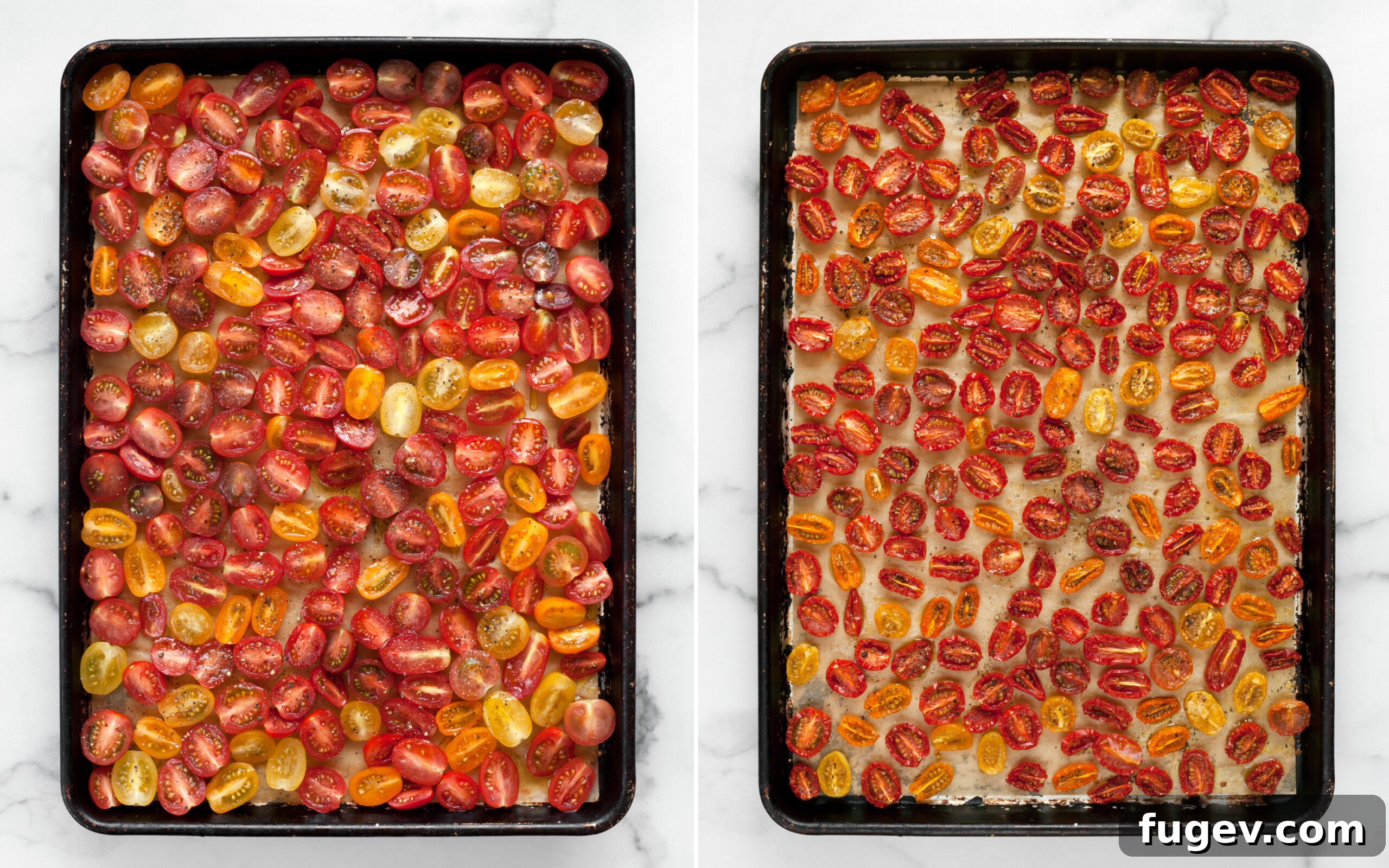
- Arrange the Tomatoes: Wash and dry your chosen tomatoes thoroughly. Halve cherry and grape tomatoes; for larger varieties like Roma or beefsteak, slice them into even 1/4-inch thick pieces. Arrange the prepared tomatoes on the parchment-lined baking sheet in a single layer. It’s important that the tomatoes do not overlap, as this will cause them to steam rather than roast, leading to a less intense flavor and softer texture. If using halved tomatoes, place them cut-side up; this allows moisture to escape more readily and helps achieve that desirable wrinkled texture.
- Season Generously: Drizzle the tomatoes evenly with a generous amount of high-quality extra virgin olive oil. Then, sprinkle them liberally with kosher salt and freshly ground black pepper. If you’re adding optional dried herbs or spices (like Italian seasoning, oregano, or garlic powder), now is the time to sprinkle those over the tomatoes as well, ensuring they are well-coated.
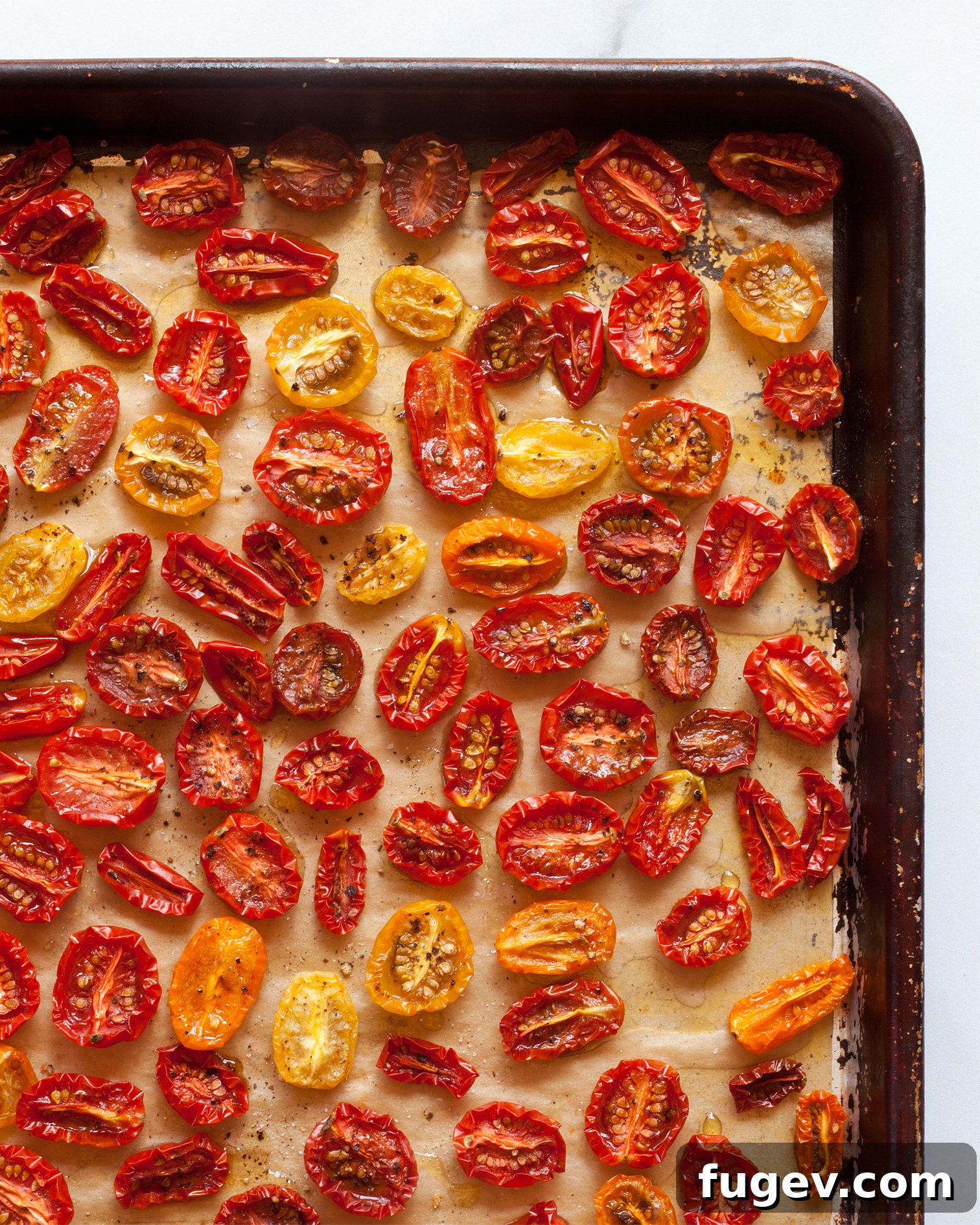
- Slow Roast to Perfection: Place the baking sheet in the preheated oven. Roast the tomatoes for approximately 2 to 2.5 hours, or until they are visibly shriveled, deeply colored, and have lost most of their moisture, becoming slightly wrinkled at the edges. They should still retain a little juiciness in their centers, indicating they are succulent and flavorful, not completely dried out. The exact roasting time will vary depending on the size and water content of your tomatoes, as well as your oven. Keep an eye on them during the last 30 minutes to achieve your desired level of tenderness and concentration.
- Cool and Store: Once roasted, remove the baking sheet from the oven and allow the tomatoes to cool completely to room temperature directly on the pan. This cooling process helps them firm up slightly and further concentrates their flavor.
Creative Ways to Enjoy Your Roasted Tomatoes
Once you’ve experienced the intense, sweet-savory flavor of slow-roasted tomatoes, you’ll find endless opportunities to incorporate them into your meals. Their concentrated taste makes them an incredibly versatile ingredient, capable of elevating both simple and sophisticated dishes. Here are numerous ideas to inspire your culinary creativity:
- Pasta Powerhouse: This is perhaps the most classic application. Toss the warm roasted tomatoes directly into freshly cooked al dente pasta with a splash of their flavorful oil, minced fresh garlic, a handful of fresh basil or parsley, and a generous grating of Parmesan cheese for a simple yet incredibly satisfying meal. They also make a fantastic addition to creamy pasta sauces or baked pasta dishes.
- Pizza & Flatbread Perfection: Use them as a gourmet topping for homemade pizzas or flatbreads. Their sweetness contrasts beautifully with savory cheeses and cured meats. Try a white pizza with ricotta, roasted tomatoes, and fresh arugula.
- Savory Breakfast Boost: Brighten up your morning meals! Stir them into scrambled eggs or an omelet for a burst of flavor. They are also excellent in frittatas, quiches, or alongside savory breakfast bowls with grains and greens.
- Elevated Toasts & Sandwiches: Take your avocado toast to the next level by layering it with mashed avocado, slow-roasted tomatoes, a sprinkle of everything bagel seasoning, and a squeeze of lemon. They are also a delicious addition to grilled cheese sandwiches, paninis, or hearty deli sandwiches, adding both moisture and concentrated flavor.
- Vibrant Salads: Transform any ordinary salad into something extraordinary. Add them to a peppery arugula salad with lemon vinaigrette and crumbled goat cheese. They pair wonderfully with mixed greens, grains like quinoa or farro, fresh mozzarella, and a balsamic drizzle. They are also a staple in a classic Caprese salad, offering a richer alternative to fresh tomatoes.
- Soup & Stew Enhancement: Stir slow-roasted tomatoes into simmering soups and stews to add depth, sweetness, and a touch of acidity. They work particularly well in minestrone, tomato soup, or lentil stews, enriching the broth and adding textural interest.
- Appetizer Highlights: Create quick and elegant appetizers. Serve them over creamy burrata with crusty bread, or chop them finely and mix with fresh basil and garlic for a delightful bruschetta topping.
- Side Dish Star: Roast them alongside other vegetables like zucchini, eggplant, or bell peppers for a flavorful and colorful side dish. They also make a fantastic base for a warm orzo salad.
- Flavorful Spreads & Dips: Blend them into hummus for a sun-dried tomato variation, or incorporate them into a homemade pesto for a deeper, richer flavor. They can also be pureed into a savory spread for crostini.
- Chicken, Fish & Meat Accompaniment: Serve them as a vibrant accompaniment to grilled chicken, baked fish, or roasted pork. Their bright flavor cuts through richness and adds a fresh element to any protein.
With a batch of slow-roasted tomatoes on hand, you’ll find yourself effortlessly adding gourmet flavor to almost any meal. They are a simple pleasure that keeps on giving!
Storing and Freezing for Extended Freshness
The beauty of slow-roasted tomatoes isn’t just in their flavor, but also in their excellent shelf life, allowing you to enjoy the taste of summer long after the season ends. Proper storage ensures they remain delicious and ready to use whenever inspiration strikes.
Refrigerator Storage:
Once your slow-roasted tomatoes have cooled completely to room temperature, transfer them to an airtight container. A wide-mouthed mason jar is an excellent choice for this, as it allows for easy packing and retrieval. You can store them simply as is, or for added flavor and preservation, cover them with a layer of their roasting oil or additional extra virgin olive oil. This not only keeps them moist but also infuses the oil with a wonderful tomato essence that can be used in dressings or other cooking. Stored in the refrigerator, slow-roasted tomatoes will maintain their quality and flavor for up to 2 weeks.
Freezing for Longer Preservation:
To enjoy your slow-roasted tomatoes for several months, freezing is an ideal option. To prevent them from clumping together into a solid block, which makes it difficult to use small portions, follow this simple method:
- Flash Freeze Individually: Line a baking sheet or a large plate with wax paper or parchment paper. Arrange the cooled slow-roasted tomatoes in a single layer on the lined surface, ensuring they do not touch each other.
- Freeze Until Solid: Place the baking sheet or plate in the freezer for 1-2 hours, or until the tomatoes are completely frozen solid.
- Transfer to Storage: Once individually frozen, transfer the solid tomatoes to an airtight freezer-safe bag or container. This method allows you to easily grab just the amount you need without thawing the entire batch.
Frozen slow-roasted tomatoes can be stored for up to 2 months. When you’re ready to use them, you can thaw them in the refrigerator overnight or add them directly to warm dishes like pasta or soups, where they will thaw quickly during cooking. This ensures you always have a taste of concentrated summer sunshine on hand, ready to enhance any meal.
More Delicious Roasted Tomato Inspirations
If you’re anything like me, once you master the art of slow-roasting tomatoes, you’ll be eager to explore more recipes that highlight their incredible flavor. Here are some fantastic dishes where roasted tomatoes truly shine:
Appetizers:
Burrata with Roasted Tomatoes: A luxurious and simple starter, perfect for entertaining.
Tomato Pesto Tartine: A delightful open-faced sandwich, bursting with fresh flavors.
Cherry Tomato Confit: Slow-cooked tomatoes in oil, a rich and fragrant condiment.
Side Dishes:
Roasted Eggplant, Tomatoes and Chickpeas: A hearty and healthy vegetable medley.
30-Minute Tomato Zucchini Orzo: A quick and flavorful pasta side, ideal for weeknights.
Salads:
Roasted Zucchini Tomato Lentil Salad: A robust and nutritious salad, great for meal prep.
Roasted Tomato Pesto Potato Salad: A fresh twist on a classic, perfect for picnics.
Main Dishes:
Sheet Pan Baked Feta with Vegetables: A trending dish that’s easy to make and packed with flavor.
Roasted Mediterranean Vegetables and Halloumi: A vibrant and satisfying vegetarian meal.
Slow-Roasted Cherry Tomatoes
★
★
★
★
☆
Paige Adams
5
2
30
2
35
4

Pin
Ingredients
- 2 tablespoons olive oil
- 1-1/2 to 2 pounds assorted ripe tomatoes (cherry & grape tomatoes halved, larger tomatoes sliced 1/4-inch-thick)
- 1/2 teaspoon kosher salt
- 1/4 teaspoon freshly ground black pepper
- Optional: 1-2 cloves garlic, thinly sliced, or 1/2 tsp dried Italian seasoning
Instructions
-
Preheat your oven to 220 degrees F (105°C). Line a large baking sheet with parchment paper to prevent sticking and for easy cleanup.
-
Arrange the prepared tomatoes (halved cherry/grape tomatoes cut-side up, or 1/4-inch slices of larger tomatoes) in a single layer on the parchment-lined sheet pan. Ensure there is no overlapping to allow for proper roasting.
-
Drizzle the tomatoes evenly with olive oil and then sprinkle generously with kosher salt and freshly ground black pepper. If using, scatter any optional dried herbs (like Italian seasoning) or thinly sliced fresh garlic over the tomatoes now.
-
Roast for 2 to 2.5 hours, or until the tomatoes are visibly shriveled, deeply colored, and mostly dried out but still a little bit juicy in the center. The roasting time can vary based on the type and size of your tomatoes, so monitor them towards the end.
-
Once roasted to your liking, remove the baking sheet from the oven and let the tomatoes cool completely to room temperature on the pan before storing.
Notes
Always allow the tomatoes to cool completely to room temperature before transferring them to storage.
Store roasted tomatoes in an airtight container in the refrigerator for up to 2 weeks. For extra flavor and preservation, you can cover them with olive oil.
To freeze the tomatoes, arrange them in a single layer on a wax paper-lined sheet pan or plate and freeze until solid. Once frozen, transfer them to an airtight freezer bag or container. They will keep for up to 2 months.
For an enhanced savory flavor, consider adding a few sprigs of fresh rosemary or thyme to the baking sheet during the last hour of roasting.
Nutrition
Calories: 103kcal
|
Carbohydrates: 9g
|
Protein: 2g
|
Fat: 7g
|
Saturated Fat: 1g
|
Polyunsaturated Fat: 1g
|
Monounsaturated Fat: 5g
|
Sodium: 302mg
|
Potassium: 539mg
|
Fiber: 3g
|
Sugar: 6g
|
Vitamin A: 1890IU
|
Vitamin C: 31mg
|
Calcium: 23mg
|
Iron: 1mg
Nutrition information is automatically calculated and should be used as an approximation.
Additional Info
Spreads & Sauces, Side Dish, Appetizer
Italian, Mediterranean
Did you make this recipe?
Mention @lastingredient on Instagram and tag it #lastingredient!