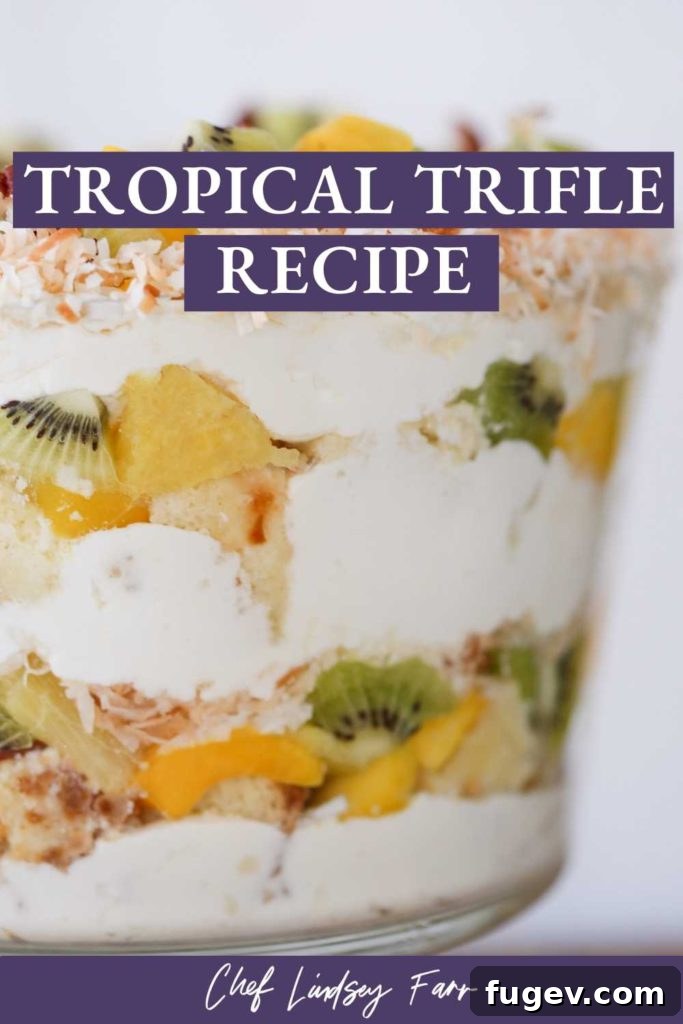
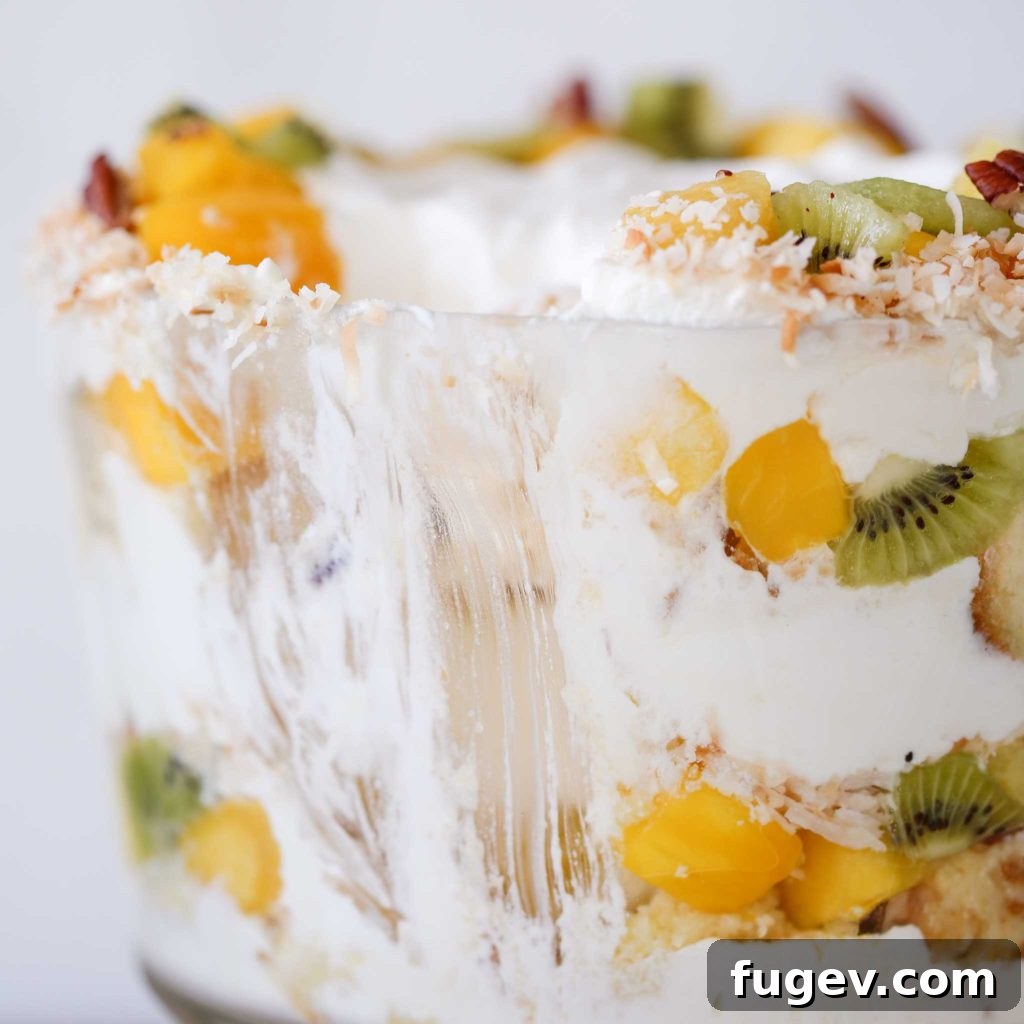
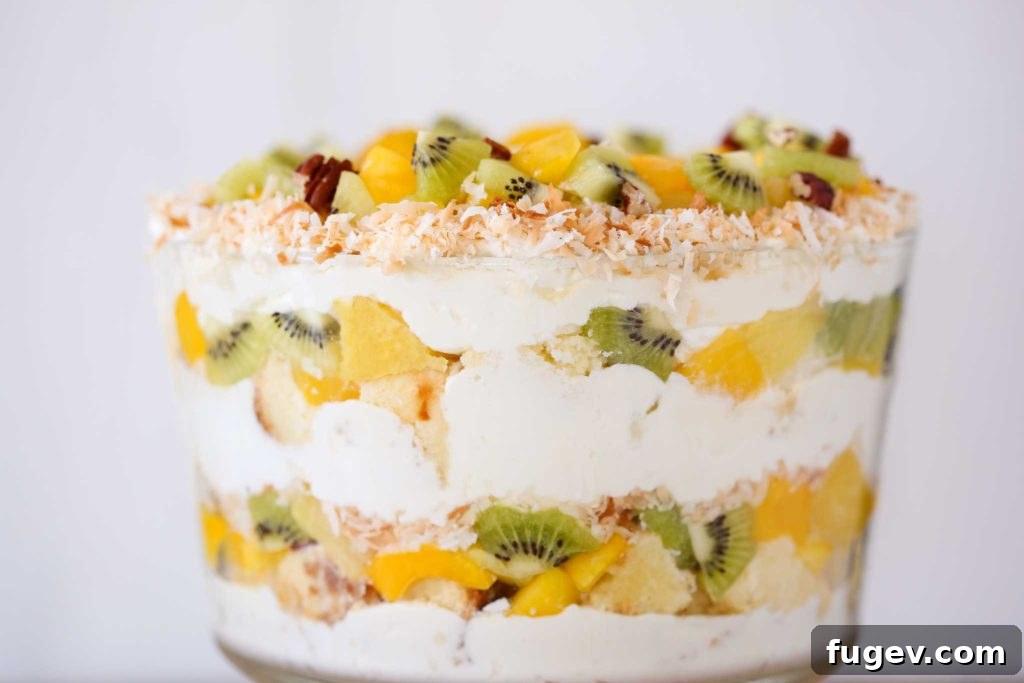
Get ready to impress with this **Tropical Trifle recipe**, a dessert that’s as easy to make as it is incredibly delicious and visually stunning! Imagine layers of rich, rum-soaked pound cake, velvety coconut pastry cream, and vibrant, juicy mangoes, kiwis, and pineapples, all coming together in a symphony of sun-kissed flavors. This trifle isn’t just a dessert; it’s a celebration of sunshine and fresh ingredients, perfect for any special occasion, a summer gathering, or simply a delightful treat at home.
The Allure of the Tropical Trifle: A Dessert for Every Occasion
There’s something inherently delightful and satisfying about a well-made trifle, and my love for these layered masterpieces runs deep. Judging by the incredible popularity of my Lemon Berry Trifle, it seems many of you share this passion for effortless elegance! Trifles are fantastic because they combine sophisticated visual appeal with surprising ease of preparation, allowing you to create a truly showstopping dessert without the fuss of intricate baking techniques.
They are also wonderfully versatile, making them an ideal solution for utilizing leftover cake – a common occurrence in my kitchen, especially with perfectly baked pound cake. Whenever I find myself with a spare half of a delicious cake, it’s instantly destined for a new, exciting trifle creation. The beauty of this particular Tropical Trifle lies in its thoughtful simplicity. While it looks elaborate, the hands-on effort is surprisingly minimal, primarily focusing on crafting the irresistible coconut pastry cream. The real secret to its phenomenal, deeply melded flavor? Patience! Allowing the trifle to chill for at least a full day lets all those incredible tropical flavors intertwine and deepen, transforming it into an even more spectacular and cohesive dessert experience.
Secrets to a Silky-Smooth Coconut Pastry Cream for Your Tropical Trifle
The heart of any exceptional trifle is its creamy filling, and for this tropical sensation, our coconut pastry cream takes center stage. Achieving a smooth, luscious pastry cream is crucial for the perfect texture, but avoiding lumps is a common challenge for many home bakers. Fear not! With a few expert techniques and a watchful eye, you’ll achieve pastry cream perfection every single time. Let’s walk through the critical stages where vigilance is key to a flawless, lump-free result, ensuring your tropical trifle is nothing short of magnificent.
-
Strategic Sugar Addition: Preventing Scorching and Protecting Eggs
The very first step in preparing your pastry cream significantly impacts its final texture. For this tropical trifle recipe, I strongly advocate adding all the sugar to the coconut cream at the beginning, rather than splitting it between the cream and the eggs. This method offers several distinct advantages:
- **Scorching Prevention:** Sugar acts as an excellent insulator, effectively preventing the coconut cream from scorching and sticking to the bottom of your saucepan. A generous amount of sugar means you have a little more leeway and don’t have to monitor the pot quite as intensely, freeing you up to attend to other simultaneous kitchen tasks – a busy pastry chef’s dream!
- **Egg Protein Protection:** Crucially, adding sugar to the eggs too early, or allowing the egg mixture to sit with sugar for an extended period, can actually denature the proteins in the yolks. This chemical reaction can lead to the formation of small, firm lumps that are impossible to whisk out later. Essentially, you inadvertently start cooking the eggs without any heat, creating a problem that no amount of subsequent whisking can resolve.
-
Mastering the Art of Tempering: Harmonizing Temperatures
Tempering is the elegant technique of gradually raising the temperature of your eggs without scrambling them. This step is absolutely fundamental for achieving a perfectly smooth pastry cream. After whisking your eggs and cornstarch together into a velvety mixture, slowly and steadily pour about half of the hot coconut cream into the egg mixture while continuously whisking. This controlled and gentle addition allows the eggs to gradually come up to temperature with the hot cream, preventing them from coagulating into undesirable lumps. It’s a culinary magic trick that ensures your cream remains impeccably smooth.
-
Unwavering Whisking During Cooking: Your Essential Companion
Once the tempered mixture is returned to the stove, constant and vigorous whisking becomes your unwavering companion. Do not, under any circumstances, walk away! As the pastry cream heats and begins to thicken, bits of cream can quickly coagulate, stick to the bottom of the pot, and even burn, leading to unsightly lumps and a compromised flavor. Keep that whisk moving constantly, making sure to reach into all corners and edges of the saucepan, to ensure even cooking and a perfectly uniform, silky-smooth consistency. This active engagement is paramount to preventing frustration and achieving a pristine pastry cream.
-
Avoiding the Overcooking Trap: Precision Heat Management
Overcooking your pastry cream, or cooking it over excessively high heat, is another common culprit for lumps and a less-than-ideal texture. High heat can cause the egg proteins to cook too rapidly and unevenly, resulting in a grainy or lumpy consistency. Aim for medium heat and maintain a focused attention on the mixture. Once the pastry cream visibly thickens and comes to a gentle boil, continue whisking for precisely one minute. This crucial minute ensures that the cornstarch is fully cooked and activated, achieving its maximum thickening power. After this minute, promptly remove the pot from the heat.
-
Rapid Cooling for Optimal Smoothness and Stability
After cooking, speed is of the essence! To immediately halt the cooking process and prevent an unsightly skin from forming on the surface, promptly pour the hot pastry cream onto a shallow baking pan or dish lined with plastic wrap. Spread it out into an even, thin layer to maximize surface area for cooling. Then, cover the entire surface of the pastry cream directly with another sheet of plastic wrap, pressing it down gently to eliminate any air contact. For good measure, poke a few small holes in the top plastic wrap to allow any residual steam to escape. Transfer the pan to the refrigerator to cool down as quickly as possible. This rapid and thorough cooling process is vital for ensuring a smooth, stable, and perfectly set cream.
The Essential Step: Conditioning Your Chilled Pastry Cream
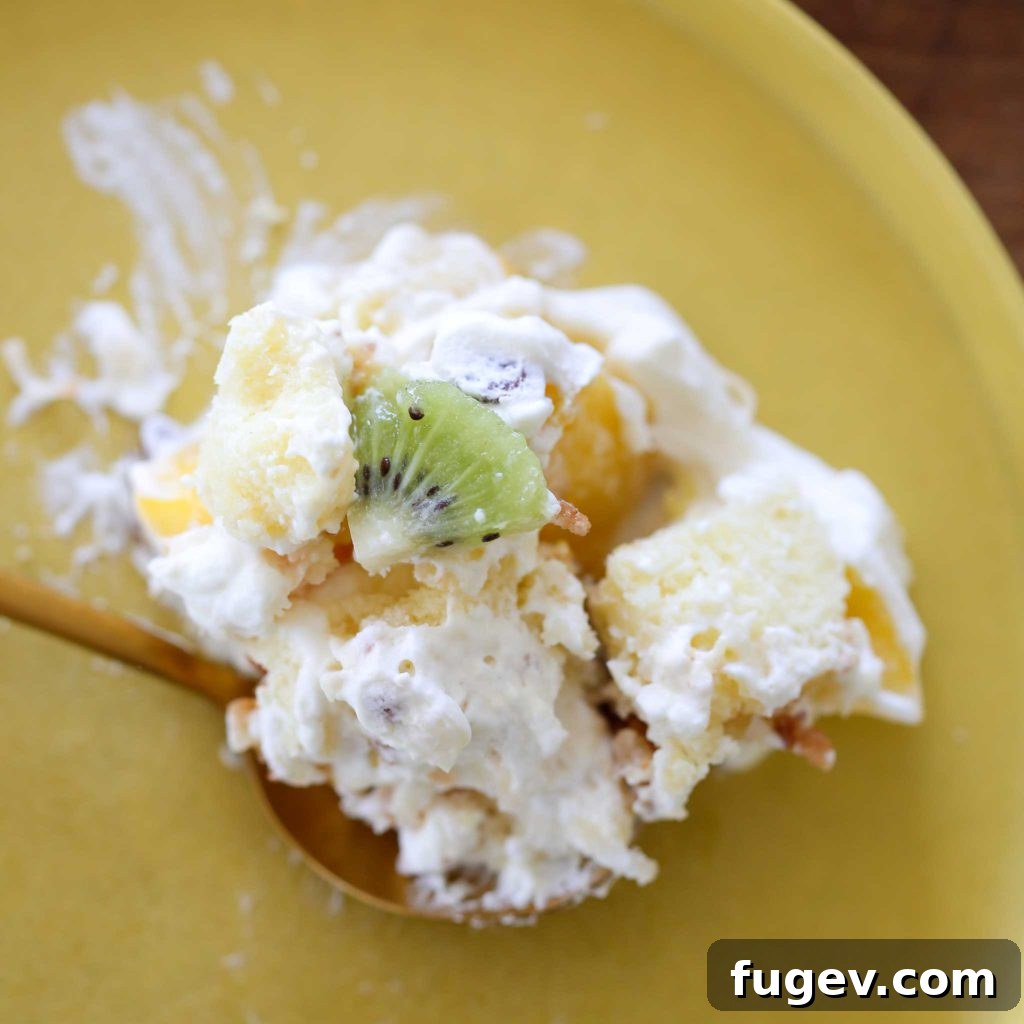
Even after expertly preparing a lump-free pastry cream, there’s one final, crucial step before you incorporate it into your trifle: “refreshing” or “conditioning” it. This process doesn’t involve removing any lumps you might have (because you’ve already mastered avoiding them!), but rather beating the thoroughly chilled cream until it returns to a smooth, silky, and pliable consistency. Pastry cream firms up considerably as it cools in the refrigerator, and attempting to fold unconditioned, stiff pastry cream into delicate whipped cream is a recipe for disaster – you’ll end up with a grainy, uneven texture and a lot of unnecessary effort. Conditioning ensures a light, airy, and beautifully blended final filling for your tropical trifle, making assembly a joy rather than a chore.
You can efficiently condition your coconut pastry cream using a stand mixer fitted with the paddle attachment. Alternatively, if a stand mixer isn’t available, you can achieve excellent results by hand in a large bowl with a sturdy rubber spatula. Beat the cream just until it’s smooth, creamy, and easily workable. Exercise caution not to overbeat, as this can potentially break down the cornstarch’s thickening properties and cause the cream to become too loose or runny, which would compromise the structural integrity of your trifle’s layers.
Elevate Your Trifle: Cake Choices and Fruit Medleys
While our coconut pastry cream is undoubtedly a star, I understand that sometimes you might be looking for a different flavor profile or a quicker option. If you’re short on time or prefer a tangier note, consider making a perfect lemon curd instead. For an even more tropical twist that perfectly complements the fruits, transform it into a vibrant lime curd! Imagine lounging in a tropical paradise, sipping a refreshing piña colada, with a zesty lime-infused trifle in hand – pure bliss!
The Foundation: Selecting the Ideal Cake for Trifle Perfection
The cake forms the essential, sturdy base of our trifle, and its quality and type greatly impact the final result. For this particular Tropical Trifle, I highly recommend using my Bacardi Rum Cake. The rum is already beautifully infused into the cake, providing a wonderful depth of flavor, and as the saying goes, “in for a penny, in for a pound!” To amplify this tropical essence, I generously soak the cubed cake in a simple syrup specifically spiked with rum and the natural, sweet juices accumulated from the cubed pineapple. This ensures an incredibly moist, deeply flavorful, and wonderfully “happy” cake – truly the key to achieving trifle heaven.
If you don’t have homemade rum cake on hand, a plain vanilla sour cream pound cake or even a high-quality, dense store-bought pound cake will work beautifully. The most important factor is to select a heartier, denser cake type. Pound cakes are robust enough to absorb the fruit juices, rum soak, and creamy filling without becoming a soggy, unappealing mess. A soggy trifle is a cardinal sin in my kitchen – and you certainly won’t find that anywhere in this tropical trifle recipe!
The Vibrant Fruit Medley: A Burst of Freshness
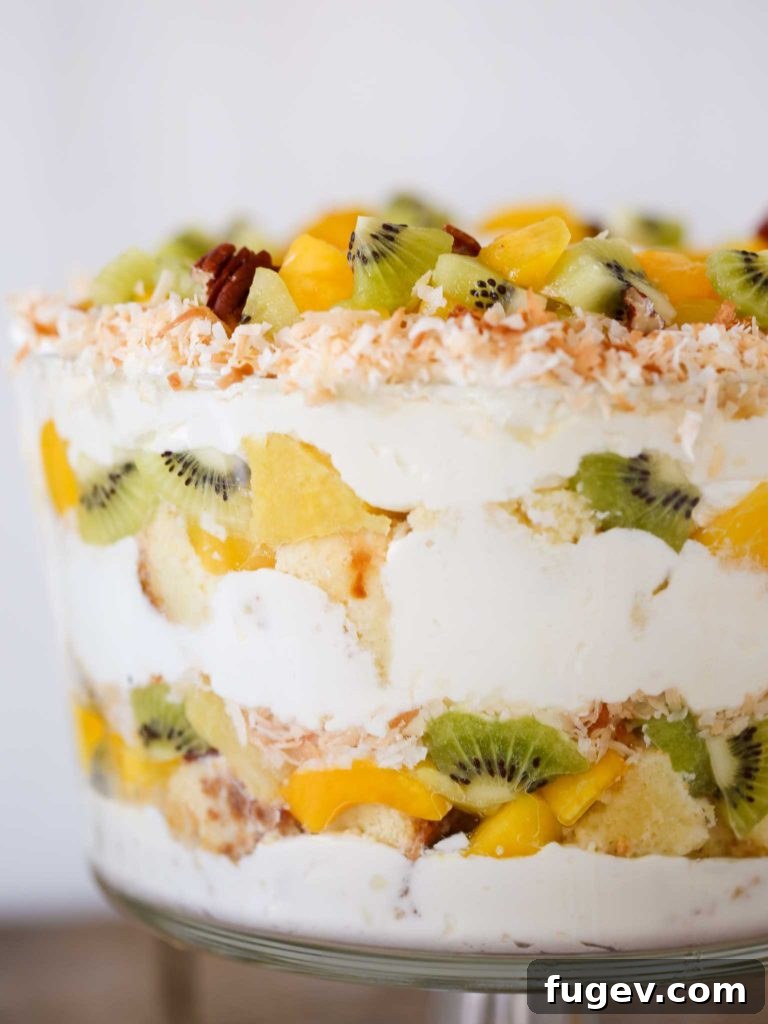
Our chosen tropical fruits – succulent mango, tart kiwi, and sweet pineapple – are not only visually stunning with their bright colors but also provide a refreshing, zesty contrast to the rich cake and creamy layers. When selecting your fruits, always opt for ripeness: look for mangoes that yield slightly to gentle pressure and emit a fragrant, sweet aroma. Pineapples should feel heavy for their size and have a sweet scent at their base, not fermented. Kiwis should be firm but not rock-hard. If fresh fruit isn’t readily available or in season, high-quality frozen and thawed fruit works perfectly and conveniently, often offering consistent ripeness. Feel free to experiment with other tropical delights like passion fruit, star fruit, or papaya to customize your trifle and add your personal touch of paradise. This vibrant medley ensures every bite is a delightful explosion of flavor and texture.
⭐
⭐
⭐
⭐
Tropical Trifle Recipe
Chef Lindsey
30 minutes
30 minutes
12
people
Comment
Print Recipe
Ingredients
For the Coconut Pastry Cream:
- 260 g Coconut Cream (1 cup, full-fat, well-shaken)
- 56 g Granulated Sugar (¼ cup)
- 1 Large Whole Egg
- 1 Large Egg Yolk
- 25 g Cornstarch (6 ¼ teaspoons)
For the Rum Simple Syrup:
- ½ cup Granulated Sugar
- ½ cup Water
- ¼ cup Dark or Light Rum (more or less to taste, optional for alcohol-free)
- 2 tablespoons Pineapple Juice (accumulated from the cubed pineapple, or store-bought)
For the Assembly:
- 2 cups Heavy Cream (cold)
- 6 cups Pound Cake (cubed, about half of a 12-cup bundt cake or 1 large store-bought loaf)
- 12 oz Mangoes (cubed, from 2 bags frozen/thawed or 2 fresh large mangoes)
- 6 oz Pineapple (cubed, from 1 bag frozen/thawed or ½ fresh pineapple)
- 3 Kiwi Fruits (peeled and sliced)
- ½ cup Pecans (toasted and chopped, optional)
- ½ cup Sweetened Shredded Coconut (toasted, for garnish)
Instructions
Part 1: Prepare the Coconut Pastry Cream
-
In a medium saucepan, combine the coconut cream (ensure you shake the can well before opening to mix solids and liquids evenly) and granulated sugar. Bring this mixture to a gentle boil over medium heat, stirring occasionally to ensure the sugar fully dissolves and the cream doesn’t scorch on the bottom. As soon as it reaches a boil, immediately remove the pot from the heat.
-
Meanwhile, in a separate medium bowl, whisk together the whole egg, egg yolk, and cornstarch until the mixture is completely smooth and free of any lumps. Once the coconut cream mixture has boiled and been removed from heat, slowly and gradually pour approximately half of the hot cream mixture into the egg mixture while continuously whisking. This crucial tempering process gently raises the temperature of the eggs without cooking them, preventing scrambling.
-
Return the tempered egg-and-cream mixture back to the saucepan containing the remaining hot coconut cream. Place the pot back on medium heat and resume whisking constantly. Continue to whisk vigorously as the cream thickens significantly and comes back to a full boil. Allow it to boil for 1 full minute while maintaining constant whisking. This ensures the cornstarch is thoroughly cooked and activated, achieving its maximum thickening power.
-
Immediately pour the hot pastry cream onto a baking pan or shallow dish that has been lined with plastic wrap. Spread the cream into an even, thin layer to facilitate rapid cooling. Cover the entire surface of the pastry cream directly with another piece of plastic wrap, pressing it down firmly to prevent any air contact and inhibit skin formation. Poke a few small holes in the top plastic wrap to allow steam to escape. Refrigerate the cream for at least 4 hours, or ideally overnight, until it is thoroughly chilled and firm.
Part 2: Make the Rum Simple Syrup
-
In a small saucepan, combine the granulated sugar and water. Stir them together thoroughly and bring the mixture just to a boil over medium heat, continuing to stir occasionally until all the sugar has completely dissolved and the syrup is clear. Once boiling, remove from heat and let it cool completely. This versatile simple syrup can be prepared up to a month in advance and stored in an airtight container in the refrigerator, making it perfect for your next trifle or a batch of cocktails!
-
In a small bowl or liquid measuring cup, combine 3 tablespoons of the cooled simple syrup with the rum and the accumulated pineapple juice from your cubed fruit. Taste and adjust the amount of rum to your personal preference – feel free to add a little more if you desire a stronger rum flavor, or less for a milder, more subtle hint. For an alcohol-free version, simply omit the rum and use extra pineapple juice or a splash of vanilla extract.
Part 3: Prepare for Assembly and Create Crème Légère
-
Cut your chosen pound cake into uniform, bite-sized cubes. Place the cake cubes in a large bowl and gently toss them with the prepared rum simple syrup soak. Ensure all pieces are lightly moistened and infused with flavor but not overly saturated, as a soggy cake is to be avoided.
-
Before you incorporate the thoroughly chilled coconut pastry cream into the trifle, it’s essential to “refresh” or “condition” it. Transfer the firm, chilled pastry cream to the bowl of a stand mixer fitted with the paddle attachment (or use a large bowl and a sturdy rubber spatula for hand mixing). Beat on medium-high speed until the pastry cream becomes wonderfully smooth, silky, and pliable. This process re-emulsifies it, making it significantly easier to work with and ensuring a smooth, luxurious consistency in your final filling. Be cautious not to overbeat, as this can potentially loosen the cornstarch’s hold, leading to a runny filling when chilled.
-
Once conditioned, scoop the coconut pastry cream into a separate medium bowl and set aside. Thoroughly clean the stand mixer bowl and paddle attachment (or whisk attachment, depending on your preference). Pour the cold heavy cream into the clean stand mixer bowl. Using the whisk attachment, beat the heavy cream on medium speed until it forms stiff peaks. Pay close attention to avoid overwhipping, which can result in a grainy or butter-like texture.
-
Now it’s time to combine the ethereal whipped cream and the conditioned coconut pastry cream. If you desire an even more intense coconut flavor, you can add a small amount of coconut extract at this stage. First, spoon about one-third of the whipped cream into the pastry cream and fold it in aggressively. This initial vigorous folding helps to lighten the pastry cream’s density and makes incorporating the remainder of the delicate whipped cream much easier.
-
Gently fold the remaining whipped cream into the pastry cream with care and love. Use a large rubber spatula and a light hand, aiming to maintain as much air as possible for a truly light and airy filling. Congratulations! You’ve just created a delicious crème légère, the perfect creamy and tropical component for your exquisite trifle.
Part 4: Assemble Your Showstopping Tropical Trifle!
-
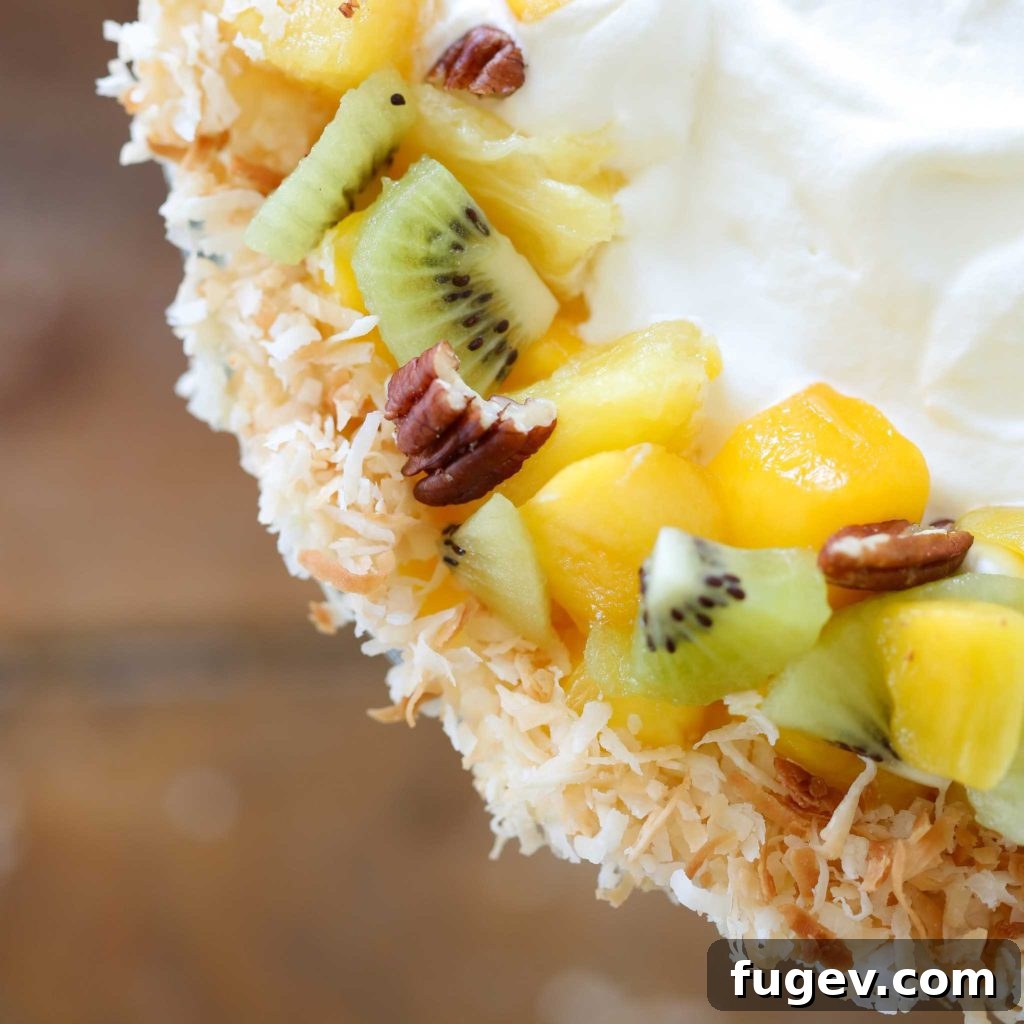
Begin by spreading a thin layer of the prepared coconut crème légère at the very bottom of your trifle dish. This acts as a delicious foundation and helps to prevent the first layer of cake from sitting directly on the glass. Next, arrange a generous, even layer of the rum-soaked pound cake cubes over the cream. Follow this with an abundant layer of your vibrant fresh fruit assortment (cubed mangoes, pineapple, and sliced kiwi). Finally, sprinkle generously with toasted coconut and chopped pecans (if you are using them).
-
Repeat the magnificent layering process: add another smooth layer of coconut crème légère, followed by more rum-soaked cake cubes, then fresh tropical fruit, toasted coconut, and pecans. Continue this pattern until your trifle dish is beautifully full, ensuring you end with a perfectly smooth and inviting top layer of the coconut crème légère for that ultimate photo finish! For an extra pristine white top, you have the optional choice of adding a thin final layer of plain whipped cream, which adds a lovely contrast and elegant touch.
-
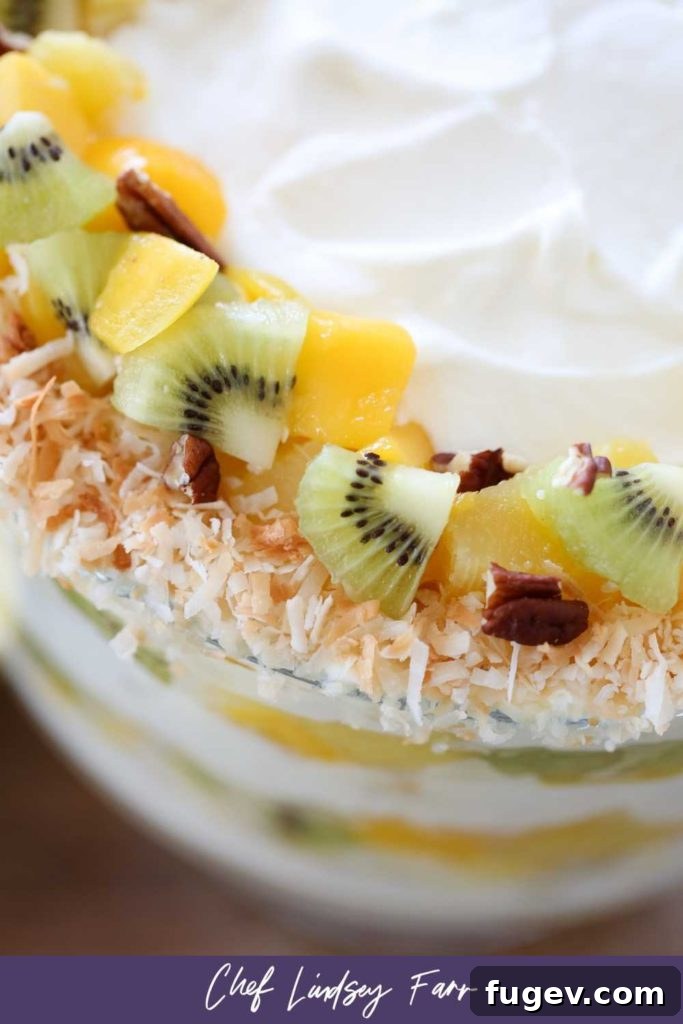
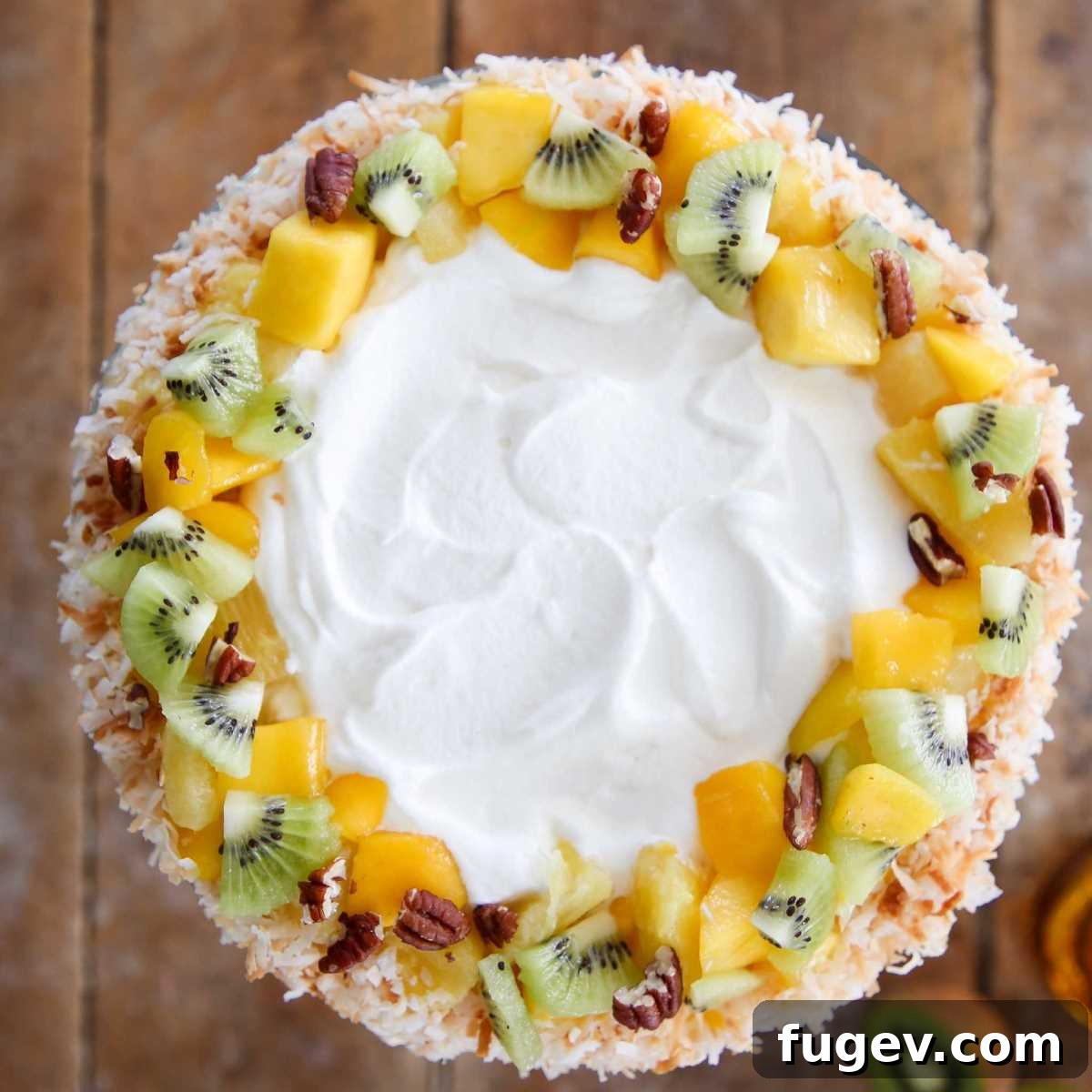
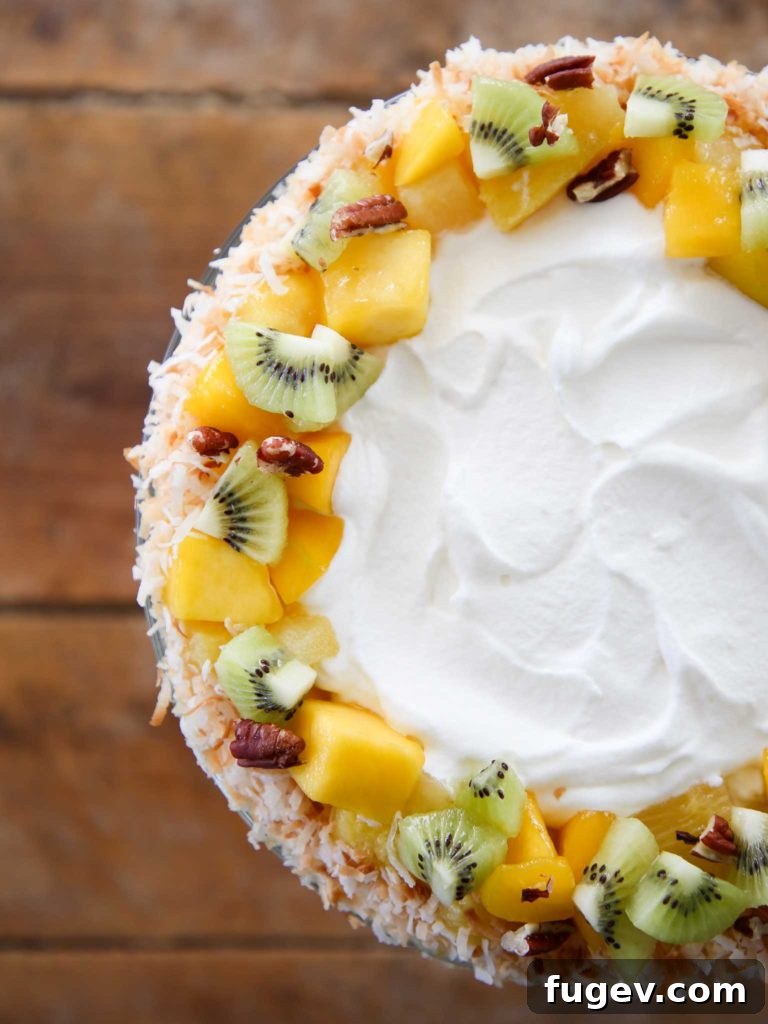
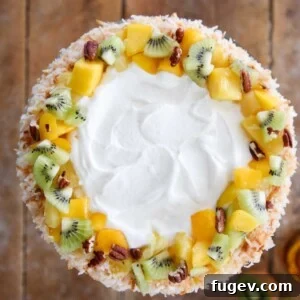
For a truly showstopping presentation that will wow your guests, artistically arrange some of the reserved fresh fruit, toasted coconut flakes, and chopped pecans around the edge and in the center of the top layer. This not only enhances the visual appeal but also provides a delightful hint of the delicious flavors awaiting within.
-
Cover the assembled trifle loosely with plastic wrap and refrigerate for at least 4 hours, or ideally overnight, to allow the flavors to meld beautifully and the trifle to fully set. This crucial waiting period is essential for the best taste, texture, and overall enjoyment of your tropical masterpiece.
Video
Notes
I used half of my Bacardi Rum Cake for this recipe. You can also use one large loaf of good quality store-bought pound cake, or any other sturdy, dense cake of your choice. Ensure the cake is robust enough to absorb the liquids without becoming mushy.
For an alcohol-free version, simply omit the rum from the simple syrup. You can replace the rum with an equal amount of pineapple juice or a splash of vanilla extract for added flavor, maintaining the tropical essence.
Feel free to customize the fruit layers with your favorite tropical fruits like passion fruit, papaya, or even a mix of traditional berries for a unique tropical berry trifle.
Toasted pecans and coconut add a wonderful textural contrast and depth of flavor. Don’t skip the toasting step for these elements – it really makes a difference in enhancing their taste!
This trifle is best when made at least 12-24 hours in advance to allow all the flavors to fully meld. It can be stored, covered, in the refrigerator for up to 3 days.
Nutrition
Carbohydrates: 102g |
Protein: 10g |
Fat: 30g |
Saturated Fat: 18g |
Polyunsaturated Fat: 2g |
Monounsaturated Fat: 7g |
Trans Fat: 1g |
Cholesterol: 195mg |
Sodium: 767mg |
Potassium: 373mg |
Fiber: 3g |
Sugar: 67g |
Vitamin A: 1144IU |
Vitamin C: 35mg |
Calcium: 133mg |
Iron: 4mg
Dessert
British
715
Loved this recipe? Your feedback means the world to us!
Leave a comment below and share your delightful experience making this Tropical Trifle. We can’t wait to hear from you!
Explore More Irresistible No-Bake Desserts
If you’ve fallen in love with the ease and impressive results of this Tropical Trifle, you’re in for a continued treat! As a professional pastry chef, I specialize in creating delectable desserts that require no baking, allowing you to create culinary magic without ever turning on the oven. Be sure to explore my other fantastic collection of no-bake dessert recipes. Why not try this decadent Nutella Truffles recipe next? They’re incredibly simple, elegantly sophisticated, and absolutely perfect for satisfying any chocolate craving with minimal effort!