
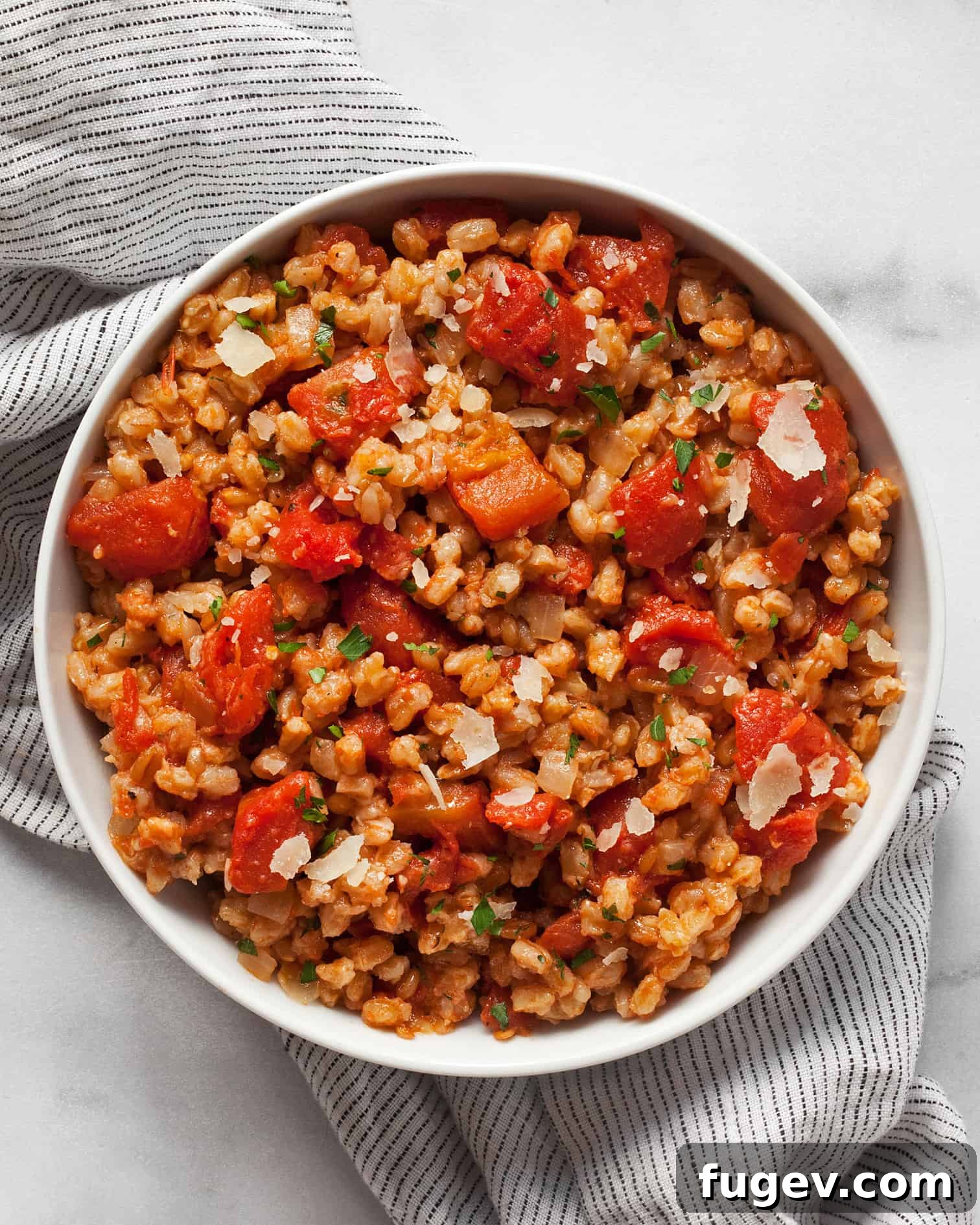
Nothing truly captures the essence of Italian comfort food quite like a rich, creamy risotto. However, the traditional method often involves constant stirring, a labor of love that can sometimes feel like a chore. This **baked farro risotto with canned tomatoes** offers a revolutionary approach, moving the simmering process from the stovetop to the oven. It’s a remarkably easy, hands-off recipe that delivers all the classic flavors and luxurious texture without the relentless stirring. Prepare to transform your weeknight meals with this pantry-friendly delight!
For another twist on oven-baked goodness, you might also enjoy this baked lemon risotto recipe.
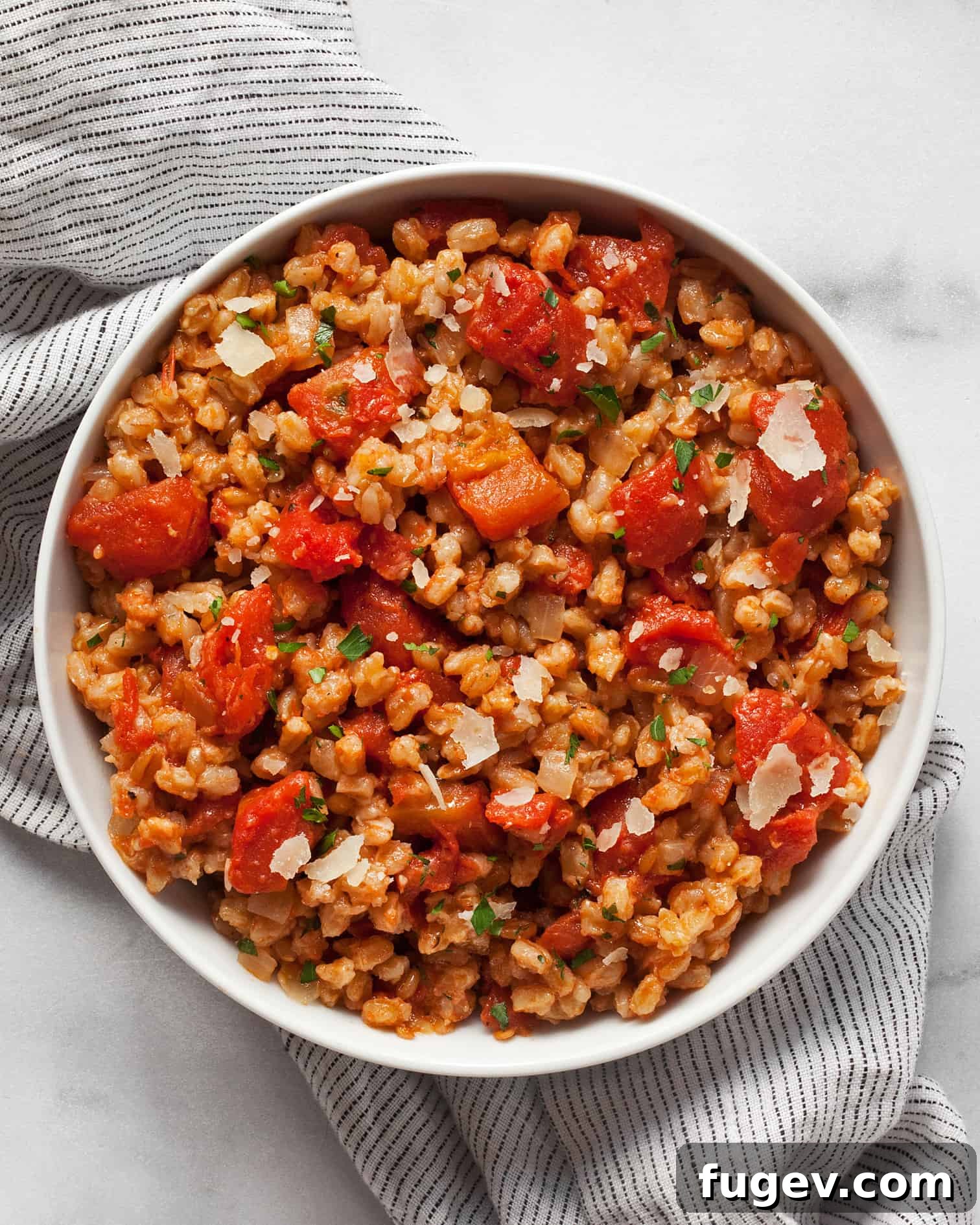
Table of Contents
- The Risotto Revolution: Embracing the Oven
- Discovering Farro: An Ancient Grain for Modern Meals
- From Pantry to Plate: The Convenience of Canned Tomatoes
- Essential Ingredients for Your Baked Farro Risotto
- Step-by-Step Guide: Crafting Your No-Stir Tomato Farro Risotto
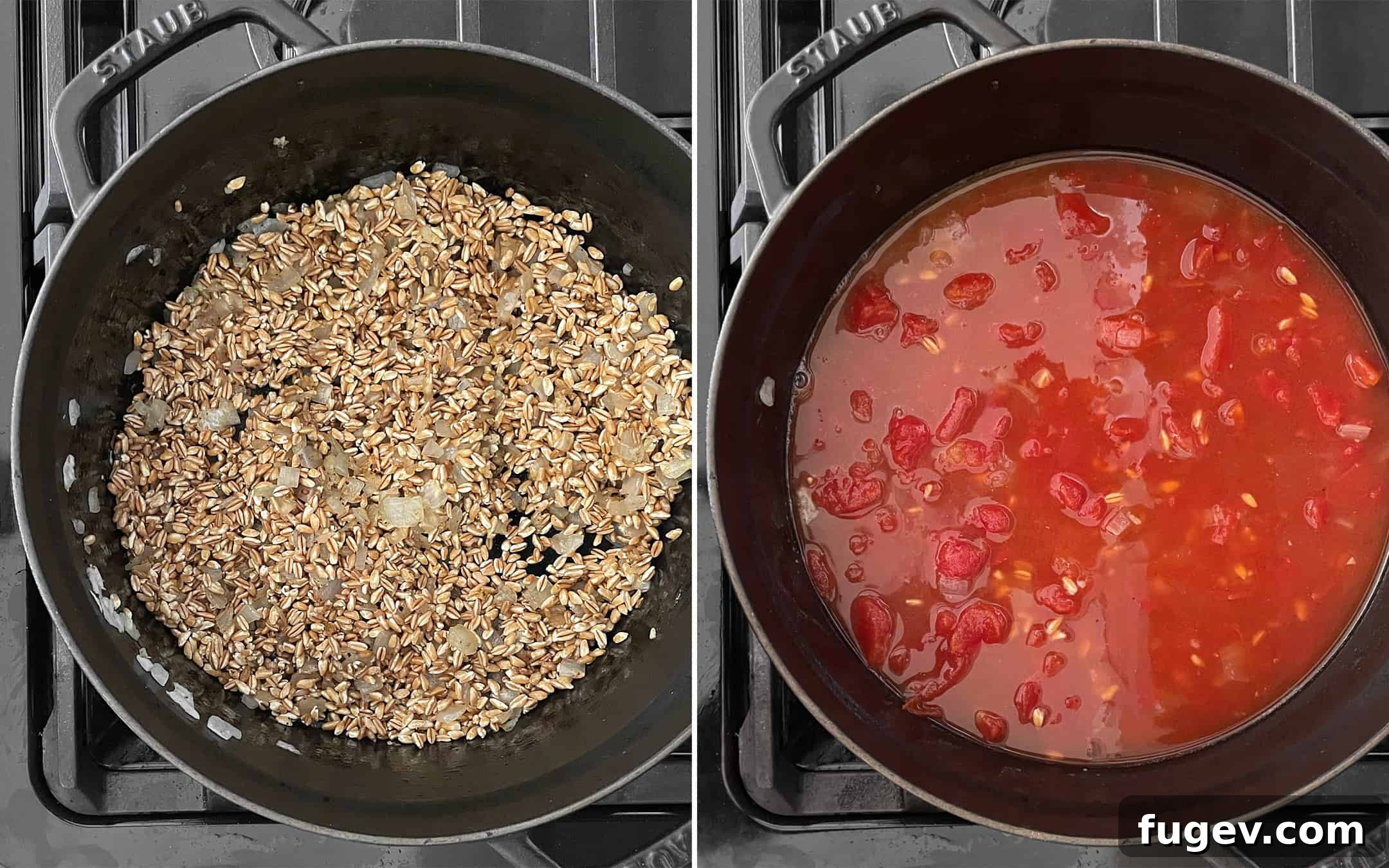
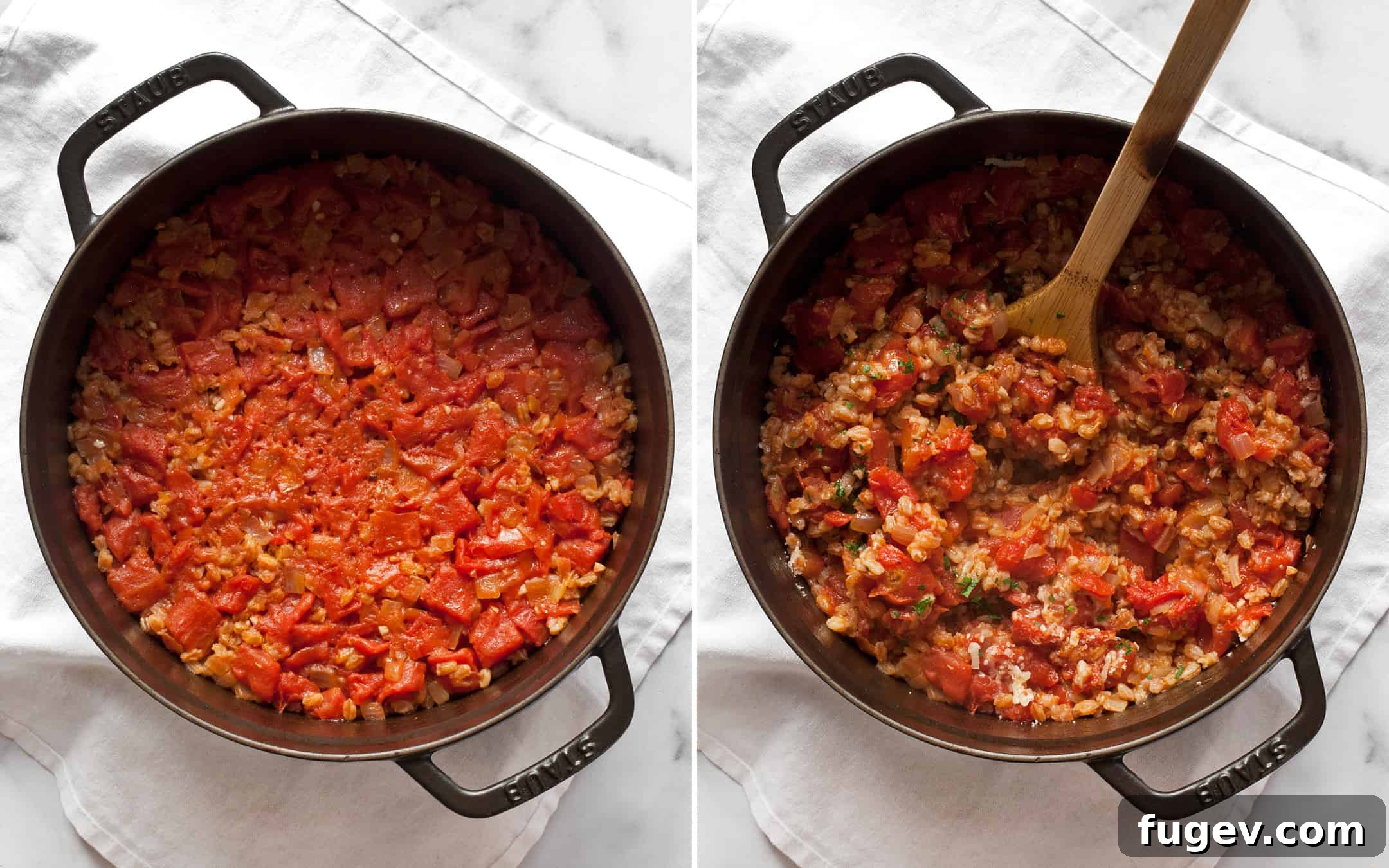
- Visual Guide to Baking Farro Risotto
- Serving Suggestions: What to Pair with Your Farotto
- Storing and Reheating Leftovers
- Explore More Farro Recipes
- Baked Tomato Farro Risotto Recipe Card
The Risotto Revolution: Embracing the Oven for Perfect Texture
For years, I adored the rich, creamy texture and comforting warmth of risotto, but the act of making it often felt like a culinary marathon. The constant stirring, the slow ladling of broth, the meticulous attention required to coax the rice into its characteristic creaminess – it simply didn’t align with my busy schedule or my love for efficient, hands-off cooking. As someone who has honed the art of multi-tasking, especially when it comes to meal preparation, traditional risotto frequently cramped my style.
That’s precisely why I embarked on a mission to transform my approach to this classic Italian dish. The solution was surprisingly simple: start the risotto on the stove, then finish it in the oven. This method dramatically reduces the active cooking time, turning a once labor-intensive dish into one that’s largely hands-off. Once you experience the ease and fantastic results of oven-baked risotto, there truly is no turning back. It retains all the depth of flavor and creamy consistency you expect, but with a fraction of the effort.
Beyond the innovative cooking method, another significant deviation from a classic risotto recipe is my choice of grain. Instead of relying solely on arborio rice, I’ve opted for nutritious, wholesome farro. This substitution not only introduces a delightful nutty flavor and satisfying chew but also elevates the dish, giving birth to what I affectionately call “farotto.” Farro brings its own unique character, making this baked dish a healthier and equally delicious alternative to its traditional counterpart.
Discovering Farro: An Ancient Grain for Modern Meals
If you’re new to farro, prepare to meet your new favorite whole grain. The best way to describe its taste and texture is nutty and delightfully chewy. Farro is an ancient grain, often considered a cornerstone of traditional Italian cooking, and it shares some similarities with barley in its hearty structure and versatility. What truly sets farro apart is its impressive nutritional profile: it’s an excellent source of plant-based protein, dietary fiber, and various B vitamins, making it a fantastic addition to any healthy diet.
There are typically three types of farro available: whole farro, semi-pearled farro, and pearled farro. Whole farro retains all its bran, germ, and endosperm, offering the most nutritional benefits and a truly robust chew, though it requires the longest cooking time and often needs presoaking. Semi-pearled farro has some of its bran removed, striking a balance between nutrition and quicker cooking. Pearled farro has most of its bran removed, cooking the fastest and having a softer texture, but with a slightly reduced fiber content. For this baked risotto recipe, semi-pearled or pearled farro is generally recommended to ensure even cooking within the oven’s timeframe, though whole farro can be used if presoaked and potentially cooked longer.
Beyond rice-like dishes such as farotto, farro is incredibly versatile. Its robust texture holds up beautifully in a variety of preparations. You can effortlessly toss cooked farro into vibrant salads for added substance and a satisfying bite, or stir it into your favorite soups and stews to make them more satisfying and wonderfully filling. It’s also excellent as a side dish, much like quinoa or brown rice. However, it’s important to note for those with dietary restrictions that because farro is a type of wheat, it is not gluten-free.
From Pantry to Plate: The Convenience of Canned Tomatoes
A well-stocked pantry is the secret weapon of any efficient home cook, and mine is no exception. I always ensure a diverse collection of grains, from versatile farro to various types of rice, are readily available. To complement these staples, I am never without a reliable assortment of canned goods – beans, mixed vegetables, and, of course, a generous supply of high-quality canned tomatoes.
This baked farro risotto recipe truly shines as a prime example of “pantry cooking” at its finest. With farro and canned tomatoes forming the backbone, the majority of the ingredients are items that boast a long shelf life, whether tucked away in your cabinet or chilling in the refrigerator, like a good hunk of Parmesan cheese. This focus on readily available, long-lasting ingredients means you can whip up a flavorful, hearty, and impressive meal even when a trip to the grocery store isn’t on the agenda. It’s the ultimate go-to recipe for those busy evenings when you crave something comforting yet effortless.
Essential Ingredients for Your Baked Farro Risotto
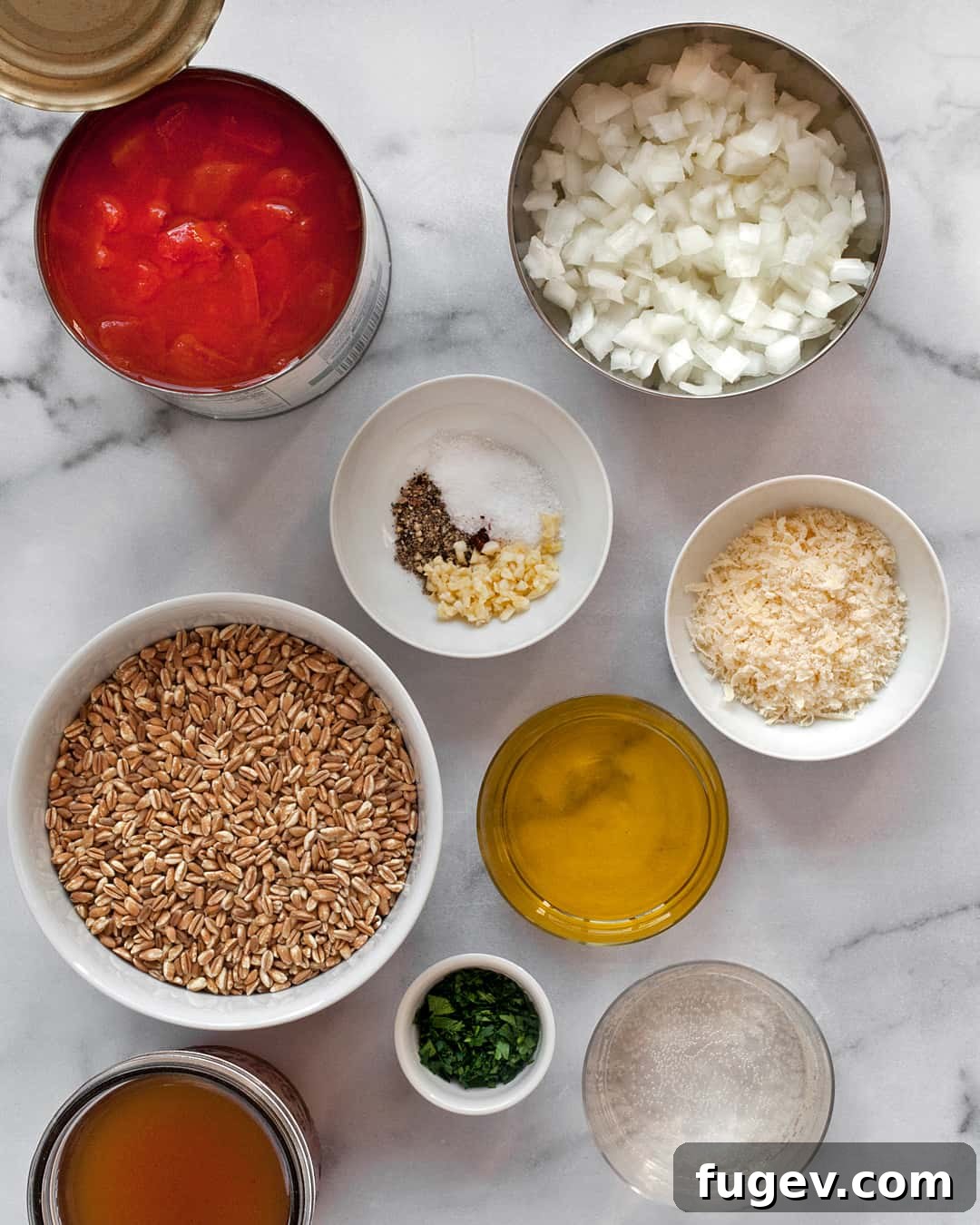
Crafting this delicious baked farro risotto requires a handful of simple, yet impactful, ingredients. Here’s a closer look at what you’ll need and some clever substitutions:
- Farro: The star of our “farotto”! Its nutty flavor and chewy texture are unparalleled. While farro is our top choice for oven risotto due to its ability to maintain shape and texture during baking, barley is another excellent and hearty whole grain option if you’re looking for a similar profile.
- Canned Tomatoes: A large can of diced tomatoes is key to this recipe. Not only do they infuse the farro with their vibrant, tangy juices throughout the cooking process, but they also provide wonderful little bites of sweet and acidic tomato, adding complexity and freshness to every spoonful. Crushed tomatoes or whole peeled tomatoes (crushed by hand) can also work, but diced offers the best texture.
- Onion: We kick off the flavor foundation by sautéing finely chopped onions in olive oil. This crucial step softens them and releases their natural sweetness, creating an aromatic base that deepens the overall taste of the risotto.
- Garlic: Once the onions have become tender and translucent, minced garlic joins the party. Its pungent aroma and flavor are essential for that quintessential Italian taste, blossoming beautifully when gently cooked with the onions.
- Seasonings: We keep it classic with the obvious choices of salt and freshly cracked black pepper. For a touch of warmth and a subtle kick, a pinch of red pepper flakes is included. Feel free to adjust the amount of red pepper flakes to your preference for heat.
- White Wine: This ingredient plays a vital role, adding a bright acidity that is characteristic of traditional risotto. It helps to deglaze the pan, picking up all the flavorful browned bits, and its complexity balances out the richness of the creamy grain and cheese. I always add about a half-cup of a dry white wine (like Pinot Grigio or Sauvignon Blanc) to the farro, allowing it to bubble and reduce before incorporating the remaining liquids. If you prefer to avoid alcohol, you can simply increase the broth by the same amount, though the flavor profile will be slightly different.
- Vegetable Broth: The primary liquid for cooking our farro. It’s important to use low-sodium vegetable broth to have full control over the final saltiness of your dish. If you’re not adhering to a vegetarian diet, chicken broth can be a suitable substitute, offering a slightly richer flavor. Always taste and adjust seasoning before and after cooking.
- Parmesan Cheese: The grand finale! Grated Parmesan cheese is stirred into the hot farotto immediately after it comes out of the oven. The residual heat melts it almost instantly, creating that luscious, creamy texture and adding a salty, umami depth that is simply irresistible. Have extra on hand for serving!
- Extra-Virgin Olive Oil: Used for sautéing the aromatics, ensuring a rich, foundational flavor. Choose a good quality extra-virgin olive oil for the best results.
- Fresh Parsley: To finish the risotto with a burst of vibrant green color and a fresh, herbaceous note, a generous sprinkle of chopped fresh parsley is essential. It brightens the entire dish and adds a lovely aromatic contrast.
Step-by-Step Guide: Crafting Your No-Stir Tomato Farro Risotto
Making this baked farro risotto is surprisingly straightforward and incredibly rewarding. Follow these simple steps for a perfect, creamy, and flavorful meal:
- Preheat Your Oven: Begin by preheating your oven to 400 degrees Fahrenheit (200 degrees Celsius). This ensures the oven is at the correct temperature when your risotto is ready to go in.
- Prepare Your Pan: Select a large, ovenproof saucepan or a Dutch oven with a tight-fitting lid. Heat 1 tablespoon of olive oil over medium-high heat on your stovetop.
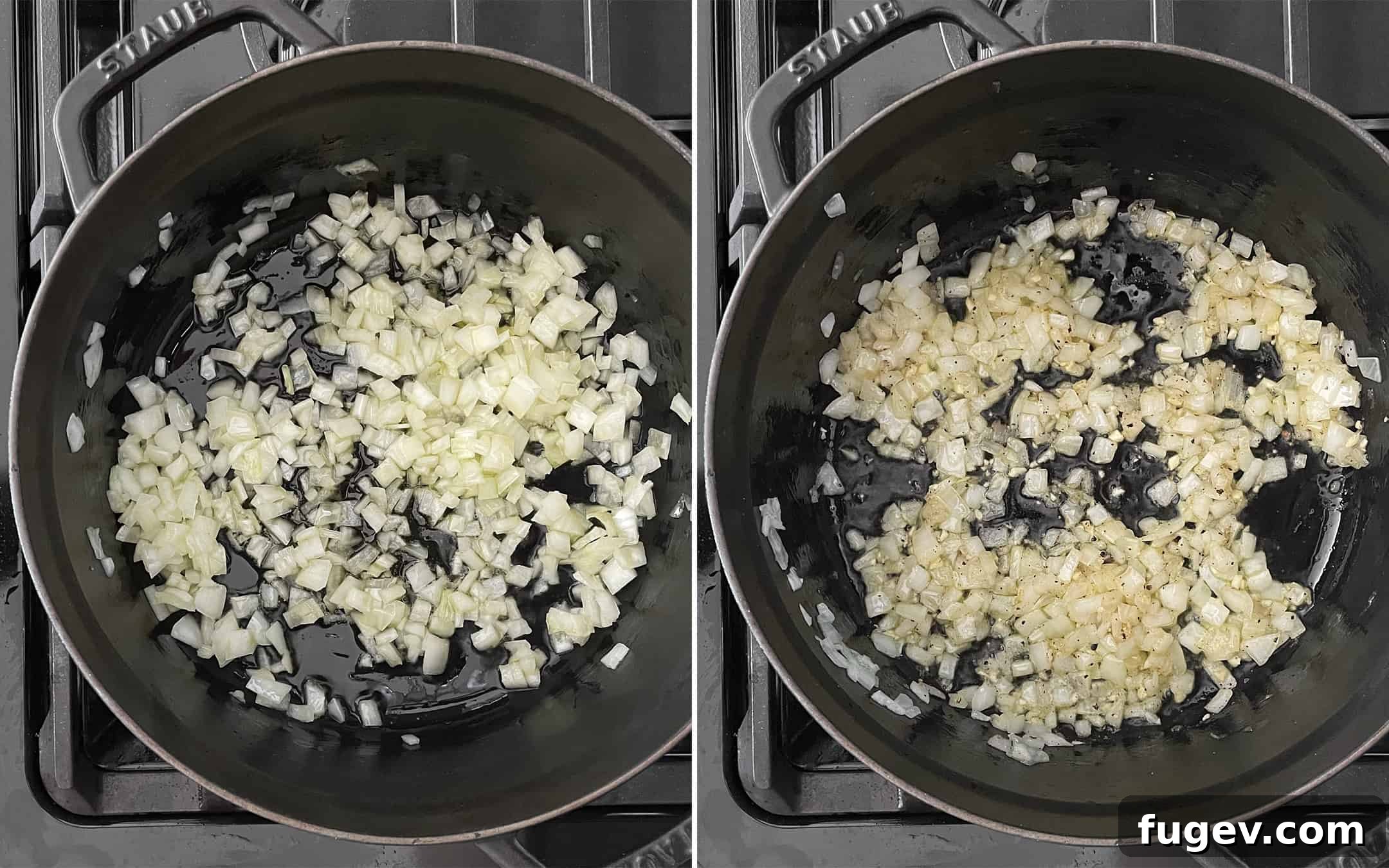
- Sauté the Aromatics: Add the chopped onions to the hot olive oil. Sauté them, stirring occasionally, for about 4-5 minutes until they become soft, translucent, and fragrant. Avoid browning them too much.
- Infuse with Garlic and Spices: Once the onions are softened, stir in the minced garlic, red pepper flakes, salt, and black pepper. Cook for another 30 seconds to 1 minute, until the garlic becomes fragrant. Be careful not to burn the garlic.
- Toast the Farro: Add the farro to the pan, stirring to ensure it’s thoroughly combined with the sautéed onions and spices. Toast the farro for about 1 minute. This step enhances its nutty flavor.
- Deglaze with Wine: Pour in the dry white wine. Let it bubble vigorously and allow the farro to absorb the liquid. This process, called deglazing, adds depth and complexity to the dish. Continue to cook until almost all the wine has evaporated.
- Add Tomatoes and Broth: Stir in the canned diced tomatoes (with their juices) and the low-sodium vegetable broth. Bring the entire mixture to a gentle boil on the stovetop.
- Transfer to the Oven: Once boiling, immediately place the lid securely on the saucepan or Dutch oven. Carefully transfer the covered pot to your preheated oven.
- Bake to Perfection: Bake the farotto for 30-35 minutes. The baking time can vary slightly depending on your oven and the type of farro used. The farro should be tender with a pleasant chew, and most of the liquid should be absorbed, resulting in a creamy consistency.
- Finish and Serve: Carefully remove the hot pot from the oven. Stir in the grated Parmesan cheese and chopped fresh parsley. The residual heat will melt the cheese beautifully. Divide the baked farro risotto into bowls, topping each serving with a little extra Parmesan and a sprinkle of fresh parsley for garnish. Enjoy immediately!
Serving Suggestions: What to Pair with Your Farotto
This baked tomato farro risotto is so satisfying and flavorful that it can easily stand on its own as a delightful main course. Its rich texture and hearty ingredients make it a complete and fulfilling meal. For those who enjoy a lighter accompaniment, I often keep things simple, pairing it with a fresh, vibrant green salad.
Consider serving your farotto alongside an Arugula Salad with Lemon Vinaigrette, where the peppery greens and bright dressing provide a refreshing contrast to the creamy grain. Another excellent choice is an Italian Chopped Salad, packed with crisp vegetables and a zesty dressing, adding layers of texture and flavor.
Beyond being a stellar main dish, this versatile risotto also shines as a go-to side dish. It pairs wonderfully with a variety of proteins, from grilled chicken or pan-seared fish to roasted pork tenderloin. For a heartier vegetarian meal, you could serve it with some sautéed mushrooms, roasted seasonal vegetables, or a side of crusty garlic bread to soak up every last bit of its deliciousness. Don’t hesitate to experiment with your favorite pairings!
Storing and Reheating Leftovers
One of the many benefits of this baked farro risotto is how well it keeps, making it fantastic for meal prep or enjoying a second meal. Store any leftover risotto in an airtight container in the refrigerator for up to 3 days. Ensure it cools down completely before sealing and refrigerating to maintain freshness and prevent bacterial growth.
When you’re ready to enjoy it again, reheating is a breeze. You can warm individual portions gently in the microwave, stirring occasionally, until heated through. Alternatively, for a stovetop refresh, place the risotto in a saucepan over medium-low heat with a splash of extra olive oil or a tablespoon or two of vegetable broth or water. Stir gently until it’s hot and creamy again. Adding a little extra liquid helps to revive the texture, as grains tend to absorb more liquid upon cooling.
Explore More Farro Recipes
Farro’s adaptability makes it a fantastic ingredient to experiment with beyond risotto. If you’ve enjoyed this recipe, you’ll love exploring other ways to incorporate this wholesome grain into your cooking:
Peach Corn Farro
Lemon Brussels Sprout Farro
Mushroom Tomato Farro
Roasted Carrot Chickpea Farro
Pear Farro Salad
Baked Tomato Farro Risotto Recipe
Baked Tomato Farro Risotto
Rated 5 out of 5 stars from 1 vote.
By Paige Adams
Prep: 5 mins
Cook: 40 mins
Total: 45 mins
Servings: 4
Pin Recipe
Print Recipe
This baked farro risotto with canned tomatoes uses pantry ingredients and takes the simmering from the stove to the oven. It’s an easy recipe that doesn’t involve constant stirring.
Ingredients
- 1 tablespoon olive oil
- 1 small white onion, roughly chopped
- 2 garlic cloves, minced
- 1 teaspoon kosher salt
- 1/2 teaspoon black pepper
- 1/4 teaspoon red pepper flakes
- 1-1/2 cups farro
- 1/2 cup dry white wine
- 1 (28-ounce) can diced tomatoes
- 2 cups low-sodium vegetable broth
- 1/4 cup grated Parmesan cheese, plus more for serving
- 1 tablespoon chopped fresh parsley, for serving
Instructions
- Preheat the oven to 400 degrees F (200 degrees C).
- In a large ovenproof saucepan or Dutch oven, heat 1 tablespoon olive oil over medium-high heat. Sauté the onions until they start to turn soft and translucent, about 4-5 minutes. Add the garlic, salt, pepper, and red pepper flakes, cooking until fragrant, about 30 seconds.
- Stir in the farro and cook for 1 minute to toast lightly. Pour in the wine, letting it bubble and be absorbed by the farro.
- Add the diced tomatoes and vegetable broth and bring the mixture to a boil. Cover the saucepan with a tight-fitting lid and transfer to the preheated oven.
- Bake for 30-35 minutes, or until the farro is tender and most of the liquid has been absorbed. Carefully remove from the oven. Stir in the Parmesan cheese and fresh parsley. Top with more cheese and parsley before serving, if desired.
Notes
Store leftover risotto in an airtight container in the refrigerator for up to 3 days. Warm it in the microwave or on the stove with a little olive oil or a splash of broth to restore its creamy texture.
Nutrition
Calories: 401kcal | Carbohydrates: 73g | Protein: 12g | Fat: 6g | Saturated Fat: 2g | Polyunsaturated Fat: 1g | Monounsaturated Fat: 3g | Cholesterol: 5mg | Sodium: 986mg | Potassium: 668mg | Fiber: 15g | Sugar: 7g | Vitamin A: 342IU | Vitamin C: 21mg | Calcium: 152mg | Iron: 4mg
Nutrition information is automatically calculated and should only be used as an approximation.
Additional Info
Course: Main Dishes
Cuisine: Italian
Did you make this recipe?
Mention @lastingredient on Instagram and tag it #lastingredient!